
Latest AI Headlines from Asia
Asia, a dynamic region known for its technological prowess, is making significant strides in the field of Artificial Intelligence (AI). From cutting-edge innovations to strategic partnerships, here are the latest headlines shaping the AI landscape in Asia:
The Upcoming Chinese “AI Law”
China is gearing up to introduce its own comprehensive AI Act, similar to the European Union’s AI regulations. Unlike previous Chinese laws that focused on specific AI subsets (such as deepfakes), this new law aims to address the entire AI ecosystem. Expect a draft of the AI Law in 2024, although finalization and effectiveness may take longer. Defining what constitutes AI poses challenges, but this law could significantly impact how AI shapes our world1.
Guidance for AI Companies
The Chinese Academy of Social Sciences drafted an advisory version of the future AI law in 2023. This document provides insights into what China wants to achieve. It guides AI companies on what to avoid and sets boundaries for responsible AI development. As China continues to lead in AI research and patents, such guidance becomes crucial1.
China’s AI Market Growth
China’s AI market value is projected to reach US$26.44 billion by 2026. In 2023 alone, the country’s AI spending is expected to hit US$14.75 billion, accounting for about 10% of the world total. Chinese researchers publish more AI papers and secure more patents than their U.S. counterparts, positioning China as a global leader in AI-empowered applications234.
Challenges and Opportunities
While China’s AI advancements are impressive, challenges remain. Balancing innovation with ethical considerations, data privacy, and security is essential. Foreign stakeholders eyeing China’s AI market must navigate regulatory updates, investment opportunities, and cultural nuances. As China emerges as an AI force, collaboration and responsible practices will shape its future5.
ETT | iByond™ and Knightsbridge Group Seal $1.2B Deal
In a groundbreaking move, ETT | iByond™ and Knightsbridge Group have joined forces to advance digitization and fintech globally. The monumental deal, projected to be worth as much as $1.2 billion, underscores their commitment to harnessing AI and transforming financial services12. This collaboration promises unparalleled solutions tailored to meet evolving business needs.
OpenAI’s Sora Challenges China’s AI Dreams
OpenAI introduces Sora, an AI model that turns text into video. Amid China’s AI ambitions, Sora provides a fresh perspective, emphasizing the need for responsible AI development1. As AI continues to shape the world, this critical dialogue ensures ethical and sustainable progress.
Nvidia Vaults to Fourth-Biggest Company by Market Cap
Driven by AI optimism, Nvidia has surged to become the world’s fourth-largest company by market capitalization. Their commitment to AI research and development positions them at the forefront of technological innovation1.
Singapore Invests in 10Gbps Broadband Network
Singapore plans to invest up to S$100 million to boost its broadband network, upgrading to 10Gbps. This move aligns with the nation’s vision of becoming a smart city powered by AI and connectivity1.
AI Perspectives from Asia: A Collaborative Effort
The Asia Foundation and Stanford HAI announce the “AI Perspectives from Asia” program. Through research, education, and convenings, they aim to support policymakers and civil society in harnessing AI’s potential while mitigating its harms in the Asia Pacific region3.
APAC Emerges as an AI Force
The Asia Pacific (APAC) region, fueled by the COVID-19 pandemic, is emerging as a pioneering force in AI. As adoption accelerates, APAC’s contributions to AI innovation must not be overlooked4.

AI Is Taking What You Publish and What You Type
Common Crawl holds more than 300 billion web pages, and 52 per cent of crawler requests on Cloudflare's network in June 2026 were for AI training. Models can give back what they took in: one chatbot reproduced 76.8 per cent of the first Harry Potter book near word for word. A US court ordered OpenAI to give the New York Times 20 million anonymised ChatGPT logs. This KXCO warning sets out what is exposed, what to do now, and how each KXCO client runs its own AI inside its own walls.

Industrialising Intelligence: Demand, Scarcity and the Boundary of Sovereignty
AI agents generate 80% of OpenRouter's tokens, about seven times human use, and Google's monthly tokens rose about 330 times in two years to over 3.2 quadrillion. In my view the limit on AI demand has moved from people to power: the International Energy Agency expects data-centre electricity to reach around 945 terawatt-hours by 2030. Execution is becoming a utility. Selection is not. KXCO builds the boundary that keeps the decision with a named person and lets another party check the record.

Democrats' AI Spending Curtailment: The Dumbest Idea in Washington
After the midterm sweep, Democrats want to slow America's AI build-out. The Sanders and Ocasio-Cortez bill would freeze building and upgrading of AI data centres nationwide, and a superintelligence ban Rep. Yassamin Ansari wants atop the agenda would pause every model trained with 10^25 operations or more. Governors-elect in Texas and Georgia back pauses, and Goldman Sachs puts 45% of planned capacity in Democrat-run states backing moratoriums. Shayne Heffernan: AI computing follows the power.
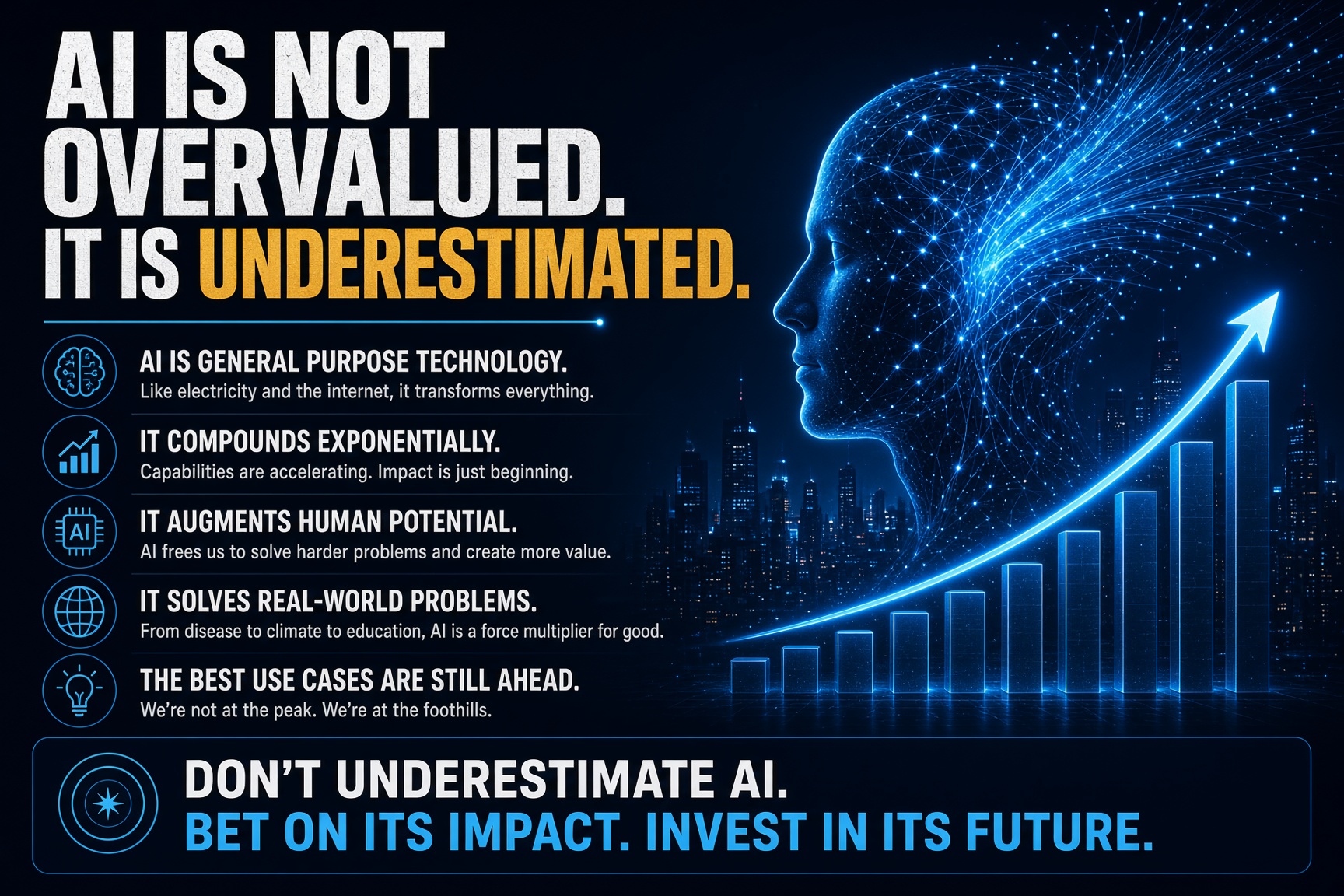
AI Is Not Overvalued. It Is Underestimated.
Markets debate whether artificial intelligence (AI) is overvalued. Shayne Heffernan argues the more material risk is underestimation. Alphabet's capital expenditure reached $51.4 billion in the third quarter, Google Cloud revenue rose 103% to $30.7 billion and the Cloud backlog stands at $561 billion, per its 28 October results and earnings call. Jurisdictions that block data centres do not remove the demand: they import the capability later, at a higher price.
Every story, signed and delivered.
Subscribe to the kxco channel and get the headline, the AI-written key takeaways, and the chain-anchor link the moment we publish. Audio versions and per-ticker subscriptions arrive in the next iteration.