
Janet Yellen is Challenging Jerome Powell's Control of the Financial Markets
#Fed #Treasury #inflation #employment #economy #money
$DIA $SPY $QQQ $RUTX $USD $XAU $GLD $XAG $SLV
"The problem with too much Fed liquidity is financial markets continuing to mark record highs"-- Paul Ebeling
The Feds mandate is to maintain control of inflation, unemployment and long-term interest rates through its monetary policy decisions.
Fed Chairman Powell is working to get the US economy moving. A combination of near-Zero interest rates and QE which means buying bonds directly. Both these interventions increase the amount of money in circulation. Ultimately, this will lead to inflation
Inflation is closely tied to market interest rates. In response to the VirusCasedemic, the Fed rate policy that Chairman Powell advocates now is to keep money market rates close to Zero for a "long time".
Mr. Powell must balance economic recovery and employment against market excesses and excessive inflation.
Enter the Biden administration's newly minted Treasury Secretary Janet 'Schoolmarm' Yellen, who just threw sand & gravel in Mr. Powell’s plans to maintain any semblance of tight control over rates.
This is what she said: "Already low short-term interest rates are set to sink further, potentially below zero, after the Treasury announced plans earlier this month to reduce the stockpile of cash it amassed at the Fed over the last year to fight the pandemic and the deep recession it caused."
Seems sensible, Yes? Except that the Yellen Treasury is planning to unleash a tsunami of reserves into the financial system and on to the Fed’s balance sheet. And all of that money has to go somewhere.
All that cash from the Treasury’s general account will have to go back to the Fed and into the market. That will drive short term interest rates lower, as far as they can go, meaning negative.
This means banks have to pay money to the Fed to keep their cash for them. Recall that in Y 2008, negative short-term interest rates paralyzed business lending and resulted in a money market fund losing money, thus breaking the Buck.
Excess money supply (liquidity) causes inflation, and the official cash balance sheet at the Treasury is about to fall by hundreds of billions of dollars as they flood the market with cash.
The experts are at odds as to what will happen to USD. Some think there will be downward pressure, still others see it as a “non-event.”
That aside the Treasury move will bring on a day of reckoning for the Fed.
The official Fed balance sheet sits just over $7.5-T, up from $5-T and Mr. Powell claims there is no limit to its lending power except for the Treasury's willingness to pay for it.
So What If?
The market functioning continues to improve, then "... we are happy to slow or even stop the bond purchases" Chairman Powell told Congress.
But, hang on, he did not mention the possibility of selling off the bonds bought.
Mr. Powell knows better than anyone is that the moment the Fed makes any such announcement, it will trigger a sharp sell-off by investors who have become addicted to monetary stimulus.
And so now with other economic uncertainty, the Fed feels it needs the support of markets as much as the markets need the support of the Fed.
The problem with too much Fed liquidity is financial markets continuing to mark record highs. What has been dubbed the "everything bubble"
As I am fond of saying, "always take what the market gives and be prepared"
Economist Bruce WD Barren notes: Too much liquidity risks the creation of asset bubbles, like in housing before the financial crisis and farm land afterwards, and distorts financial markets. Throughout the world, ongoing central bank liquidity has bolstered financial assets rather than goods and services that produce growth in the real economy.
Meaning, take a hard look at adding gold and silver.
Have a healthy day, Keep the Faith!
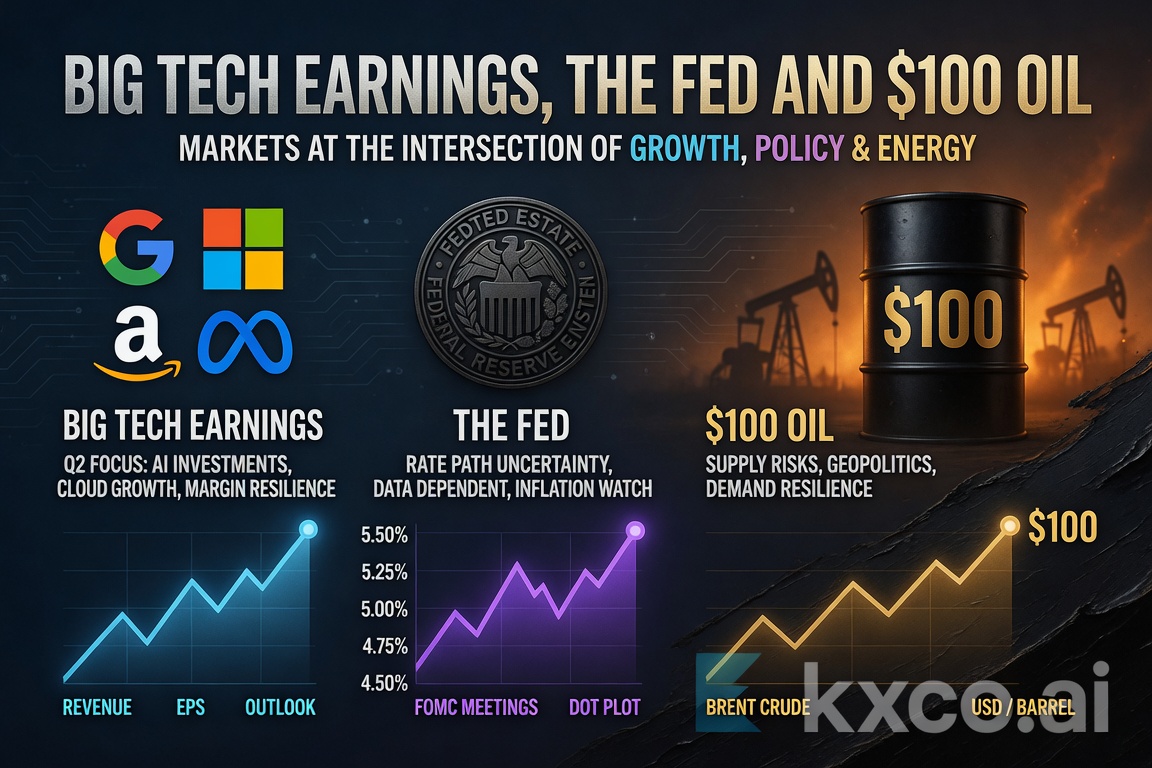
Big Tech Earnings, the Fed and $100 Oil. Trading Strategies for Every Sector
Microsoft, Meta, Apple and Amazon report, the Fed decides, and oil sits above $100. Shayne Heffernan on the week ahead, with the full economic calendar and a trading strategy for big tech, AI, quantum, gold, silver, FX and Bitcoin.

Economic Calendar and Trading Strategies for the Week Ahead: July 20–24, 2026
A pivotal week for markets: Iran's closure of the Strait of Hormuz sends crude above $86 and gasoline over $5, while Alphabet, Tesla and Intel earnings test the AI trade. Full economic calendar plus trading strategies across oil, gold, Bitcoin, FX and AI chip stocks.
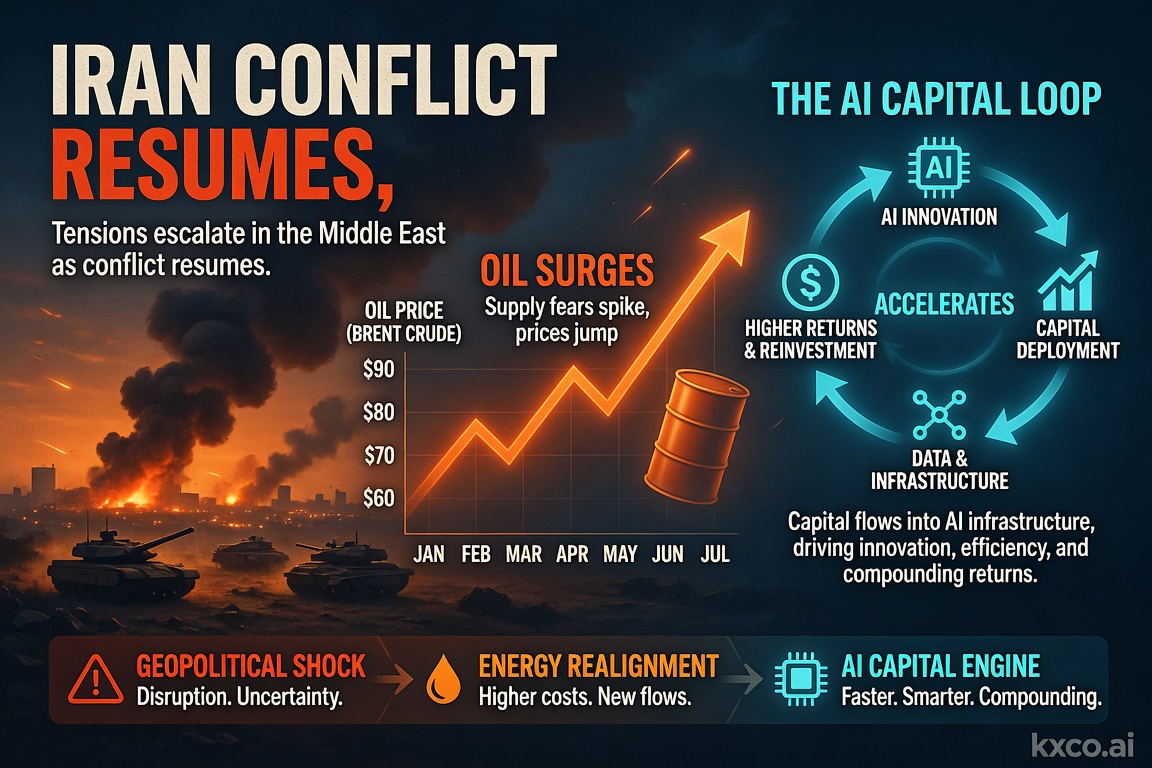
Economic Calendar and Trading Strategies for the Week Ahead: July 14–18, 2026
A pivotal week for markets: US strikes on Iran reignite the oil risk premium, June CPI and retail sales test the Fed's rate-cut path, and the $1 trillion AI capital loop keeps driving the tech trade. Full economic calendar plus trading strategies across oil, gold, Bitcoin, FX and AI stocks.

Economic Calendar and Trading Strategies for July 7–11, 2026
A trader's guide to the week of July 7–11, 2026: the US and China economic calendar, the Fed-pivot test after a soft jobs report, and how to trade Nvidia, SpaceX, Bitcoin, the dollar, gold, silver, AI and quantum. Track every release on Live Trading News.
Every story, signed and delivered.
Subscribe to the kxco channel and get the headline, the AI-written key takeaways, and the chain-anchor link the moment we publish. Audio versions and per-ticker subscriptions arrive in the next iteration.