
Jackson Hole Economic Symposium $USD $BTC $QQQ $GLD
The Jackson Hole Economic Symposium is an annual conference hosted by the Federal Reserve Bank of Kansas City at the Jackson Lake Lodge in Grand Teton National Park, Wyoming. The symposium brings together central bankers, economists, and policymakers from around the world to discuss current economic issues.
The first Jackson Hole Economic Symposium was held in 1978. The symposium was originally intended to be a forum for central bankers to discuss monetary policy. However, the scope of the symposium has since broadened to include a wide range of economic issues, such as financial stability, globalization, and climate change.
The Jackson Hole Economic Symposium is a prestigious event that is attended by some of the most influential economists in the world. The speeches and presentations given at the symposium are often closely watched by financial markets and the media.
The 2023 Jackson Hole Economic Symposium will be held on August 24-26. The theme of the symposium is "Structural Shifts in the Global Economy: Implications for Monetary Policy."
Here are some of the topics that are likely to be discussed at the 2023 Jackson Hole Economic Symposium:
The impact of the COVID-19 pandemic on the global economy
The rise of China and other emerging economies
The transition to a low-carbon economy
The increasing inequality of wealth and income
The role of technology in the economy
The Jackson Hole Economic Symposium is an important event that helps to shape the debate on economic policy. The speeches and presentations given at the symposium can have a significant impact on financial markets and the global economy.
Central bankers and academics from around the world have descended upon the town of Jackson, Wyoming searching for clues on the US Federal Reserve's interest rate policy.
After 11 rate hikes in less than 18 months, the US benchmark lending rate now sits at a range between 5.25 and 5.5 percent -- its highest level for 22 years.
However, the rapid cycle of interest rate increases has failed to definitively quash inflation, which remains stuck above the Fed's long-term target of two percent, despite slowing sharply from recent multi-decade highs.
Analysts expect Fed Chairman Jerome Powell's opening remarks at the annual Jackson Hole economic symposium on Friday to address monetary policy ahead of the next interest rate decision in September.
They'll also be looking for clues about the Fed's likely policy trajectory in the coming months, when inflation is expected to approach its long-term target.
"The main takeaway from the speech to me is essentially going to be how much he talks about keeping rates higher for longer," Peterson Institute for International Economics (PIIE) President Adam Posen told reporters earlier this month.
This year's symposium will examine "structural shifts in the global economy," the Kansas City Fed, which organizes the annual retreat, announced in a recent statement.
European Central Bank President Christine Lagarde will address the symposium on Friday afternoon, while senior central bankers from the United Kingdom and Japan will take part in a panel discussion on Saturday.
- Another pause likely -
Analysts and policymakers remain split on the likelihood of a 12th hike to tackle inflation at the Fed's next rate-setting meeting in September.
Surprisingly strong jobs and growth data in recent months indicate that the US economy is in better health than many economists feared earlier this year when they forecast the United States was headed for recession.
Nevertheless, futures traders currently assign a probability of more than 80 percent that the Fed will vote to pause rates at the next Federal Open Market Committee (FOMC) meeting on September 19-20, according to data from CME Group.
Looking ahead, if price increases continue to slow and the Fed holds rates steady, policymakers will find themselves in a scenario where real, inflation-adjusted interest rates are rising.
This would have the effect of continuing to slow the US economy, which some fear could tip it into recession.
- Higher for longer -
Against this backdrop, economists and investors will be looking for clues from Powell about how long the Fed intends to hold interest rates before contemplating a cut.
"Powell will need to choose whether to accept or push back against the "higher-for-longer" narrative at Jackson Hole on Friday," Citigroup economists wrote in a recent note to clients.
"We think he will have little incentive to loosen financial conditions given a tight labor market and above-potential growth," they added.
"We think Powell's tone at Jackson Hole will be less balanced than the July FOMC minutes since the latest data raise the risk of a fresh increase in inflation," Bank of America economists wrote in a recent note to clients.
If Powell doesn't indicate support for keeping rates higher for longer, the financial markets could react forcefully, according to Posen from PIIE.
"If he says we're data dependent, I think the markets will interpret that as very dovish and there will be a strong reaction," he told reporters earlier this month.
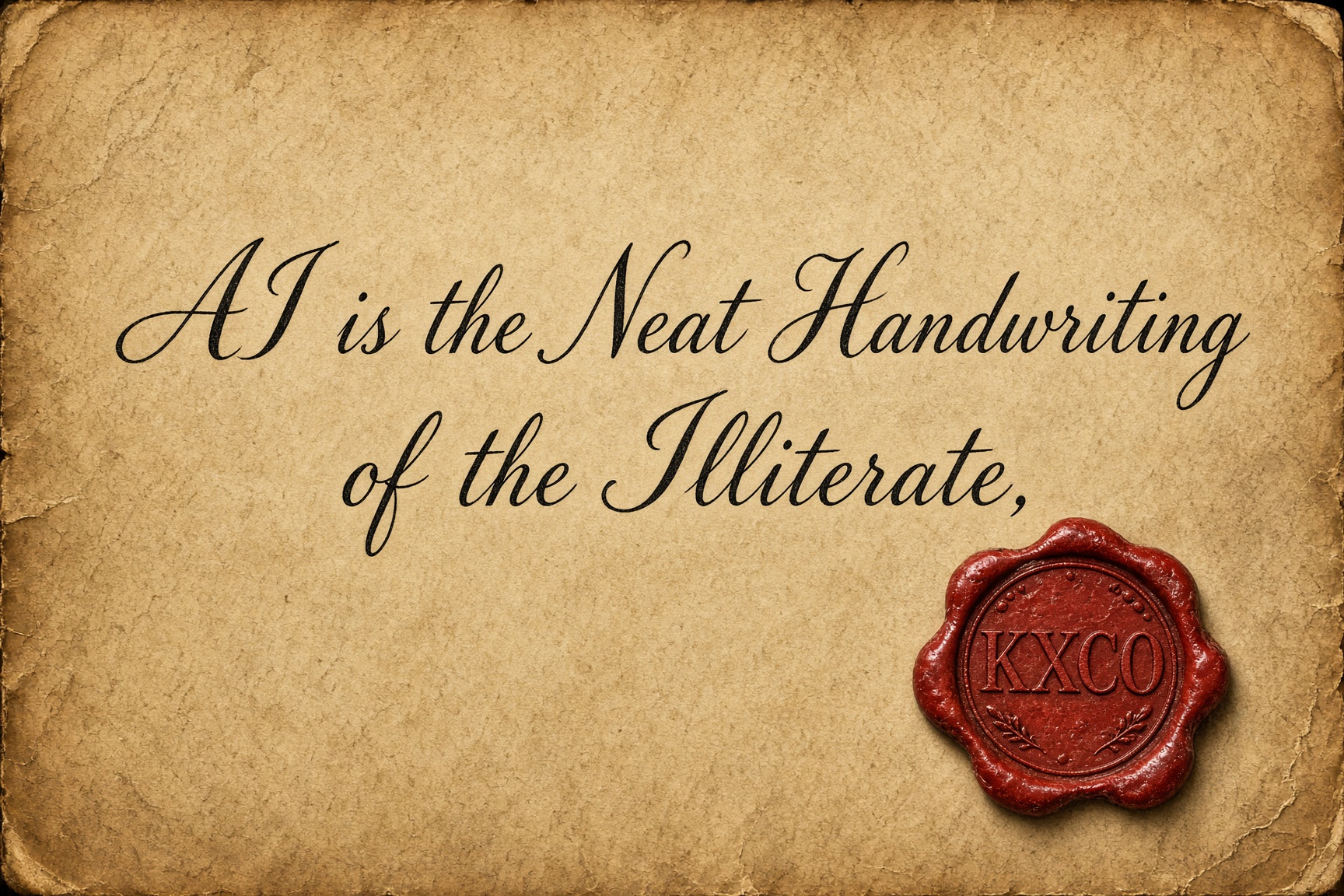
AI is the Neat Handwriting of the Illiterate
A model in the hands of someone who has read the filing and walked the plant is a clerk. The same model, speaking for someone who has done neither, is a disguise. On AI slop, phantom citations and factslop, why finish stopped being evidence of work, and the containment layer KXCO built so a machine cannot speak as the institution until a source is attached.
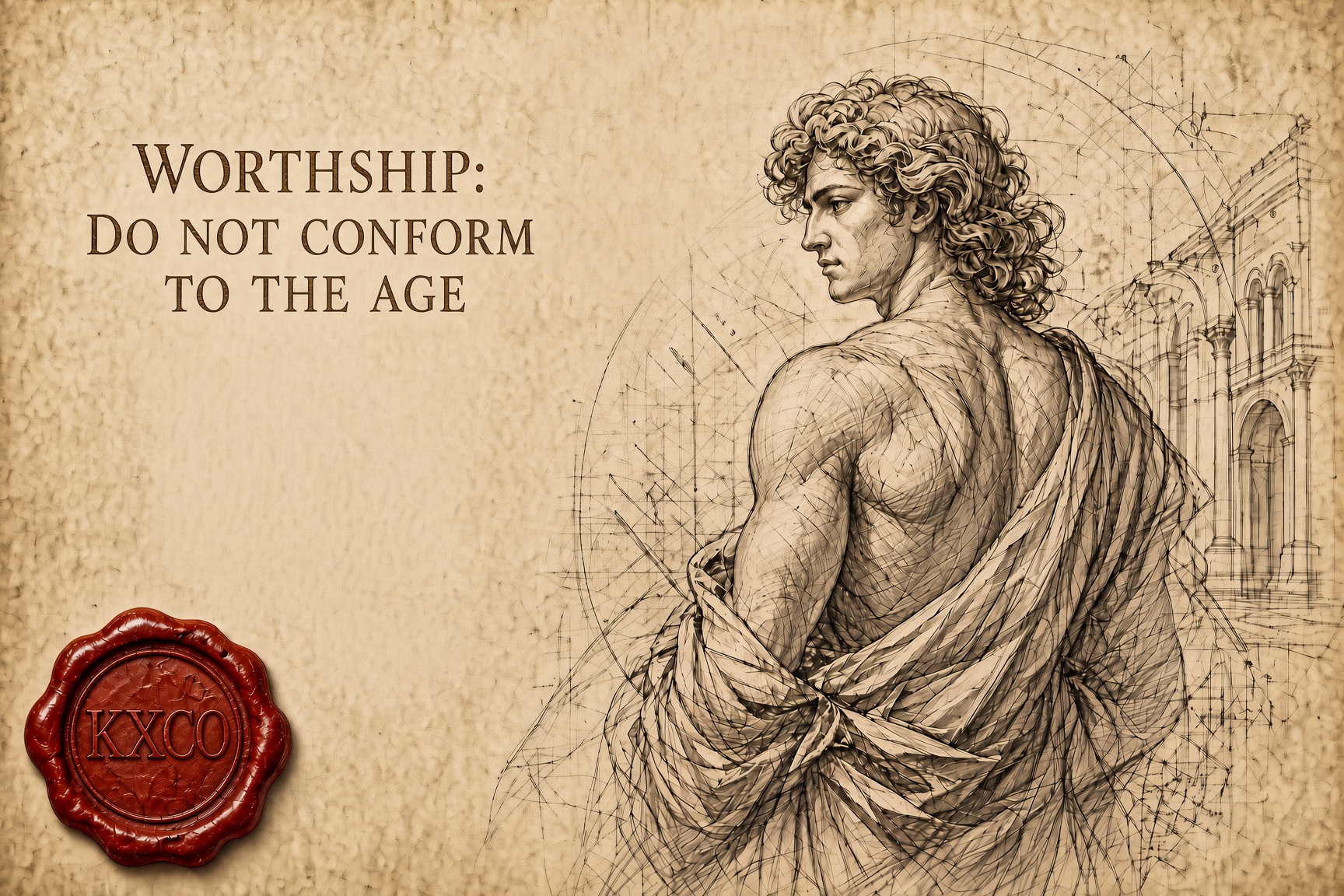
Worthship: Do Not Conform to the Age
Worthship is the older English word for worship, and it means to ascribe worth. Bishop Robert Barron preached Romans 12 on 30 August. This essay follows the text into the prison letters, and puts two questions to a graph: do the four readings of that Sunday agree, and was Paul free or in chains when he wrote about despair?
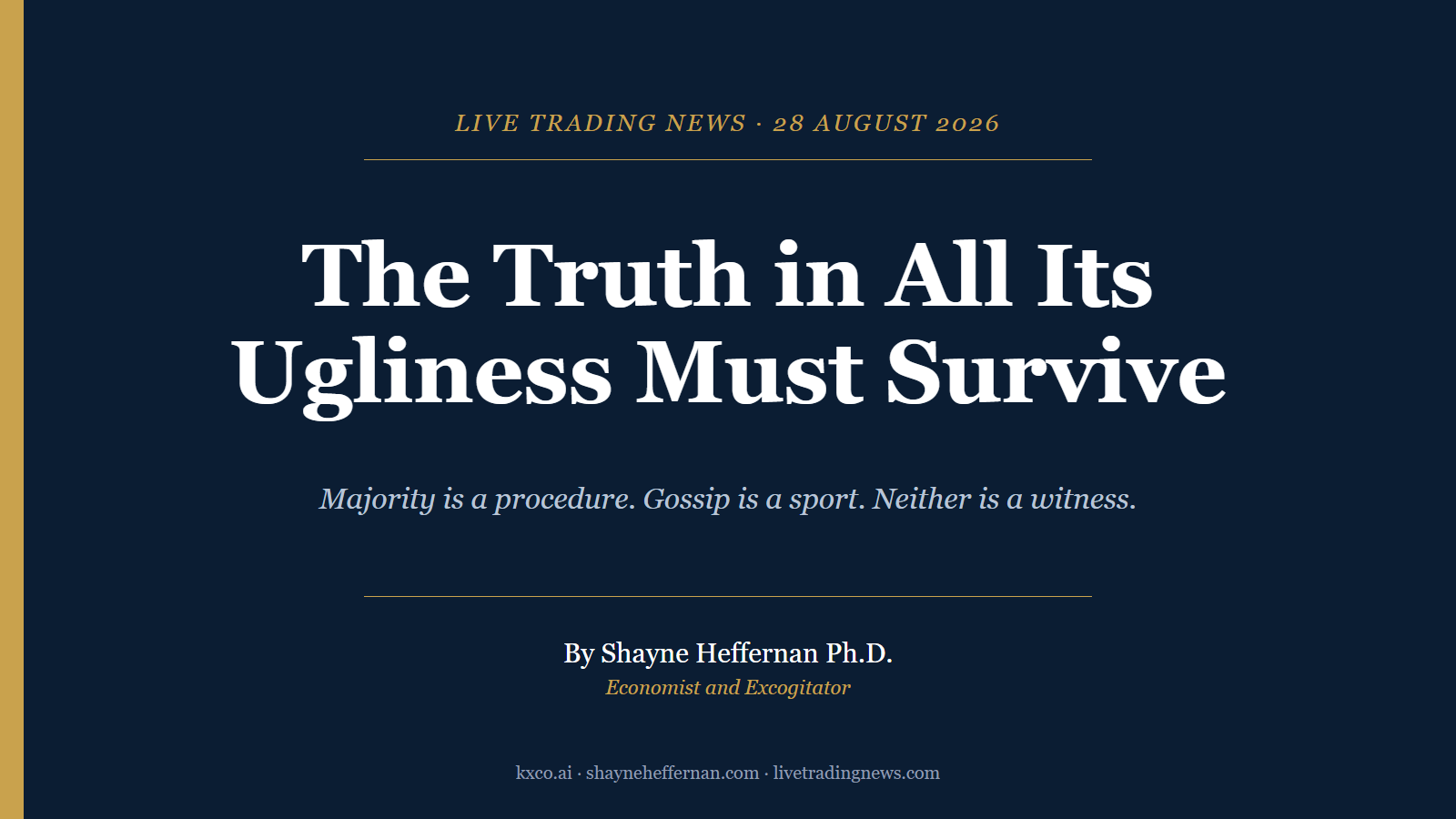
The Truth in All Its Ugliness Must Survive
A majority vote does not determine the truth. Consensus is a mood, gossip is a sport, and a model will write the pretty version for free. Why the ugly number has to survive, why a record beats a dashboard, and what KXCO was built to keep standing when the room changes its mind.

Don't Be the Best, Be the Only: Winning in an AI World
AI is repricing competence downward. What it cannot reproduce is a life. The case for remaining non-fungible, why friction still produces the best ideas, and what it means to build AI systems that keep the human intellect in them.
Every story, signed and delivered.
Subscribe to the kxco channel and get the headline, the AI-written key takeaways, and the chain-anchor link the moment we publish. Audio versions and per-ticker subscriptions arrive in the next iteration.