
Is Ethereum a Security
Whether Ethereum is a security is a complex legal question that has not yet been definitively answered. The Securities and Exchange Commission (SEC) has not yet declared Ethereum to be a security, but it has said that it is "examining" whether certain digital assets, including Ethereum, are securities.
There are a number of factors that the SEC considers in determining whether an asset is a security. These factors include whether the asset is an investment of money, whether it is offered and sold with the expectation of profits, and whether it is subject to the managerial or entrepreneurial efforts of others.
Ethereum can be argued to be a security under some of these factors. For example, Ethereum can be purchased with the expectation of profits, and its value is largely dependent on the efforts of others, such as the Ethereum developers and miners. However, Ethereum also has some characteristics that make it different from traditional securities. For example, Ethereum is not a debt instrument, and it does not represent ownership in a company.
Ultimately, whether Ethereum is a security is a decision that will be made by the courts. However, the SEC's recent actions suggest that it is likely to take a more aggressive approach to regulating digital assets. This could have a significant impact on the Ethereum ecosystem, as well as the broader cryptocurrency market.
Here are some of the arguments for and against classifying Ethereum as a security:
Arguments for
Ethereum is an investment of money.
Ethereum is offered and sold with the expectation of profits.
Ethereum is subject to the managerial or entrepreneurial efforts of others.
Arguments against
Ethereum is not a debt instrument.
Ethereum does not represent ownership in a company.
Ethereum is decentralized.
Ethereum has a long history of use and adoption.
AI is the Neat Handwriting of the Illiterate
A model in the hands of someone who has read the filing and walked the plant is a clerk. The same model, speaking for someone who has done neither, is a disguise. On AI slop, phantom citations and factslop, why finish stopped being evidence of work, and the containment layer KXCO built so a machine cannot speak as the institution until a source is attached.
Worthship: Do Not Conform to the Age
Worthship is the older English word for worship, and it means to ascribe worth. Bishop Robert Barron preached Romans 12 on 30 August. This essay follows the text into the prison letters, and puts two questions to a graph: do the four readings of that Sunday agree, and was Paul free or in chains when he wrote about despair?
The Truth in All Its Ugliness Must Survive
A majority vote does not determine the truth. Consensus is a mood, gossip is a sport, and a model will write the pretty version for free. Why the ugly number has to survive, why a record beats a dashboard, and what KXCO was built to keep standing when the room changes its mind.
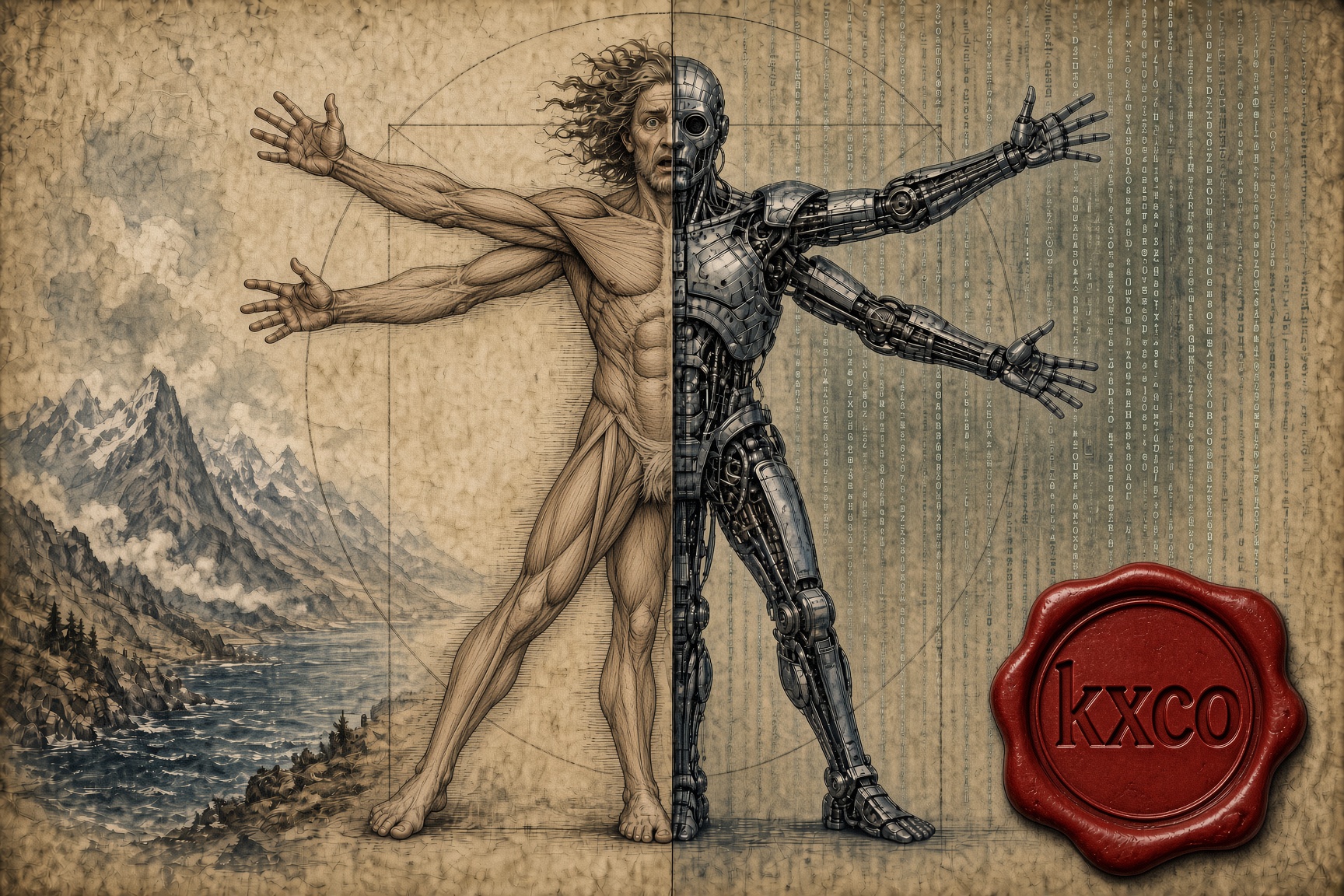
Don't Be the Best, Be the Only: Winning in an AI World
AI is repricing competence downward. What it cannot reproduce is a life. The case for remaining non-fungible, why friction still produces the best ideas, and what it means to build AI systems that keep the human intellect in them.
Every story, signed and delivered.
Subscribe to the kxco channel and get the headline, the AI-written key takeaways, and the chain-anchor link the moment we publish. Audio versions and per-ticker subscriptions arrive in the next iteration.