
Inflation: No Rate Cut Coming
US Inflation Concerns Prompt Fed Caution
The path to bringing inflation down to the central bank's 2% target will be "longer than expected," according to Federal Reserve Chair Jerome Powell's indications on Tuesday, pointing to a postponed schedule for rate decreases.
Powell said that recent inflation readings have not shown the intended development, highlighting a need for ongoing restrictive policy measures, during a speech on the Canadian economy in Washington.
The economy is suffering from the production of too much money.
Gold: Inflation typically leads to an increase in demand for gold as a hedge against currency devaluation and purchasing power erosion. Historically, gold has been viewed as a store of value during periods of high inflation, making it an attractive investment option. Rising inflation often correlates with higher gold prices, as investors seek safe-haven assets to protect their wealth.
Stocks: Inflation can have mixed effects on stocks, depending on various factors such as the industry, company fundamentals, and overall economic conditions. Companies with strong pricing power and the ability to pass on increased costs to consumers may fare better during inflationary periods. However, rising inflation can also lead to higher interest rates, which may increase borrowing costs for companies and dampen consumer spending, negatively impacting corporate earnings and stock prices.
USD (US Dollar): Inflation typically weakens the purchasing power of a currency, leading to a decline in its value relative to other currencies. A depreciating USD can result from inflationary pressures, as investors seek alternative currencies or assets to preserve their wealth. Central banks may respond to inflation by tightening monetary policy, which can support the USD in the short term but may have long-term implications for its value.
Bitcoin: Bitcoin is often viewed as a hedge against inflation, similar to gold, due to its limited supply and decentralized nature. During periods of high inflation or economic uncertainty, investors may allocate funds to Bitcoin as a store of value and a means of diversification. However, Bitcoin's price volatility and speculative nature can make it susceptible to market sentiment and broader macroeconomic factors, including inflation expectations.
Powell first suggested that rate cuts may occur later in the year in remarks that were made just two weeks ago. This change in position is a departure from that. But in his most recent remarks, he did not promise anything or make any projections about future rate decreases.
Powell stressed that before thinking about loosening policy, there has to be more assurance that inflation will move sustainably toward the 2% objective. He mentioned one important measure for tracking inflation trends as the Personal Consumption Expenditures Price Index (PCE), which does not include volatile food and gas costs.
Concerns on Wall Street have increased in response to the most recent inflation data, especially after several months of Consumer Price Index (CPI) readings that were higher than anticipated. In March, the CPI increased 3.5% over the previous year, which surprised economists and increased market jitters.
Traders' initial expectations of a June rate cut have been revised downward, with a strong likelihood that the Fed will stick with its current position in June and may look into cutting rates later in the year.
The Fed's cautious strategy is being implemented against a backdrop of conflicting economic indications. The labor market has been resilient, and consumer spending is still strong as seen by the positive retail sales data for March, even though inflation is still a worry.
Fed Vice Chair Philip Jefferson echoed Powell's remarks when he stressed the significance of closely observing inflation developments. He emphasized how uncertain the economic future is and made the argument that a long-term period of restrictive policy measures would be necessary if there is a persistent inflationary environment.
Investors are eagerly watching any signs regarding future monetary policy decisions as the Fed works through the difficulties of inflationary pressures and economic indicators. The changing economic environment highlights the difficulties faced by policymakers in striking a balance between the goals of economic expansion and inflation containment.
AI is the Neat Handwriting of the Illiterate
A model in the hands of someone who has read the filing and walked the plant is a clerk. The same model, speaking for someone who has done neither, is a disguise. On AI slop, phantom citations and factslop, why finish stopped being evidence of work, and the containment layer KXCO built so a machine cannot speak as the institution until a source is attached.
Worthship: Do Not Conform to the Age
Worthship is the older English word for worship, and it means to ascribe worth. Bishop Robert Barron preached Romans 12 on 30 August. This essay follows the text into the prison letters, and puts two questions to a graph: do the four readings of that Sunday agree, and was Paul free or in chains when he wrote about despair?
The Truth in All Its Ugliness Must Survive
A majority vote does not determine the truth. Consensus is a mood, gossip is a sport, and a model will write the pretty version for free. Why the ugly number has to survive, why a record beats a dashboard, and what KXCO was built to keep standing when the room changes its mind.
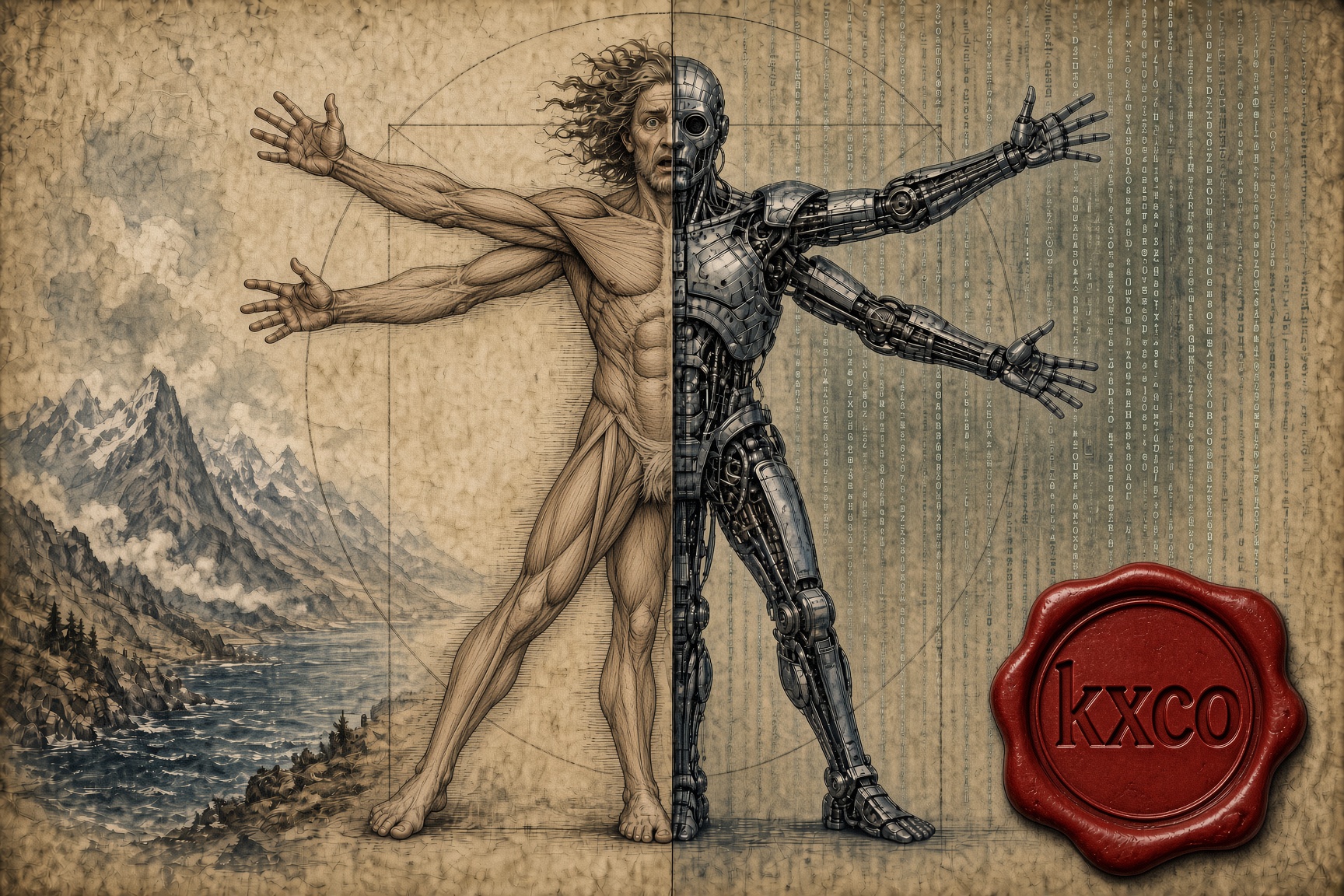
Don't Be the Best, Be the Only: Winning in an AI World
AI is repricing competence downward. What it cannot reproduce is a life. The case for remaining non-fungible, why friction still produces the best ideas, and what it means to build AI systems that keep the human intellect in them.
Every story, signed and delivered.
Subscribe to the kxco channel and get the headline, the AI-written key takeaways, and the chain-anchor link the moment we publish. Audio versions and per-ticker subscriptions arrive in the next iteration.