
In 1686 Chevalier de Chaumont Arrived in Thailand
The first French ambassador to Thailand was the Chevalier de Chaumont. He was appointed by King Louis XIV in 1685 and arrived in Siam (as Thailand was then known) in 1686. Chaumont's mission was to establish diplomatic relations between France and Siam, and to promote trade between the two countries.
Chaumont was a skilled diplomat and quickly won the trust of the Siamese king, Narai. He helped to negotiate a number of trade agreements between France and Siam, and he also played a role in the construction of the first French embassy in Bangkok.
Chaumont's mission was a success, and it helped to lay the foundation for the strong relationship between France and Thailand that exists today. He is remembered as one of the most important figures in the history of Franco-Thai relations.

Early life and career
The Chevalier de Chaumont was born in 1639 in the French province of Champagne. He was a member of a noble family, and he received a good education. Chaumont entered the French army at a young age, and he served in a number of campaigns. He was also a member of the French diplomatic corps, and he served in a number of countries, including Russia and Turkey.
Appointment as ambassador to Siam
In 1685, King Louis XIV appointed Chaumont as the first French ambassador to Siam. Chaumont was a popular choice for the position, and he was well-respected by the Siamese king, Narai.
Mission to Siam
Chaumont arrived in Siam in 1686, and he was immediately welcomed by the Siamese king. Chaumont's mission was to establish diplomatic relations between France and Siam, and to promote trade between the two countries.
Chaumont was a skilled diplomat, and he quickly won the trust of the Siamese king. He helped to negotiate a number of trade agreements between France and Siam, and he also played a role in the construction of the first French embassy in Bangkok.
Success of Chaumont's mission
Chaumont's mission was a success, and it helped to lay the foundation for the strong relationship between France and Thailand that exists today. He is remembered as one of the most important figures in the history of Franco-Thai relations.
Death
Chaumont died in Bangkok in 1690. He was buried in the French cemetery in Bangkok.
AI is the Neat Handwriting of the Illiterate
A model in the hands of someone who has read the filing and walked the plant is a clerk. The same model, speaking for someone who has done neither, is a disguise. On AI slop, phantom citations and factslop, why finish stopped being evidence of work, and the containment layer KXCO built so a machine cannot speak as the institution until a source is attached.
Worthship: Do Not Conform to the Age
Worthship is the older English word for worship, and it means to ascribe worth. Bishop Robert Barron preached Romans 12 on 30 August. This essay follows the text into the prison letters, and puts two questions to a graph: do the four readings of that Sunday agree, and was Paul free or in chains when he wrote about despair?
The Truth in All Its Ugliness Must Survive
A majority vote does not determine the truth. Consensus is a mood, gossip is a sport, and a model will write the pretty version for free. Why the ugly number has to survive, why a record beats a dashboard, and what KXCO was built to keep standing when the room changes its mind.
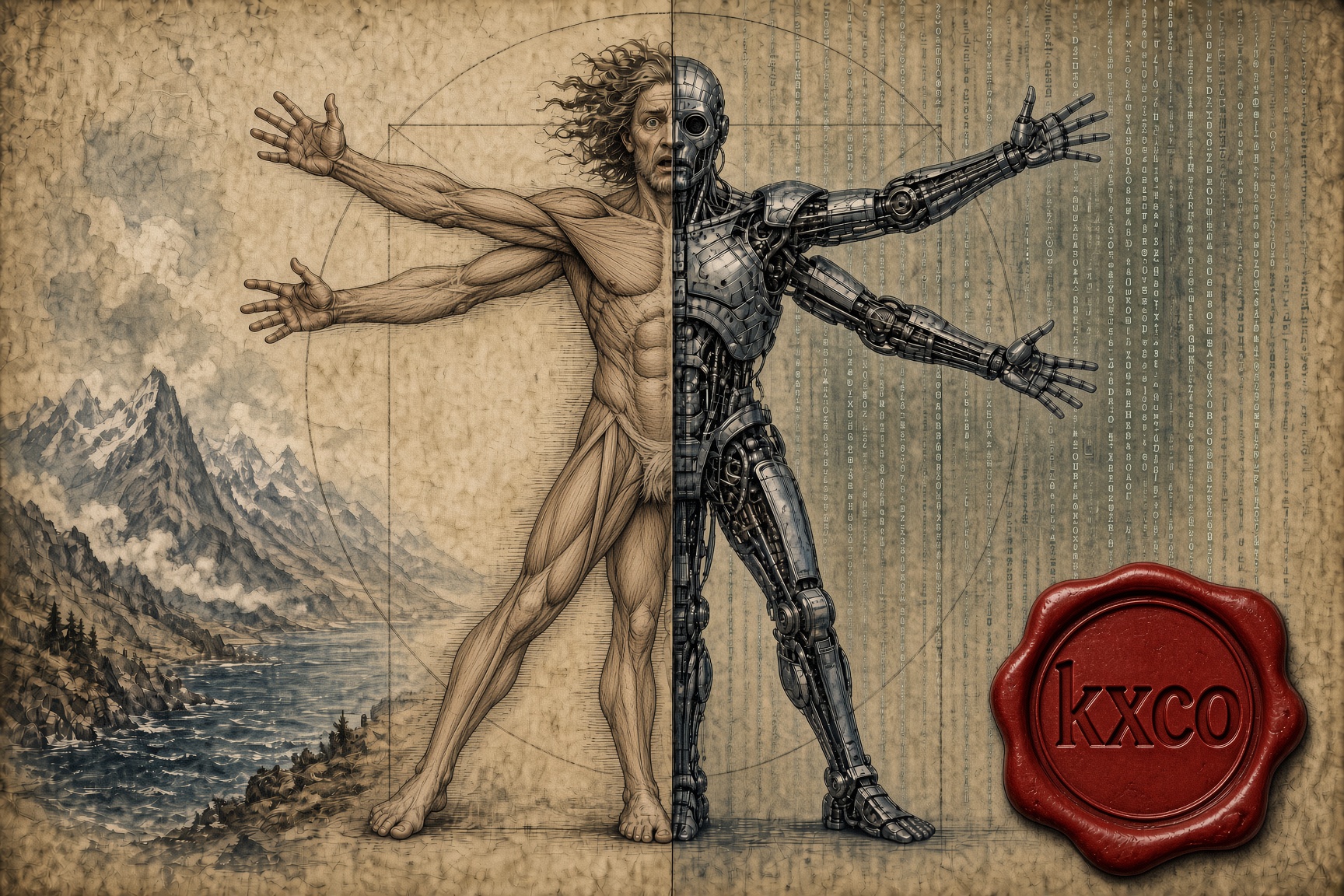
Don't Be the Best, Be the Only: Winning in an AI World
AI is repricing competence downward. What it cannot reproduce is a life. The case for remaining non-fungible, why friction still produces the best ideas, and what it means to build AI systems that keep the human intellect in them.
Every story, signed and delivered.
Subscribe to the kxco channel and get the headline, the AI-written key takeaways, and the chain-anchor link the moment we publish. Audio versions and per-ticker subscriptions arrive in the next iteration.