
Getting More Sleep Helps to Reduce Calorie Intake
#health #sleep #weight #obesity #food #calories #energy
"A lot of people struggle to find ways to reduce calorie intake to lose weight..."--Paul Ebeling
Experts say the ongoing obesity epidemic is for the most part due to an increase in calorie intake rather than insufficient exercise. However, a study on how having enough sleep can impact calorie intake in a real-world environment may change our perception of weight loss to some degree.
In a randomized study involving 80 overweight individuals between the ages of 21 and 40 years old, researchers revealed that those who consistently slept less than 6.5 hours per night could increase their duration of sleep by 1.2 hours a night on average after a personalized counseling session for sleep hygiene.
The treatment was meant to extend bed time duration to 8.5 hours, and the increased duration of sleep in comparison to controls also reduced the overall daily calorie intake of participants by an average of 270 calories.
Not only did the study examine the impact of extended sleep on calorie intake, but did so in a real-world environment with no control or manipulation over the dietary habits of the participants.
The individuals participating in the study got to sleep in their own beds, wearable devices were used for monitoring sleep, and a normal lifestyle was otherwise adhered to with no guidelines on exercise or eating plan.
Researchers objectively tracked the calorie intake of the individuals by relying on an approach called “doubly labeled water” and energy store changes. This urine-based test entails an individual consuming water in which both the oxygen and hydrogen atoms have been substituted for naturally occurring easy-to-trace stable isotopes. This is regarded as the gold standard for the objective measuring of daily energy expenditure in a real-world environment.
Individuals increasing their duration of sleep could reduce their daily calorie intake by 270 calories on average, which would subsequently result in approximately 26 lbs., or 12 kg, of weight loss over 3 years if maintained.
Even with no other lifestyle change recommendations, most individuals had a large reduction in how much they consumed, with some individuals consuming as much as 500 daily calories less.
Although this was not a weight-loss study, even within just 2 weeks a reduction in calorie intake and a negative energy balance was demonstrated. If healthy sleep habits were to be maintained over a longer time, this would eventually result in clinically significant weight loss.
A lot of individuals are struggling to find ways to reduce calorie intake to lose weight, and just sleeping more might help to reduce it considerably.
Have a prosperous day, Keep the Faith!

Frequencies and Thinking
Thinking is not a metaphor sitting on top of frequency. It is frequency, organised, across four layers that are electrical, chemical, physical and biological. A companion to The Invisible Symphony that ranks frequency pollution by the quality of the human data behind it, noise first and radiofrequency third, then turns to the part you control: what education, exercise, blood pressure, hearing, sleep, diet and purpose have actually proved about cognitive longevity.

The Invisible Symphony: Frequency Pollution and Human Health
We have engineered a world that is out of tune with our own biology. Here is the evidence on electromagnetic and acoustic pollution, the frequencies that put the nervous system back together, and a practical detox you can start this week.
Energy IS the New Currency
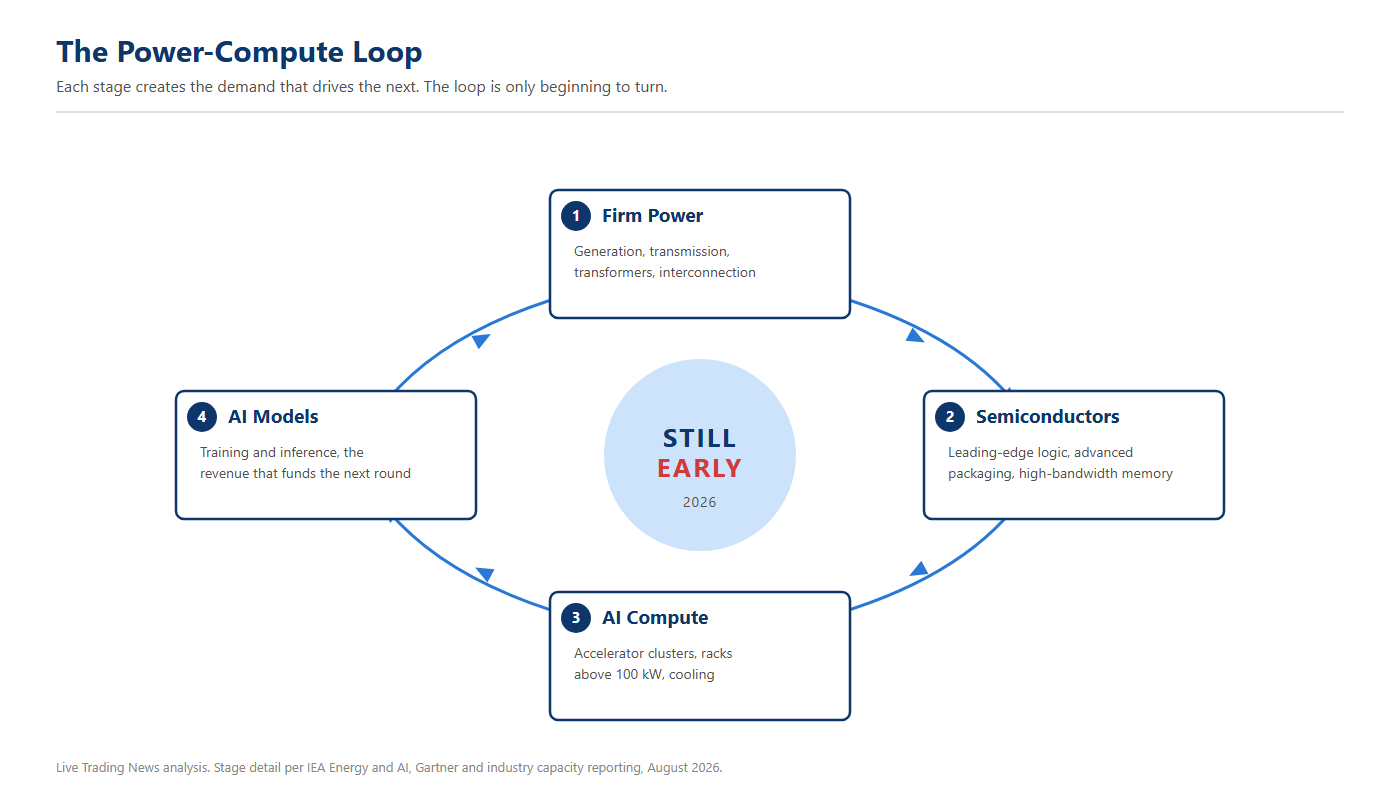
Elon Musk said energy would become the de facto currency. He was describing a physical constraint, not a metaphor. Firm power delivered to the rack is now the limiting reagent in the AI build-out, and roughly 158 GW of data-centre capacity still has to be energised by 2030.

Biohacking: The Science of Optimizing Longevity
An evidence-led, optimistic tour of biohacking: what it is, why the science is sound, and how the movement is converging with clinical longevity medicine of the kind practised at Bangkok's Target150.
Every story, signed and delivered.
Subscribe to the kxco channel and get the headline, the AI-written key takeaways, and the chain-anchor link the moment we publish. Audio versions and per-ticker subscriptions arrive in the next iteration.