
The Quantum-AI Convergence Is Real. The Quantum Stocks Aren't the Trade.
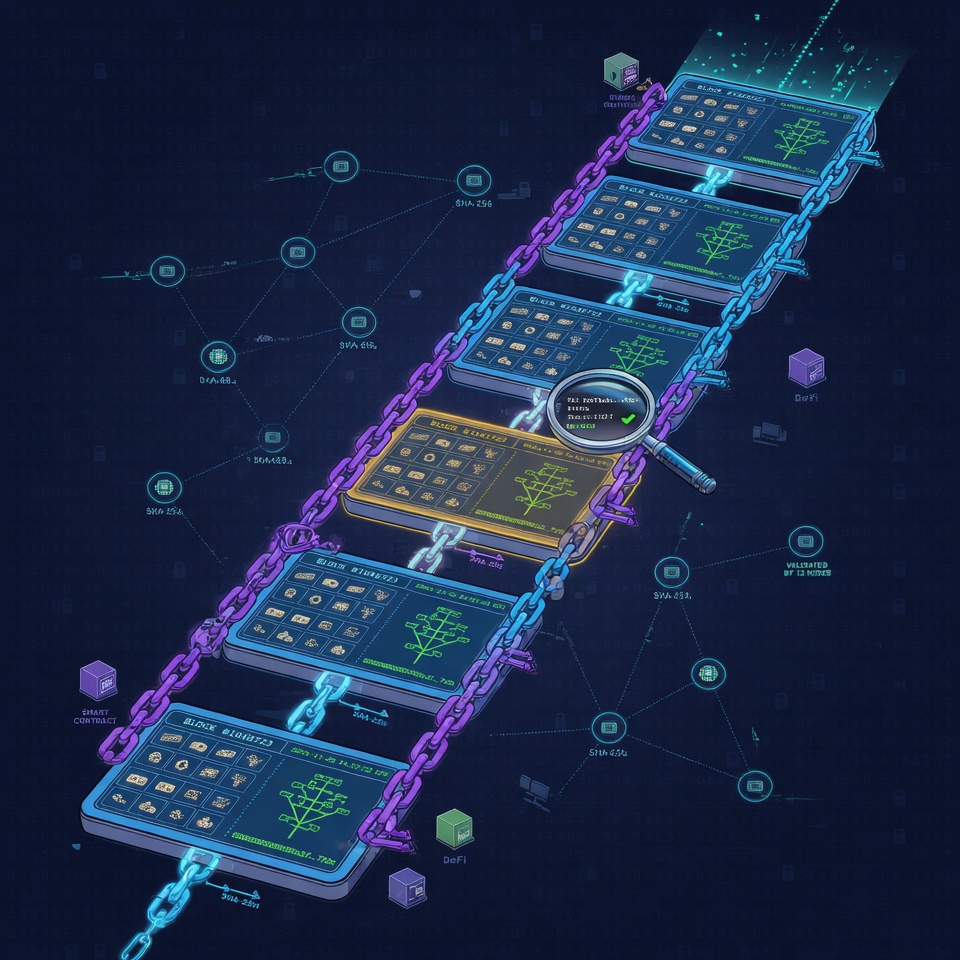
KXCO view on where the capital is actually moving in 2026 — and why most retail money chasing IonQ and Rigetti is buying the wrong end of the story.
For most of the last decade, the quantum-computing pitch sounded the same in every investor deck: a hockey-stick chart, a vague reference to "exponential speedup," a slide on Shor's algorithm breaking RSA, and a comparison to where the internet was in 1995. The chart was real. The 1995 comparison was not. Quantum spent the 2010s and most of the early 2020s as a science project on a public-company balance sheet, dressed up for capital markets that did not understand what they were buying.
That has changed in 2026. Not because quantum suddenly works — it doesn't, not in any sense an enterprise CIO would recognise as production-ready — but because the underlying physics has crossed a series of thresholds that change the investability of the sector. Google's Willow chip, in a paper that landed in early 2026, became the first system to show that adding more physical qubits to a logical qubit actually reduces the logical error rate. That is the "below-threshold" result quantum-error-correction theorists have chased for thirty years. IBM, in November 2025, shipped its 120-qubit Nighthawk processor and put a written stake in the ground: verified quantum advantage by the end of 2026, with a 10× speedup in error-correction decoding achieved a year ahead of its own roadmap. China's Origin Quantum, in May 2026, launched the Wukong-180 — a 180-computational-qubit superconducting machine, fourth-generation domestic silicon, no US components. Three weeks earlier they bolted AI co-processing onto its older 72-qubit sibling.
The headlines look like a race. They are not a race in the way the cable-news framing suggests. They are the sound of a sector finishing its physics homework and walking, slightly unsteadily, into the room where money is allocated. The question for an investor in May 2026 is not whether quantum is real — that argument is over — but where, in a stack that now includes hardware, error correction, control systems, AI co-processors, operating systems, post-quantum cryptography, and a fast-growing software middleware layer, the durable economic rents are going to land.
Our house view is unambiguous, and it cuts against the prevailing retail trade. The pure-play quantum names — IonQ, Rigetti, D-Wave, QUBT — are not the cleanest expression of this thesis. The cleanest expressions are NVIDIA at the hybrid layer, the soon-to-IPO Quantinuum at the integrated systems layer, and the post-quantum-cryptography migration that every regulated financial institution is now legally obliged to begin. The pure-plays will trade violently on news flow and will produce winners, but the risk-reward there is closer to single-asset biotech than to platform tech. We will explain why.
The American stack, ranked by where the rent accrues
Start with the part of the market most people see. IBM, Google, and Microsoft are the three names that frame the popular narrative, and they sit in very different positions.
IBM has spent fifteen years patiently shipping qubit counts on a public roadmap, and is now monetising what that roadmap built. The November 2025 announcement of Nighthawk, Loon, and the Kookaburra modular processor (scheduled for the back half of 2026) is more important than its press coverage suggested. Loon demonstrates, on real hardware, all the elements of fault-tolerant computing with a 10× decoder speedup. Kookaburra is the first IBM processor designed to store quantum information in a qLDPC memory and process it on an attached logical processing unit — the closest analogue to a working RAM/CPU split that the field has produced. IBM is not selling time on a science experiment any more; it is selling a roadmap that customers can build production-grade workloads against. Its quantum business is still small relative to the rest of the company, which means a single dollar of quantum revenue does very little to the stock. But it also means quantum is funded by Watson, by mainframe maintenance contracts, and by the rest of a $60 billion services business that does not blink at $1 billion a year of quantum R&D. IBM's quantum optionality is, in financial terms, free.
Google's position is harder to express. Willow's below-threshold result is genuinely the most important academic milestone in the sector since 2019's "supremacy" claim, and arguably more important because it points at engineering scalability rather than a one-off benchmark. But Google is structurally allergic to monetising quantum the way IBM does. There is no Google Quantum cloud business of any commercial size; the chip is shown off, the paper is published, the team rotates back to research priorities. Alphabet's stock is not a quantum trade. It is an AI trade with a free option attached. Treat it that way.
Microsoft is the awkward case. The Majorana 1 chip — announced February 2025 and presented as a topological-qubit breakthrough that scales to a million qubits on a single die — has been challenged hard by parts of the physics community. Nature's editors noted explicitly that the published results "do not represent evidence for topological modes." Independent reviewers in HPCwire and Physics in mid-2025 raised further questions. Microsoft's response has been to double down: expanding the Lyngby lab in Denmark, opening the 2026 Quantum Pioneers Program, and pushing its DARPA-aligned fault-tolerant prototype milestone. Our house view is that the topological-qubit thesis remains a real bet but a binary one. If the physics works, Microsoft owns the most scalable architecture in the field. If it does not, the entire Azure Quantum strategy is back to integrating other people's hardware. Microsoft stock should not be held for the Majorana outcome; it should be held for Azure, AI, and Office, with Majorana as an embedded warrant of unknown strike.
The fourth American name on this list is the one most quantum analysts still under-weight, and the one we think is the actual trade: NVIDIA. CUDA-Q, NVIDIA's quantum software platform, has gone from a curiosity in 2023 to the de-facto middleware layer in 2026. At GTC 2026 in March, NVIDIA unveiled NVQLink — a physical-layer integration that lets GPUs talk to quantum processors at the latency required for real-time error correction. Seventeen quantum hardware builders and nine national labs are listed as initial NVQLink partners. In April, NVIDIA released Ising, an open family of AI models purpose-built to handle qubit calibration and error-correction decoding — the two manual, labour-intensive bottlenecks that have made every quantum system before this one impossible to scale operationally.
This is the picks-and-shovels position. Every quantum system that scales past the noisy-intermediate stage needs classical GPU compute next to it. The error-correction decoder is itself a heavy classical workload. The hybrid AI-quantum stack — train a model on a GPU, hand a parameterised subroutine off to a QPU, return the result, integrate — is now the standard architecture for everything from drug-discovery startups to national-lab climate models. Quantinuum confirmed its NVIDIA integration in 2026. An NVIDIA-built decoder integrated into Quantinuum's Helios control engine improved logical fidelity by more than 3% on an already-low error rate. That is the kind of incremental improvement that, once you understand how exponentially error compounds, materially changes what quantum systems can actually compute.
The trade implication is simple. If you believe quantum scales, you must also believe NVIDIA sells more GPUs to quantum customers in 2027 than it sold in 2025. The reverse is also true: if you don't believe quantum scales, the worst NVIDIA does is sell exactly as many GPUs to AI customers as it already sells. NVIDIA's quantum exposure is a free call option attached to the most expensive AI hardware monopoly on the public market. Try to construct a bear case for that combination on the back of a napkin.
The pure-play quantum stocks: revenue meets gravity
Then there is the part of the market most retail investors think of when they hear "quantum stocks." IonQ, Rigetti Computing, D-Wave Quantum, and Quantum Computing Inc (ticker: QUBT) traded as a basket through 2024 and most of 2025, with the kind of correlated volatility that signals undifferentiated retail flow rather than fundamental analysis. The Q1 2026 prints are the first real test of whether that basket can be valued individually.
IonQ delivered. Q1 2026 revenue: $64.7 million, up 755% year-over-year. Full-year 2025 came in at $130 million, a 202% increase over 2024. Management raised 2026 guidance from $225-$245 million to $260-$270 million. That is the first quantum-computing public company with a revenue line that an enterprise-software analyst can model without holding her nose. The trapped-ion architecture, long mocked as too slow to scale, is now the basis of a real commercial offering at the level of individual government and corporate contracts. The stock is still expensive on any rational forward multiple. But you can no longer dismiss IonQ as a science project. Inside the pure-play basket, this is the one to own.
Rigetti is the cautionary tale. Q1 2026 revenue of $4.4 million sounds like growth — until you note that full-year 2025 revenue was $7 million, down 34% from 2024. The 108-qubit Cepheus-1 system is genuine engineering progress; the commercial traction is not. Rigetti's market capitalisation is built almost entirely on optionality and on its position in the US national-quantum strategy. That optionality has value, but at current multiples it is being priced as if the optionality has already converted.
D-Wave is its own category. Annealing, not gate-based quantum, which means most of the academic milestones discussed above do not apply to it. The business has shown real bookings traction — Q4 2025 bookings of $33.4 million, up roughly 2,000% year-over-year — but full-year revenue is still $24.6 million and Q4 revenue actually fell 81% year-over-year. The booking-revenue gap will close one way or the other. Watch the next two quarters carefully. D-Wave is the only quantum public company with a viable claim to current commercial utility for a specific class of optimisation workloads. That is also why its narrative is the easiest to break if a single customer rotates out.
Quantinuum, the Honeywell-controlled majority-owned quantum unit, filed a confidential S-1 with the SEC on February 17, 2026. This is the IPO to wait for. Quantinuum has the most integrated stack of any of the pure-plays — trapped-ion hardware, the Helios control system, the H-series machines, the NVIDIA decoder integration — and a real revenue line behind a parent company that can absorb losses. When the S-1 goes public, model it carefully. There is a real chance it reprices the entire sector basket on the day of pricing.
China's parallel stack: not behind, just optimising for different things
Move east. The lazy framing, which you will see in most US financial press, is that China is "behind" the United States in quantum. The numbers do not support that framing, and more importantly, neither does the strategy.
The University of Science and Technology of China (USTC), the academic anchor of the entire Chinese effort, has been running two parallel quantum hardware programmes for more than five years. The photonic Jiuzhang series demonstrated boson-sampling quantum advantage in 2020 and successfully solved a sampling problem in one microsecond with Jiuzhang 3.0 in 2023. The superconducting Zuchongzhi series, the direct competitor to Google's Sycamore and IBM's Heron, surpassed 200 qubits by 2026. In March 2025, a USTC-led team established the world's longest intercontinental quantum-satellite link, 12,900 kilometres between Beijing and Stellenbosch, South Africa. That is a quantum-communications result, not a computing one, but it matters: it is operational infrastructure, deployed and working, of a kind no Western coalition has yet built.
USTC's spin-out, Origin Quantum, is the commercial layer. Origin Wukong, the 72-qubit superconducting processor launched in January 2024, attracted more than 20 million cloud visits from users in 145 countries in its first year. The fourth-generation control system released in 2025 supports more than 500 qubits. In April 2026, Origin bolted AI-computing capabilities onto Wukong, making it the first Chinese system to offer integrated quantum-AI workloads at production scale. In May, they shipped Wukong-180 — 180 computational qubits, plus 251 coupling qubits, all domestically produced silicon. The Wukong-180 announcement was bundled with a People's Daily English-language press push, which tells you that Beijing wants this visible.
But the most strategically important Chinese quantum event of 2026 happened in February, and it was a software release. On February 26, Origin Quantum open-sourced Origin Pilot, the first publicly downloadable quantum-computer operating system. Anyone on the planet can now run the OS layer that controls a Chinese-architected quantum stack. IBM, Google, Microsoft, and the US national labs have not produced anything analogous, and the strategic implications are larger than they may appear. An open operating system invites developer ecosystems. Developer ecosystems create lock-in. Lock-in survives export controls.
Baidu's quantum group is a smaller story than the headline numbers suggest, focused mostly on cloud, software, and machine-learning applications for Chinese enterprises rather than on hardware milestones. Alibaba's quantum-cloud business is more dormant than it was three years ago, having pulled back as Beijing centralised quantum strategy under USTC and Origin. The picture is one of state-coordinated specialisation: USTC owns the physics, Origin owns the commercial layer, the cloud players resell access. Compared to the US picture — IBM, Google, NVIDIA, Microsoft, IonQ, Rigetti, Quantinuum, D-Wave, and a dozen others all competing on overlapping fronts — the Chinese picture is more disciplined. That is not the same as being more advanced. It is a different bet on how to industrialise an emerging technology.
The Chinese government's 15th Five-Year Plan (2026-2030) explicitly lists quantum as one of six strategic sectors, alongside hydrogen and nuclear fusion, biomanufacturing, brain-computer interfaces, embodied AI, and 6G. Estimated cumulative Chinese national quantum spend over the past decade is north of $15 billion. That is roughly equivalent to the cumulative US federal commitment under the National Quantum Initiative, but it understates the Chinese effort because it does not capture provincial spending, state-owned-enterprise procurement, or the value of human-capital allocation through the Chinese Academy of Sciences. The right way to read the comparison is that the two countries are spending broadly the same and getting broadly comparable hardware results, with the US still ahead on error-correction sophistication and China ahead on operational infrastructure and software-layer accessibility.
Export controls: the policy is working, except where it isn't
Washington has spent the last three years building an export-control wall around quantum. In October 2024 the Commerce Department's BIS published interim controls covering quantum computers, components, materials, cryogenic systems, and the related software and technology. In January 2026 a final rule revised the licence-review policy for advanced computing exports to China and Macau. The technical thresholds are specific: systems with 34 or more fully controlled qubits and meeting certain error-rate parameters are restricted; cryogenic systems with cooling power at or above 600 µW below 0.1 K are flagged. Most of the global quantum-research community — a coalition of 38-plus "like-minded" countries — is now operating under coordinated licence-exception rules. China is the named exception.
In January 2026 the House passed the Remote Access Security Act 369-22, an attempt to extend export controls to cloud access. The bill targets the loophole through which China Telecom's Tianyan quantum-cloud platform attracted more than 37 million user visits from 60+ countries. Whether the Senate moves it, and whether enforcement is operationally feasible against cloud workloads that look like ordinary international traffic, are open questions.
Our house view on the policy: the hardware-side controls are doing real work — they have slowed Chinese access to specific high-end components, particularly cryogenic and control-electronics inputs — but they have also accelerated the very thing they were meant to prevent. Origin Quantum's entire commercial pitch is now "sovereign supply chain." The release of Origin Pilot was a direct response to the closure of US-Chinese software collaboration channels. China has effectively been told it must build a parallel stack, and is building one. By 2028 the question will not be whether export controls slowed China; it will be whether they produced a competing standards layer that Western developers eventually have to interoperate with anyway.
This matters for investors because it changes the assumed total addressable market for US quantum players. The implicit base case in most Western analyst models is that the global quantum-cloud business will run on US-hosted infrastructure with Chinese workloads carved out. The realistic case is two parallel stacks with limited interoperability — closer to the SWIFT-versus-CIPS structure in payments than to a unified global cloud market. Companies that price as if they will sell to the whole world will, in practice, sell to about 70% of it.
The boring trillion-dollar story: post-quantum cryptography
There is one quantum-related theme on which the US-China rivalry is essentially settled, and it is the one most retail investors are ignoring.
NIST published its first three finalised post-quantum cryptography standards in August 2024, with a fourth expected this year. The NSA's Commercial National Security Algorithm Suite 2.0 mandates quantum-safe algorithms for national-security systems, with the first compliance deadline for new systems landing in January 2027 — less than nine months away. NIST has signalled that quantum-vulnerable algorithms will be deprecated by 2030 and disallowed by 2035. The European NIS2 framework is pushing member states to publish national PQC strategies, run cryptographic inventories, and launch pilot projects by end-2026. The Basel Committee and the European Central Bank are issuing quantum-risk guidance to banks. The UK's NCSC has its own migration timelines.
The financial-sector exposure is unique. SWIFT messaging, Fedwire, ACH, payment-card processing, and algorithmic trading systems all rely on quantum-vulnerable cryptography. Migration cannot happen unilaterally — banks have to coordinate with counterparties, central banks, processors, and vendors. The "harvest now, decrypt later" attack pattern, in which adversaries are presumed to be capturing encrypted financial traffic today on the assumption that future quantum computers will decrypt it, has shifted the migration imperative from "eventually" to "now." There is no large bank in the developed world that does not have a PQC project running, and most have not budgeted what it will actually cost. McKinsey's 2026 Quantum Technology Monitor calls this a "commercial tipping point" — the first year in which sustained capital allocation to quantum technology is being justified by near-term, non-speculative business cases.
The companies that win in PQC will not be the quantum-hardware names. They will be the cryptographic-infrastructure players: cybersecurity firms that own the migration tooling, hyperscalers (Microsoft, AWS, Google) that integrate PQC into their identity and key-management services, identity-and-access-management names like CyberArk and Okta, and a handful of specialists like SandboxAQ and PQShield. This is, in dollar terms, the largest near-term quantum-related capex line in the global economy, and it almost never makes the cover of the quantum-themed financial press because it does not have a hockey-stick chart attached.
It should. By 2030 cumulative PQC-migration spending across the regulated financial sector will outweigh cumulative spending on quantum computing hardware itself. The boring story is the trade.
How to position
Pull the threads together. The thesis stack, in order of conviction:
The highest-conviction quantum exposure is NVIDIA. CUDA-Q, NVQLink, and the Ising model family give it a structural position at the hybrid quantum-classical layer that is now becoming the default architecture. The downside is that you don't actually get a quantum exposure that is differentiated from the AI exposure you are already buying. The upside is that there is no scenario in which scaled quantum hurts NVIDIA. Hold it for the AI thesis and accept the quantum exposure as a free option.
The second-highest-conviction exposure is the Quantinuum IPO when it prices. The Honeywell-backed integrated stack is the strongest combination of hardware, control, and software in the field. Watch the S-1 filing carefully when it becomes public. Do not buy at the IPO price; let the inevitable first-week volatility wash out, then evaluate on the post-lockup setup.
Inside the existing public pure-plays, IonQ is the only one with revenue traction that justifies an enterprise-software framing. Rigetti, D-Wave, and QUBT remain trades for tactical capital, not core positions. Size them like single-asset biotechs: small, with explicit thesis-defining news catalysts, and stops you actually honour.
The post-quantum-cryptography migration is the most under-priced quantum theme in the public market right now. Look at SandboxAQ (still private but with strategic investors that telegraph eventual liquidity), PQShield, and the cybersecurity incumbents that will provide the cryptographic discovery and migration tooling. The hyperscalers — Microsoft, Google Cloud, AWS — all win on PQC integration too, but again, that is a small addition to a much larger thesis you are presumably already expressing.
Geographically, the China stack is largely uninvestable for US-based capital under the current export-control regime, but it is investable indirectly. Hong Kong-listed names with exposure to the Chinese AI-hardware supply chain — and, soon, the Chinese quantum-hardware supply chain — will get a re-rating as the 15th Five-Year Plan's quantum line items convert into procurement. That is a 2027-2028 trade, not a today trade, but it is one to start watching.
The trap to avoid is the basket trade. Treating quantum as a single thematic ETF, or buying IonQ, Rigetti, D-Wave, and QUBT in equal weights because they are "the quantum stocks," is the kind of strategy that worked in 2024 because the names moved together and is going to break in 2026 because they are no longer the same business. IonQ is becoming a revenue story. Rigetti is becoming a national-strategy optionality story. D-Wave is becoming a specific-workload niche story. They will not move in lockstep through 2026 the way they did through 2024.
Quantum has stopped being a science bet. It has become an engineering bet, layered on top of an industrial-policy bet, layered on top of a regulatory bet. Each layer has different winners. The retail-trade temptation is to keep treating it as one bet. Don't.

The Evil Legacy of the French Revolution
The French Revolution is still sold as the birthday of the modern world. The ledger does not match the posters. It seized the Church's land and floated its paper money on the seizure, hunted the priests who would not swear, defined the nobility as a moral enemy, and put in their place a political class accountable chiefly to itself. Four knowledge-graph exhibits trace who put the king and queen on the scaffold, and how the template left France.
Careful of the Prompts You Give Yourself
A prompt is not only what you type into a model. It is any sentence that gets inside you and starts issuing orders. Most of what we call goals were written by comparison, media, competition and now the model, and they arrive dressed as ambition. Shayne Heffernan maps how an imported sentence becomes a week, why a want should carry its source the way a Round Table claim does, and how to strip, lock and guard the objective that is actually yours.

KXCO is Enhanced Intelligence, Not Artificial
I never wanted artificial intelligence. I wanted enhanced intelligence, and they are not the same product. Artificial means the machine does the thinking and hands you the answer. Enhanced means I do the thinking, with more of my own mind in the room than I have ever had at one time. Forty years of reading, recallable in the second I need it. Patterns across law, credit, physics and markets that no specialist sees, because the useful ones sit between the fields rather than inside them.

The AI Safety Argument Is Being Held in the Wrong Room
The people who will be blamed for what AI does are not in the room where its safety is argued. A jailbreak escapes a policy. The failure that costs money is an action that escapes an owner, a payment sent or a record altered. Tokens are not authority. Intelligence got cheap and judgment did not, and there is no organ of standing you can copy into a model. Shayne Heffernan on the objection worth taking seriously, and the questions to take into a vendor meeting.
Every story, signed and delivered.
Subscribe to the kxco channel and get the headline, the AI-written key takeaways, and the chain-anchor link the moment we publish. Audio versions and per-ticker subscriptions arrive in the next iteration.