
Ferrari's New Coke Moment
The Luce is a $640,000 fiasco that betrays everything the prancing horse stands for. Sound familiar?
Part of theRamblingsIn April 1985, Coca-Cola did something its executives were convinced was brilliant. They'd run 200,000 taste tests. The research was airtight. Consumers in blind panels preferred the new formula. The numbers said change. So they changed. Within 79 days, the company was in full retreat, rebranding the original formula as "Coca-Cola Classic" and quietly burying New Coke in the corporate graveyard of catastrophic decisions. The numbers, it turned out, had missed the whole point. People weren't just drinking Coke. They were drinking an identity.
Ferrari $RACE just did the same thing.
On May 25, 2026, Maranello unveiled the Luce — Italian for "light" — the company's first fully electric production car, a four-door, five-seat liftback sedan designed in collaboration with Jony Ive, the man who gave the world the iMac and the iPhone. It has 1,035 horsepower, four motors, a 122-kWh battery, 530 kilometres of WLTP range and a 0-62 mph time of 2.5 seconds. On paper, an engineering triumph. In reality, a PR catastrophe.
The price tag is €550,000 — roughly $640,000. By the following morning, Ferrari shares had fallen more than 8% in Milan trading, wiping out billions in market capitalisation. Luca Cordero di Montezemolo, the man who ran Ferrari for two decades and is as close to Italian automotive royalty as it gets, watched the reveal and went straight for the jugular.
"I only hope that someone removes the Prancing Horse from that car. There is a risk of destroying a myth, and I am deeply sorry about that."
— Luca Cordero di Montezemolo, former Ferrari president, speaking on the sidelines of a business conference in Rome
That is not a quote from a blogger or a Twitter contrarian. That is the man who shepherded Ferrari through some of its greatest years — the Michael Schumacher championships, the Enzo relaunch, the transformation of the brand into one of the most valuable luxury names on earth — telling the world he thinks Ferrari just made a mistake so severe it should hide the badge.
Italian Deputy Prime Minister Matteo Salvini, not a man known for pulling punches, wrote on X: "It looks nothing like a Ferrari. Is this supposed to be 'innovation'? Who knows what Enzo Ferrari would say."
The internet, meanwhile, required no prompting.
The Social Media Verdict
Within hours of the reveal, every automotive forum, Reddit thread and comment section from PistonHeads to Bored Panda was on fire. Here is a sample of what the car's new owners — the internet — had to say:
"A Ferrari designed entirely in airplane mode."
"If an Apple Store made a minivan and gave it trust issues."
"Oozes Waymo vibes. This is a robotaxi, not a Ferrari."
"Somehow worse than I could ever have imagined."
— TechRadar reader
"It's a Chinese knockoff Tesla with a Ferrari badge glued on."
— HotCars comments
"A luxury toaster. A very, very expensive luxury toaster."
— Multiple sources, widely shared
"This is the car Ferrari built for people who always secretly wanted a Honda Accord."
— PistonHeads forum
Jalopnik ran the headline: "Ferrari Insists New $640,000 Luce EV Is A Serious Car, Not An Elaborate Prank Like You All Assume." The fact that Ferrari needed to issue a statement clarifying the car was not a prank says everything you need to know about how the reveal landed.
What Jony Ive Got Wrong
Jony Ive is undeniably one of the great designers of the last 50 years. What he did for Apple changed the way the world thinks about the relationship between human beings and their objects. The rounded corners, the anodised aluminium, the brutal minimalism — it all worked because Apple was selling technology to people who wanted technology to feel warm and approachable.
Ferrari is not selling technology. Ferrari is selling mythology.
When you buy a Ferrari, you are not making a rational purchase. You are buying into a story that stretches from Enzo Ferrari's dusty workshop in Modena, through the screaming V12s of the 1960s, through Maranello's dominance of Formula One, through the F40, the Enzo, the LaFerrari. You are buying something that was made to make grown adults feel things they cannot explain. The sound alone — that mechanical howl that climbs through four octaves and hits you somewhere below the sternum — is part of the product.
The Luce is silent.
That is not inherently disqualifying — Ferrari's chairman John Elkann said "a Ferrari has never been defined by what powers it," and he has a point. But the silence has to be compensated for. The absence of the soundtrack demands something else to carry the emotional weight. It demands a design so visceral, so unmistakably Ferrari, that you feel it in your chest just looking at it. And what Jony Ive delivered instead was a sleek, aerodynamically optimised liftback that looks exactly like what happens when you ask the man who designed the iPhone to design a car.
The result has a drag coefficient of 0.254 Cd. It has a beautiful interior. It has vertical windshield wipers for aerodynamic cleanliness and turbine-style flat-disc wheels. It is every inch a Jony Ive product — rational, refined, relentlessly considered. And about as emotionally engaging as an iMac.
Back to 1985
The New Coke story is worth revisiting in full, because the parallel is almost uncomfortably precise.
Coca-Cola had been watching Pepsi eat its market share for 15 years. The Pepsi Challenge — that famous campaign where people took blind taste tests and chose Pepsi — had stung. Internally, Coca-Cola ran its own tests and got the same result. So the company did the logical thing: it improved the product. Nearly 200,000 taste tests confirmed that New Coke tasted better than old Coke and better than Pepsi.
The product was objectively superior by the metric they measured. But the metric was wrong.
"The simple fact is that all the time and money and skill poured into consumer research on a new Coca-Cola could not measure or reveal the depth and abiding emotional attachment to original Coca-Cola felt by so many people," a Coca-Cola executive admitted later. Consumers hoarded old Coke. They staged protests. One man in San Antonio drove to a bottler and bought $1,000 worth of original formula. A Seattle resident filed a lawsuit to force the company to reinstate it. The backlash was so severe that Coca-Cola reversed course in 79 days, rebranding the original as Coca-Cola Classic to thunderous relief.
Now replace "Coca-Cola" with "Ferrari" and "formula" with "V12" and the story writes itself.
Ferrari's engineering team has almost certainly built a better car — faster, more tractable in traffic, quieter on a long drive, bigger inside, more practical in every measurable way than anything that bears the prancing horse badge before it. None of that matters to the people who are actually upset about it. They are not upset about the performance numbers. They are not upset about the range, or the charging speed, or the seating arrangement. They are upset because Ferrari changed the formula.
"Ferrari is not selling performance. Ferrari is selling mythology — and mythology cannot be updated."
The Market Knew First
The stock market, which doesn't trade on sentiment but prices it ruthlessly, rendered its verdict without ambiguity. Ferrari's Milan-listed shares fell 8.4% in the session following the reveal, wiping roughly €3 billion from the company's market capitalisation. The New York-listed shares dropped 5.1%. In a market that had been broadly constructive, this was not noise. This was a verdict.
Analysts were divided, but the bear case was simple: Ferrari's pricing power — perhaps the most extraordinary in the luxury goods industry — rests entirely on scarcity and brand purity. The company has spent decades carefully managing how many cars it makes, refusing to grow production to meet demand because the waiting list is part of the product. When Enzo Ferrari was asked why he never built more cars, he reportedly said: "We will always produce one less car than the market demands."
The Luce does not destroy that model on its own. One controversial car does not undo 75 years of brand equity. But the worry among investors and analysts is about what it signals — that Ferrari's leadership, under CEO Benedetto Vigna, a former semiconductor executive rather than a car man, is prioritising the electrification mandate over the purity of the badge. That the prancing horse is being ridden somewhere it has never been, and may not come back from.
Does It Matter That It's Brilliant?
Here is the uncomfortable truth: the Luce is probably a magnificent machine. Four independent permanent-magnet motors. Rear-biased torque vectoring derived from the F80 supercar programme. An active suspension that modulates at each wheel in ways that a combustion car physically cannot replicate. Coach doors that swing open electronically. An interior that Jony Ive designed as a direct rejection of the touchscreen hellscapes that afflict every other car on sale — actual physical switches, toggles, anodised aluminium, a clock with real hands.
The right rear-paddle system — where you click through increasing "power levels" rather than gear ratios — is a genuinely clever attempt to give an EV some of the rhythm and involvement of a manual gearbox. Ferrari's global head of product marketing, Emanuele Carando, told journalists before the reveal: "The reaction we're going to have among our customer base is going to be very much mixed. People will love it, and people will hate it." At least they saw it coming.
But Coca-Cola also ran 200,000 taste tests. The product was better. They had data. They had numbers. They were still catastrophically wrong.
What Happens Next
Coca-Cola's New Coke moment turned out fine, in the end. Sales of Coca-Cola Classic surged after the reinstatement. Some conspiracy theorists even argued the whole thing was engineered — a masterstroke of manufactured nostalgia. It wasn't. It was a genuine, expensive mistake that happened to end with the company in a stronger position than before.
Ferrari might get the same reprieve, for a different reason. The Luce targets a buyer who does not currently own a Ferrari — the ultra-wealthy tech executive, the Silicon Valley partner, the family office client who wants the most expensive car money can buy but needs five seats and doesn't care about a V12. There is a real market for that car. The orders will come. And the car itself, when people actually drive it, may generate the kind of word-of-mouth that social media froth cannot replicate.
Ferrari has been here before. The FF — the first Ferrari with four-wheel drive, four seats, a shooting brake body and an estate-car boot — was derided as a heresy when it launched in 2011. It now has genuine cult status, because it turned out to be a brilliant car that expanded what a Ferrari could be rather than replacing what a Ferrari was. The Purosangue SUV faced similar backlash. It sells at a premium on the second-hand market.
But the FF kept the V12. The Purosangue kept the V12. The Luce took the engine away and handed the design brief to the man who made the Magic Mouse. That is a different order of magnitude.
"Coca-Cola brought back the original. Ferrari cannot bring back the sound."
The difference between New Coke and the Luce is not the mistake. It is the reversibility. Coca-Cola could uncork the old formula. Ferrari has built a car on a platform that is designed from the ground up to be electric. The badge is on the car. The deliveries start Q4 2026. The prancing horse is going to the races without an engine.
© LiveTradingNews. By Shayne Heffernan.
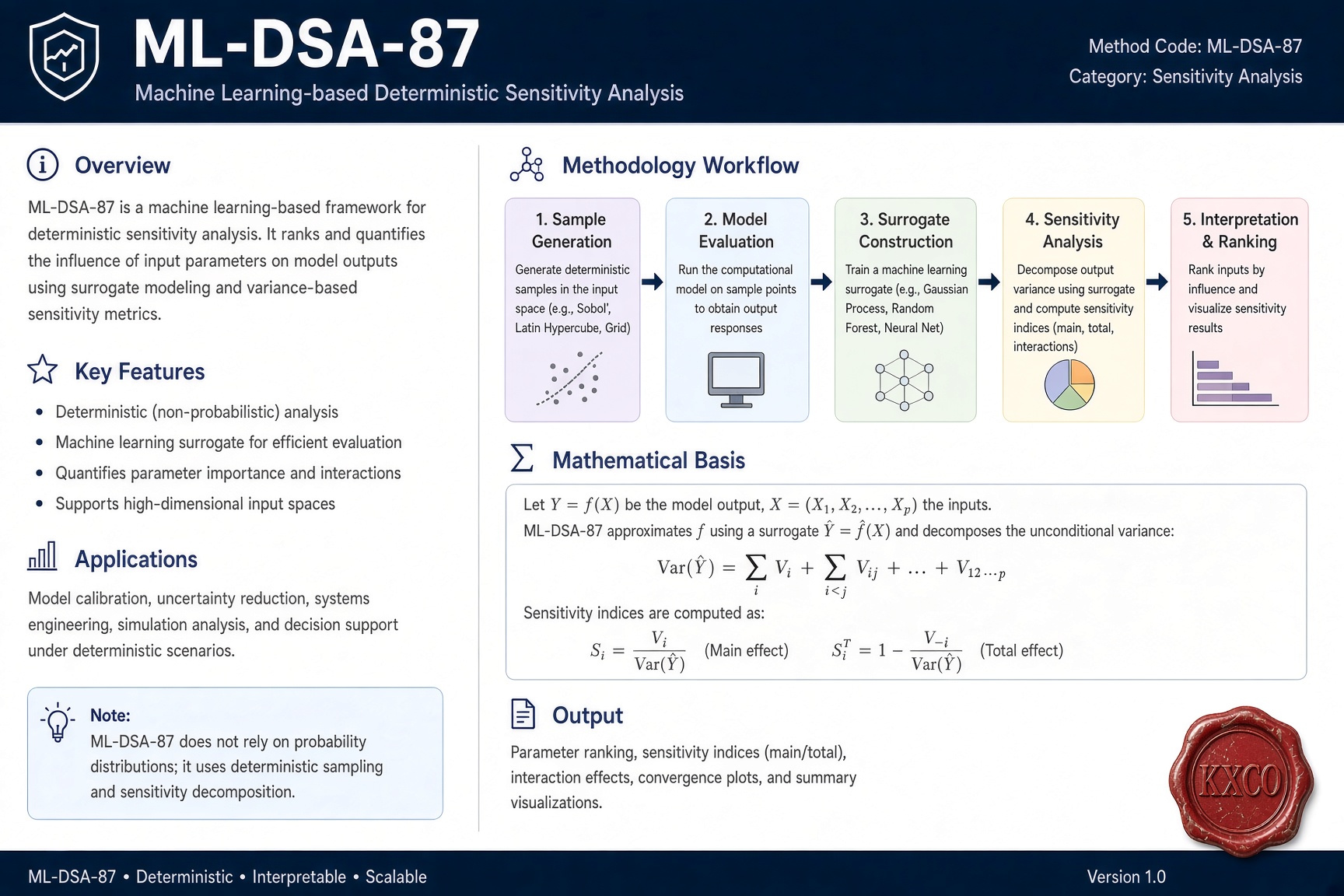
KXCO Now Verifies ML-DSA-87 in Consensus, the Signature Level Named by the NSA
On 6 October 2026 KXCO's chain began verifying ML-DSA-87 signatures as a rule of consensus, and the first ML-DSA-87 identity registered 28 seconds later. ML-DSA-87 is the category 5 level of NIST's FIPS 204, specified by the NSA for US national security systems and preferred by Australia's Information Security Manual. KXCO ships it for signing and for keys held in hardware, accepts it across its network and verifies it on chain, and anyone can check a verdict.
Weekly Market Outlook: Fed Minutes, Anthropic and OpenAI IPOs, Gold, Bitcoin, FX
The Fed raised rates in September and payrolls rose 29,000, per the Labor Department. This week the FOMC minutes, three Treasury auctions and a 10-year near 5.3 percent test that gap. Anthropic's IPO clock runs toward a 14 October investor day while OpenAI's chief executive says not 2026. Gold sits 26 percent below its record, bitcoin near $85,500, the dollar up three weeks running. Two knowledge graphs from KXCO's records map the IPO backers and the FDA board.
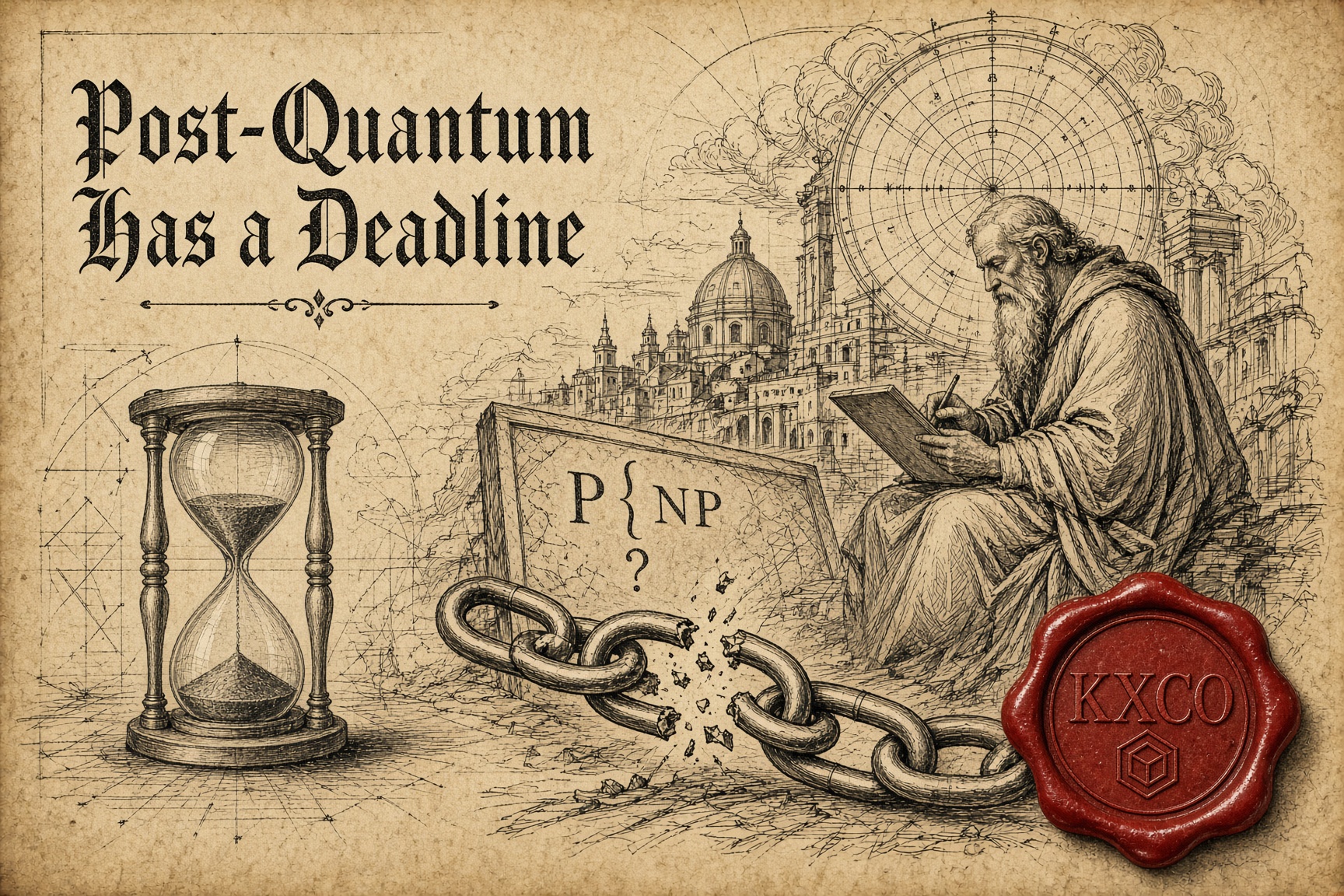
Post-Quantum Has a Deadline: 2030 for Keys, 2031 for Signatures
Executive Order 14412 gives federal high-value systems until 31 December 2030 for post-quantum key establishment and until 31 December 2031 for signatures. Six of the seven official calendars put a milestone in 2030. The Order reaches vendors through the contract, the purchase, the build, the data and the inventory. The runtimes already moved: a stock Node.js client negotiates X25519MLKEM768 by default. What is left is in the application.
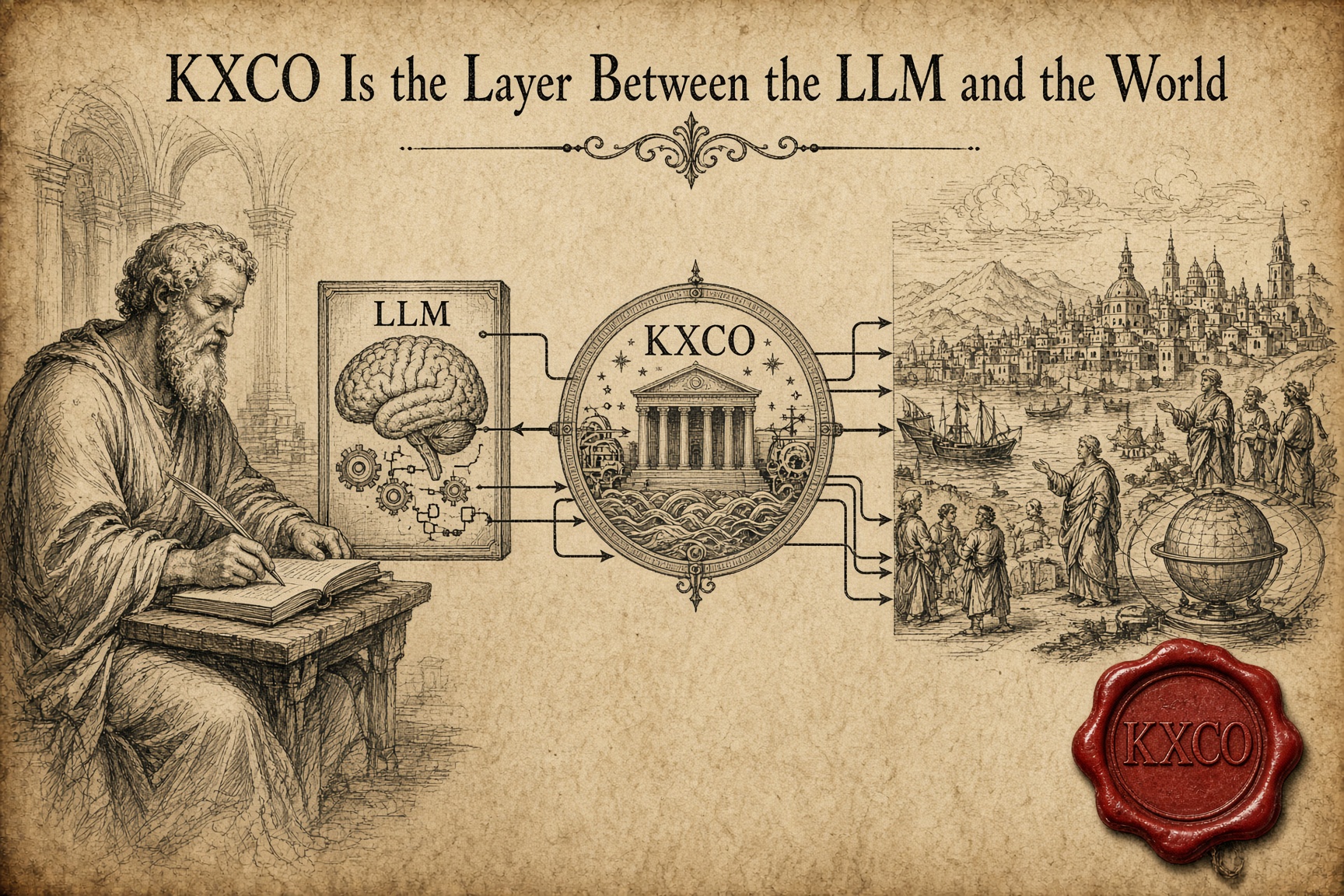
KXCO Is the Layer Between the LLM and the World
Give a hundred people the same book and very few will act on it. AI is that book: it distributes access, not understanding, and an institution cannot act on a paragraph. KXCO does not build another model or another agent. It builds the layer between the model and the world: who is speaking, what they are allowed to do, what they committed, and a post-quantum signature a stranger can check without asking us.
Every story, signed and delivered.
Subscribe to the kxco channel and get the headline, the AI-written key takeaways, and the chain-anchor link the moment we publish. Audio versions and per-ticker subscriptions arrive in the next iteration.