
Federal Reserve a Danger to Democracy
The Federal Reserve, often lauded as a bastion of economic independence, faces a critical juncture. Amidst mounting pressure from the Democratic Party and a slowing economy, the Fed is contemplating a risky policy shift: a premature rate cut in early 2024. While ostensibly intended to stimulate growth, such a move could backfire spectacularly, jeopardizing both the health of the economy and the integrity of our democratic institutions.
The Fed's Conflicted Mandate:
The Fed faces a dual mandate: achieving maximum employment and price stability. However, these goals can sometimes be at odds. Lowering interest rates can boost economic activity and create jobs, but it can also exacerbate inflationary pressures. The current economic environment presents a perfect illustration of this dilemma.
While inflation has shown signs of moderating, it remains significantly above the Fed's target of 2%. At the same time, economic growth is slowing, raising concerns about a potential recession. This tricky situation puts immense pressure on the Fed to strike a delicate balance between supporting the economy and fighting inflation.
Politicization of Monetary Policy:
Unfortunately, the Fed's decision-making process is increasingly becoming politicized. The Biden administration and many Democrats have openly advocated for lower interest rates, arguing that they are necessary to boost the economy and improve the party's chances of winning the 2024 elections. This blatant political interference undermines the Fed's independence and casts doubt on its commitment to price stability.
A Dangerous Precedent:
Should the Fed succumb to political pressure and lower rates prematurely, the consequences could be severe. Lower interest rates could reignite inflationary pressures, leading to higher prices for goods and services. This would disproportionately hurt low-income Americans and erode public trust in the Fed.
Furthermore, a rate cut now could create a dangerous precedent. It would signal that the Fed is willing to prioritize political expediency over sound economic principles. This could lead to future administrations pressuring the Fed to manipulate monetary policy for their own short-term gains, ultimately undermining the economic stability of the country.
The Way Forward:
The Fed must resist the urge to capitulate to political pressure. Instead, it must prioritize its core mandate: maintaining price stability and fostering long-term economic growth. This requires a data-driven approach, focusing on the economic indicators and not the whims of politicians.
The Fed should also strive to enhance its transparency and communication efforts. This will help build public trust and ensure that its decisions are seen as legitimate and objective.
Ultimately, the Fed's integrity and the future of the American economy are at stake. The Fed must choose wisely. It must not allow itself to become a political tool, but rather remain the independent and objective institution it is meant to be.
AI is the Neat Handwriting of the Illiterate
A model in the hands of someone who has read the filing and walked the plant is a clerk. The same model, speaking for someone who has done neither, is a disguise. On AI slop, phantom citations and factslop, why finish stopped being evidence of work, and the containment layer KXCO built so a machine cannot speak as the institution until a source is attached.
Worthship: Do Not Conform to the Age
Worthship is the older English word for worship, and it means to ascribe worth. Bishop Robert Barron preached Romans 12 on 30 August. This essay follows the text into the prison letters, and puts two questions to a graph: do the four readings of that Sunday agree, and was Paul free or in chains when he wrote about despair?
The Truth in All Its Ugliness Must Survive
A majority vote does not determine the truth. Consensus is a mood, gossip is a sport, and a model will write the pretty version for free. Why the ugly number has to survive, why a record beats a dashboard, and what KXCO was built to keep standing when the room changes its mind.
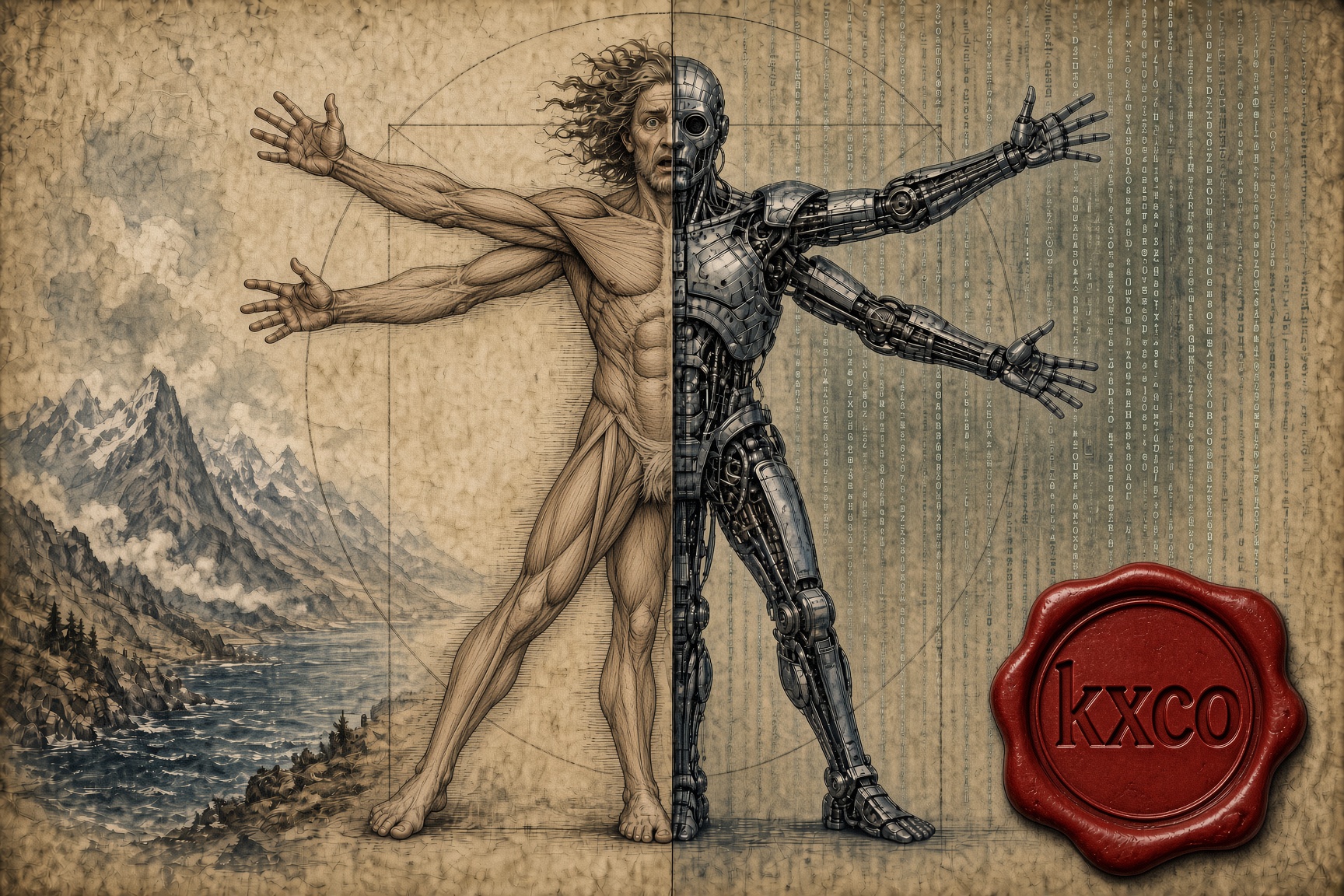
Don't Be the Best, Be the Only: Winning in an AI World
AI is repricing competence downward. What it cannot reproduce is a life. The case for remaining non-fungible, why friction still produces the best ideas, and what it means to build AI systems that keep the human intellect in them.
Every story, signed and delivered.
Subscribe to the kxco channel and get the headline, the AI-written key takeaways, and the chain-anchor link the moment we publish. Audio versions and per-ticker subscriptions arrive in the next iteration.