
FCC One-to-One Consent Rule and $CAUD
FCC One-to---One Consent Rule and $CAUD
As new FCC Rules alter the lead generating game, Caud is likely to gain from the strategic forethought of management.
The strategic orientation of Collective Audience in the new regulatory environment might help to determine its share price. In a field where others might struggle with compliance, investors could view $CAUD as a safer risk, therefore increasing the stock value due of perceived stability and growth potential.
Collective Audience ($CAUD) Navigating the New FCC Lead Generation One-to- One Consent Rule
New rules by the Federal Communications Commission (FCC) are drastically changing the scene of digital marketing and lead generation.
Particularly, the FCC's one-to--one consent regulation, which is effective from January 27, 2025, mandates that companies have clear permission from customers for any organization that will come into touch with them. This control seeks to plug the "lead generator loophole," which has hitherto let several merchants share consumer data without particular permission. Collective Audience ($CAUD) is positioned as a creative option here that could help to increase market share, income, and share price by means of possible innovations.
FCC Rules' Effects on Lead Generation
Rising Compliance Costs: The new rule calls for a significant review of current lead generating policies. Companies now have to put in place processes for getting and documenting one-to-one consents, which will result in higher compliance expenses, legal counsel, and technological changes all around.
Consumer Privacy: Privacy is more important now that consumers can choose who may contact them. This change calls on lead generating businesses to improve their data management systems so they closely follow privacy regulations.
Lower Lead Volume but Improved Quality: Since every customer must consent to every vendor separately, the rules may cut the lead volume. Higher quality leads could result, though, as customers participate more in the consent process, therefore raising possible conversion rates.
Legal Risks: Non-compliance may result in large penalties and legal action, hence guiding businesses toward more austere marketing plans.
The position of collective audience
Adapting to New Norms: Collective Audience has positioned itself front and first in this change of regulation. Their system is made to control lead production in line with the new FCC regulations, thereby making sure that every lead comes with the required one-to-one permission. Modern consent management systems that smoothly interact with marketing plans help to enable this.
Data Integrity and Consumer Trust: Collective Audience not only satisfies the legal need for specificity in consent but also develops trust with consumers by concentrating on premium, first-hand data. Their method guarantees that every customer encounter is recorded, therefore guaranteeing openness and responsibility—qualities very important in the new legal climate.
Collective Audience uses technology to simplify the consent process, so enabling companies to adjust without sacrificing effectiveness. Their solutions fit exactly the FCC's criteria and feature dynamic consent forms allowing consumers to choose which businesses they wish to get communications from.
Offering a compliance-ready solution will help Collective Audience draw companies trying to negotiate the new regulations without interfering with their marketing campaigns. As businesses choose Collective Audience for their lead generating requirements, this could cause a rise in market share. Higher conversion rates resulting from better lead quality and demand for their compliance services could follow from increased income.
Collective Audience ($CAUD) shines out as a lighthouse of compliance and creativity as the digital marketing industry adjusts to the FCC's one-to--one consent regulation. Their answers not only meet the immediate legal needs but also set a benchmark for moral lead generation, therefore strengthening consumer confidence and involvement. In terms of market share, income, and share price, this might mean major benefits for Collective Audience, which would make this an interesting option for companies and investors both in the changing digital environment.

AI Is Taking What You Publish and What You Type
Common Crawl holds more than 300 billion web pages, and 52 per cent of crawler requests on Cloudflare's network in June 2026 were for AI training. Models can give back what they took in: one chatbot reproduced 76.8 per cent of the first Harry Potter book near word for word. A US court ordered OpenAI to give the New York Times 20 million anonymised ChatGPT logs. This KXCO warning sets out what is exposed, what to do now, and how each KXCO client runs its own AI inside its own walls.

Industrialising Intelligence: Demand, Scarcity and the Boundary of Sovereignty
AI agents generate 80% of OpenRouter's tokens, about seven times human use, and Google's monthly tokens rose about 330 times in two years to over 3.2 quadrillion. In my view the limit on AI demand has moved from people to power: the International Energy Agency expects data-centre electricity to reach around 945 terawatt-hours by 2030. Execution is becoming a utility. Selection is not. KXCO builds the boundary that keeps the decision with a named person and lets another party check the record.

Democrats' AI Spending Curtailment: The Dumbest Idea in Washington
After the midterm sweep, Democrats want to slow America's AI build-out. The Sanders and Ocasio-Cortez bill would freeze building and upgrading of AI data centres nationwide, and a superintelligence ban Rep. Yassamin Ansari wants atop the agenda would pause every model trained with 10^25 operations or more. Governors-elect in Texas and Georgia back pauses, and Goldman Sachs puts 45% of planned capacity in Democrat-run states backing moratoriums. Shayne Heffernan: AI computing follows the power.
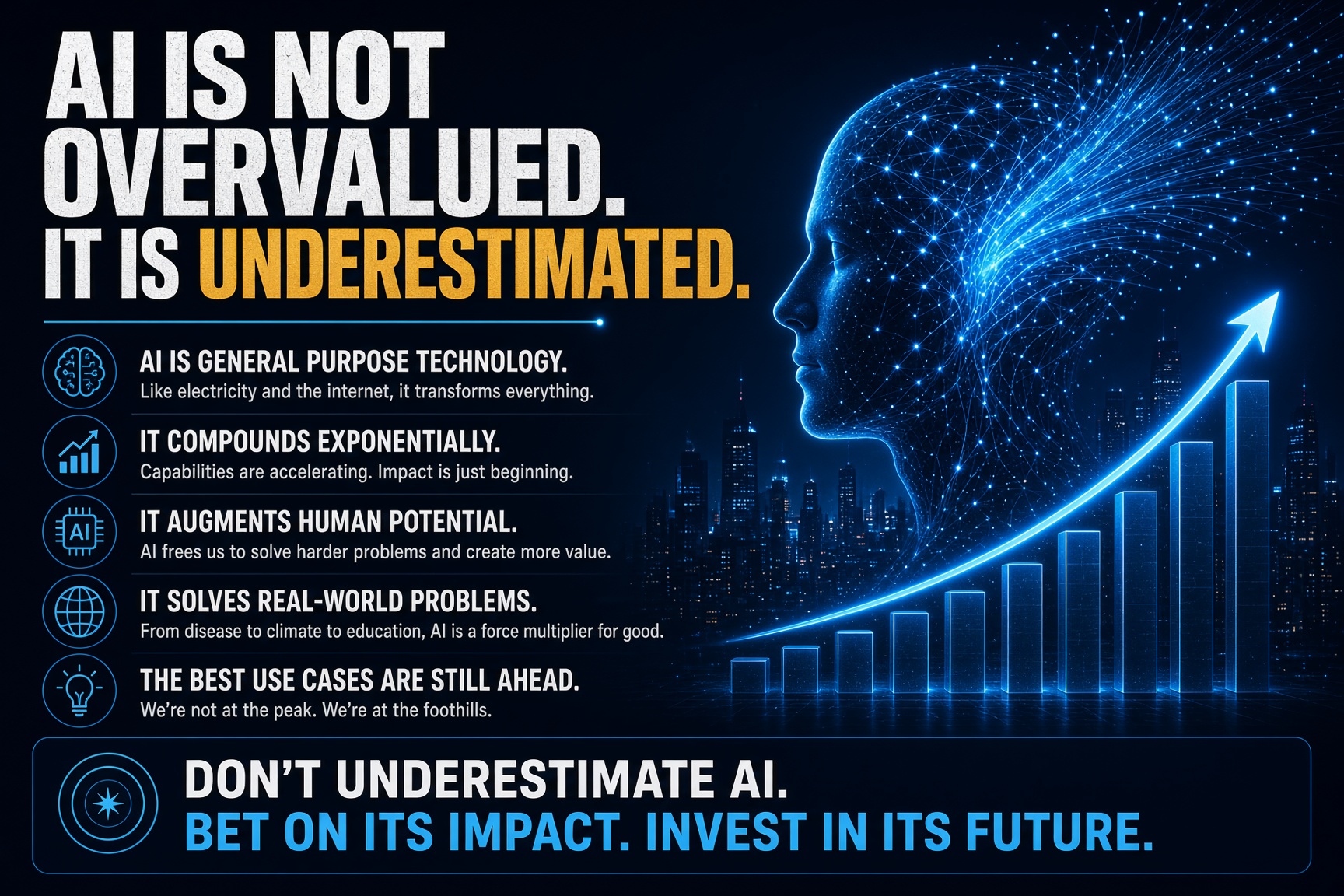
AI Is Not Overvalued. It Is Underestimated.
Markets debate whether artificial intelligence (AI) is overvalued. Shayne Heffernan argues the more material risk is underestimation. Alphabet's capital expenditure reached $51.4 billion in the third quarter, Google Cloud revenue rose 103% to $30.7 billion and the Cloud backlog stands at $561 billion, per its 28 October results and earnings call. Jurisdictions that block data centres do not remove the demand: they import the capability later, at a higher price.
Every story, signed and delivered.
Subscribe to the kxco channel and get the headline, the AI-written key takeaways, and the chain-anchor link the moment we publish. Audio versions and per-ticker subscriptions arrive in the next iteration.