
Eight Up Weeks, a Trillion-Dollar IPO Coming, and the Fed Holding the Line.
What moved last week, what matters for next week. Bitcoin, gold, US stocks, the AI and quantum trade, tokenised equities and the SpaceX IPO road show.
Part of theMacro Center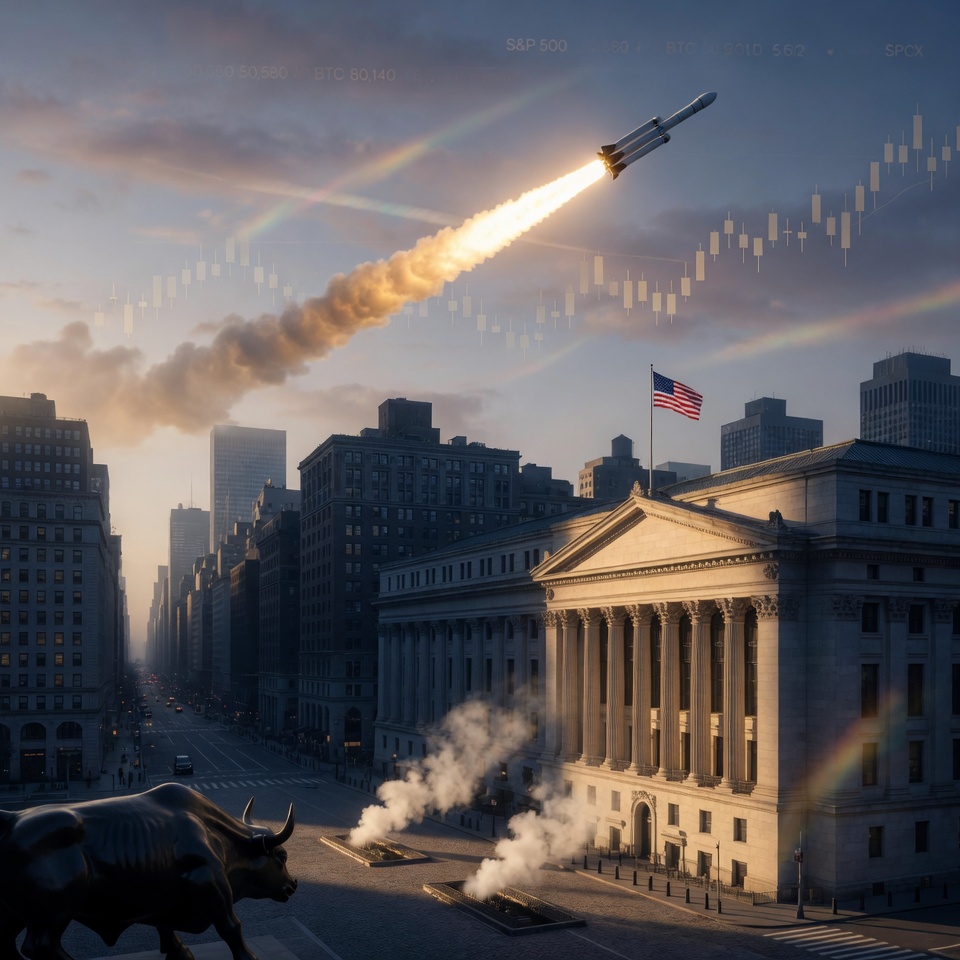
Markets closed the week on a high. The S&P 500 added 0.4% on Friday and notched its eighth consecutive weekly gain — the longest run since December 2023. The Dow Jones Industrial Average set a fresh closing record at 50,580.66 on Thursday and held above 50,000 into the close on Friday. The Nasdaq Composite hit new highs alongside it. Treasury yields whipped around. The 10-year touched its highest level in a year on Monday before settling lower into the weekend. Nvidia delivered the print everyone was waiting for. Bitcoin reclaimed $80,000. Gold consolidated in the high $4,000s. And SpaceX filed the documents that will make next month's IPO the largest in capital-markets history.
This note runs through what happened across the bits that matter for US dollar capital — equities, Bitcoin, gold, the AI and quantum complex, the tokenised-equities build-out and the SpaceX road show that begins on 4 June. Then a short read on what it all means for the week ahead.
US Equities — Records, Earnings, and a Fed That Is Not Moving
The S&P 500 added 0.4% on Friday to close out the week, with leadership coming from a mix of staples (Merck +5.64% on Friday alone), software (Salesforce +2.23%) and networking (Cisco Systems +2.01%). The eight-week streak is the longest run of weekly gains since the back half of 2023 and has carried the index well past the level that bears spent April calling a top. The Dow Jones Industrial Average closed at a record 50,285.66 on Thursday and added another 294 points (+0.58%) on Friday to finish at 50,580. The Nasdaq Composite made fresh all-time highs as well. Volatility has compressed steadily through the rally. The VIX traded in the low teens for most of the week.
The single biggest piece of data this week was Nvidia's first-quarter fiscal 2027 print on Wednesday after the close. Revenue came in at $81.6 billion against a consensus of roughly $78 billion. That is 85% year-on-year growth and 20% sequential growth on a quarter that was already enormous. Data centre revenue alone was $75.2 billion, up 92% year-on-year, driven by the Blackwell 300 ramp. The gross margin held at 74.9%. Free cash flow set a record at $49 billion. The board added $80 billion to the share-repurchase authorisation and raised the dividend by a factor of 25. The Q2 guide came in at $91 billion against a $85 billion consensus.
Two pieces of the Nvidia print are worth dwelling on. The first is the customer mix. Around half of data-centre revenue came from the hyperscaler cohort everyone tracks. The other half came from a fast-diversifying base of AI cloud operators (CoreWeave, Lambda, Nebius), large enterprises building proprietary inference fleets, and sovereign customers. Jensen Huang said in the prepared remarks that the company is in active design conversations with eleven national customers. That sovereign line is new and it is large. The second is the China line. Data-centre shipments of Hopper-class products to China came in at zero this quarter, against $4.6 billion in the year-ago quarter. The US export-control regime has eliminated Nvidia's China data-centre business and management has signalled they are not pursuing further degraded variants for that market. The bull case is that the loss is now in the base. The bear case is that similar restrictions could eventually reach gaming and automotive. For now the market is taking the bull view.
Behind Nvidia, the broader earnings season has been firm. Walmart reported Thursday and held its full-year guide. Target reported Wednesday and lagged on softer non-essentials demand. Meta, Microsoft, Alphabet and Amazon all guided 2026 capital expenditure up sharply at their respective prints earlier in the year. Collectively the four largest hyperscalers are now projected to spend around $725 billion on capex in 2026 against roughly $410 billion in 2025. That is a 77% increase. Nvidia's CFO Colette Kress said in the post-earnings call that the company has roughly $500 billion of Blackwell and Rubin revenue visibility booked from now through the end of 2026. There are people calling this an AI bubble. The capex pre-commitment numbers are not what bubbles look like.
On the macro side, the Fed is on hold and looks likely to stay there. The April Consumer Price Index, released earlier this month, came in at 3.8% on a year-on-year basis — the highest reading since May 2023. Month-on-month CPI rose 0.6% against expectations of 0.3%. Core CPI was 0.4% on the month against 0.2% expected, with year-on-year core at 2.8%. Those are hot numbers and they killed off the residual market hope for a June rate cut. Fed funds futures now price effectively zero probability of a cut at the 17 June FOMC meeting, and the implied path through the end of the year has roughly one cut, possibly none. The Fed funds target range stays at 3.50% to 3.75%.
Kevin Warsh was confirmed as the next Federal Reserve Chair on 15 May, replacing Jerome Powell. Warsh is a known hawk and a known anti-QE voice. Markets did not panic on the confirmation. They priced it correctly months earlier. What changes under Warsh is the rhetorical posture more than the policy. The Fed is going to sound tighter even if the rate path is not materially different. That matters for the dollar more than for stocks.
Bitcoin — Above $80,000 Again, Flow Picture Is Mixed
Bitcoin is back above $80,000 after a choppy month. The pullback from the April highs got people calling for the cycle top. The rebound suggests otherwise. The ETF flow data tells the cleanest version of the story. On 4 May, US spot Bitcoin ETFs took in $532 million in net inflows. The next day they took in another $467 million. BlackRock's IBIT alone pulled $335 million on the 4th. Fidelity's FBTC pulled $185 million. That was the fourth consecutive day of net inflows. Then the picture flipped. Between 11 May and 15 May, US spot Bitcoin ETFs saw approximately $1 billion of net outflows — the largest weekly outflow since February. By the close of the week of 19 May, flows had turned positive again.
This is what an institutional asset class looks like in its second full year of operation. It is no longer the retail-driven, sentiment-whipsawed product it was in 2017 or 2021. BlackRock's IBIT now sits on roughly $63 billion in net assets, about two-thirds of the total spot Bitcoin ETF complex. Fidelity, ARK 21Shares, Bitwise and Grayscale's converted GBTC make up most of the rest. Morgan Stanley's recently launched Bitcoin ETF pulled $194 million in its first days of trading.
The near-term technical pattern has $82,000 as the immediate level to watch. A clean break of $82,000 opens the $85,000 to $90,000 zone, where the next material round of supply sits. Below, $76,000 to $78,000 has held twice in the last six weeks and is the line the bulls cannot afford to give up. Macro-wise, Bitcoin remains the highest-beta US dollar hedge in markets. Every soft dollar print pulls capital toward it. Every hot CPI print does the same, for the inflation-hedge crowd. Both forces are operating right now. So is the Fed's reluctance to cut, which is dollar-positive and Bitcoin-negative. The mix is messy. The medium-term direction is up. I have been bullish Bitcoin since the early ETF days and that view has not changed.
Gold — Consolidating Around $4,600 After a Record Year
Gold spent the week around $4,600 per ounce. That sits roughly 16% below the all-time high of $5,589 that the metal set on 28 January, when geopolitical tension around Iran combined with the soft inflation print to send the metal vertical. The pullback since then has been orderly — none of the violent positioning unwinds that gold has seen at previous tops. The level remains historically high and very profitable for anyone who bought below $3,000 in 2023 or below $4,000 in 2024.
Central banks remain the marginal buyer that matters. World Gold Council data showed central banks net-purchased 244 tonnes in the first quarter of 2026, up 3% year-on-year. China's central bank added to reserves for the eighteenth consecutive month. India, Türkiye, Poland and a small group of Gulf central banks were also net buyers. The Gold Council's full-year forecast continues to call for around 585 tonnes of combined investor and central bank demand per quarter through 2026, with roughly 190 tonnes per quarter coming from the official sector.
The macro setup for gold remains constructive. April CPI at 3.8% gives the inflation hedge thesis another quarter of life. The Fed staying on hold while inflation runs above target is the textbook setup. Geopolitical risk has not gone away — the Iran situation, the Russia-Ukraine war and the Taiwan question are all sitting at slow simmer. JPMorgan continues to call $5,000 as base case for the year. ING describes 2026 as a continuation of the gold bull market. State Street's monthly gold monitor for May had constructive language. I am long gold via physical and via the major miners. I am not chasing it here, but I am also not selling.
AI and Quantum — Capex Is Real, Quantum Just Got Reality-Checked
The Nvidia print speaks for the AI side. The hyperscalers are spending roughly $725 billion on capex in 2026. Nvidia has $500 billion in forward revenue visibility through the end of 2026. The four largest cloud providers all guided capex higher at their last earnings reports. Meta has committed to a six-gigawatt partnership with AMD for its next-generation AI clusters. Alphabet plans roughly $180 billion of 2026 capex with AI and its next-generation TPU chips at the centre. Amazon Web Services is aggressively building out Trainium and Inferentia. Microsoft is extending Azure AI capacity in lockstep with OpenAI's scaling roadmap. The AI infrastructure cycle is not topping.
Quantum had a different kind of week. The pure-play public names have been on a rip since the Quantinuum IPO filing in early May and the early-April Oratomic paper that demonstrated AI-assisted discovery of a three-atom logical-qubit encoding. The combined sector ran 80% to 130% over six weeks. On Monday 18 May, the group sold off in lockstep. IonQ fell 7%. D-Wave Quantum fell 8%. Rigetti fell 9%. Quantum Computing Inc. fell 9%. That was profit-taking, not a fundamental break — every name moved the same percentage on the same day, which is the signature of mechanical position trimming rather than a company-specific catalyst. Even after the sell-off, all four names are up materially year-to-date.
The fundamentals are real, the valuations are not yet. IonQ reported first-quarter revenue of $64.7 million, up 755% year-on-year, and raised full-year guidance to a range of $260 million to $270 million. That is a serious revenue ramp for a category that was largely pre-revenue eighteen months ago. D-Wave reported first-quarter revenue of $2.86 million, down 81% year-on-year against a tough prior comp, but bookings surged 2,000% to $33.4 million. Rigetti reported first-quarter revenue of $4.4 million, nearly tripling year-on-year, with a non-GAAP loss of $0.04 per share and a $569 million cash position that should fund operations through their fault-tolerant milestones. The valuations are where it gets uncomfortable. IonQ is trading at around 116 times trailing price-to-sales. D-Wave is at 311 times. Those are venture-capital numbers in the public market.
The big quantum event of the next few weeks is Quantinuum's IPO. The company filed publicly in early May and will list on the Nasdaq under the ticker QNT, with a target valuation of $20 billion. Quantinuum is the trapped-ion architecture that delivered 48 logical qubits in November 2025 — a milestone the field believed was five years away. Honeywell holds a controlling stake. The listing will reset the comparable-valuation methodology for the whole quantum cohort and will give the sector a flagship that institutional investors can take meaningful positions in. The IPO is the next test of how much capital is willing to chase the quantum thesis at scale.
My view on the quantum cohort is unchanged from earlier in the year. The category is a buy. The volatility is real. Position sizing should reflect that 50%-plus drawdowns along the way are likely. The asymmetric upside justifies it.
Tokenised Stocks — Quietly the Biggest Story Nobody Is Talking About
Tokenised real-world assets are now a $31 billion category, up from approximately $23 billion at the end of December — a 35% jump in one quarter. BlackRock's BUIDL tokenised Treasury fund crossed $2 billion in assets across multiple blockchain networks. Securitize, the issuance platform that does the back-end work for most of these vehicles, now manages over $4 billion in assets and has named partnerships with Apollo, BNY, Hamilton Lane, KKR and VanEck. The New York Stock Exchange has signed Securitize as a partner to support tokenised-securities markets. BlackRock filed for two new tokenised funds with the SEC on 8 May. The DTCC, the central market plumbing for US securities, has announced limited production trades of tokenised securities beginning in July with broader commercial rollout in October. Robinhood is expanding its stock-tokenisation product across multiple geographies.
This is the part of the convergence between traditional finance and crypto that allocators have been slow to recognise. The conversation has been dominated by Bitcoin and stablecoins. The actual structural shift — institutional securities, treasuries, real estate, private credit, all moving onto programmable rails — has been happening quietly underneath. The SEC has been working through a tokenised-stocks framework. The pieces are coming together fast enough that the first regulated US-listed tokenised equity is now a question of months, not years.
For investors, the trade is in the picks-and-shovels names. Securitize itself is going public via a SPAC merger. BlackRock, BNY Mellon, State Street and the major asset managers all benefit. The exchange operators — ICE, Nasdaq, CME — are positioned. The legacy plumbing players — DTCC is private, but its bank shareholders are public — get a refresh of business they thought was commoditised. And the stablecoin issuers, Circle most obviously, are the settlement layer underneath. Circle went public earlier in the year. The market for these instruments is already at $323 billion globally and growing into the tokenisation flywheel. This is a category I expect to look very different in twelve months and unrecognisable in three years.
SpaceX IPO — The Largest in History, Pricing 11 June
SpaceX filed its S-1 with the Securities and Exchange Commission on 20 May. The road show begins on 4 June. The pricing is targeted for 11 June. Trading begins 12 June under the ticker SPCX on the Nasdaq. The deal aims to raise approximately $75 billion at a $1.75 trillion valuation, though Bloomberg has reported the deal team is testing investor appetite at valuations up to $2 trillion. If it prices at the upper end of that range, the listing will surpass Saudi Aramco's 2019 IPO ($29.4 billion raised at $1.7 trillion) as the largest in capital-markets history — by a multiple of more than 2.5 on the cash raised.
The S-1 disclosed the underlying numbers for the first time at this level of detail. SpaceX's combined consolidated entity (which includes SpaceX itself, xAI and X, the platform formerly known as Twitter) generated $18.7 billion of revenue in 2025, up more than 30% year-on-year, against a net loss of $4.9 billion. The loss was driven by xAI, which lost $6.4 billion on $3.2 billion of revenue and spent close to $13 billion on data-centre construction. xAI added a further $7.5 billion of data-centre capex in the first quarter of 2026 alone. Starlink crossed 10.3 million subscribers, generated $11.4 billion of revenue and $4.5 billion of operating profit in 2025, with first-quarter 2026 revenue of $3.3 billion and operating profit of $1.19 billion. SpaceX captured over 80% of global rocket launches in 2025 and has more than 10,000 Starlink satellites in orbit.
Elon Musk retains 85.1% voting control through a super-voting share class. Public investors will own economic interest with effectively no governance say. That is a structure the market has accepted before — Google, Meta, Alphabet's parent class. It will be accepted again here. The IPO will likely make Musk the first publicly verifiable trillionaire. Google's roughly $40 billion stake in SpaceX, accumulated through its earlier investment rounds, is set to be worth on the order of $100 billion at the IPO price. Early SpaceX employees and angel investors are looking at multi-billion-dollar outcomes.
The IPO will absorb a meaningful chunk of available institutional capital across the next month. Every bookrunner running an unrelated deal during the road-show window is already moving timing. Once SPCX starts trading, S&P 500 inclusion mechanics — assuming the float profile qualifies — will force passive demand into the stock within roughly 30 days of listing. The broader downstream effect is that the valuation precedent SpaceX sets will become the comparable for an entire cohort of currently private AI-infrastructure companies — Anthropic, OpenAI, Mistral, CoreWeave-style operators. Those private marks are about to be repriced against a public-tape benchmark for the first time. The repricing will move in whichever direction SPCX trades.
My base case is the deal prices, trades up at debut and holds. The structural story is strong enough and the demand environment is favourable enough that the marginal trade is to participate, not to fade.
The Week Ahead — What This All Means
Pulling it together, the operating thesis going into the week of 25 May is this. The AI infrastructure cycle is the dominant macroeconomic force in equities, and it has been validated again by Nvidia's print. There is roughly $725 billion of hyperscaler capex coming in 2026 and another year of revenue visibility for Nvidia. As long as that capex commitment holds, the semiconductor, power infrastructure and data-centre real-estate trades work. Anything that puts that capex commitment in doubt — most obviously a return-on-invested-capital comment from Alphabet, Microsoft, Amazon or Meta in their next quarterly cycle — would be the canary. Watch for it. It has not arrived yet.
The Federal Reserve is on hold. The June 17 FOMC meeting is now a non-event in terms of rate decisions. The market focus is on the next CPI print, due 11 June, which will land in the middle of the SpaceX road show. A hot CPI does double damage — it removes the Fed cut bid and it widens the spread the SpaceX bookrunners need to price the deal through. A cool CPI is the opposite. The path of inflation has not been cooperative this year. Plan for hotter for longer.
Bitcoin remains a buy on weakness. The institutional ETF infrastructure is real, the flow data is constructive on a multi-week view, and the macro backdrop favours hard-asset allocation. I would not chase $85,000. I would buy any retracement to $76,000 to $78,000 aggressively.
Gold is a hold. The bull case is intact, central banks remain the marginal buyer, the inflation backdrop is supportive, and the Iran situation is not resolved. I am not adding to existing positions at $4,600, but I am not trimming either.
Quantum is volatile but the cohort is a buy on the next 10% to 15% pullback. The Quantinuum IPO is the catalyst to watch. If QNT prices well and trades up, the entire pure-play cohort gets a refresh. If it disappoints, the pullback in IonQ, D-Wave, Rigetti and Quantum Computing Inc. will be the entry.
Tokenised equities are the trade most allocators are still missing. The DTCC pilot starts in July. The first regulated US-listed tokenised equity is closer than people realise. The picks-and-shovels names — Circle, BlackRock, BNY, the exchange operators — should be in the portfolio.
SpaceX is the event. Get the allocation if you can. If you cannot, the proxy trade is Google through its existing stake. The downstream repricing of private AI infrastructure marks will be a multi-quarter story regardless of how the deal itself prints.
Eight up weeks is a long run. The market is overdue a breather. None of that changes the medium-term setup. The cycle is mid-game, not late. The trade is to stay long the structural names and use volatility to add.
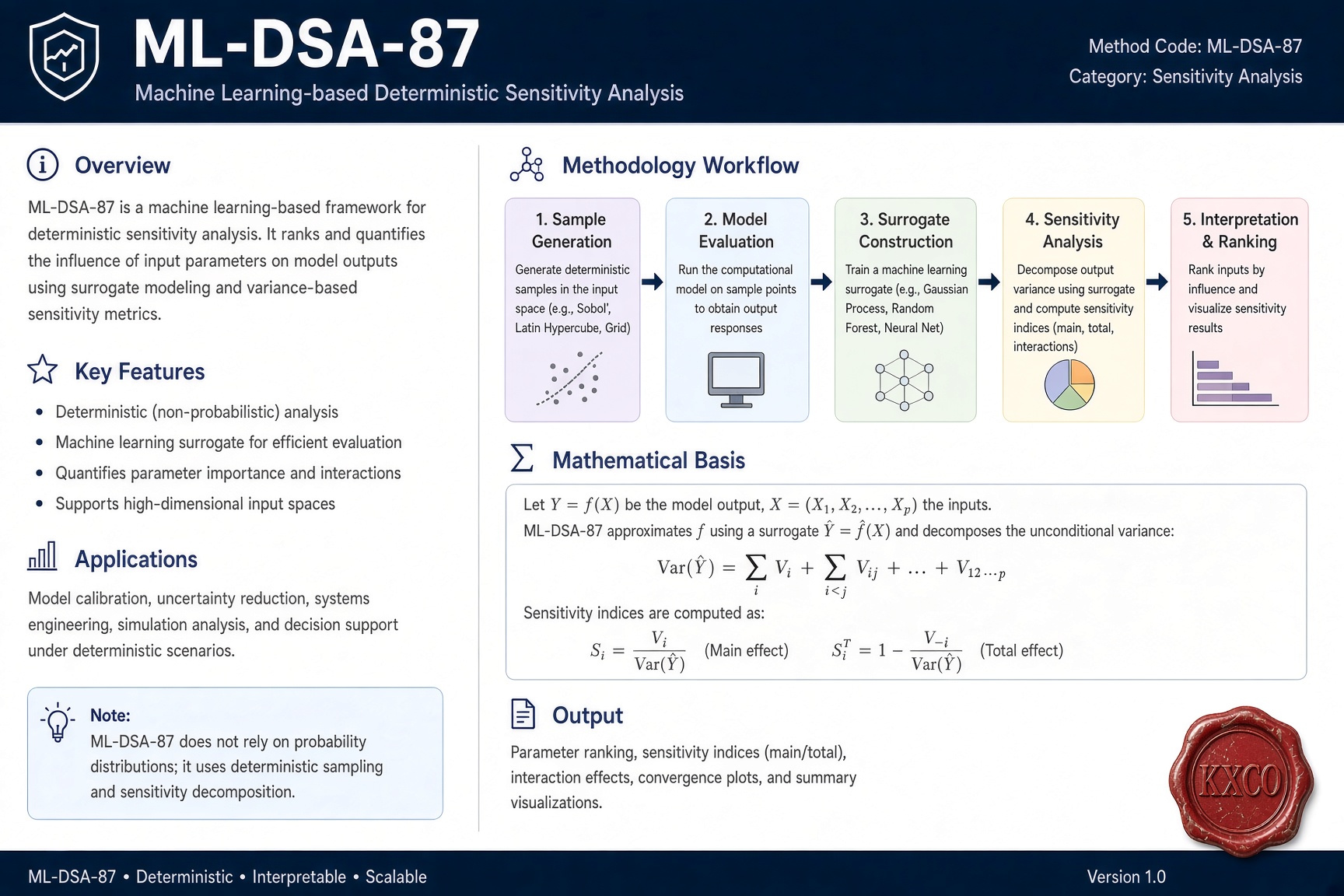
KXCO Now Verifies ML-DSA-87 in Consensus, the Signature Level Named by the NSA
On 6 October 2026 KXCO's chain began verifying ML-DSA-87 signatures as a rule of consensus, and the first ML-DSA-87 identity registered 28 seconds later. ML-DSA-87 is the category 5 level of NIST's FIPS 204, specified by the NSA for US national security systems and preferred by Australia's Information Security Manual. KXCO ships it for signing and for keys held in hardware, accepts it across its network and verifies it on chain, and anyone can check a verdict.
Weekly Market Outlook: Fed Minutes, Anthropic and OpenAI IPOs, Gold, Bitcoin, FX
The Fed raised rates in September and payrolls rose 29,000, per the Labor Department. This week the FOMC minutes, three Treasury auctions and a 10-year near 5.3 percent test that gap. Anthropic's IPO clock runs toward a 14 October investor day while OpenAI's chief executive says not 2026. Gold sits 26 percent below its record, bitcoin near $85,500, the dollar up three weeks running. Two knowledge graphs from KXCO's records map the IPO backers and the FDA board.
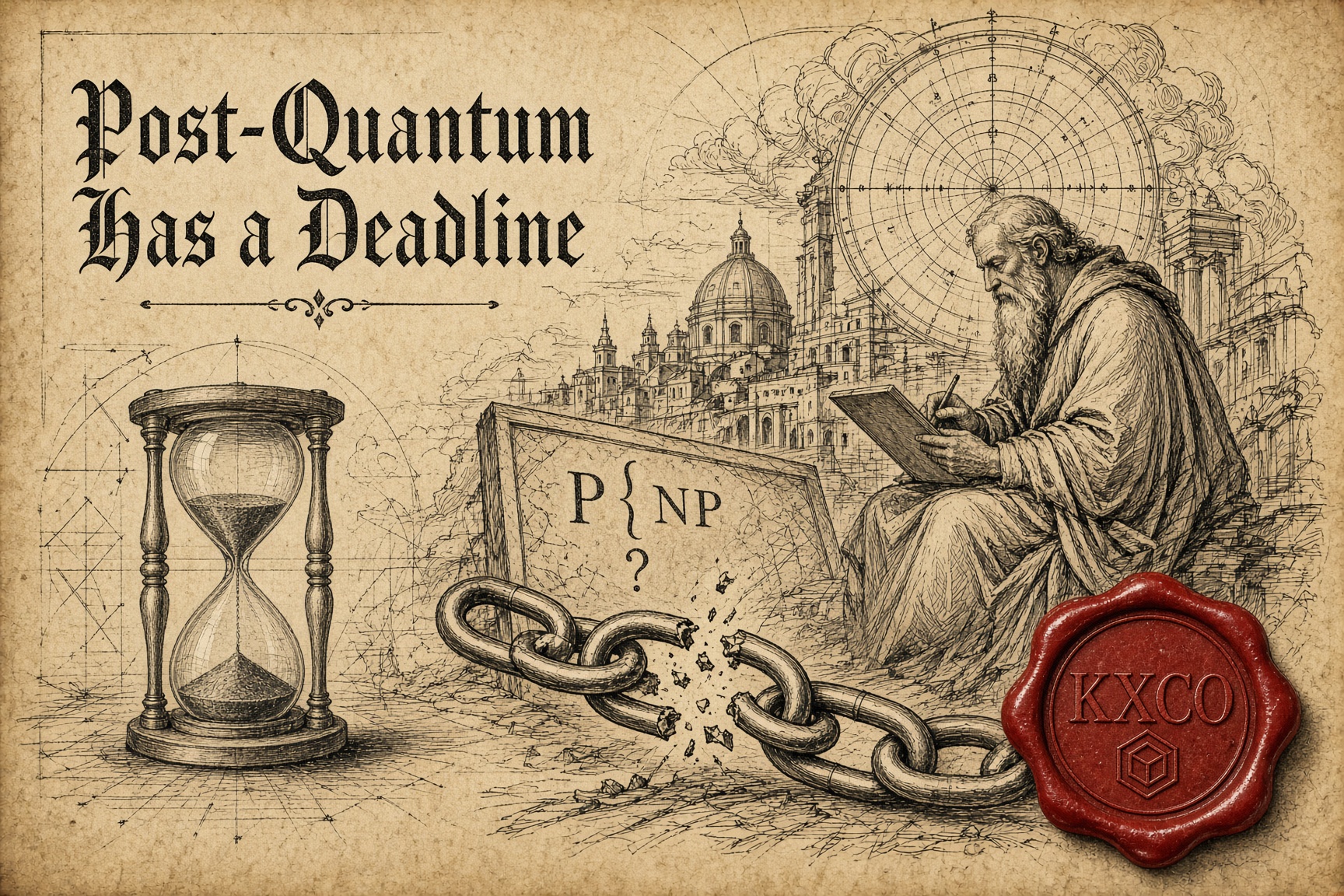
Post-Quantum Has a Deadline: 2030 for Keys, 2031 for Signatures
Executive Order 14412 gives federal high-value systems until 31 December 2030 for post-quantum key establishment and until 31 December 2031 for signatures. Six of the seven official calendars put a milestone in 2030. The Order reaches vendors through the contract, the purchase, the build, the data and the inventory. The runtimes already moved: a stock Node.js client negotiates X25519MLKEM768 by default. What is left is in the application.
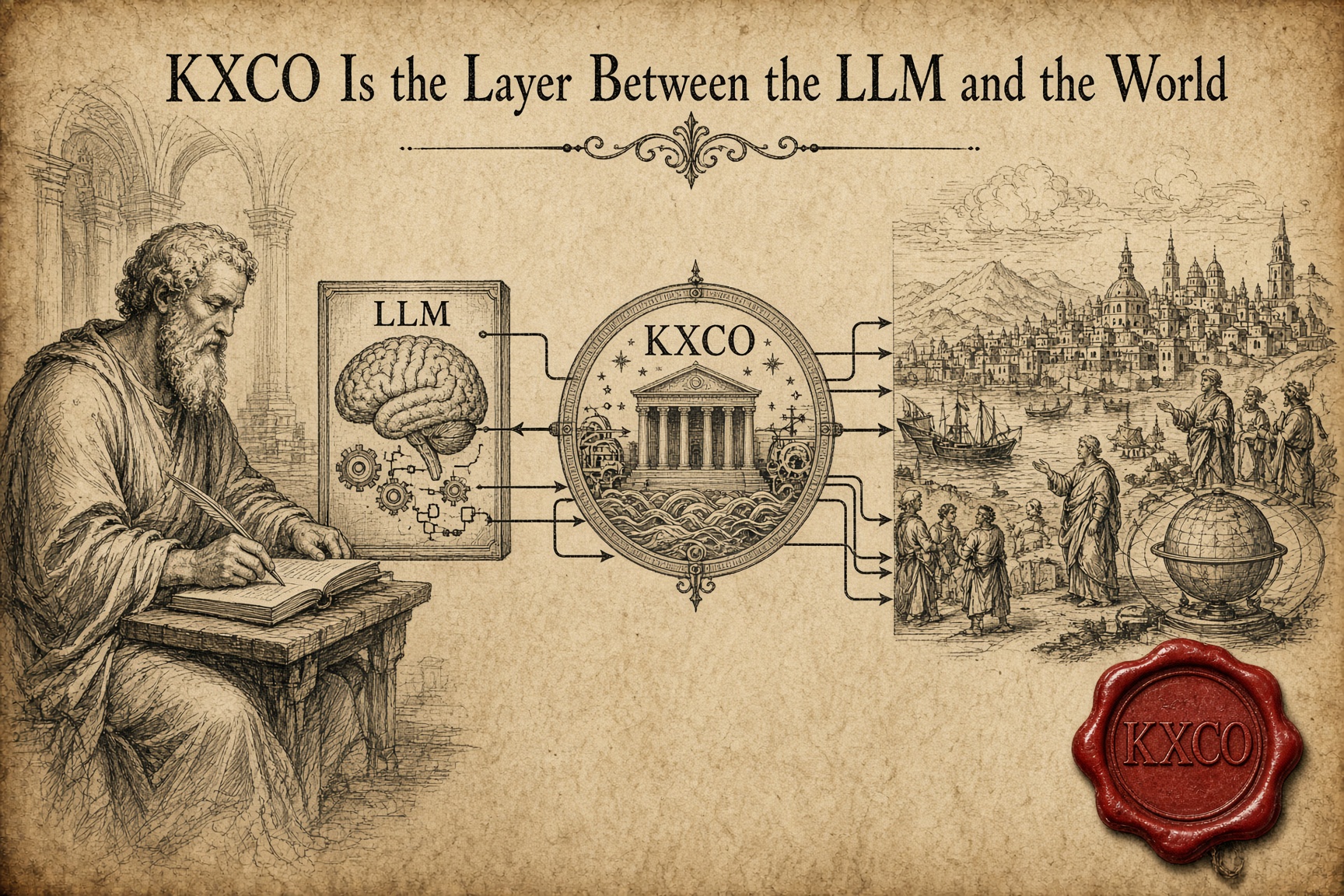
KXCO Is the Layer Between the LLM and the World
Give a hundred people the same book and very few will act on it. AI is that book: it distributes access, not understanding, and an institution cannot act on a paragraph. KXCO does not build another model or another agent. It builds the layer between the model and the world: who is speaking, what they are allowed to do, what they committed, and a post-quantum signature a stranger can check without asking us.
Every story, signed and delivered.
Subscribe to the kxco channel and get the headline, the AI-written key takeaways, and the chain-anchor link the moment we publish. Audio versions and per-ticker subscriptions arrive in the next iteration.