
Despite Immediate Suffering, Banking Crisis Won't Destroy Crypto Banking
Cryptocurrency was founded on the notion that no single institution should control a person's finances. Until that becomes a reality, traditional banking will most likely act as a link between centralized finance (CeFi) and decentralized finance (DeFi).
In the short term, the closure of Silicon Valley Bank (SVB), Silvergate Bank, and Signature Bank will undoubtedly cause problems for the industry as numerous crypto companies seek new banking partners. It is also unknown whether larger organizations will ever want to work with crypto startups.
Future is Obscure
“It's unclear what new financial institutions will partner with these crypto companies in the wake of Silvergate, SVB and now Signature.” Said Ilya Volkov, CEO of and co-founder of YouHodler, a Swiss-based international fintech platform providing a variety of Web3 crypto and fiat services.
“The industry is currently running out of options and that needs to be addressed soon to prevent further problems.” Volkov added, noting that it will cause some fear-based reactions from the investors.
This threat shouldn't harm the cryptocurrency industry in the long-run due to other smaller banks that can fill the void. “Crypto liquidity is likely to take a hit in the short term but this is an opportunity for new innovative challenger banks to step up and take the place of SVB, Silvergate and Signature.” Said Andrei Grachev, managing partner at digital asset market maker DWF Labs.
Circle and USDC surviving (so far)
Perhaps one such good example is Circle's capacity to quickly choose an automated settlement partner. Circle claims that about $3.3 billion of USDC's cash reserves are trapped in SVB and that Circle can no longer mint or redeem USDC through Signature's Signet product. The stablecoin issuer found itself in the heart of the crisis as its USDC depegged from theoretical $1 value.
Yet by late Sunday, Circle had managed to connect with Cross River Bank as a new automated settlement banking partner, keeping it operating on Monday.
“It would be shortsighted to assume that the events of the last few days will lead to a total divorcing of crypto and traditional banking.” Said Joshua Frank, co-founder and CEO of provider of information services for digital assets, The Tie. Frank asserted that there are still a few financial options open to US cryptocurrency enterprises, like Cross River Bank and BankProv. Moreover, he anticipates a rapid emergence of alternative banking partners.
According to Tribe Capital managing partner Boris Revsin, there is another bank that might be beneficial to the crypto sector. “There are other innovative banks, like Western Alliance Bank, that will continue to offer banking rails like what Silvergate and Signature offered and many more that will be looking at this technology as an opportunity for growth,” said Revsin. Cryptocurrency companies could also consider searching outside of the US for banking partnerships and employ stablecoin-based techniques.
More from Live Trading News:
New Regulations in Hong Kong: Hopes for Web3 Firms Returning

Earnings, the Economic Calendar and Trading Strategies: September 8 to 12, 2026
A four-session week decides more than a print. Oracle reports after the close on Thursday 10 September, PPI lands that morning and CPI on Friday, with the ECB in between and the FOMC eight days out. Oracle is the last hyperscaler of the cycle and the widest value gap on the KXCO Ontology Live Analyst Outlook layer: a $457bn market value under a $638bn contracted backlog. Here is the calendar, the graph behind it, the levels and the book.
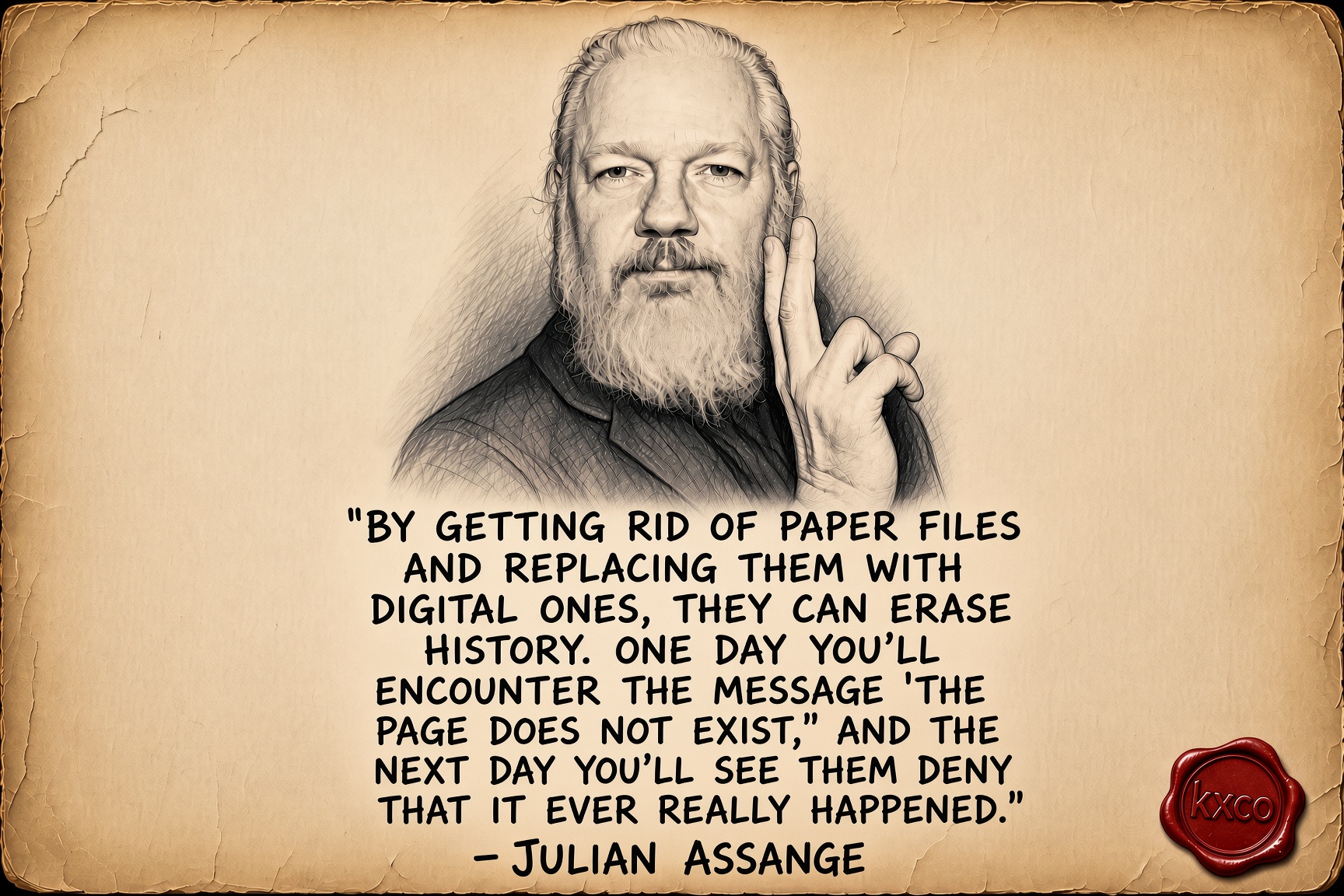
Digital Erasure, and Why KXCO Matters
Pew found 38 percent of 2013's web pages gone a decade later, and quantum computing will eventually let attackers forge the signatures that prove records authentic. Why durable history now depends on post-quantum cryptography, on-chain anchoring and verification that needs nobody's permission.

What is Cathie Wood Buying?
ARK fully exited Twilio in 2024, so the old $44.7 million story is history. The capital is now flowing into SpaceX, wafer-scale AI silicon, GPU cloud and stablecoin rails. Here is what Cathie Wood is actually buying as of mid-August 2026, what she is trimming, and whether the math still holds.

Economic Calendar and Trading Strategies for the Week Ahead: July 20–24, 2026
A pivotal week for markets: Iran's closure of the Strait of Hormuz sends crude above $86 and gasoline over $5, while Alphabet, Tesla and Intel earnings test the AI trade. Full economic calendar plus trading strategies across oil, gold, Bitcoin, FX and AI chip stocks.
Every story, signed and delivered.
Subscribe to the kxco channel and get the headline, the AI-written key takeaways, and the chain-anchor link the moment we publish. Audio versions and per-ticker subscriptions arrive in the next iteration.