
Crypto Currency, How to Get Started Investing in It
#crypto #cryptocurrency #digital #assets #investing #bitcoin #ethereum #stablecoins #blockchain #money #banks #governments #computers
"To understand cryptocurrency, consider that Bitcoin rose from the global financial crisis of Ys 2007-08"-- Paul Ebeling
Bitcoin was created by an individual using the pseudonym Satoshi Nakamoto and was declared a digital version of money that did not depend on banks and governmental interference. Anyone could exchange bitcoins with anyone else at any time for any reason.
But cryptocurrency is just the first use of a technology, called "blockchain," that is slowly spreading into other pursuits, such as art, real estate, music and gaming.
Bitcoin's blockchain exists solely to keep track of bitcoins, but ethereum and later initiatives use blockchains to run "smart contracts" that are applications that can be triggered on demand. As a result, blockchains offer an alternative not just to banks and government record-keepers, but to computer servers.
Blockchains rely on a huge network of computers to store and update a permanent digital record of every transaction, eliminating the need for a centralized ledger or record-keeper. They use cryptography to make sure the people exchanging bitcoins are who they claim to be and to enable computers on the network to keep identical, immutable records. That prevents bitcoins or any other asset tracked by a blockchain from being duplicated or spent more than once.
The records on a public blockchain such as bitcoin are open for all to see; anyone can inspect the list of transactions or track the activity of any individual account holder. But account holders' identities are encrypted, so you cannot tell who is behind the accounts making those transactions.
Cryptocurrencies are worth whatever the market says they're worth. Investors have poured more than $2-T into bitcoin and other cryptocurrencies on the expectation that future investors will be willing to pay more for them.
Crypto Bulls note that the supply of bitcoin is capped at at a level that ensures scarcity; there will never be more than 21-B bitcoins. In the Bulls view, the more widely bitcoin is used, the more demand for it will drive price growth.
Bears argue that the wild price swings will deter most people from jumping on the cryptocurrency bandwagon. So too might crypto's vulnerability to price manipulation and to the whims of momentum-driven investors.
The list of places where you can spend bitcoins includes a handful of tech companies, a couple of sports franchises, and a smattering of retailers and restaurants around the world.
There are workarounds such as Purse, which lets you trade bitcoins for Amazon gift cards, but the need for such services underlines how poor a substitute cryptocurrency currently is for dollar bills.
For those who want to use their cyber coins as currency, there is a class of tokens called stablecoins whose value is tied to the value of USD or some other non-cryptographic asset.
The most popular of these is called Tether; its creators pledge that each Tether token is backed by $1 in cash and other reserves , and its price has remained at or close to $1 for much of its history.
For most people who buy cryptocurrency, it is an investment thought not a conventional 1.
Cryptocurrencies are not like shares of corporate stock, whose value is at least nominally tied to something concrete, nor are they like commodities whose supply and demand can be forecast.
Instead, they are more like a collectible item whose value is driven in large part by their scarcity. There are no analyses or quarterly reports, production forecasts or fundamental measures such as earnings per share to guide investors. Instead, they have to rely more on any evidence they can find about which cryptocurrencies have momentum in the market.
These are the cryptocurrency equivalent of a shopping mall, offering access to many cryptocurrencies. Typically, the exchanges provide a digital wallet that acts a lot like a checking account, except that it's secured by a personal cryptographic key instead of a PIN. You deposit cash or cryptocurrency into the wallet, and it funds your purchases, keeps track of your holdings and stores the digital receipts that track what you've bought and sold.
That is a "custodial" wallet, which means it's stored in the cloud and maintained by a 3rd party that can help you recover your password, it is maintained by you alone, and if you lose your password, you will have lost your cryptocurrency.
Have a prosperous Happy Christmas Holiday, Keep the Faith!
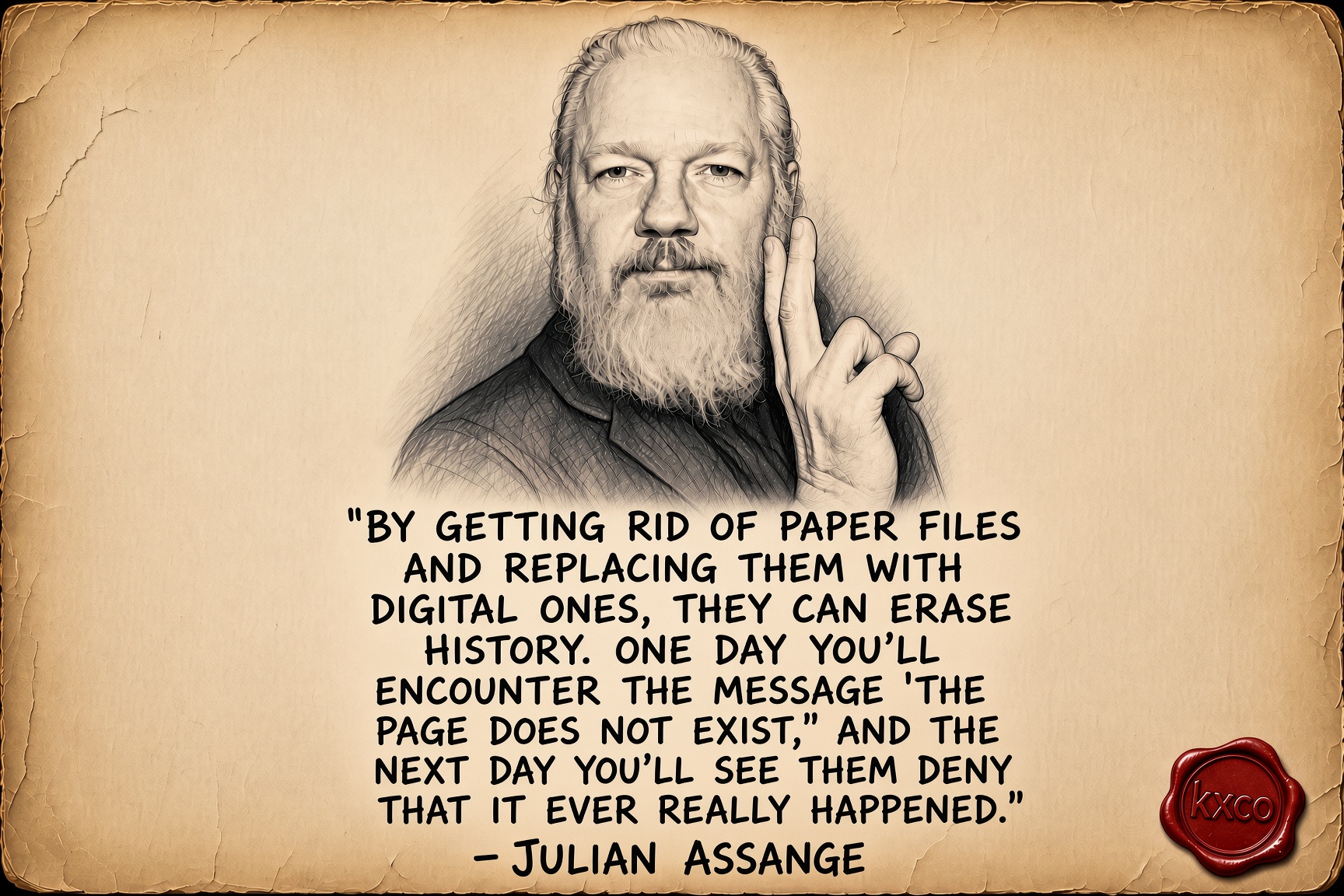
Digital Erasure, and Why KXCO Matters
Pew found 38 percent of 2013's web pages gone a decade later, and quantum computing will eventually let attackers forge the signatures that prove records authentic. Why durable history now depends on post-quantum cryptography, on-chain anchoring and verification that needs nobody's permission.
Economic Calendar and Trading Strategies for the Week Ahead: July 20–24, 2026
A pivotal week for markets: Iran's closure of the Strait of Hormuz sends crude above $86 and gasoline over $5, while Alphabet, Tesla and Intel earnings test the AI trade. Full economic calendar plus trading strategies across oil, gold, Bitcoin, FX and AI chip stocks.
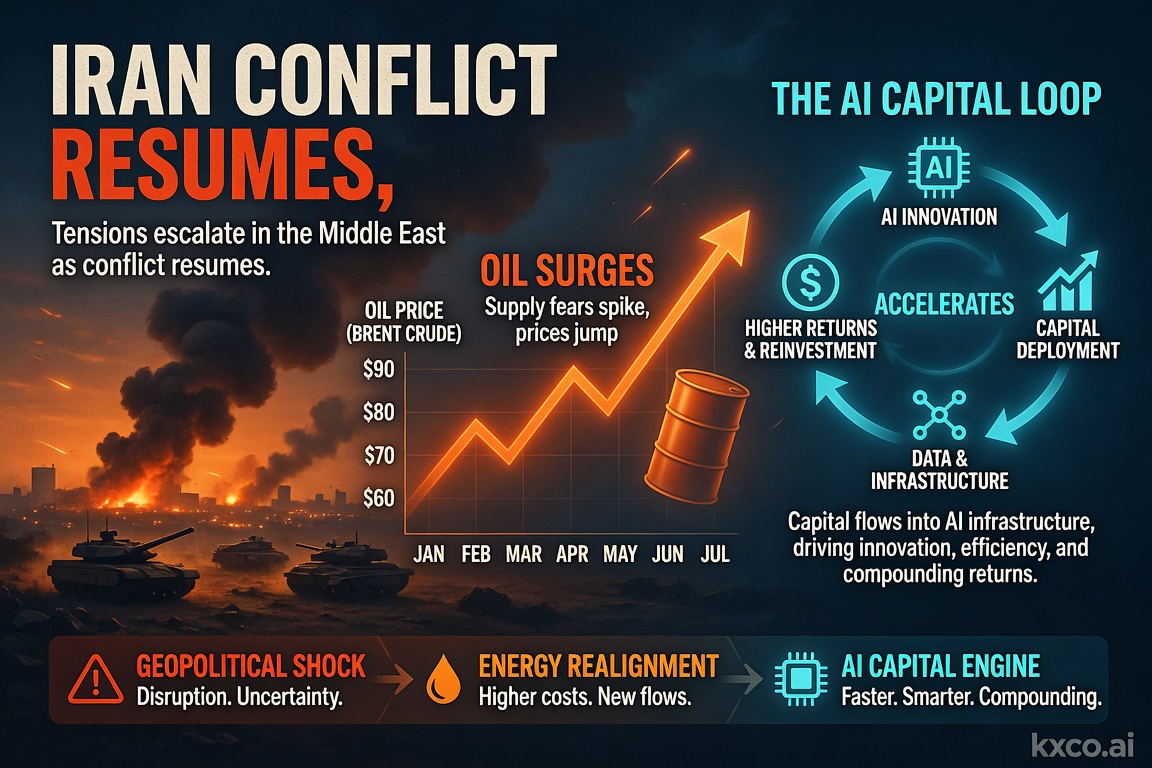
Economic Calendar and Trading Strategies for the Week Ahead: July 14–18, 2026
A pivotal week for markets: US strikes on Iran reignite the oil risk premium, June CPI and retail sales test the Fed's rate-cut path, and the $1 trillion AI capital loop keeps driving the tech trade. Full economic calendar plus trading strategies across oil, gold, Bitcoin, FX and AI stocks.
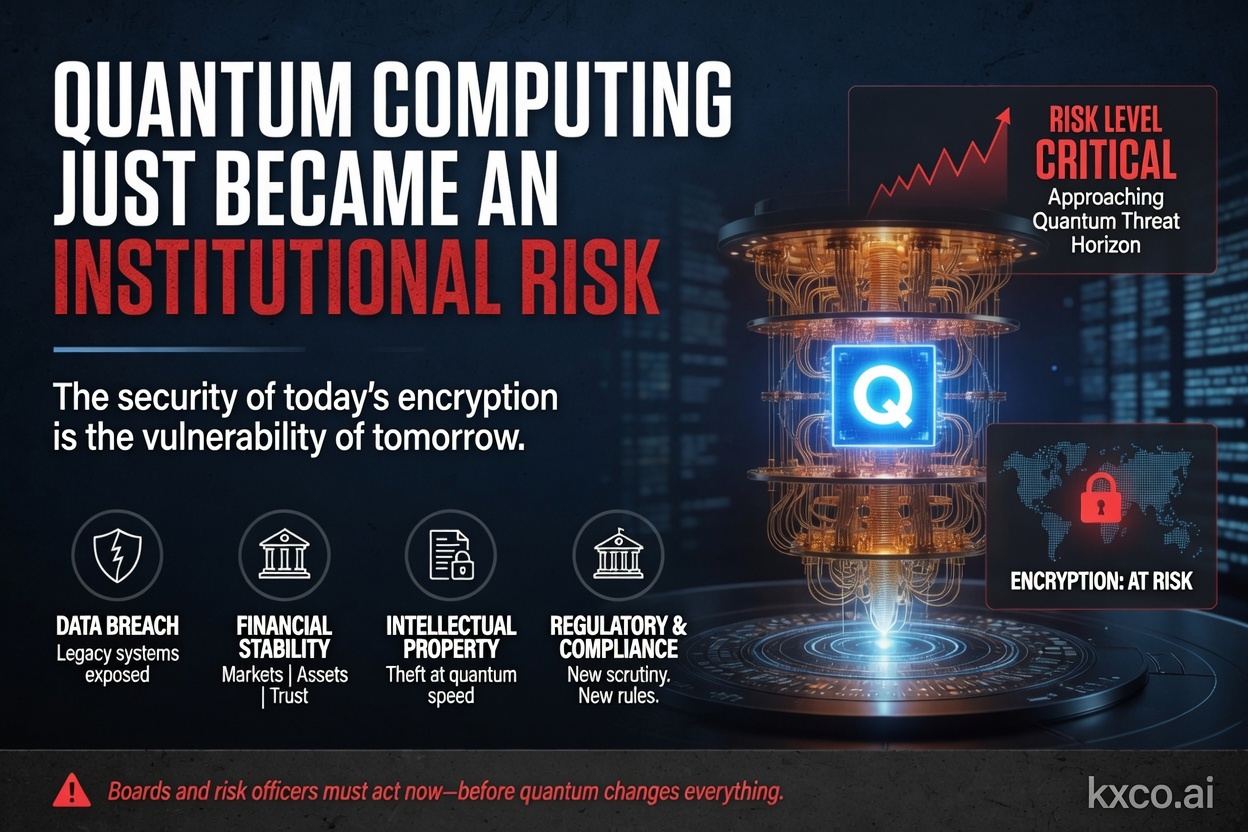
Quantum Computing Just Became an Institutional Risk
Shayne Heffernan on BlackRock's quantum-computing warning for Bitcoin and Ethereum, Google's cryptanalysis research, the two on-chain risk vectors, and how KXCO's Armature L1 — post-quantum from genesis, coordinated by its ontology — answers a threat that just went institutional.
Every story, signed and delivered.
Subscribe to the kxco channel and get the headline, the AI-written key takeaways, and the chain-anchor link the moment we publish. Audio versions and per-ticker subscriptions arrive in the next iteration.