
Crypto: Congressman Tom Emmer is at Issue with the Fed on CBDC
#crypto #technology #blockchain #Fed #banks #CBDC #stablecoinc #digital #currency #Congress #Republican #Democrat
He introduced a bill that would prohibit the institution from issuing digital currency directly to individuals, noting that, “[A]s other countries like China develop CBDCs that fundamentally omit the benefits and protections of cash, it is more important than ever to ensure the United States’ digital currency policy protects financial privacy, maintains the dollar’s dominance and cultivates innovation.
CBDCs that fail to adhere to these three basic principles could enable an entity like the Federal Reserve to mobilize itself into a retail bank, collect personally identifiable information on users and track their transactions indefinitely. Not only would this CBDC model centralize Americans’ financial information, leaving it vulnerable to attack, but it could also be used as a surveillance tool that Americans should never tolerate from their own government.”
At issue is the ability of the Fed to offer retail bank accounts – something that is well outside of its current purview. A direct-to-consumer CBDC would be, in Mr. Emmer’s view, akin to such retail banking duties.
He argued, “Any CBDC implemented by the Fed must be open, permissionless and private. This means that any digital dollar must be accessible to all, transact on a blockchain that is transparent to all and maintain the privacy elements of cash.”
Mr. Emmer notes that the United States must lead on the issue of CBDCs in order to “maintain the dollar’s status as the world’s reserve currency in a digital age,” but that at the same time, the country must aim to encourage innovation in the profit sector rather than compete against it.
Congressman Emmer is known for his thoughtful approach to digital currencies, and as the country prepares itself to discuss CBDCs in earnest, those making decisions would be wise to consult with him on the best way to bring about our digital future. In addition to the debate on CBDCs, the time has come and gone for a more standardized set of rules for digital assets of all stripes.
Many believe that regulators will begin developing such a rulebook for cryptocurrencies and stablecoins, as well as exchanges. During this time, it is critical that they continue to look at the custody situation too, as it is an area that would also benefit from a more standardized set of expectations and regulations.
Elections have a way of politicizing issues that should be apolitical, and this is an election yr. The bipartisan nature of the Congressional Blockchain Caucus should prove that the blockchain economy is 1 item that transcends Republican and Democrat.
Politically diverse areas, including bright red Texas and bright blue New York City, have leaders grappling to show innovators that they understand the gravity of the situation while offering havens for startups and other businesses even tangentially related to cryptocurrency and the budding digital assets space.
Now is not the time to politicize the technology which has and will continue to fundamentally alter the state of the industry. The concerns that Congressman Emmer has remain in line with the spirit of the birth of the cryptocurrency movement. As we consider how to move forward, his words should remain with us.
Have a prosperous day, Keep the Faith!
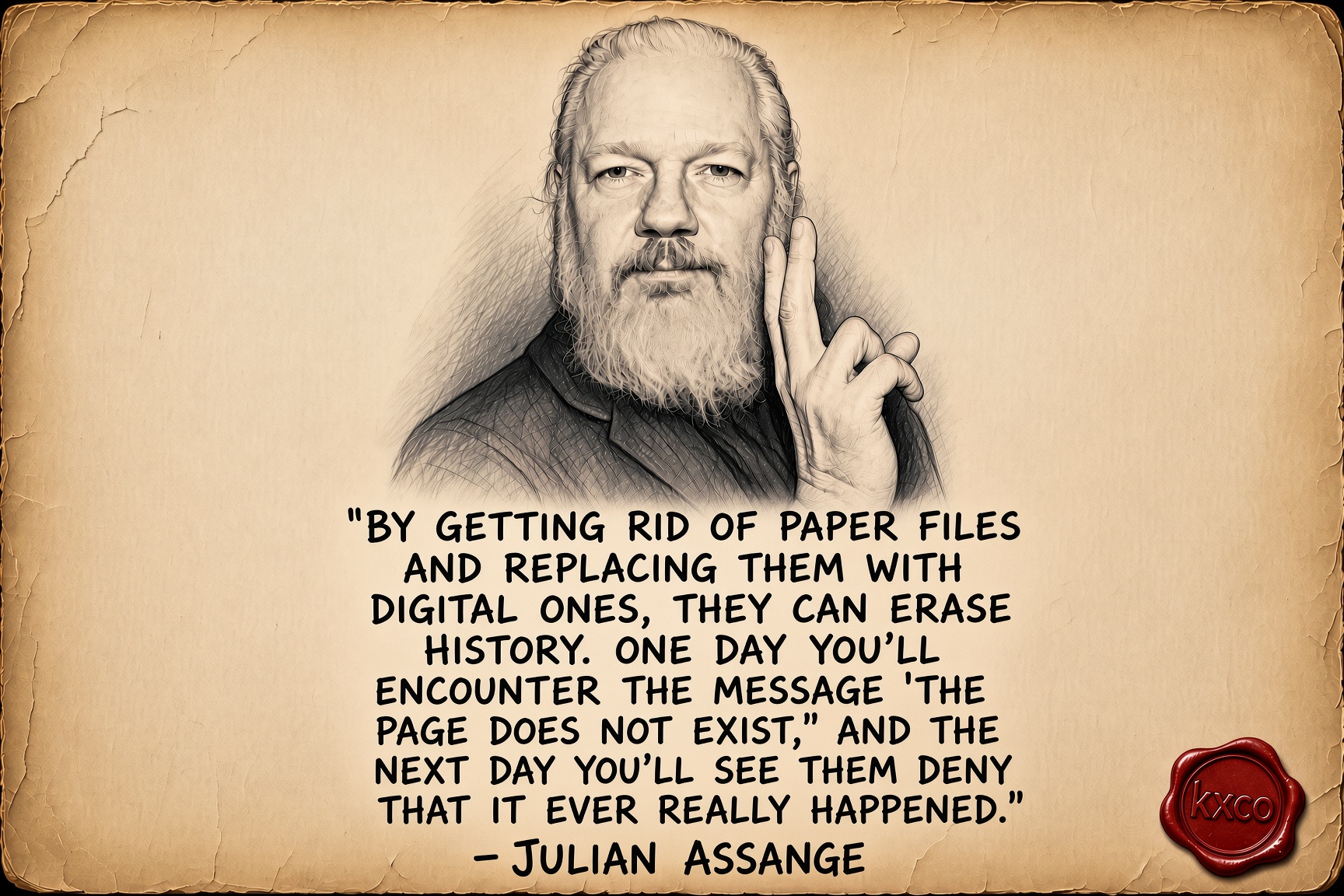
Digital Erasure, and Why KXCO Matters
Pew found 38 percent of 2013's web pages gone a decade later, and quantum computing will eventually let attackers forge the signatures that prove records authentic. Why durable history now depends on post-quantum cryptography, on-chain anchoring and verification that needs nobody's permission.

Economic Calendar and Trading Strategies for the Week Ahead: July 20–24, 2026
A pivotal week for markets: Iran's closure of the Strait of Hormuz sends crude above $86 and gasoline over $5, while Alphabet, Tesla and Intel earnings test the AI trade. Full economic calendar plus trading strategies across oil, gold, Bitcoin, FX and AI chip stocks.
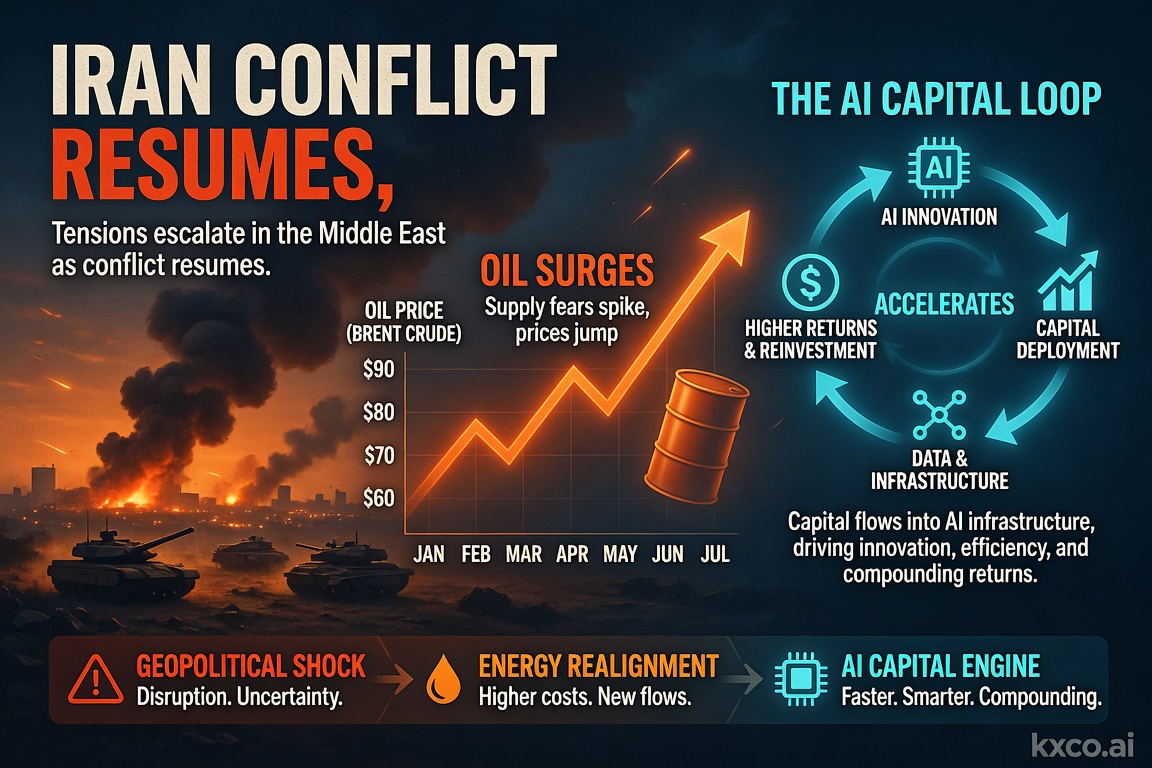
Economic Calendar and Trading Strategies for the Week Ahead: July 14–18, 2026
A pivotal week for markets: US strikes on Iran reignite the oil risk premium, June CPI and retail sales test the Fed's rate-cut path, and the $1 trillion AI capital loop keeps driving the tech trade. Full economic calendar plus trading strategies across oil, gold, Bitcoin, FX and AI stocks.
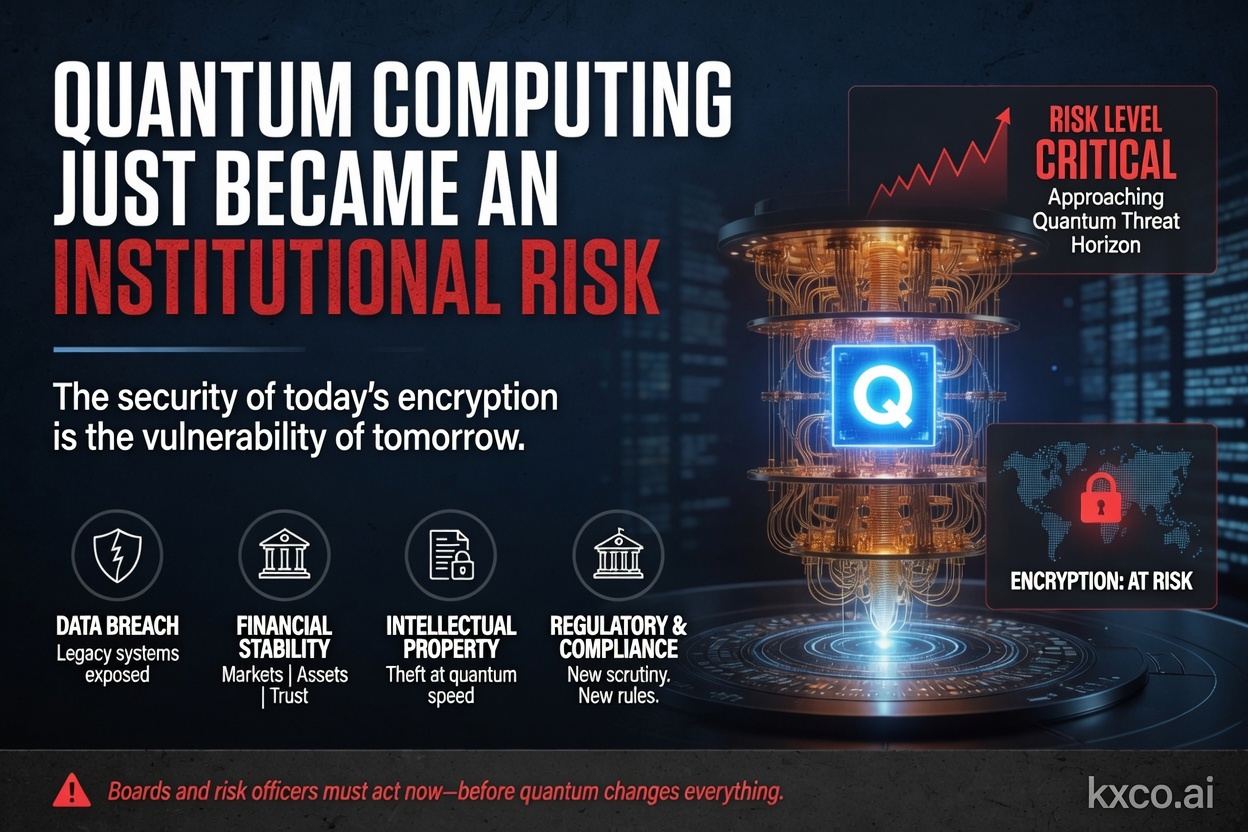
Quantum Computing Just Became an Institutional Risk
Shayne Heffernan on BlackRock's quantum-computing warning for Bitcoin and Ethereum, Google's cryptanalysis research, the two on-chain risk vectors, and how KXCO's Armature L1 — post-quantum from genesis, coordinated by its ontology — answers a threat that just went institutional.
Every story, signed and delivered.
Subscribe to the kxco channel and get the headline, the AI-written key takeaways, and the chain-anchor link the moment we publish. Audio versions and per-ticker subscriptions arrive in the next iteration.