
Commentary: Paul Ebeling on Wall Street; Special Report on DeFi, Everything You Need to Know
#PaulEbeling #WallStreet #DeFi #blockchain #bitcoin #etherum #money
The term decentralized finance, or DeFi, goes back to a Telegram chat in Y 2018 when a group of software developers and entrepreneurs were trying to decide what to call their movement of new-breed financial services that would be automated, built on a blockchain, and capable of stripping out traditional banks.
Now just 3yrs later and DeFi is big business.
A user with a crypto wallet can trade digital assets, get loans, or take out insurance, among many other things. $90-M of collateral is locked up in these services, and more than 10-M people have downloaded MetaMask, a very popular digital wallets used to open up access to the networks.
The roots of DeFi (decentralized finance) come from the Y 2008 bitcoin whitepaper that set out the framework for a novel system for digital cash; those creation exploded into something bigger when Ethereum was invented a few years later. “Bitcoin wanted to be peer-to-peer money,” Camila Russo, founder of the crypto news service The Defiant, wrote in her book The Infinite Machine. “Etherum wanted to be peer-to-peer everything.”
DeFi is an amalgam of cryptography, finance, and software development with its own lexicon and jargon.
Let’s take a look at it, as follows:
One of the core tenants of decentralized finance is that it is decentralized. Take bitcoin, for example: The original crypto asset is basically a ledger (its blockchain) that is decentralized because the transactions are recorded in databases on many different computers. That single record (stored across many databases) is secured with cryptography and the computers keep tabs on each other to make sure it hasn’t been tampered with.
Decentralization is part of what makes bitcoin hard to kill. No single party is in charge, so it’s nearly impossible for someone to go rogue and change the rules that govern the virtual coin.
Likewise, even if a government manages to prevent a bunch of computers from supporting bitcoin, the digital asset can continue functioning because other computers on the network retain a full record of transactions and can carry on running the show.
DeFi takes this concept a step further. Decentralized exchanges and lending systems use blockchains like the Ethereum network, which was proposed by Canadian-Russian programmer Vitalik Buterin in Y 2013. Whereas the bitcoin blockchain was designed to keep track of bitcoin transactions, Ethereum’s blockchain was created to host programs.
Think of Ethereum as a decentralized computer that software developers can make applications (dApps) for. The computers that provide processing power for Ethereum are rewarded with ether, which is now the second-most valuable crypto asset behind bitcoin.
Like bitcoin, the Ethereum network is hard to shut down or corrupt. Anyone with an internet connection can access it.
The decision making, or governance, at DeFi organizations—from the fees they charge users to the products they offer is often meant to be decentralized.
If the US political system is a representative democracy, think of DeFi as direct democracy.
A single person or a small group of people might be driving a decentralized application at inception, but they often seek to step away as the project gains momentum, handing control to the community that uses it.
That transition could be in the form of a decentralized autonomous organization (DAO), which has its rules and regulations embedded in programming code and may issue governance tokens, which gives holders of those coins say in decisions.
One of bitcoin’s Key innovations was the capacity for 2 users to make digital payments directly with 1 another. This is easy to do in the physical world using paper or metal money. But until bitcoin came along, the only way to do so electronically was through a bank or payment company.
Going through these 3rd parties leaves a digital footprint that can be surveilled, and those companies could potentially be “censored” by the government i.e. pressured to prevent transactions for political or other reasons.
Bitcoin was envisioned to get around this, as a digital form of cash for peer-to-peer payments.
DeFi apps can also be peer-to-peer.
In a traditional stock-trading transaction, an order might be processed through a series of intermediaries, a broker and an exchange, among other, while the shares themselves are held at a custody bank, which is expected to keep the securities from getting lost or stolen.
By contrast, a DeFi exchange (DEX) does not have those intermediaries. If you use Uniswap, a decentralized exchange built on the Ethereum platform, to trade crypto tokens, those assets will end up right in your crypto wallet, facilitated by Uniswap’s automated programs known as smart contracts. That means there are fewer parties taking a cut of your transaction.
Blockchain has enabled a series of digital gold rushes since it was invented 13 yrs ago, 2 of them are initial coin offerings (ICOs) and nonfungible tokens (NFTs):
ICOs are a type of crowdfunding, and they are often used to raise money for open-source software projects. In exchange for capital, ICO investors get a unique token that might give them access to the software’s special features… or might not give them access to much at all.
ICOs can sound a little bit like a stock offering, too much like for the US Securities and Exchange Commission; coin offerings may lack guardrails like disclosure and auditing that an initial public offering (IPO) would be expected to provide in the regulated stock market.
ICOs raised more than $7-B in Y2018, before falling around 95% to $371-M in Y 2019, the latest yr data was available, as regulators cracked down.
NFTs are kind of like a limited-edition trading card online. Just as blockchain enables users to prove ownership of their bitcoin holdings, so too does it enable people to make unique digital assets like collectibles and art.
One of the best known NFT sales was a work by Beeple, the artist also known as Mike Winkelmann who sold a collage through an auction at Christie’s for $69-M. Unlike a music MP3, which can be copy-and-pasted to infinity, NFTs are designed to be 1 of a kind, and to have 1 owner at a time.
ICOs gave startups and software developers a way to raise money without the help of an investment bank or the backing of a venture capital firm.
Likewise, NFTs can give musicians and visual artists a new way to monetize their work. NFTs are really interesting because they have proven that a digital item can be scarce.
In short: DeFi strips out intermediaries like custody banks, which are expected to keep assets (usually digital tokens) safe. That means you do not have to worry about a financial institution failing and taking your holdings with it or a government seizing your tokens and confiscating them. But, the only thing keeping your holdings safe is you and your passcode. If you lose that passcode or someone steals it, your assets are gone for good.
Have a prosperous week, Keep the Faith!
#PaulEbeling, #WallStreet, #DeFi, #blockchain, #digital, #assets, #money,

The Week Ahead on Wall Street, 16 November 2026: Look for the Bounce
NVIDIA reports on Tuesday 17 November 2026, its first results since Jensen Huang resigned, and I expect the stock and the AI market to bounce. NVIDIA closed at $162.85 on 13 November 2026, 31.93% below its record, while the semiconductor index rose 8.05% on the week. The calendar leans to currencies, with the yen near 160 after briefly crossing it, and the US publishes retail sales, housing starts, jobless claims and the Fed's minutes. Follow them on the Live Trading News trading page.
KXCO Pay Is Live: WooCommerce Crypto Payments Straight to Your Own Wallet
KXCO Pay 1.0.0 went live on WordPress.org on 7 October 2026. It adds Bitcoin, Ether, USDT and USDC to WooCommerce, and the customer pays the merchant's own address. The plugin holds no funds and no keys: it reads the chain through public services, prices each order from CoinGecko, locks the rate and settles the order once the payment confirms. A shortcode, a block and a REST API take payment on any page. Free under the GPL, with no commission on any payment.
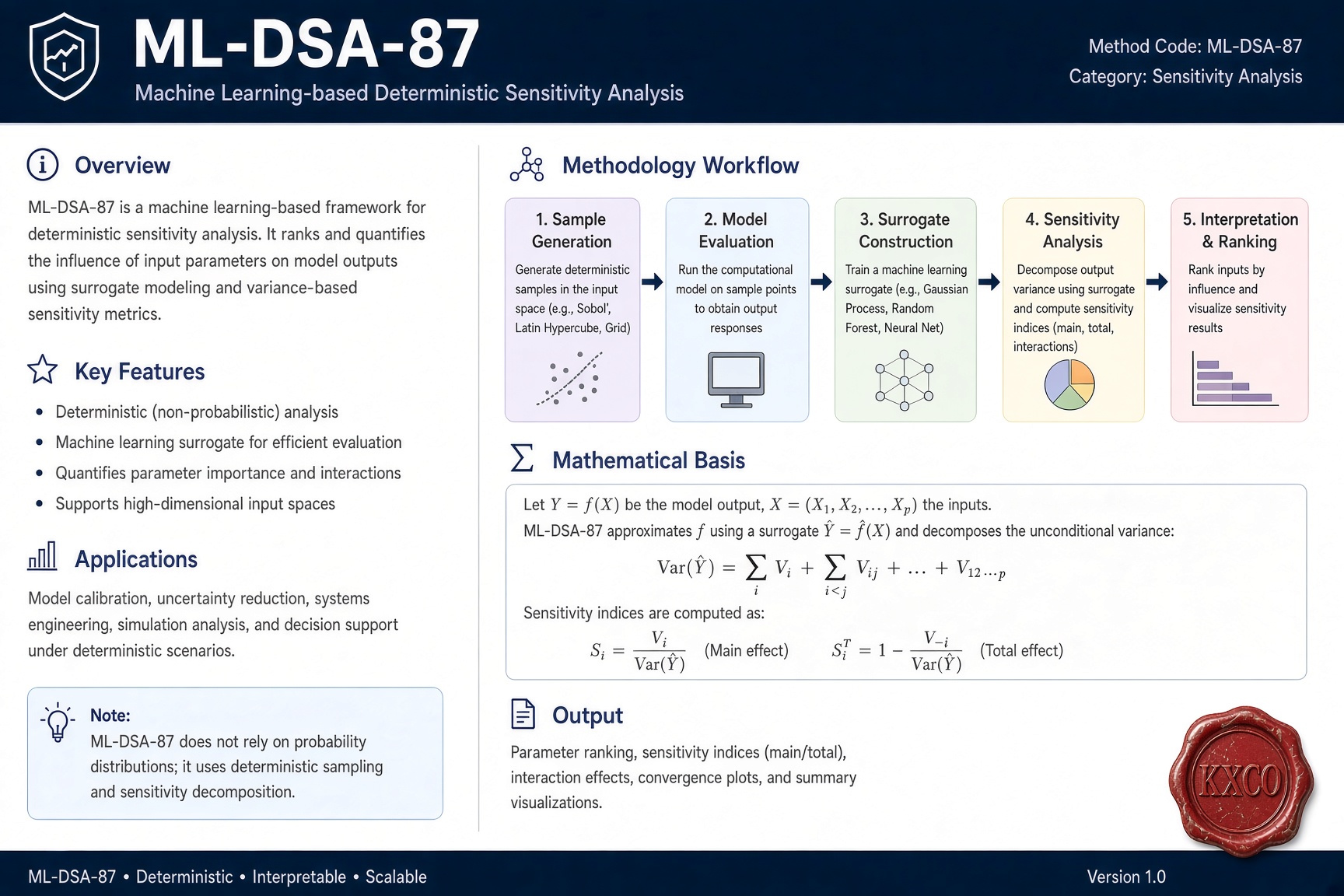
KXCO Now Verifies ML-DSA-87 in Consensus, the Signature Level Named by the NSA
On 6 October 2026 KXCO's chain began verifying ML-DSA-87 signatures as a rule of consensus, and the first ML-DSA-87 identity registered 28 seconds later. ML-DSA-87 is the category 5 level of NIST's FIPS 204, specified by the NSA for US national security systems and preferred by Australia's Information Security Manual. KXCO ships it for signing and for keys held in hardware, accepts it across its network and verifies it on chain, and anyone can check a verdict.

Earnings, the Economic Calendar and Trading Strategies: September 8 to 12, 2026
A four-session week decides more than a print. Oracle reports after the close on Thursday 10 September, PPI lands that morning and CPI on Friday, with the ECB in between and the FOMC eight days out. Oracle is the last hyperscaler of the cycle and the widest value gap on the KXCO Ontology Live Analyst Outlook layer: a $457bn market value under a $638bn contracted backlog. Here is the calendar, the graph behind it, the levels and the book.
Every story, signed and delivered.
Subscribe to the kxco channel and get the headline, the AI-written key takeaways, and the chain-anchor link the moment we publish. Audio versions and per-ticker subscriptions arrive in the next iteration.