
China's Space Station Ambition
The construction of China's own space station is underway, with the core module Tianhe, which means "heavenly harmony," sent into space Thursday, kicking off a series of key launch missions that aim to complete the construction of the station by the end of 2022.
Tianhe was carried into space by a Long March-5B Y2 carrier rocket from the Wenchang Spacecraft Launch Site on the coast of south China's Hainan Province. It is the first of 11 missions to build and supply the space station.

CGTN:Tianhe lifts off China's space station ambition
Tianhe will act as the foundational module for China's first space station in low-Earth orbit named Tiangong, which means "heavenly palace" in Chinese.
Chinese President Xi Jinping said in a congratulatory message Thursday that the successful launch of the core module Tianhe means that China's space station construction has entered the full implementation stage, which lays a solid foundation for follow-up tasks.
Building a space station and national space laboratory is an important goal of the three-step strategy of China's manned space program, and an important leading project to boost the country's strength in science and technology, as well as in space, Xi said in the message.
He called on all members who participated in the mission to be self-reliant and innovative, to win the overall victory of the space station construction mission, and to make new and greater contributions to the comprehensive construction of a modern socialist country.
An open platform
China's new space station will not just be for Chinese scientists. Foreign astronauts and global cooperation on scientific experiments are most welcome in China's space station, Hao Chun, the director of China Manned Space Engineering Office, said in an exclusive interview with CGTN.
"China and the United Nations Office for Outer Space Affairs carried out cooperation on applications concerning the use of China's space station. We signed an agreement," said Hao.
So far, a total of nine projects proposed by 17 countries including France, Germany and Italy have been selected for the first round of experiments to be conducted in the new space lab.
"In the future, there will surely be foreign astronauts participating in China's space flight, working and living on our space station. In addition, some foreign astronauts are already participating in Chinese flights and are already learning Chinese," said the director.
Build an aerospace power
Since the 18th National Congress of the Communist Party of China (CPC), Xi, also general secretary of the CPC Central Committee, has personally directed the implementation of major aerospace projects, and promoted China's steady progress to become an aerospace power.
"Exploring the vast universe, developing space programs and becoming an aerospace power have always been the dream we've been striving for," Xi said in an instruction on China's first Space Day on April 24, 2016.
In 2020, China's space industry has produced remarkable achievements: China successfully put into orbit its final Beidou satellite on June 23; an unmanned probe to Mars was sent into space on July 23; an uncrewed mission called Chang'e-5 with the aim of collecting lunar material was launched on November 24 and China successfully landed the Chang'e-5 probe on the moon's surface on December 1.
Democrats' AI Spending Curtailment: The Dumbest Idea in Washington
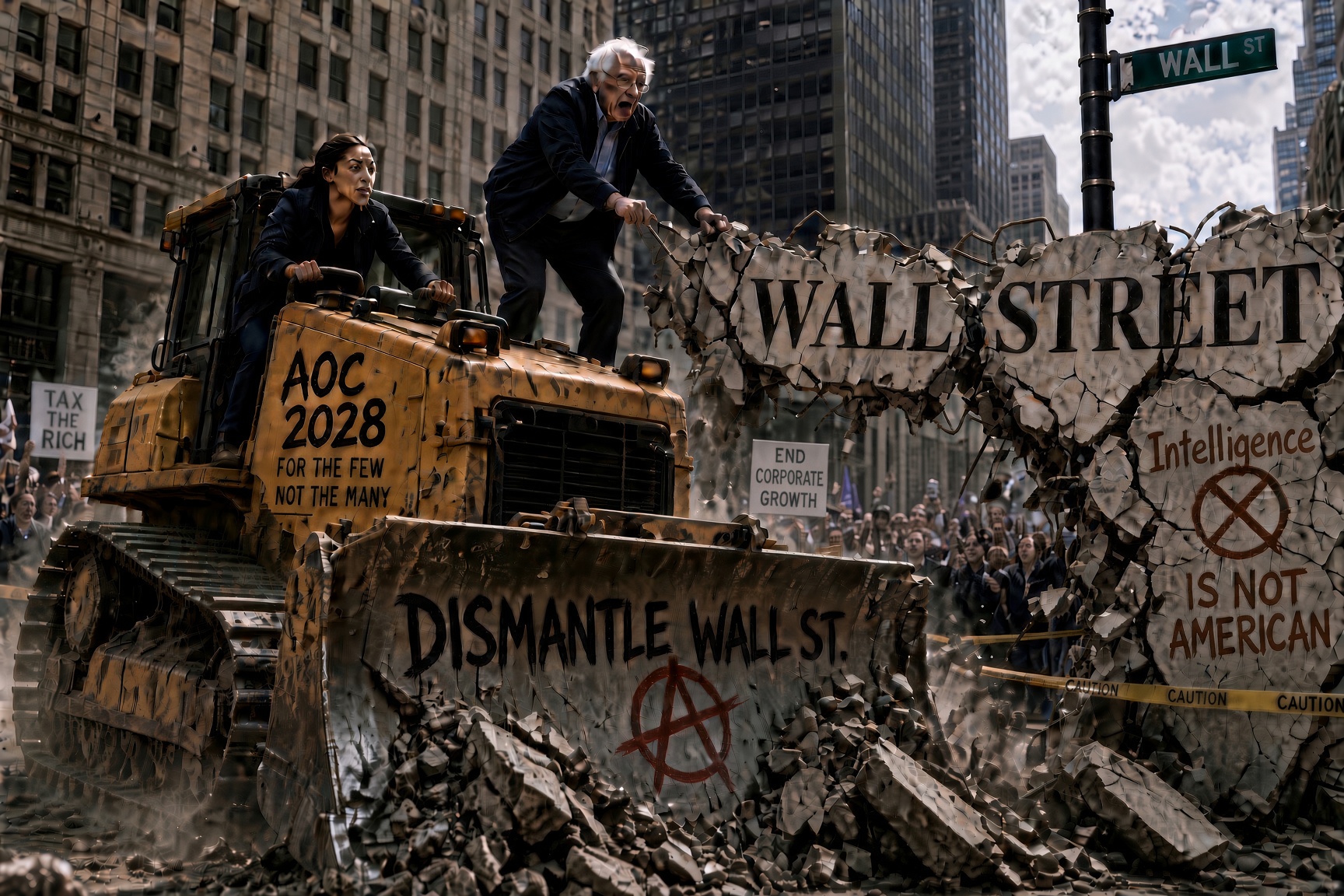
After the midterm sweep, Democrats want to slow America's AI build-out. The Sanders and Ocasio-Cortez bill would freeze building and upgrading of AI data centres nationwide, and a superintelligence ban Rep. Yassamin Ansari wants atop the agenda would pause every model trained with 10^25 operations or more. Governors-elect in Texas and Georgia back pauses, and Goldman Sachs puts 45% of planned capacity in Democrat-run states backing moratoriums. Shayne Heffernan: AI computing follows the power.

Understanding the US China AI and Quantum Landscape
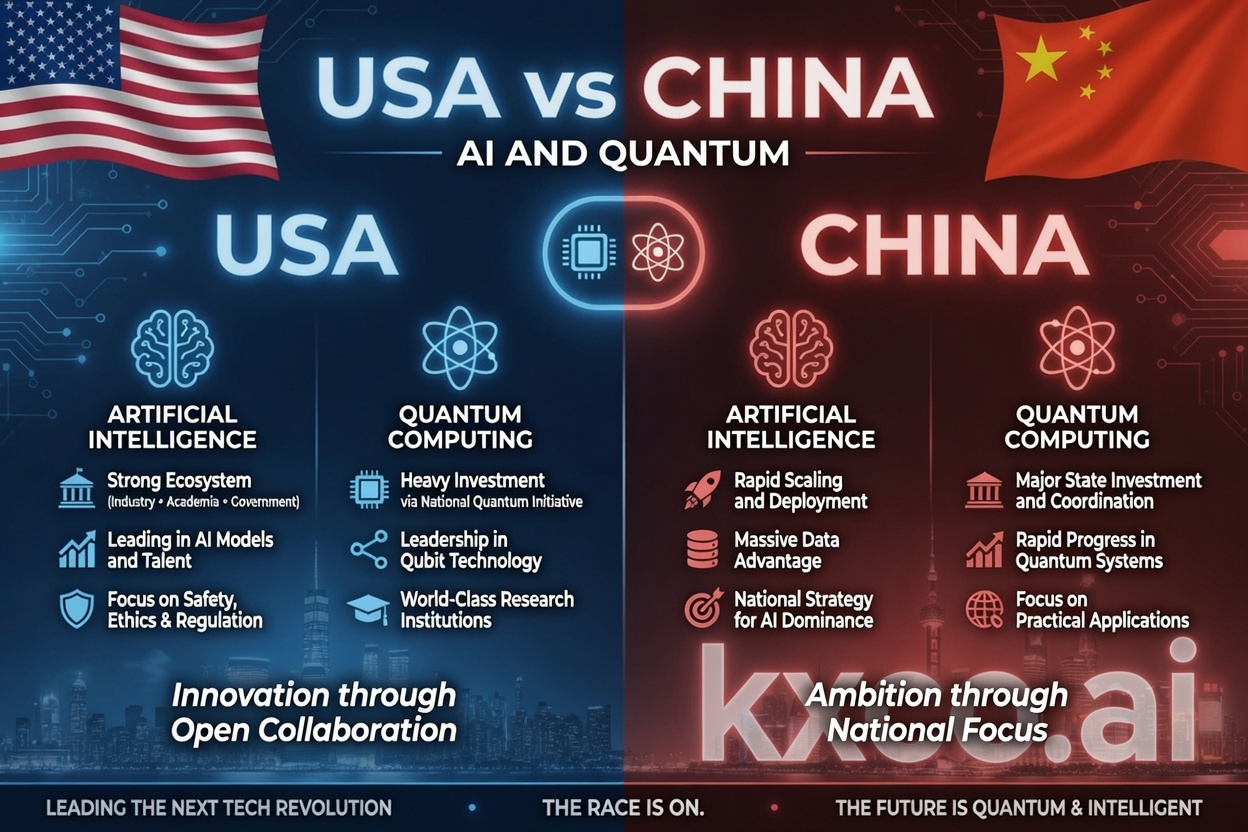
AI and quantum are usually reported as a US–China race. The more useful story is two different systems — frontier capital versus open-source scale — entangled through shared chokepoints. Shayne Heffernan maps the landscape with the KXCO AI Sector Ontology, with comparison graphics and the investable names.
USA vs China: The AI and Quantum Scorecard
The US still leads AI models and chips by a whisker; China leads power and open-weight models outright. Shayne Heffernan scores the four races that will decide the decade.
USA vs China: The Quantum Computing Race
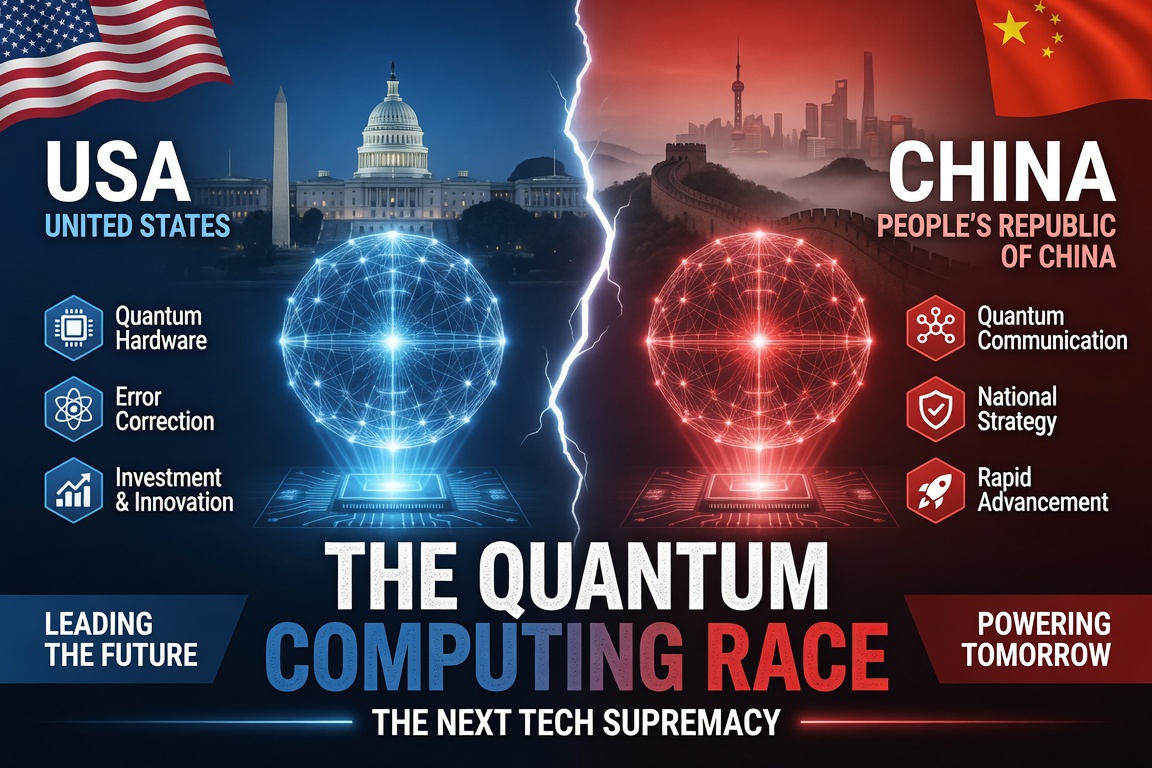
The U.S. still leads quantum computing, but China has closed the gap fast — on hardware scale, supply-chain self-reliance and quantum networking. A category-by-category scorecard as of June 2026.
Every story, signed and delivered.
Subscribe to the kxco channel and get the headline, the AI-written key takeaways, and the chain-anchor link the moment we publish. Audio versions and per-ticker subscriptions arrive in the next iteration.