
China to Merge Exchanges
China's securities regulator on Friday approved merging the Shenzhen Stock Exchange's main board with the SME (small and medium-sized enterprises) board.
The merger will follow the general principles of unifying business rules and unifying operation supervision modes, with issuance and listing conditions, investor thresholds, trading mechanisms, and stock codes and abbreviations remaining unchanged, said Pi Liuyi, an official with the China Securities Regulatory Commission.
Involving only adjustments on parts of business rules, market products, technical systems, and issuance and listing arrangements, the merger will have little impact on market operations and investors' trading in general, a spokesperson with the bourse noted.
After the merger, relevant indexes involving the SME board need to be adjusted adaptively. Fixed-income products, futures, and options products would be mostly unaffected. The Shenzhen-Hong Kong stock connect program would also not be affected, according to the bourse.
These index adjustments will not contain substantial changes to index compiling methods. It would, therefore, not lead to the investment target adjustments of fund products tracking relevant indexes, the spokesperson said.
These arrangements are conducive to the stability and continuity of the indexes and ensuring the stable operation of fund products, the spokesperson added.
By the end of January, the Shenzhen Stock Exchange's main board and the SME board housed 1,468 listed companies, accounting for 35 percent of the A-share market's total.
These companies' market value amounted to 23.39 trillion yuan (about 3.61 trillion U.S. dollars), accounting for 29 percent of the entire market. Enditem
AI is the Neat Handwriting of the Illiterate
A model in the hands of someone who has read the filing and walked the plant is a clerk. The same model, speaking for someone who has done neither, is a disguise. On AI slop, phantom citations and factslop, why finish stopped being evidence of work, and the containment layer KXCO built so a machine cannot speak as the institution until a source is attached.
Worthship: Do Not Conform to the Age
Worthship is the older English word for worship, and it means to ascribe worth. Bishop Robert Barron preached Romans 12 on 30 August. This essay follows the text into the prison letters, and puts two questions to a graph: do the four readings of that Sunday agree, and was Paul free or in chains when he wrote about despair?
The Truth in All Its Ugliness Must Survive
A majority vote does not determine the truth. Consensus is a mood, gossip is a sport, and a model will write the pretty version for free. Why the ugly number has to survive, why a record beats a dashboard, and what KXCO was built to keep standing when the room changes its mind.
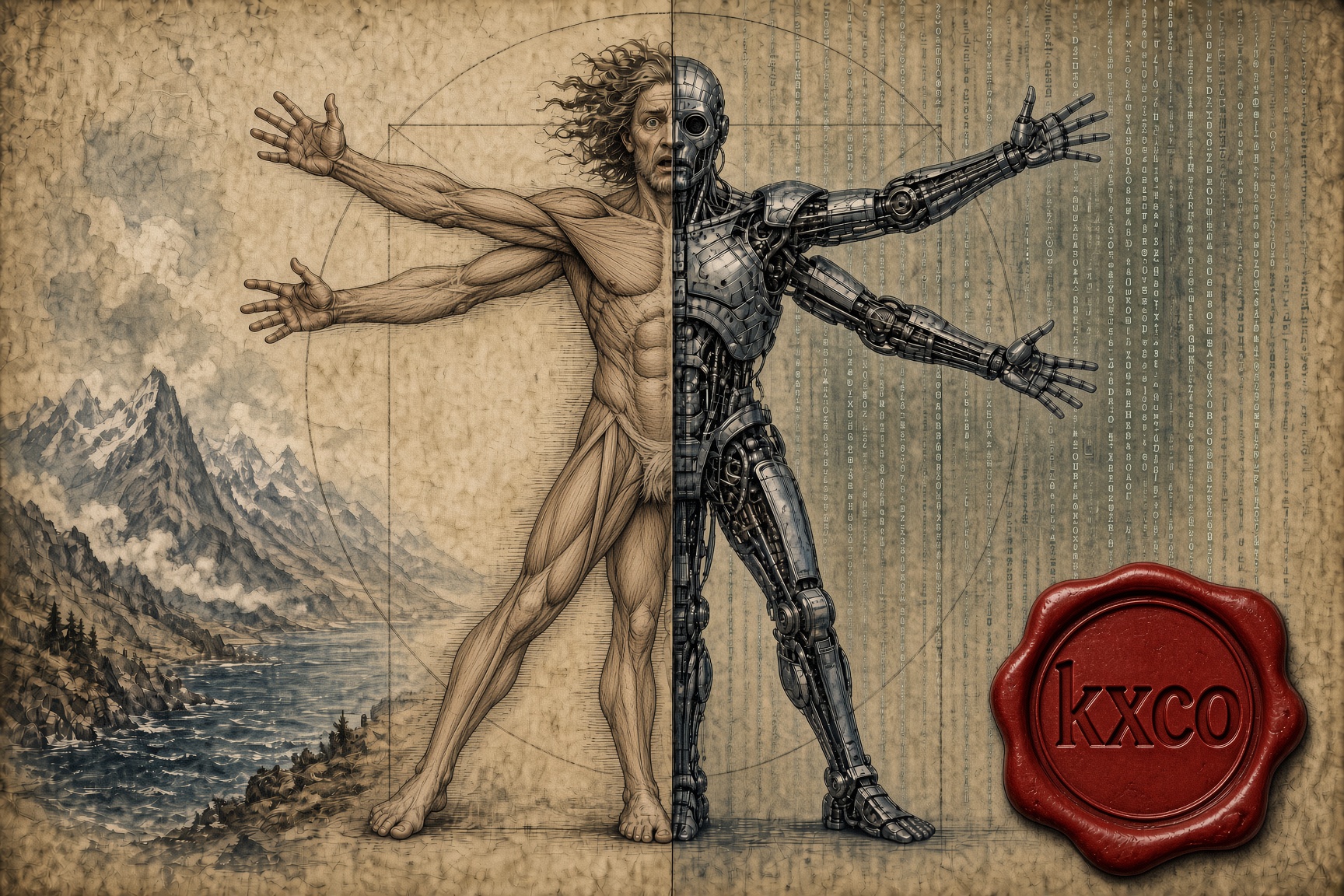
Don't Be the Best, Be the Only: Winning in an AI World
AI is repricing competence downward. What it cannot reproduce is a life. The case for remaining non-fungible, why friction still produces the best ideas, and what it means to build AI systems that keep the human intellect in them.
Every story, signed and delivered.
Subscribe to the kxco channel and get the headline, the AI-written key takeaways, and the chain-anchor link the moment we publish. Audio versions and per-ticker subscriptions arrive in the next iteration.