
Boeing and Qatar Airways $BA Update
Boeing and Qatar Airways: A Strategic Partnership for Widebody Aircraft Delivery in 2025
By Shayne Heffernan
As of May 21, 2025, a significant collaboration between Boeing and Qatar Airways is underway, with Boeing Middle East President Kuljit Ghata-Aura confirming that the company is working closely with the airline on the delivery of widebody aircraft. This partnership highlights Boeing’s commitment to meeting the demands of the Middle East aviation market while supporting Qatar Airways’ expansion plans. With a rich history and a competitive edge, Qatar Airways continues to solidify its position as a global leader, and I’m excited to see how this collaboration will shape the future of aviation.
Qatar Airways was founded in 1993, initially operating as a small regional carrier with just four aircraft, serving a handful of destinations in the Gulf. The airline was re-launched in 1997 under the vision of Qatar’s leadership to transform it into a world-class carrier, with a focus on excellence in service and innovation. By 2003, Qatar Airways had expanded its fleet to 28 aircraft and was serving 40 destinations, earning its first Skytrax World’s Best Airline award in 2011—a title it has won multiple times since. The airline joined the oneworld alliance in 2013, strengthening its global reach, and by 2017, it was operating 200 aircraft to over 150 destinations. Over the years, Qatar Airways has grown into a symbol of luxury and reliability, carrying 40 million passengers in fiscal year 2023/2024, an increase of eight million from the previous year, and reporting record revenues of $23.6 billion, up from $22.2 billion.
Comparing Qatar Airways to its regional rival, Emirates, provides a sense of its scale in 2025. Qatar Airways currently operates a fleet of 267 aircraft, with 199 more on order, including the widebody aircraft from Boeing, such as the 777X and 787 Dreamliner models. Emirates, on the other hand, has a larger fleet of 280 aircraft as of early 2025, but its orders stand at 145 aircraft, focusing heavily on the Airbus A380 and Boeing 777 models. In terms of destinations, Qatar Airways serves over 170 destinations, slightly more than Emirates’ 150, reflecting a broader network despite a smaller fleet. Qatar Airways also carried 43.1 million passengers in the past year, compared to Emirates’ 48 million, showing a closer gap in passenger numbers despite Emirates’ historical size advantage. Qatar’s strategy of using short and medium-sized jets allows it to operate efficiently with fewer passengers, giving it an edge in flexibility over Emirates’ reliance on larger aircraft like the A380.
This partnership with Boeing is a key part of Qatar Airways’ growth strategy. The airline has a firm order for 94 aircraft from Boeing, including 20 777-9s and 40 787-9s, aimed at modernizing its fleet for long-haul routes. The 777X offers a 20% improvement in fuel efficiency and a spacious cabin for up to 426 passengers, while the 787 Dreamliner reduces carbon emissions by 25% compared to older models, aligning with the industry’s push for sustainability. The Middle East aviation sector is projected to see a 5.4% annual growth in passenger traffic through 2043, outpacing the global average of 4.7%, and Qatar Airways is well-positioned to capitalize on this demand with its new aircraft. I’ve always admired the airline’s focus on excellence, and seeing them partner with Boeing to bring these advanced aircraft into service is a testament to their forward-thinking approach.
What excites me most about this development is the potential for innovation in the aviation sector. The 777X, expected to be delivered to Qatar Airways by late 2025, features advanced technologies like folding wingtips for better airport compatibility and GE9X engines, the most powerful commercial jet engines ever built, delivering a thrust of 134,300 pounds. For Qatar Airways, this means enhanced operational efficiency and the ability to serve high-demand routes with greater capacity, further solidifying its position as a global leader in air travel. At Knightsbridge, we’re inspired by the synergy between Boeing and Qatar Airways, as it reflects the kind of strategic partnerships we value in our own work. As we continue to support the digital economy through our blockchain expertise, I look forward to witnessing the broader impact of such advancements on global markets.
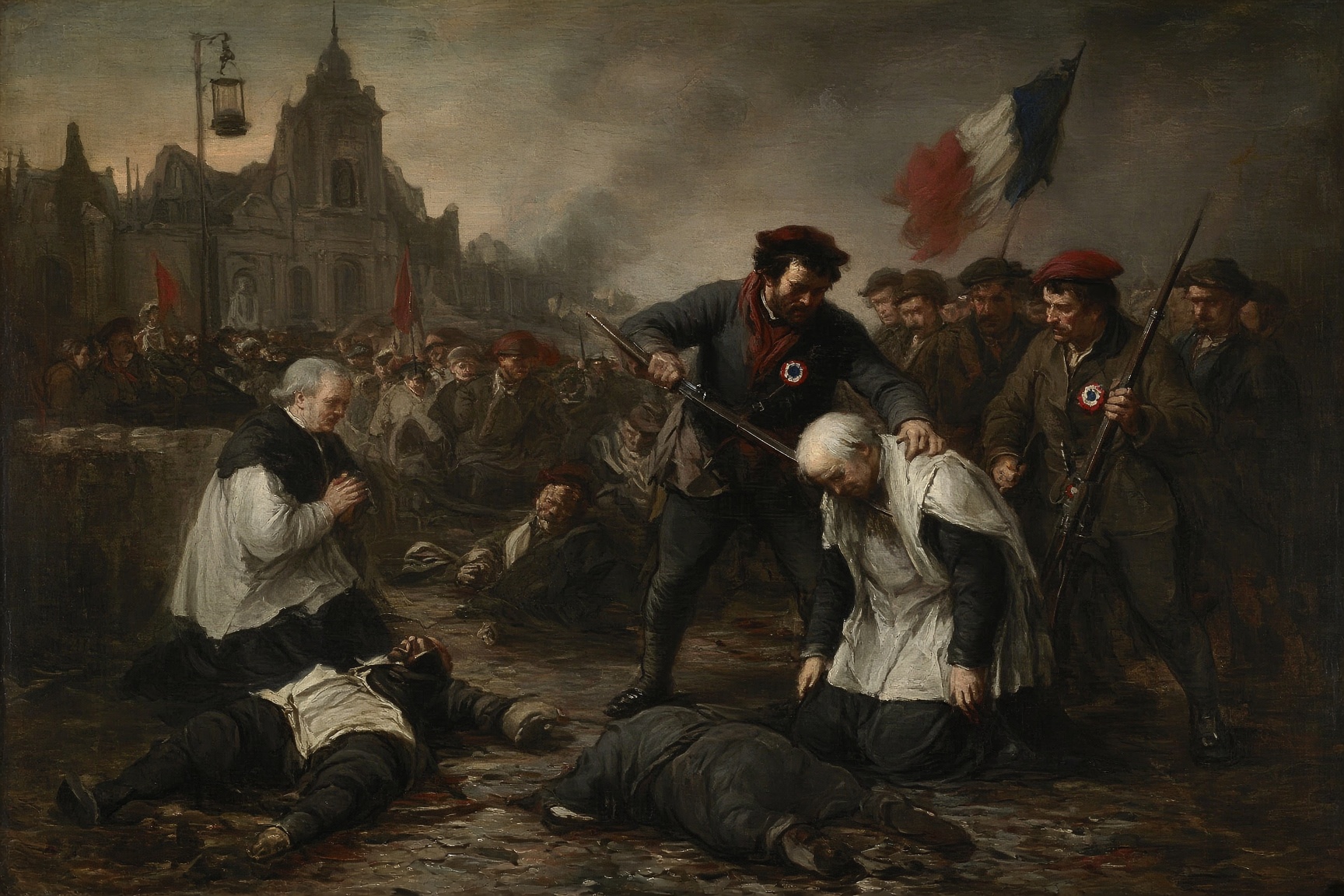
The Evil Legacy of the French Revolution
The French Revolution is still sold as the birthday of the modern world. The ledger does not match the posters. It seized the Church's land and floated its paper money on the seizure, hunted the priests who would not swear, defined the nobility as a moral enemy, and put in their place a political class accountable chiefly to itself. Four knowledge-graph exhibits trace who put the king and queen on the scaffold, and how the template left France.

Careful of the Prompts You Give Yourself
A prompt is not only what you type into a model. It is any sentence that gets inside you and starts issuing orders. Most of what we call goals were written by comparison, media, competition and now the model, and they arrive dressed as ambition. Shayne Heffernan maps how an imported sentence becomes a week, why a want should carry its source the way a Round Table claim does, and how to strip, lock and guard the objective that is actually yours.

KXCO is Enhanced Intelligence, Not Artificial
I never wanted artificial intelligence. I wanted enhanced intelligence, and they are not the same product. Artificial means the machine does the thinking and hands you the answer. Enhanced means I do the thinking, with more of my own mind in the room than I have ever had at one time. Forty years of reading, recallable in the second I need it. Patterns across law, credit, physics and markets that no specialist sees, because the useful ones sit between the fields rather than inside them.
The AI Safety Argument Is Being Held in the Wrong Room
The people who will be blamed for what AI does are not in the room where its safety is argued. A jailbreak escapes a policy. The failure that costs money is an action that escapes an owner, a payment sent or a record altered. Tokens are not authority. Intelligence got cheap and judgment did not, and there is no organ of standing you can copy into a model. Shayne Heffernan on the objection worth taking seriously, and the questions to take into a vendor meeting.
Every story, signed and delivered.
Subscribe to the kxco channel and get the headline, the AI-written key takeaways, and the chain-anchor link the moment we publish. Audio versions and per-ticker subscriptions arrive in the next iteration.