
Biden is as Xenophobic as he Claimed Trump was
Regulators have begun legal proceedings that could strip three Chinese state-owned telecommunications companies of their right to operate in the United States, officials said Wednesday, citing national security concerns.
The three firms -- China Unicom America, Pacific Networks, and ComNet -- had failed to adequately prove their Americas operations were not subject to "undue influence" from Beijing, the Federal Communications Commission said.
Commission officials voted 4-0 at a hearing to begin an investigation, which could see the firms stripped of their right to operate within the US.
"The threat to our networks from entities aligned with Communist China is one that we must address head on, and I am pleased that the FCC continues to show the strength and resolve necessary to meet this menace," FCC commissioner Brendan Carr said in a statement.
"When it comes to Communist China, we have set a high bar for action over the last few years," he added.
The move spells more bad news for the embattled firms' US operations, following a January decision by the New York Stock Exchange to bar them from trading.
In a statement following Wednesday's ruling, China Unicom -- one of the world's largest carriers -- insisted that it has never acted illegally and expected a "thorough, fair and fact-based review of the company’s conduct by the FCC," Bloomberg reported.
Wednesday's decision comes amid a broader drive by US regulators to crackdown on Chinese telecoms groups they see as a threat to national security.
Last week, regulators listed tech giant Huawei to a roster of communications companies thought to pose "an unacceptable risk", signalling that hopes for are set with the United States under President Joe Biden, after the firm was battered by sanctions imposed by Donald Trump's administration, were unfounded.
AI is the Neat Handwriting of the Illiterate
A model in the hands of someone who has read the filing and walked the plant is a clerk. The same model, speaking for someone who has done neither, is a disguise. On AI slop, phantom citations and factslop, why finish stopped being evidence of work, and the containment layer KXCO built so a machine cannot speak as the institution until a source is attached.
Worthship: Do Not Conform to the Age
Worthship is the older English word for worship, and it means to ascribe worth. Bishop Robert Barron preached Romans 12 on 30 August. This essay follows the text into the prison letters, and puts two questions to a graph: do the four readings of that Sunday agree, and was Paul free or in chains when he wrote about despair?
The Truth in All Its Ugliness Must Survive
A majority vote does not determine the truth. Consensus is a mood, gossip is a sport, and a model will write the pretty version for free. Why the ugly number has to survive, why a record beats a dashboard, and what KXCO was built to keep standing when the room changes its mind.
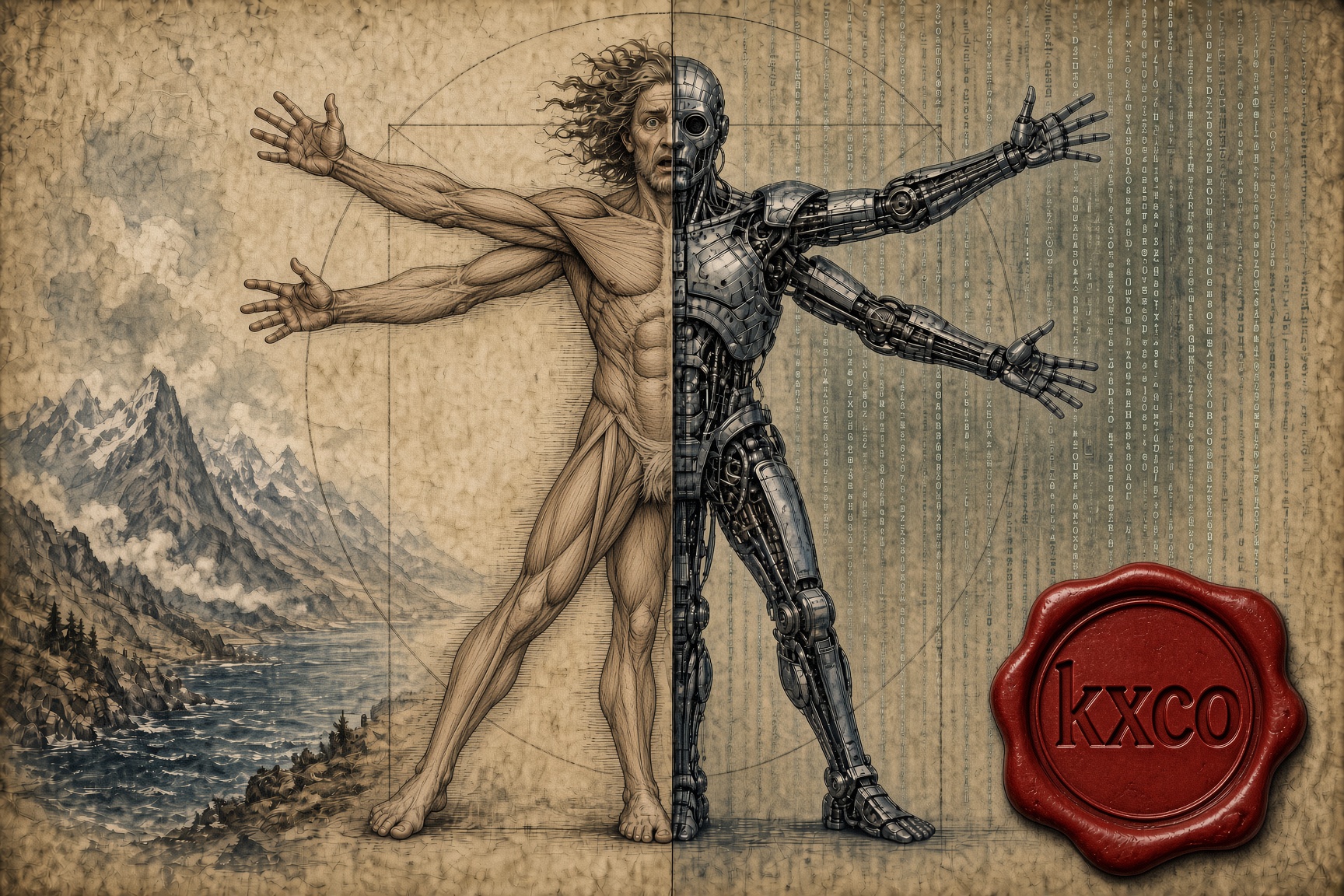
Don't Be the Best, Be the Only: Winning in an AI World
AI is repricing competence downward. What it cannot reproduce is a life. The case for remaining non-fungible, why friction still produces the best ideas, and what it means to build AI systems that keep the human intellect in them.
Every story, signed and delivered.
Subscribe to the kxco channel and get the headline, the AI-written key takeaways, and the chain-anchor link the moment we publish. Audio versions and per-ticker subscriptions arrive in the next iteration.