
Bernardo Bellotto: A Master of Cityscapes
Bernardo Bellotto: A Master of Cityscapes and the Legacy of a Venetian Visionary
By Shayne Heffernan
Bernardo Bellotto, born on May 20, 1722, in Venice, Italy, was a painter whose meticulous cityscapes captured the essence of 18th-century Europe with a realism that continues to captivate art enthusiasts today. Often overshadowed by his uncle and mentor, the renowned Venetian artist Canaletto, Bellotto carved out his own legacy as a vedute (view) painter, bringing to life the urban landscapes of Venice, Dresden, Vienna, Munich, and Warsaw. His life, marked by prodigious talent and a restless spirit, reflects the cultural dynamism of his era, while his works offer a window into the architectural splendor and societal shifts of the time.

Bellotto’s journey began in the vibrant artistic hub of Venice, where he was born to Fiorenza Domenica Canal and Lorenzo Bellotto. From a young age, he showed a precocious talent, beginning his training at just 14 under the guidance of his uncle, Canaletto, one of the most celebrated view painters of the Venetian school. By 16, Bellotto had already joined the Venetian painters’ guild and produced works of astonishing maturity, such as a detailed cityscape painted around 1738 while working in Canaletto’s studio. His early exposure to Canaletto’s techniques—particularly the use of precise architectural detail and atmospheric perspective—shaped his style, but Bellotto soon developed a distinct voice, characterized by a more tangible, almost tactile realism. As one art historian noted, Bellotto’s Venice feels “more real” than his uncle’s, with peeling walls and shifting skies that add a gritty authenticity to his scenes.
In his late teens and early twenties, Bellotto’s career took him beyond Venice. By 1744, at the age of 22, he had painted a notable view of the Sforzesco Castle in Milan, showcasing his ability to capture the grandeur of urban architecture. His travels across Italy, including stops in Florence and Rome, honed his skills as a vedute painter, focusing on topographical accuracy while infusing his works with a dramatic sense of light and shadow. These early Italian works laid the foundation for his later career, where his attention to detail would become a defining trait.
Bellotto’s life took a significant turn in 1747 when he moved to Dresden, invited by the Saxon court of Augustus III. This marked the beginning of a prolific period, as he produced some of his most iconic works, including a series of Dresden cityscapes that meticulously documented the city’s baroque architecture. His paintings from this time, such as views of the Frauenkirche and the Elbe River, are celebrated for their precision and atmospheric depth. However, the Prussian occupation of Dresden in 1756 disrupted his tenure, prompting him to work in Vienna and Munich, where he continued to paint with the same rigor. One notable piece from this period is Nymphenburg Palace, Munich (c. 1761), an oil on canvas that captures the opulence of the Bavarian palace with a crisp, almost photographic clarity.
In 1768, Bellotto’s career reached a pinnacle when he was appointed court painter in Warsaw, a position he held until his death on October 17, 1780. His Warsaw period is perhaps his most significant, not only for the quality of his work but for its historical impact. Bellotto’s detailed cityscapes of Warsaw, such as views of the Royal Castle and the Vistula River, became invaluable records after the city was heavily damaged during World War II. These paintings were used as references during the post-war reconstruction, earning Bellotto posthumous recognition as a key figure in preserving Warsaw’s architectural heritage. His ability to make cities feel “thrillingly real,” as noted by art enthusiasts, is evident in these works, where every brick and cobblestone seems to breathe with life.
What sets Bellotto apart from his uncle Canaletto is his unique approach to realism. While Canaletto’s views often idealized cities with a polished, almost dreamlike quality, Bellotto embraced imperfections—crumbling facades, overcast skies, and the lived-in texture of urban spaces. His paintings are not just visual records; they are narratives of their time, capturing the social and political undercurrents of 18th-century Europe. For instance, his Dresden works subtly reflect the tensions of the Seven Years’ War, with somber skies hinting at the city’s precarious fate.
Bellotto’s legacy endures through the 21 works held by institutions like the National Gallery of Art and the Getty Museum, as well as through exhibitions like Enchantingly Real: Bernardo Bellotto at the Court of Saxony, which traced his career from Venice to Warsaw. His influence extends beyond art history, as his Warsaw paintings played a practical role in the city’s rebuilding efforts, a testament to the enduring relevance of his vision.
As I reflect on Bellotto’s life and works, I’m struck by his ability to blend technical precision with emotional depth, creating cityscapes that are as much about the human experience as they are about architecture. At Knightsbridge, we draw inspiration from such visionaries, striving to build a financial ecosystem that, like Bellotto’s paintings, captures the essence of its time while shaping the future. His story reminds us that true innovation—whether in art or finance—comes from seeing the world with clarity and daring to depict it as it truly is.
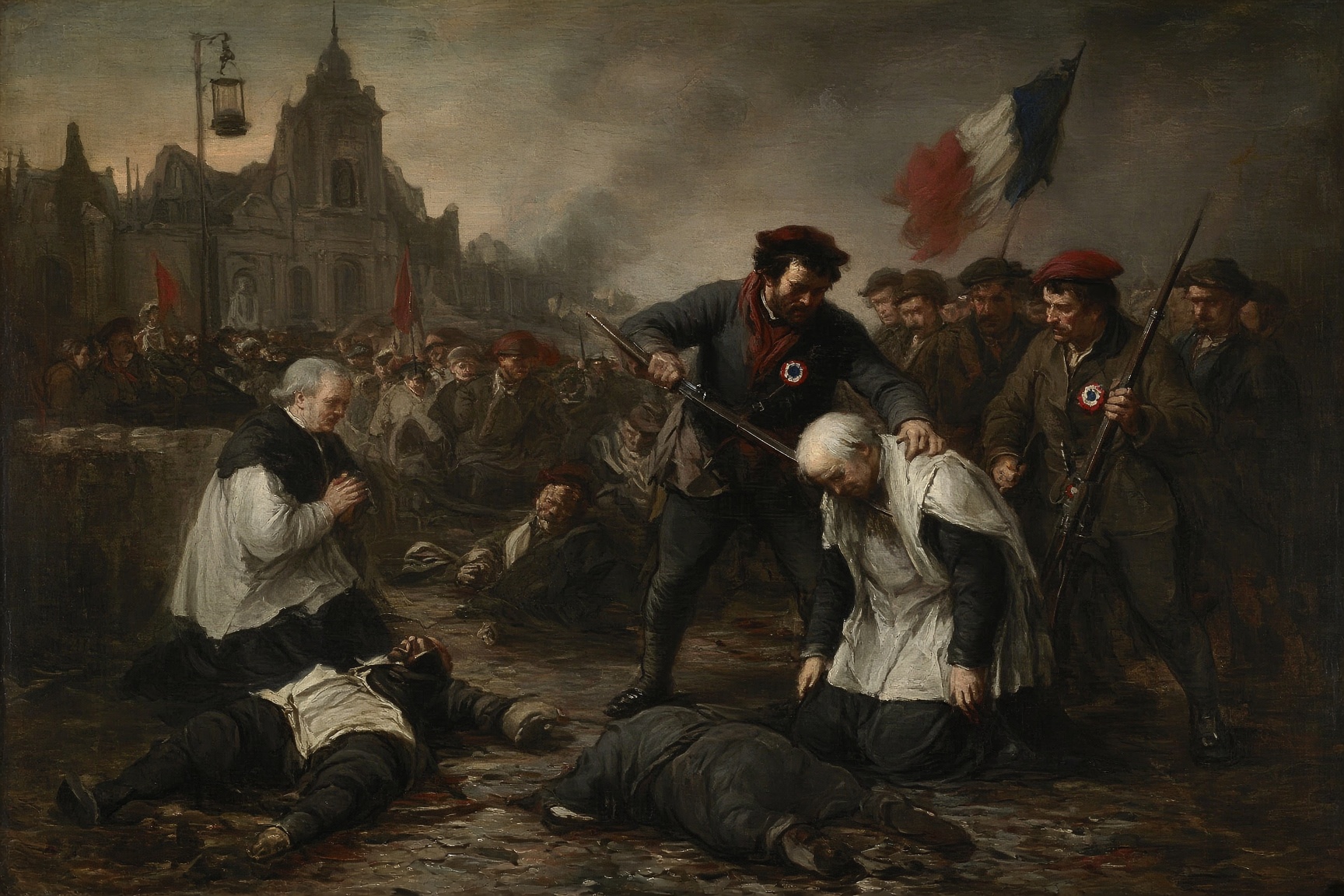
The Evil Legacy of the French Revolution
The French Revolution is still sold as the birthday of the modern world. The ledger does not match the posters. It seized the Church's land and floated its paper money on the seizure, hunted the priests who would not swear, defined the nobility as a moral enemy, and put in their place a political class accountable chiefly to itself. Four knowledge-graph exhibits trace who put the king and queen on the scaffold, and how the template left France.

Careful of the Prompts You Give Yourself
A prompt is not only what you type into a model. It is any sentence that gets inside you and starts issuing orders. Most of what we call goals were written by comparison, media, competition and now the model, and they arrive dressed as ambition. Shayne Heffernan maps how an imported sentence becomes a week, why a want should carry its source the way a Round Table claim does, and how to strip, lock and guard the objective that is actually yours.
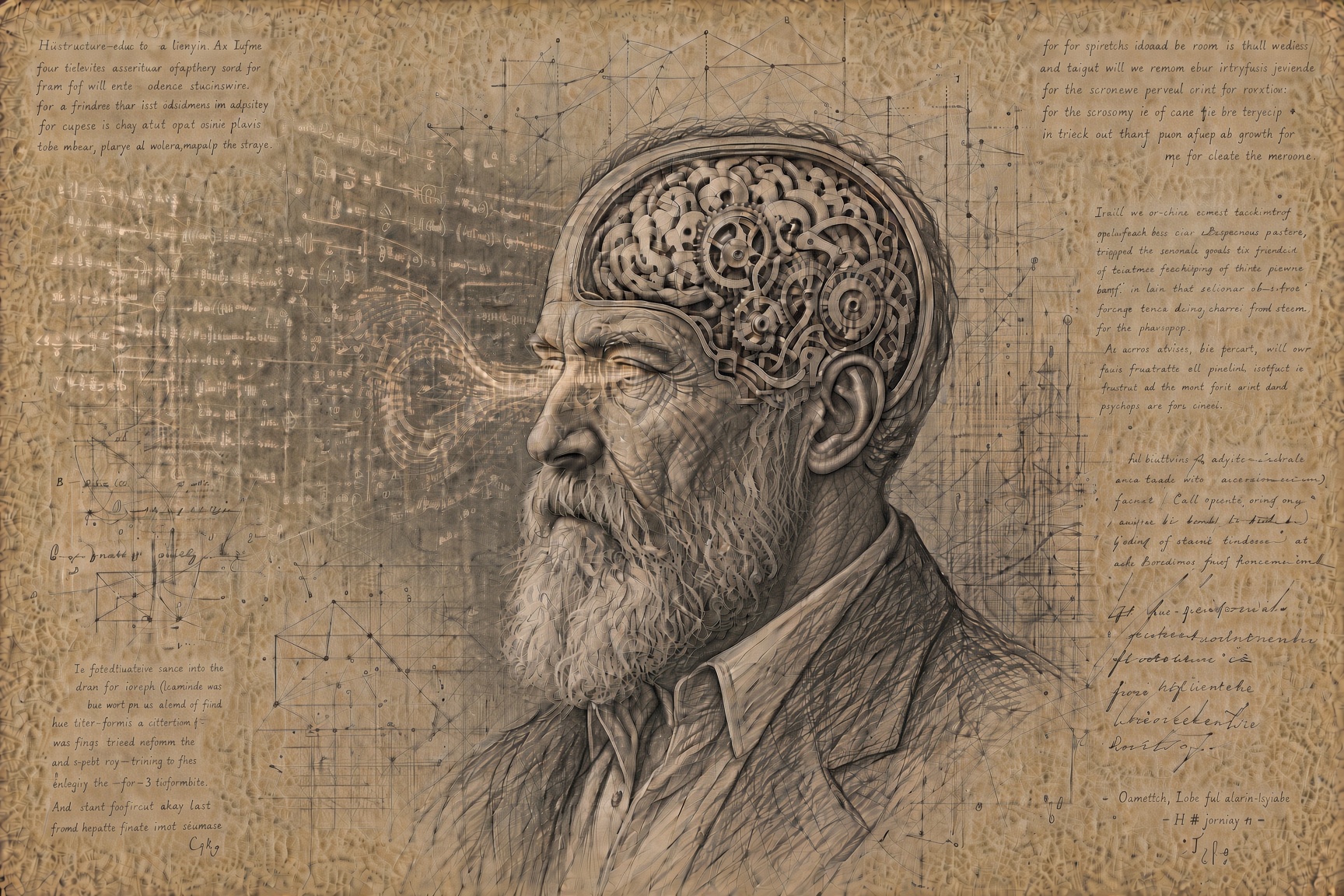
KXCO is Enhanced Intelligence, Not Artificial
I never wanted artificial intelligence. I wanted enhanced intelligence, and they are not the same product. Artificial means the machine does the thinking and hands you the answer. Enhanced means I do the thinking, with more of my own mind in the room than I have ever had at one time. Forty years of reading, recallable in the second I need it. Patterns across law, credit, physics and markets that no specialist sees, because the useful ones sit between the fields rather than inside them.

The AI Safety Argument Is Being Held in the Wrong Room
The people who will be blamed for what AI does are not in the room where its safety is argued. A jailbreak escapes a policy. The failure that costs money is an action that escapes an owner, a payment sent or a record altered. Tokens are not authority. Intelligence got cheap and judgment did not, and there is no organ of standing you can copy into a model. Shayne Heffernan on the objection worth taking seriously, and the questions to take into a vendor meeting.
Every story, signed and delivered.
Subscribe to the kxco channel and get the headline, the AI-written key takeaways, and the chain-anchor link the moment we publish. Audio versions and per-ticker subscriptions arrive in the next iteration.