
Artificial Intelligence and the Healthcare Industry
#AI #healthcare
"US healthcare expenditures grew 4.6% in Y 2019, reaching $3.8-T which was 17.7% of our nation’s total GDP" -- Paul Ebeling
In Y 1960, that number was only 5%.
The National Healthcare Expenditure (NHE) is predicting that costs will reach $6.2-T and account for 20% of GDP by Y 2028.
Public policy experts, government officials, sector leaders, business executives, and citizens from all walks of life have been seeking healthcare reform for years.
The Big Q: How can costs be reduced, while saving lives?
The Big A: AI (artificial intelligence) and machine learning are being used to reform the healthcare system in ways thought unimaginable even 5 yrs ago.
Using algorithmic architecture, AI works just like our brains. Our brains receive signals in our neurons to process the data we see. As we continue to experience new things, our brains process new information based on previous data to make informed decisions. The same happens with deep learning. The more data the AI has to process, the more accurate it becomes in its predictions.
Now medical professionals using AI can predict when a patient will come down with a sickness or need surgery up to 12 months in advance.
Big pharma is harnessing the power of AI and genomics to develop precision cancer therapies to help provide more effective cancer treatments.
AI is compressing the cost and clinical trial timeline, removing much of the trial and error in drug development.
FACT: Fraud is a huge cost to the healthcare system. The National Health Care Anti-Fraud Association estimates that fraud costs the nation about $68-B annually, fraudsters go to great ends to get patient data.
Human error contributes substantially to medical fraud. With AI, that human error can be eliminated, and the cost of fraud reduced.
AI is conquering the complexity that stood in the way of reducing costs and producing better outcomes in the healthcare industry. By constantly processing volumes of complex data to yield new insights, learn, predict, anticipate, and adapt, AI helps solve the problems of healthcare past, meets the demands of healthcare present and prepares companies to address the needs of healthcare in the future.
Have a prosperous day, Keep the Faith!
The Truth in All Its Ugliness Must Survive
A majority vote does not determine the truth. Consensus is a mood, gossip is a sport, and a model will write the pretty version for free. Why the ugly number has to survive, why a record beats a dashboard, and what KXCO was built to keep standing when the room changes its mind.
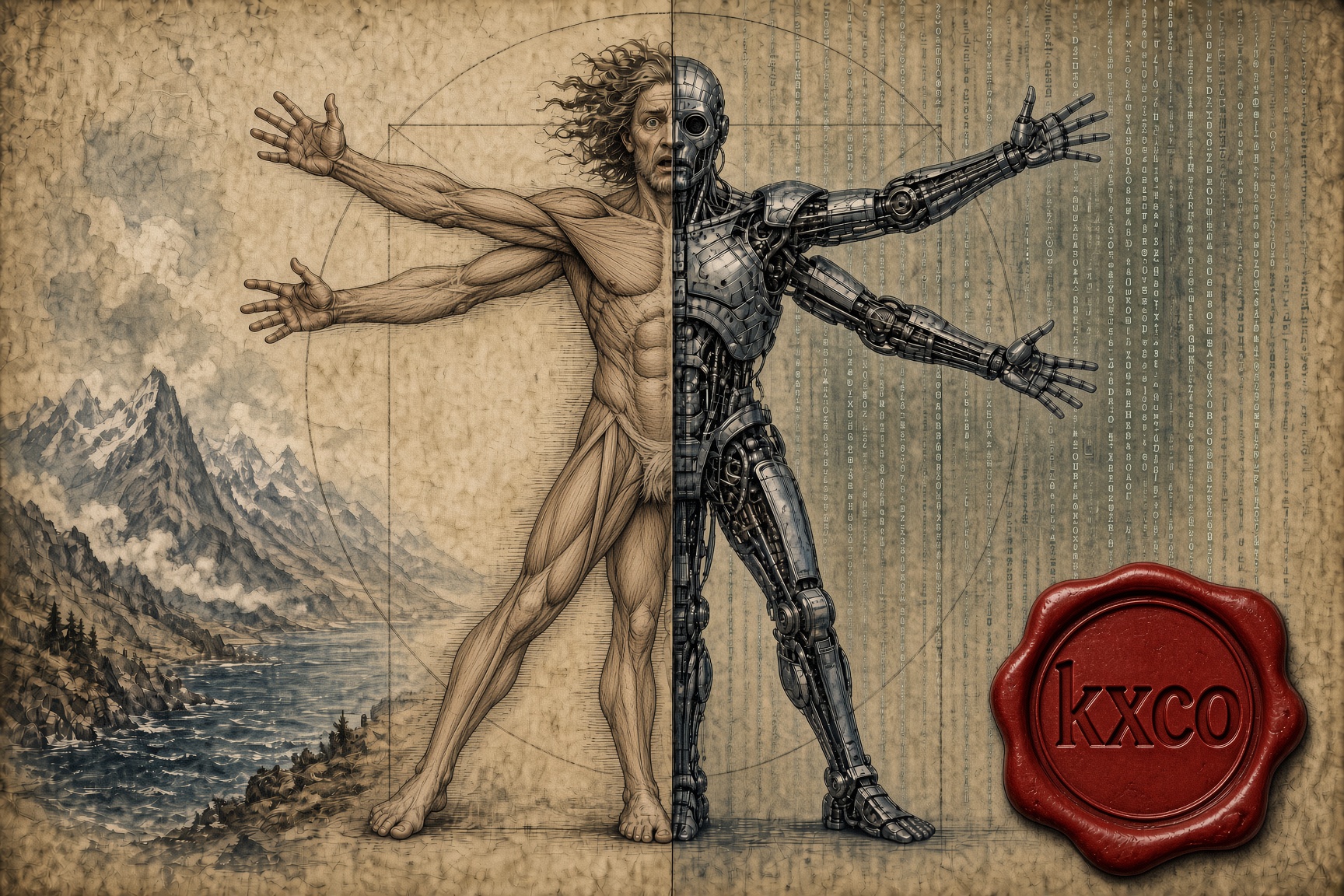
Don't Be the Best, Be the Only: Winning in an AI World
AI is repricing competence downward. What it cannot reproduce is a life. The case for remaining non-fungible, why friction still produces the best ideas, and what it means to build AI systems that keep the human intellect in them.
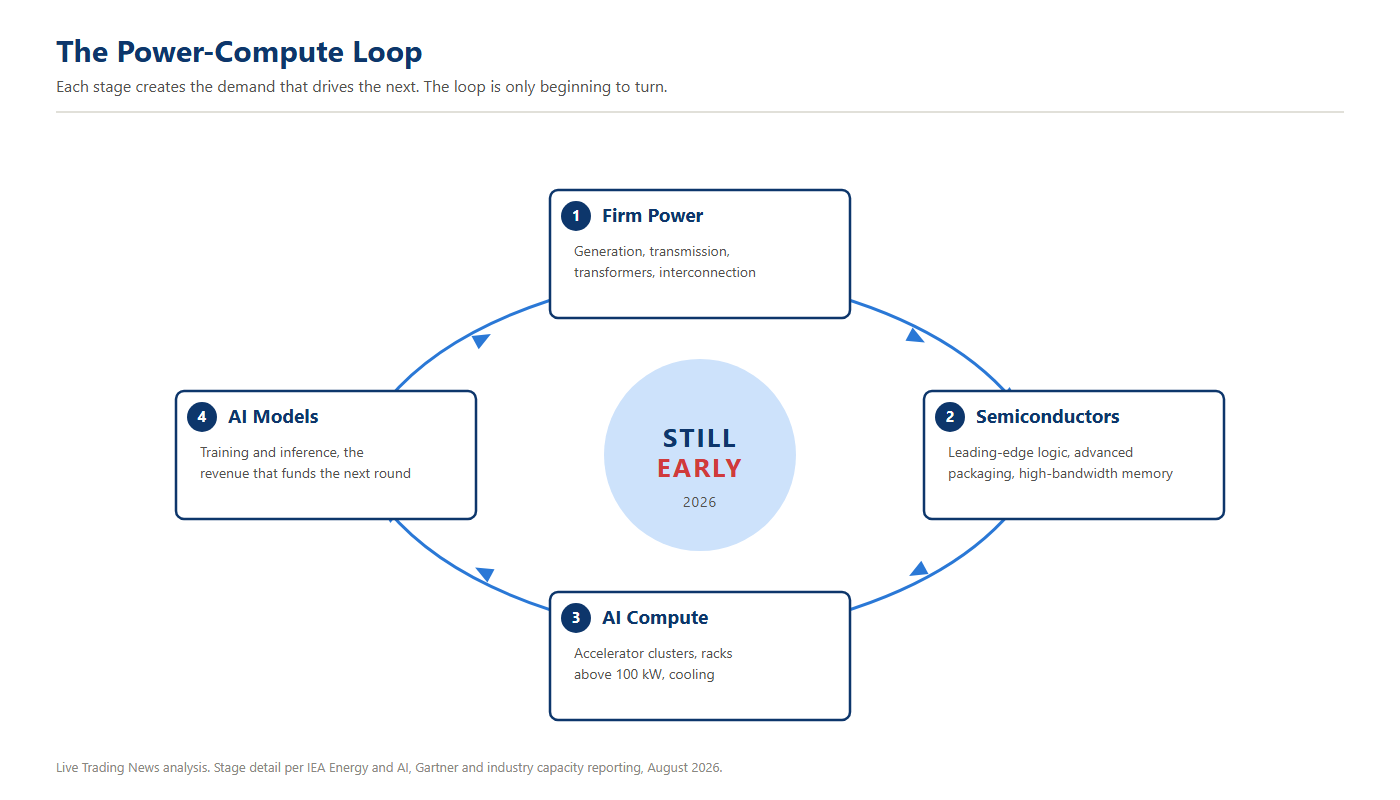
Energy IS the New Currency
Elon Musk said energy would become the de facto currency. He was describing a physical constraint, not a metaphor. Firm power delivered to the rack is now the limiting reagent in the AI build-out, and roughly 158 GW of data-centre capacity still has to be energised by 2030.
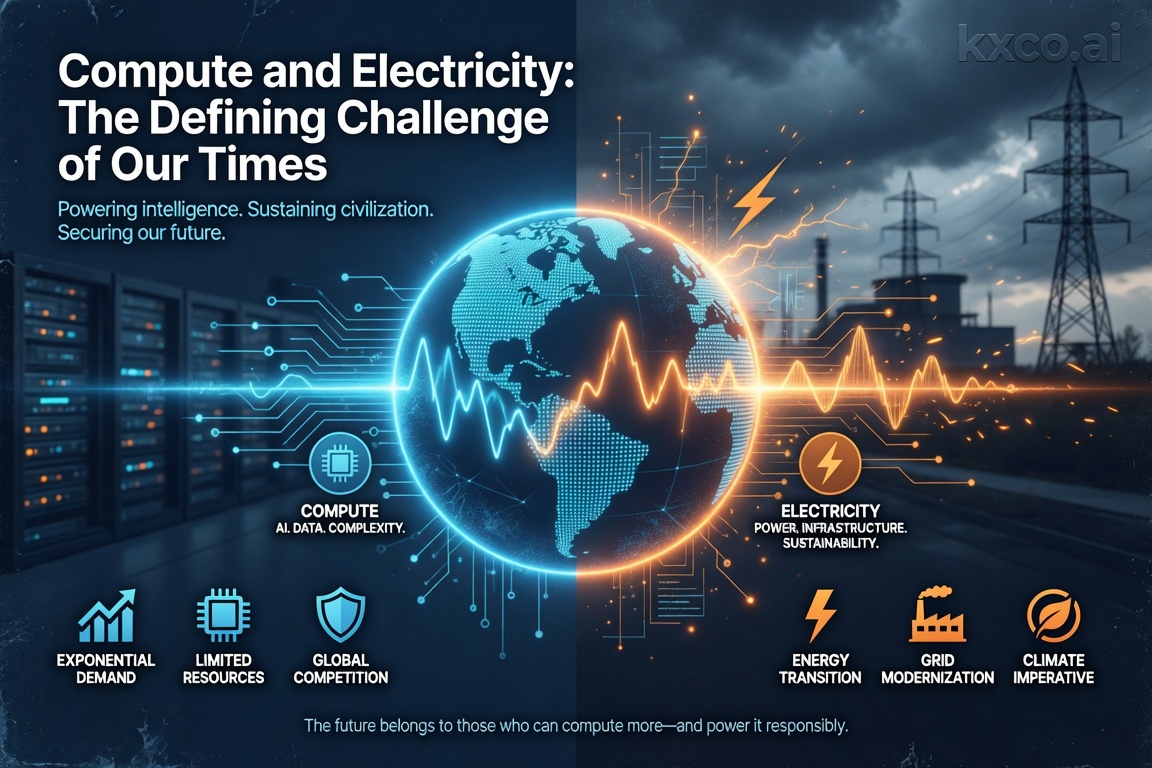
Compute and Electricity: The Defining Challenge of Our Times
Compute is no longer limited by silicon. It is limited by firm power. Shayne Heffernan on the AI electricity shock, the nuclear resurgence, the top ten electricity producing countries today and in 2036, who is building for the future, and the equity map of winners across nuclear, gas, fuel and grid.
Every story, signed and delivered.
Subscribe to the kxco channel and get the headline, the AI-written key takeaways, and the chain-anchor link the moment we publish. Audio versions and per-ticker subscriptions arrive in the next iteration.