
AI and Quantum Computing Merge: The Next Technological Revolution
$NVDA, $IBM, $GOOGL, $AMZN, $IONQ, $RGTI, $QBTS
Part of theQuantum Computing Center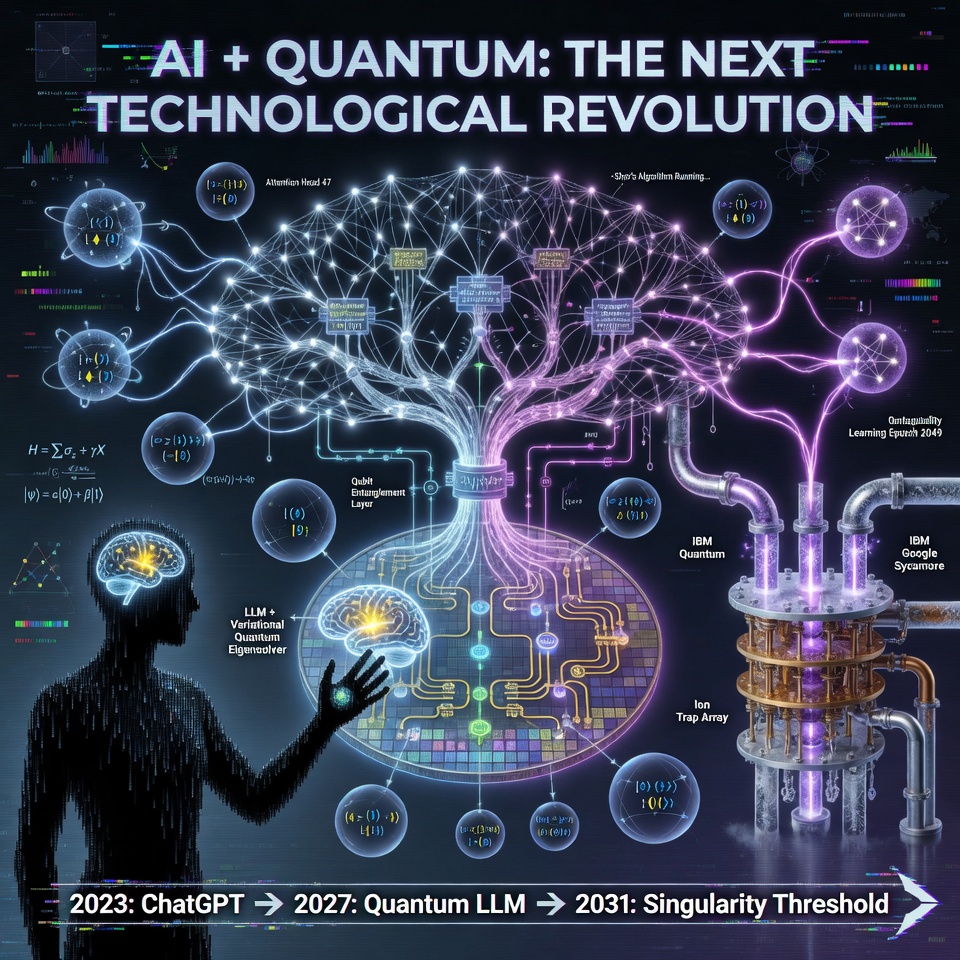
The convergence of artificial intelligence and quantum computing is no longer theoretical. In 2026, researchers, major technology companies, and governments are actively building and testing hybrid systems that combine AI’s pattern-recognition strengths with quantum computing’s ability to process exponentially complex problems. This merger is already delivering early commercial value and is expected to transform multiple industries over the coming decade.
The integration is occurring through three primary technical pathways: quantum machine learning, quantum-enhanced classical AI, and AI-designed quantum systems. Each pathway is advancing at a rapid pace, supported by record levels of private investment, government funding, and hardware improvements.
Three Main Paths of Convergence
Quantum Machine Learning (QML) applies quantum circuits directly to machine-learning tasks. Quantum processors can theoretically explore vastly larger solution spaces than classical systems. Early demonstrations have shown improved performance in high-dimensional data processing and certain optimization problems.
Quantum-Enhanced AI uses classical AI models running on traditional hardware while offloading specific computationally intensive subroutines to quantum processors. This hybrid approach is currently the most practical and widely adopted. Companies are using quantum chips for molecular simulation, portfolio optimization, and complex search problems within larger AI workflows.
AI-Designed Quantum Systems leverages artificial intelligence to accelerate the design of quantum hardware, error-correction codes, and control algorithms. AI is being used to discover new quantum architectures and to optimize qubit control pulses, significantly shortening development cycles.
Current State of Progress in 2026
Major technology companies have released or announced quantum-AI integration platforms throughout 2025 and 2026. IBM, Google, Quantinuum, Rigetti, PsiQuantum, and Atom Computing are all testing hybrid quantum-classical systems in production environments. NVIDIA has become a key bridge provider, supplying software tools that allow AI researchers to access quantum simulators and real quantum hardware through familiar development environments.
The U.S. government’s $2.013 billion CHIPS Act quantum funding package, signed in May 2026, specifically prioritized companies developing quantum hardware capable of supporting advanced AI workloads. This reflects a clear national strategy to maintain leadership in the quantum-AI domain.
Key Public Companies Active in AI + Quantum Computing (USA & Hong Kong Exchanges)
Company | Exchange / Ticker | Primary Focus | Notable 2026 Activity | Market Cap (approx.) |
NVIDIA | NASDAQ: NVDA | AI hardware + quantum software bridges | Vera Rubin platform + quantum-AI tools | > $3.5 trillion |
IBM | NYSE: IBM | Quantum hardware + hybrid AI | $1 billion CHIPS Act award for Anderon foundry | ~ $220 billion |
Alphabet (Google) | NASDAQ: GOOGL | Quantum supremacy + AI integration | Continued Willow chip development | ~ $2.1 trillion |
Amazon | NASDAQ: AMZN | Cloud quantum + AI services | Deep integration with Anthropic and quantum labs | ~ $2.3 trillion |
IonQ | NYSE: IONQ | Trapped-ion quantum + AI | Commercial hybrid systems | ~ $8 billion |
Rigetti Computing | NASDAQ: RGTI | Superconducting quantum + AI | Full-stack hybrid platforms | ~ $2.5 billion |
D-Wave Quantum | NYSE: QBTS | Quantum annealing + AI optimization | $100 million CHIPS Act award | ~ $1.8 billion |
KXCO | Private (Armature L1) | Quantum-resistant infrastructure | Native ML-DSA-65 + blockchain anchoring | N/A (private) |
Chinese companies listed on Hong Kong exchanges, such as Alibaba and Tencent, are also investing heavily in quantum-AI research, although detailed public disclosures remain limited.
Practical Applications Already Emerging
Drug discovery and molecular simulation remain the most advanced use cases. Quantum computers excel at simulating quantum systems such as molecules, while AI models interpret results and guide experimental design. Similar gains are appearing in financial portfolio optimization, supply-chain logistics, energy grid management, and advanced materials science.
Financial institutions are using hybrid systems for risk modeling and derivative pricing that were previously too complex for classical computers. Logistics companies are applying quantum-enhanced optimization to route planning and inventory management. Energy providers are exploring quantum-AI solutions for grid stability and renewable integration.
Why This Convergence Matters
Classical AI systems are powerful but constrained by the exponential growth in computational requirements for certain classes of problems. Quantum computing offers the potential to overcome these limits. When the two technologies are combined, the resulting systems can address challenges in cryptography, climate modeling, pharmaceutical development, and complex system optimization that were previously considered intractable.
The merger also intensifies the need for quantum-resistant security. As quantum computers become more powerful, they threaten to break many of today’s encryption standards. This is precisely why quantum-native infrastructure is becoming essential for any organization working at the frontier of AI and quantum technologies.
KXCO’s Position in the Quantum-AI Future
KXCO is uniquely positioned at the center of this convergence. The KXCO Armature L1 blockchain (Chain ID 1111) was built from the ground up with native ML-DSA-65 post-quantum cryptographic signatures. Every transaction and every piece of data anchored on the chain is protected by NIST FIPS 204 standards.
This quantum-native security layer is becoming increasingly relevant as AI and quantum systems merge. Future quantum-AI platforms will require trusted, tamper-proof data pipelines, verifiable audit trails, and secure identity systems. KXCO’s infrastructure — combining quantum-resistant cryptography with immutable on-chain anchoring — provides exactly the foundation these emerging hybrid systems need.Livetradingnews.com, the public-facing intelligence platform of KXCO, continues to track and analyze these developments in real time, delivering cryptographically signed, verifiable market intelligence on the quantum-AI space.
Strategic and Economic Implications
The AI-quantum merger is attracting enormous capital. Valuations of companies operating at the intersection of the two technologies have risen sharply. Governments worldwide are treating quantum-AI as a strategic national asset, with major funding programs underway in the United States, China, the European Union, and the United Kingdom.
The economic impact is expected to be profound. Sectors such as healthcare, finance, energy, and logistics stand to benefit from breakthroughs that were previously decades away. At the same time, the requirement for quantum-resistant security infrastructure is becoming urgent.
KXCO’s quantum-secure platform is designed precisely for this environment. By providing a trusted, post-quantum layer for data, identity, and transactions, KXCO enables organizations to adopt quantum-AI technologies with confidence that their most sensitive operations remain protected.
Selected Quantum-AI Funding and Milestones (2025–2026)
U.S. CHIPS Act quantum package: $2.013 billion (May 2026)
Anthropic valuation: approached $1 trillion following $65 billion raise
Multiple companies received $100 million+ awards under the CHIPS Act quantum program
NVIDIA and IBM announced expanded quantum-AI software platforms
Outlook
The merger of AI and quantum computing is still in its early stages, but the pace of progress is accelerating. Hybrid systems are already delivering measurable value today, while pure quantum AI remains a longer-term goal. The companies and platforms that can securely and reliably integrate these technologies will hold a significant competitive advantage in the coming decade.
As the quantum-AI ecosystem matures, the demand for verifiable, quantum-resistant infrastructure will only increase. KXCO’s Armature L1 blockchain and its associated tools are built to meet that demand, offering a secure foundation for the next generation of intelligent systems.
The coming years will determine which organizations successfully navigate this technological shift. Those that combine cutting-edge AI capabilities with robust quantum security will be best positioned to lead in the emerging quantum-AI era.
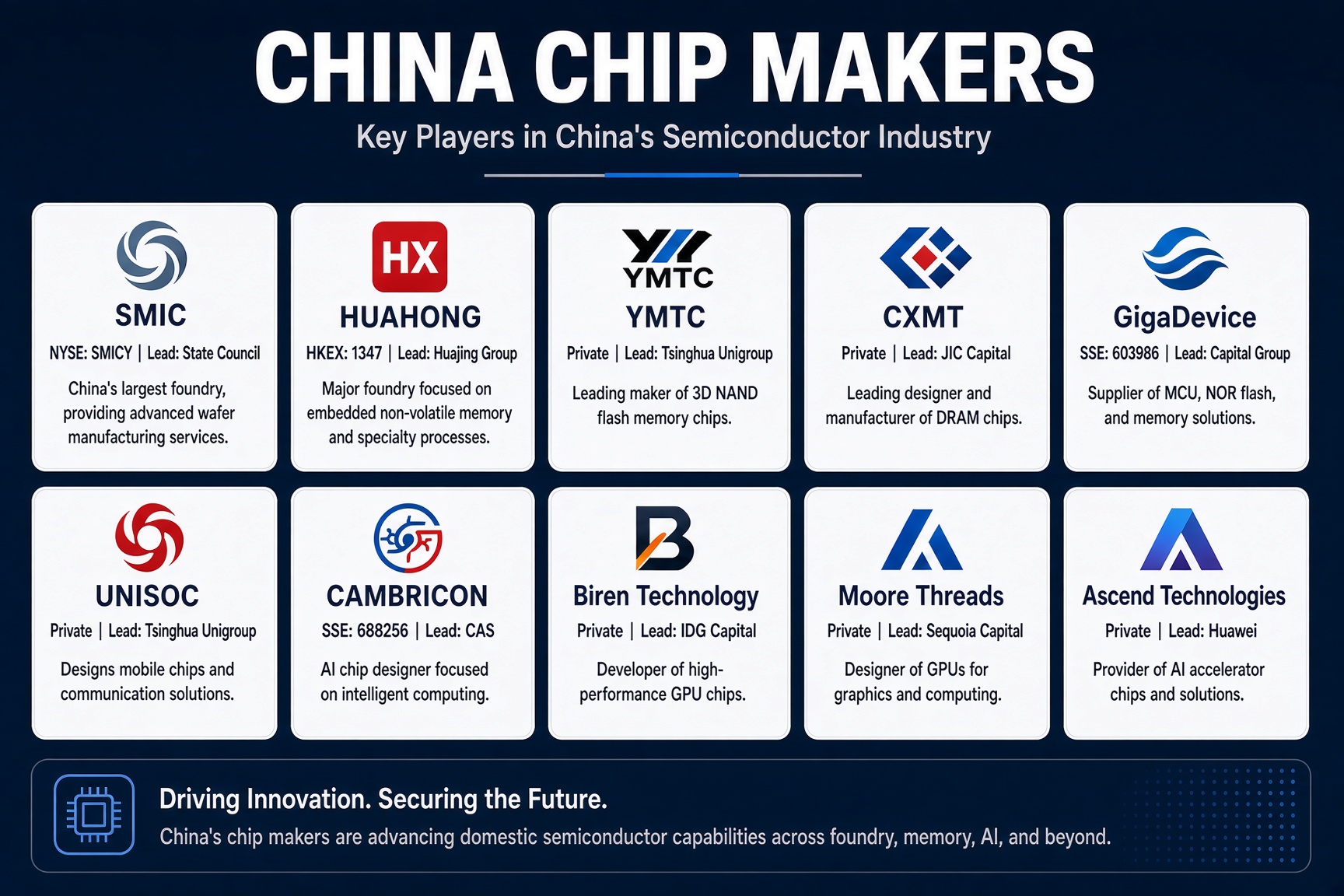
The China Chip Shock
On 10 October CXMT said it will ship DDR5 server modules on a 4F2 cell by year-end. Micron, SK Hynix, Samsung and Sandisk sold off for two sessions and Elon Musk said China scales faster than the rest of the world combined. This piece sets out China's memory makers, foundries, AI chip designers and toolmakers, with two knowledge graphs drawn from the KXCO AI Sector Ontology, and says what the sell-off prices and what it does not.

China's Coordinated Push in AI, Quantum Computing and Blockchain
On 9 October 2026 Beijing called for a nationally integrated computing-power network and a national blockchain network. DeepSeek is scaling on Huawei Ascend chips, China's intelligent computing reached 2,185 EFLOPS by June, per the industry ministry, and quantum communications remain a strength. This analysis explains the strategy and sets out the Hong Kong and US listed companies with exposure, from Tencent and Alibaba to China Mobile, HashKey and Nvidia.

Week Ahead on Wall Street: CPI, Banks and Oil
September CPI lands on Wednesday after a Fed hike and a 10-year yield at its highest since 2002. JPMorgan, Goldman and Citi open bank earnings on Tuesday, ASML and TSMC report midweek, and Saudi pipeline attacks kept Brent at $104.72 on 9 October 2026, per CNBC. The KXCO AI Sector Ontology still shows contracted demand. This week ahead sets out the calendar, the three facts that would change the call, and why dips in the AI leaders remain buying opportunities.
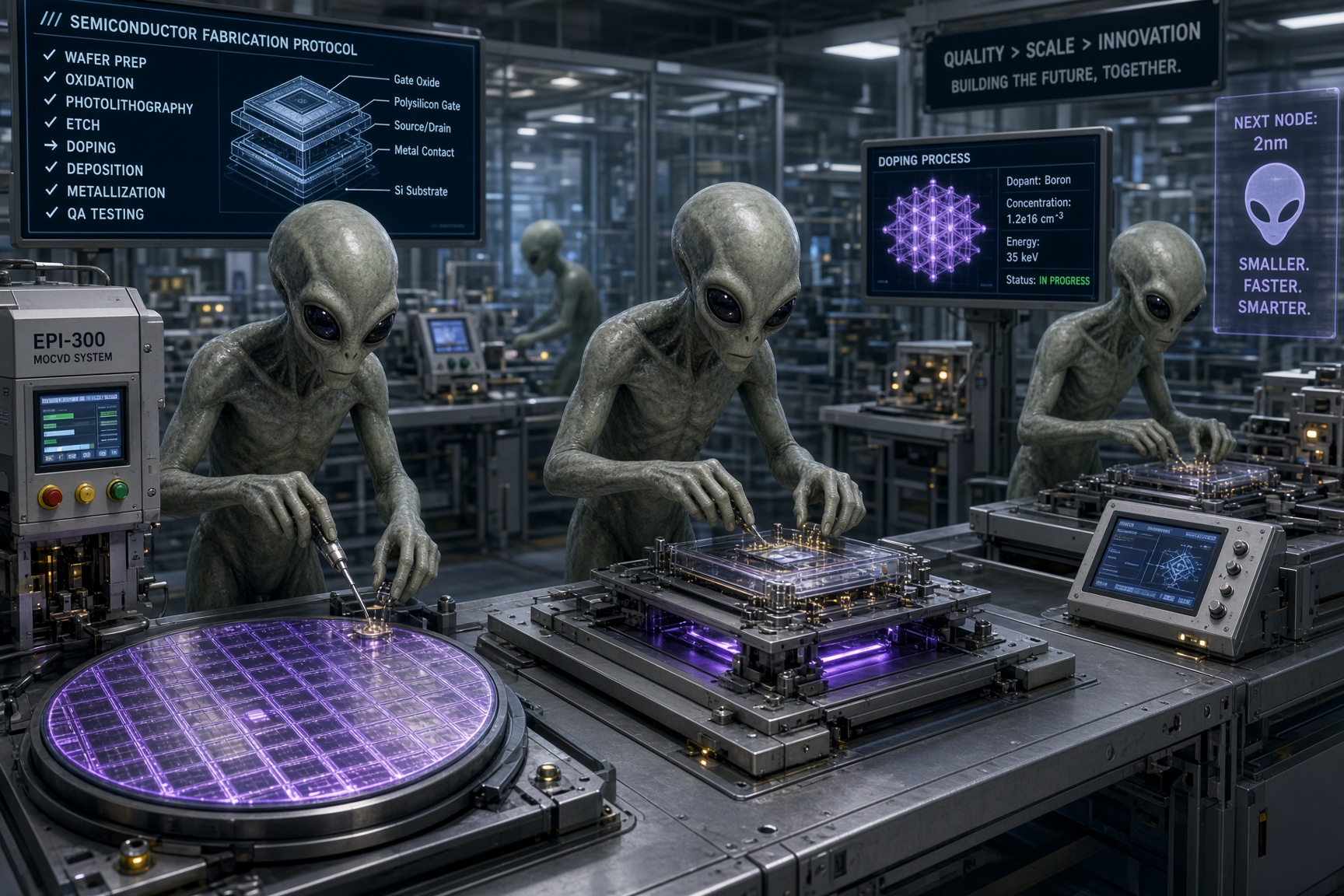
AI Is Being Powered by Tech That Looks Almost Alien
Every frontier AI model runs on chips printed by one Dutch machine. ASML's extreme-ultraviolet scanner fires a laser at up to 50,000 droplets of molten tin a second, per ASML, and bounces the light off mirrors whose deviations are tens of picometres. Veritasium called it the closest thing we have to alien technology. This piece takes the film as the brief and checks it: the machine, High-NA, and the wafer-scale chips and liquid-cooled racks downstream of it.
Every story, signed and delivered.
Subscribe to the kxco channel and get the headline, the AI-written key takeaways, and the chain-anchor link the moment we publish. Audio versions and per-ticker subscriptions arrive in the next iteration.