
Adopt, Adapt or Do Not Survive in this post-VirusCasedemic World
#VirusCasedemic #vaccinations
"Vaccinations can take us only so far, because variants outside the United States are being uncovered" -- Paul Ebeling
The diplomatic, financial and logistical challenges of quickly vaccinating the developing world are daunting, and in the EU, bureaucratic bungling has put the vaccination process well behind the US and UK. And a lot of the world is a ready host to develop strains that could outsmart our 'vaccines'.
COVID-19 has been detected in more than12 species including minks, great apes, lions, tigers, cats, dogs, and pigs. The potential for a new strain that can spread to humans, outsmart public-health agencies, and spread globally is real.
International travel may be limited for several more yrs.
And with Mr. Biden's policy catch and release for illegal aliens and asylum seekers permitted, plus the realities of globalization, new strains of COVID will find surly their way into the United States.
Commercial contact with most of the world will be limited to 'zooming' and vacationing will be limited to the United States, less perhaps the UK, Canada, and a few other places that approach 80% vaccination and continue tough protocols for workplaces and public gatherings.
It is not yet known how workers will react when back at their office desks. Many will never return because they can thrive working from home and telecommunicating.
Some people will rely on smartphones for personal finance and amusement but will not embrace collaborative technologies and AI to save travel time and streamline human interaction. But we may be on the edge of a productivity breakout that ends yrs of slow economic growth.
Thursday it was reported that Nonfarm business sector labor productivity increased at a 5.4% annual rate in Q-1, while unit labor costs decreased at an annual rate of 0.3%
History tells us that prolonged pandemics radically change social arrangements. The Black Plague created labor scarcity, caused the peasantry to overturn the feudal order and set Europe on the path to a modern economy.
Overall the country will enjoy some renewed prosperity but Americans will not be able to fully return to what most consider a normal live for some time to come notes Peter Morici an economist and emeritus business professor at the University of Maryland.
Have a healthy day, Keep the Faith!

AI Is Taking What You Publish and What You Type
Common Crawl holds more than 300 billion web pages, and 52 per cent of crawler requests on Cloudflare's network in June 2026 were for AI training. Models can give back what they took in: one chatbot reproduced 76.8 per cent of the first Harry Potter book near word for word. A US court ordered OpenAI to give the New York Times 20 million anonymised ChatGPT logs. This KXCO warning sets out what is exposed, what to do now, and how each KXCO client runs its own AI inside its own walls.

Industrialising Intelligence: Demand, Scarcity and the Boundary of Sovereignty
AI agents generate 80% of OpenRouter's tokens, about seven times human use, and Google's monthly tokens rose about 330 times in two years to over 3.2 quadrillion. In my view the limit on AI demand has moved from people to power: the International Energy Agency expects data-centre electricity to reach around 945 terawatt-hours by 2030. Execution is becoming a utility. Selection is not. KXCO builds the boundary that keeps the decision with a named person and lets another party check the record.

Democrats' AI Spending Curtailment: The Dumbest Idea in Washington
After the midterm sweep, Democrats want to slow America's AI build-out. The Sanders and Ocasio-Cortez bill would freeze building and upgrading of AI data centres nationwide, and a superintelligence ban Rep. Yassamin Ansari wants atop the agenda would pause every model trained with 10^25 operations or more. Governors-elect in Texas and Georgia back pauses, and Goldman Sachs puts 45% of planned capacity in Democrat-run states backing moratoriums. Shayne Heffernan: AI computing follows the power.
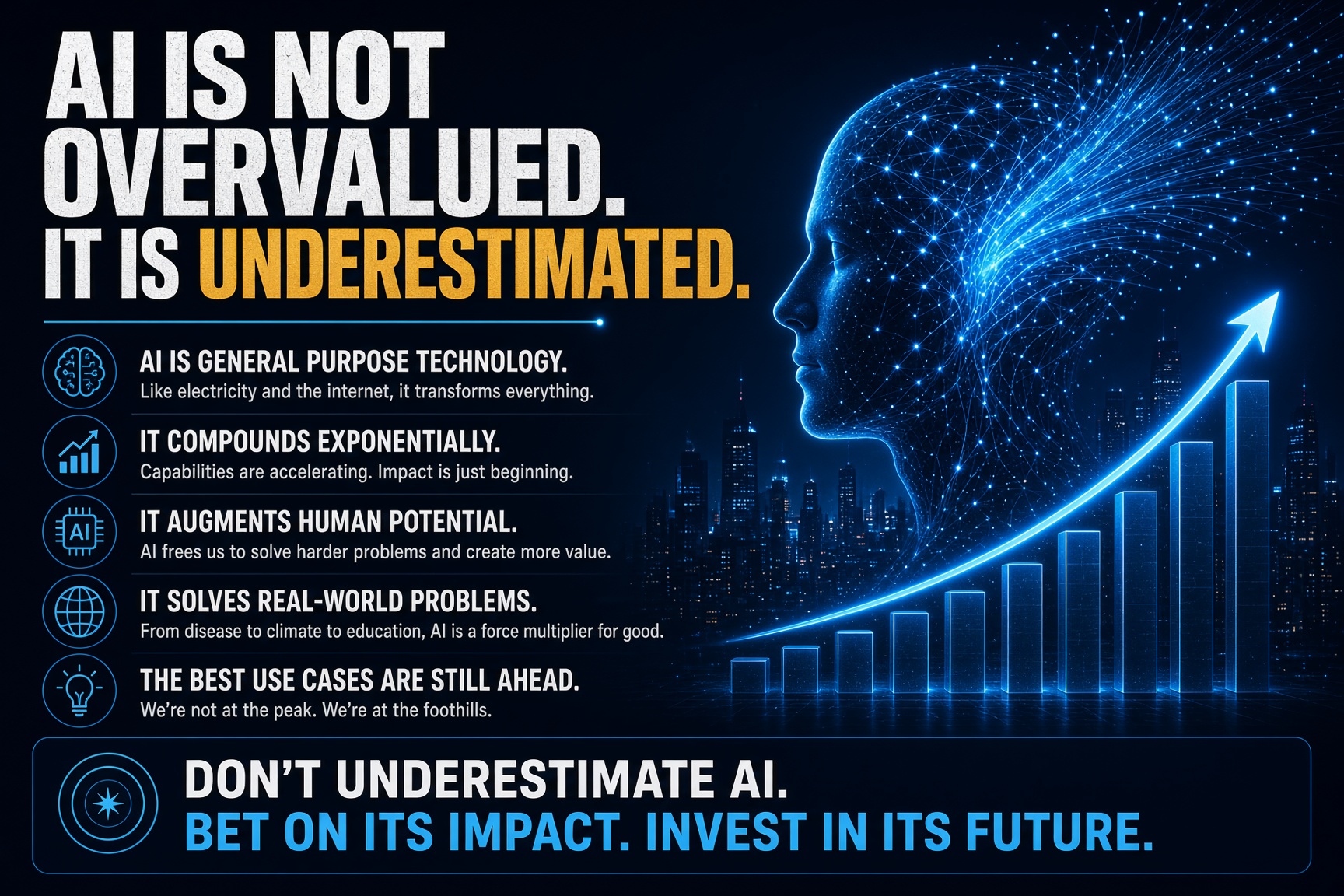
AI Is Not Overvalued. It Is Underestimated.
Markets debate whether artificial intelligence (AI) is overvalued. Shayne Heffernan argues the more material risk is underestimation. Alphabet's capital expenditure reached $51.4 billion in the third quarter, Google Cloud revenue rose 103% to $30.7 billion and the Cloud backlog stands at $561 billion, per its 28 October results and earnings call. Jurisdictions that block data centres do not remove the demand: they import the capability later, at a higher price.
Every story, signed and delivered.
Subscribe to the kxco channel and get the headline, the AI-written key takeaways, and the chain-anchor link the moment we publish. Audio versions and per-ticker subscriptions arrive in the next iteration.