
A Simple Guide to the Travel Rule
The KYC AML Rules you must know
Part of theBlockchain Center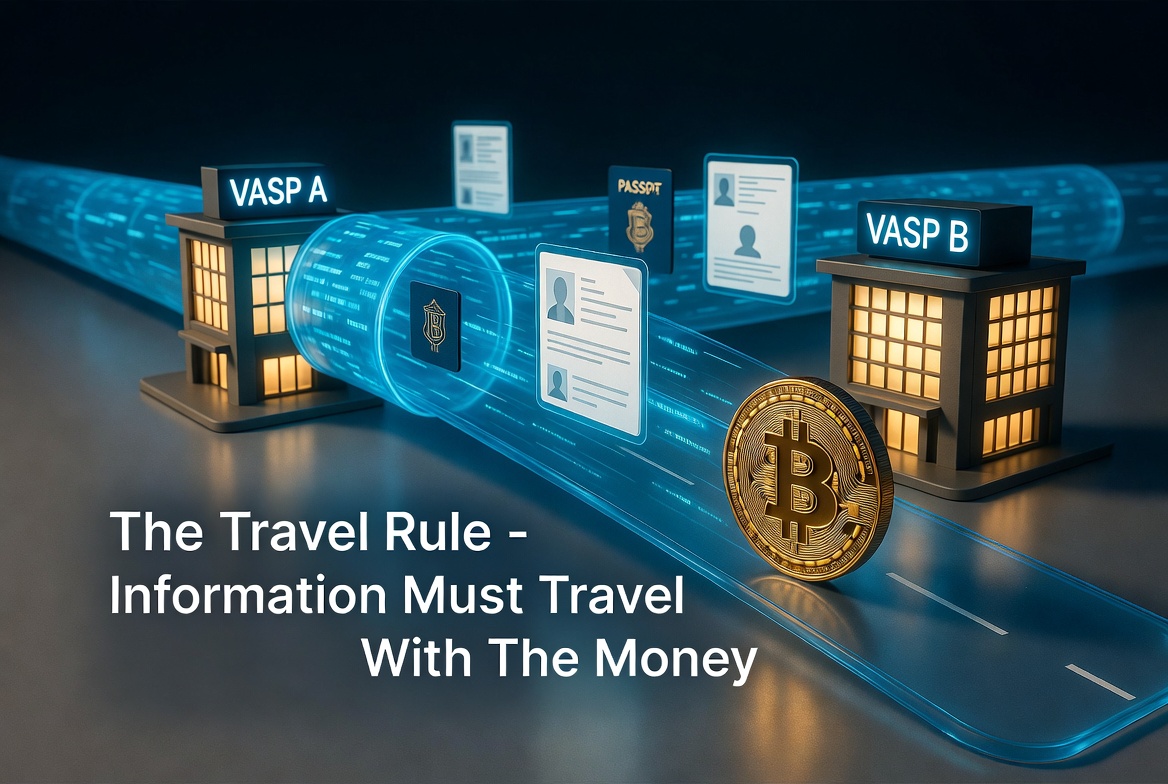
The Travel Rule (Crypto Travel Rule) Explained Simply
The Travel Rule is a major anti-money laundering (AML) regulation that requires crypto companies to share personal information about the sender and receiver when moving cryptocurrencies above a certain amount.
Where It Comes From
It originated in traditional banking decades ago (FinCEN's "Travel Rule" in the US).
In 2019, the Financial Action Task Force (FATF) — a global watchdog that sets anti-money laundering standards — extended the rule to cryptocurrency.
It is formally known as FATF Recommendation 16.
The name "Travel Rule" comes from the idea that the customer's information must "travel" with the money transfer, just like it does in bank wire transfers.
Who It Applies To
It mainly applies to VASPs (Virtual Asset Service Providers). These include:
Crypto exchanges (e.g. Binance, Coinbase, Kraken)
Custodial wallets
Crypto payment processors
Any company that facilitates buying, selling, or transferring crypto as a business
It generally does not apply directly to individual people sending crypto from their own personal wallet to another personal wallet (though some countries are tightening this).
What Information Must "Travel"?
When a transfer is above the threshold, the sending company must collect and securely send to the receiving company:
Originator (Sender) Information:
Full name
Account number or wallet address
Physical address (or date of birth / national ID number)
Beneficiary (Receiver) Information:
Full name
Account number or wallet address
They must also screen for sanctions and suspicious activity.
Thresholds (as of 2026)
Global FATF standard: Usually $1,000 USD equivalent
United States (FinCEN): $3,000
European Union (TFR): Often applies to all transfers (no minimum in many cases)
Other countries have their own slight variations
Why Does This Rule Exist?
The main goals are:
Prevent money laundering and terrorist financing
Make crypto transactions more traceable
Allow regulators and law enforcement to follow the money
Bring crypto closer to the same standards as traditional finance
Without the Travel Rule, it was too easy for illicit funds to move through crypto exchanges anonymously.
Practical Impact on Users
If you're using a regulated exchange and sending a large amount, you'll likely need to provide more KYC information.
Transfers between two regulated exchanges will require data sharing between them.
Sending to a personal (unhosted/self-custody) wallet often triggers extra checks or may be restricted by some platforms.
Non-compliant exchanges risk losing licenses or facing heavy fines.
Current Status (June 2026)
The rule is now widely implemented or being enforced in most major jurisdictions. Compliance has become a big focus for the industry, with specialized tech companies building solutions to securely share this data between platforms without exposing it unnecessarily.
In short: The Travel Rule is basically regulators saying, "If you're moving serious money in crypto, we want to know who’s sending it and where it’s going — just like with bank wires."
Would you like me to explain how it works in a specific country (e.g. US, EU, Singapore), or how it affects regular users vs. businesses?

The Hottest Biotechs of 2026
Twenty FDA approval actions so far in 2026, eight of them inside a sixteen-day window in August. A first-in-class RAS inhibitor that doubled survival in pancreatic cancer, an oral GLP-1 cleared in fifty days, a first gene therapy for GSDIa, and seven AI platforms with nine assets in humans and nothing yet approved.

AI is the Neat Handwriting of the Illiterate
A model in the hands of someone who has read the filing and walked the plant is a clerk. The same model, speaking for someone who has done neither, is a disguise. On AI slop, phantom citations and factslop, why finish stopped being evidence of work, and the containment layer KXCO built so a machine cannot speak as the institution until a source is attached.
The Economics of AI Tokens
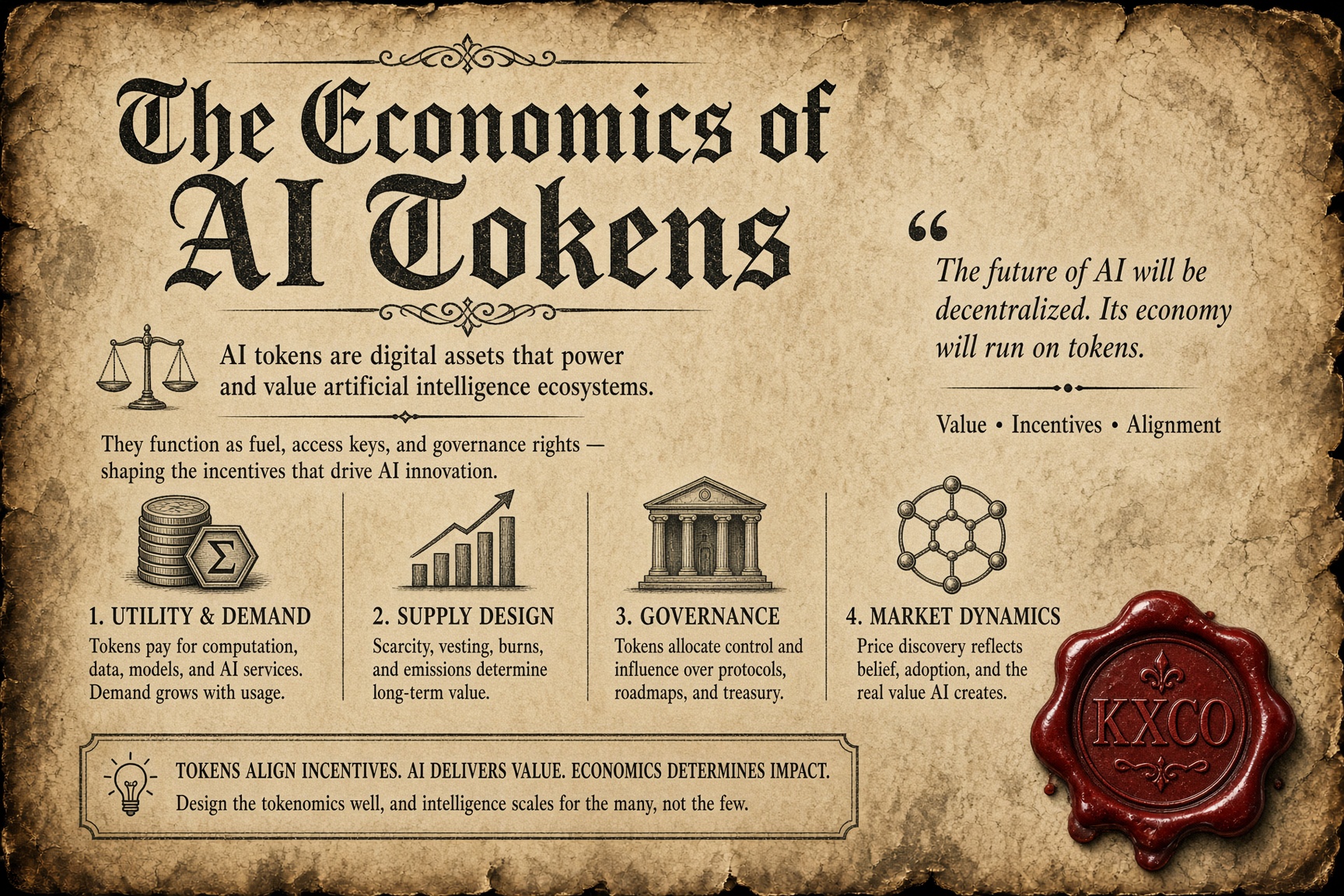
A token is a private unit. Sixteen production models, one label, and a 167-fold price spread. The same support request costs 90 times more on one model than another, and losing your cache multiplies it again by up to 16.7.
Semiconductor Stocks to Own Now
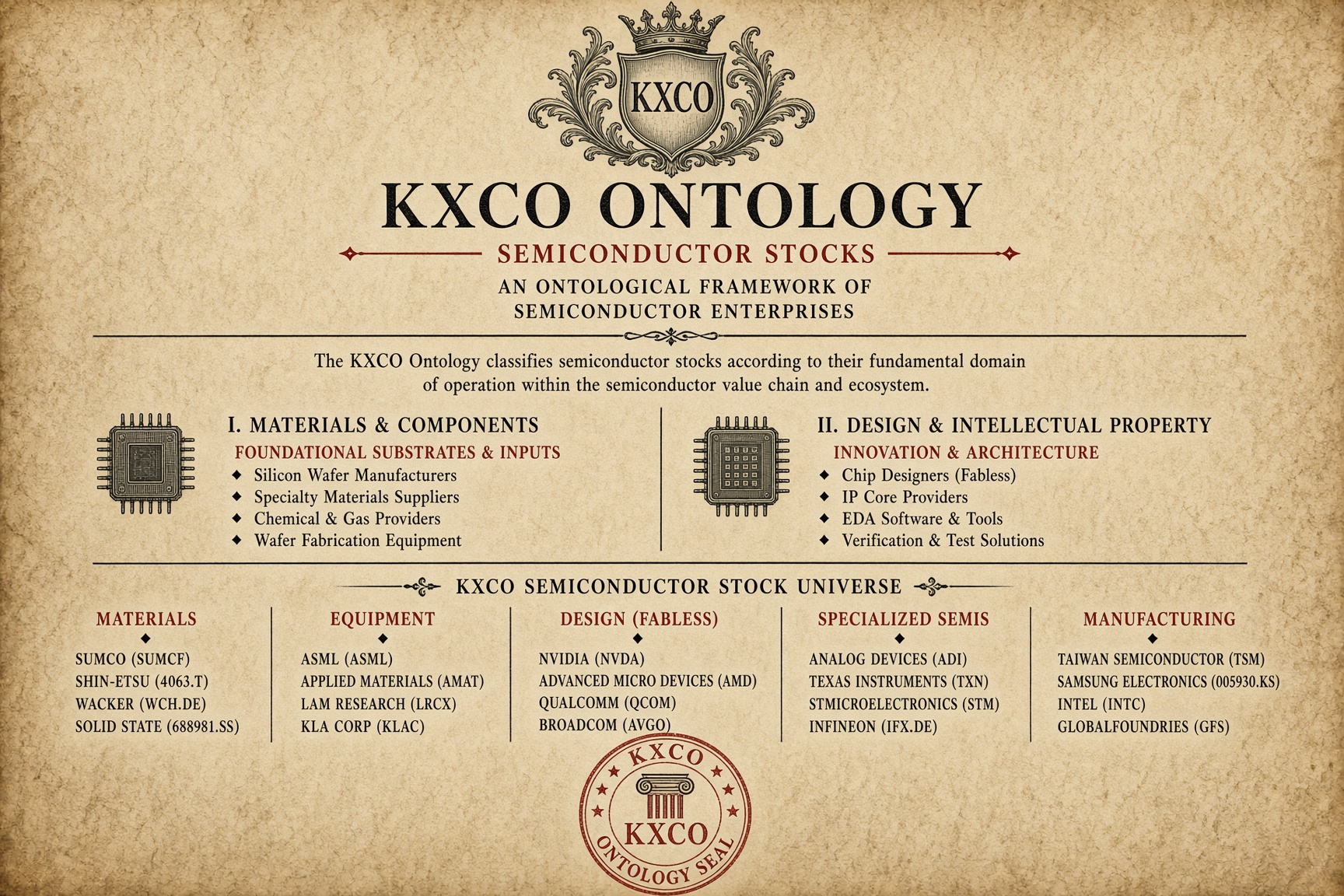
Nvidia is the most connected name on the KXCO Ontology and is not a chokepoint. Cadence carries two claims and is. That distinction decides the whole ownership question in semiconductors right now.
Every story, signed and delivered.
Subscribe to the kxco channel and get the headline, the AI-written key takeaways, and the chain-anchor link the moment we publish. Audio versions and per-ticker subscriptions arrive in the next iteration.