
Why a Worthless US Dollar May Boost Stocks $TSLA $AAPL $QQQ $SPY
Understanding the Dynamics: Why Worthless US Dollar May Boost Stock Values in USD Terms
The relationship between the value of the US Dollar (USD) and stock values is complex, and the dynamics can be influenced by a variety of factors. While the idea that a worthless US Dollar might lead to a rise in stock values in USD terms seems counterintuitive, it becomes clearer when considering key economic principles and global market dynamics.
1. Inflationary Pressures: A scenario where the US Dollar becomes worthless is often associated with hyperinflation—a situation where the currency rapidly loses its value due to an excessive increase in the money supply. In such cases, the purchasing power of the currency diminishes significantly. However, this doesn't necessarily mean the intrinsic value of companies has changed.
2. Nominal vs. Real Values: Stock values are often quoted in nominal terms, meaning they are expressed in the current currency value. In times of hyperinflation or a significantly devalued currency, nominal values of stocks may indeed rise as the numerical value of the currency decreases. However, this doesn't reflect a real increase in the value of the underlying companies.
3. International Investors and Currency Exchange: Global financial markets are interconnected, and many companies derive a substantial portion of their revenue from international operations. In a scenario where the USD is losing value, international investors may seek refuge in US stocks, viewing them as a relatively stable and familiar investment. This demand can drive up stock prices in USD terms.
4. Corporate Earnings and Real Assets: While the currency may be losing value, the underlying assets of companies—such as real estate, intellectual property, and machinery—retain intrinsic value. Investors may perceive stocks as a hedge against the devaluation of the currency, especially if companies hold significant real assets.
5. Perception and Market Sentiment: Market dynamics are not solely driven by fundamental economic principles. Investor perception and market sentiment play a crucial role. If investors believe that stocks are a better store of value compared to a rapidly depreciating currency, they may flock to equities, leading to an increase in stock prices in nominal terms.
6. Equity as an Inflation Hedge: Historically, equities have been considered a hedge against inflation. While hyperinflation can erode the value of currency, well-managed companies have the potential to adjust prices and generate returns that outpace inflation. Investors may turn to stocks as a way to preserve wealth in the face of a devalued currency.
7. Caveats and Risks: It's essential to note that while stock prices in nominal terms may rise, the real purchasing power of investors may still erode if inflation is outpacing the nominal gains. Additionally, economic instability and loss of confidence in the currency can have detrimental effects on overall market performance.
In conclusion, the relationship between a worthless US Dollar and rising stock values in USD terms is nuanced. While nominal stock prices may see an increase, this may not necessarily reflect true economic prosperity. The distinction between nominal and real values, coupled with global market dynamics and investor sentiment, contributes to the intricate relationship between currency devaluation and stock prices.
AI is the Neat Handwriting of the Illiterate
A model in the hands of someone who has read the filing and walked the plant is a clerk. The same model, speaking for someone who has done neither, is a disguise. On AI slop, phantom citations and factslop, why finish stopped being evidence of work, and the containment layer KXCO built so a machine cannot speak as the institution until a source is attached.
Worthship: Do Not Conform to the Age
Worthship is the older English word for worship, and it means to ascribe worth. Bishop Robert Barron preached Romans 12 on 30 August. This essay follows the text into the prison letters, and puts two questions to a graph: do the four readings of that Sunday agree, and was Paul free or in chains when he wrote about despair?
The Truth in All Its Ugliness Must Survive
A majority vote does not determine the truth. Consensus is a mood, gossip is a sport, and a model will write the pretty version for free. Why the ugly number has to survive, why a record beats a dashboard, and what KXCO was built to keep standing when the room changes its mind.
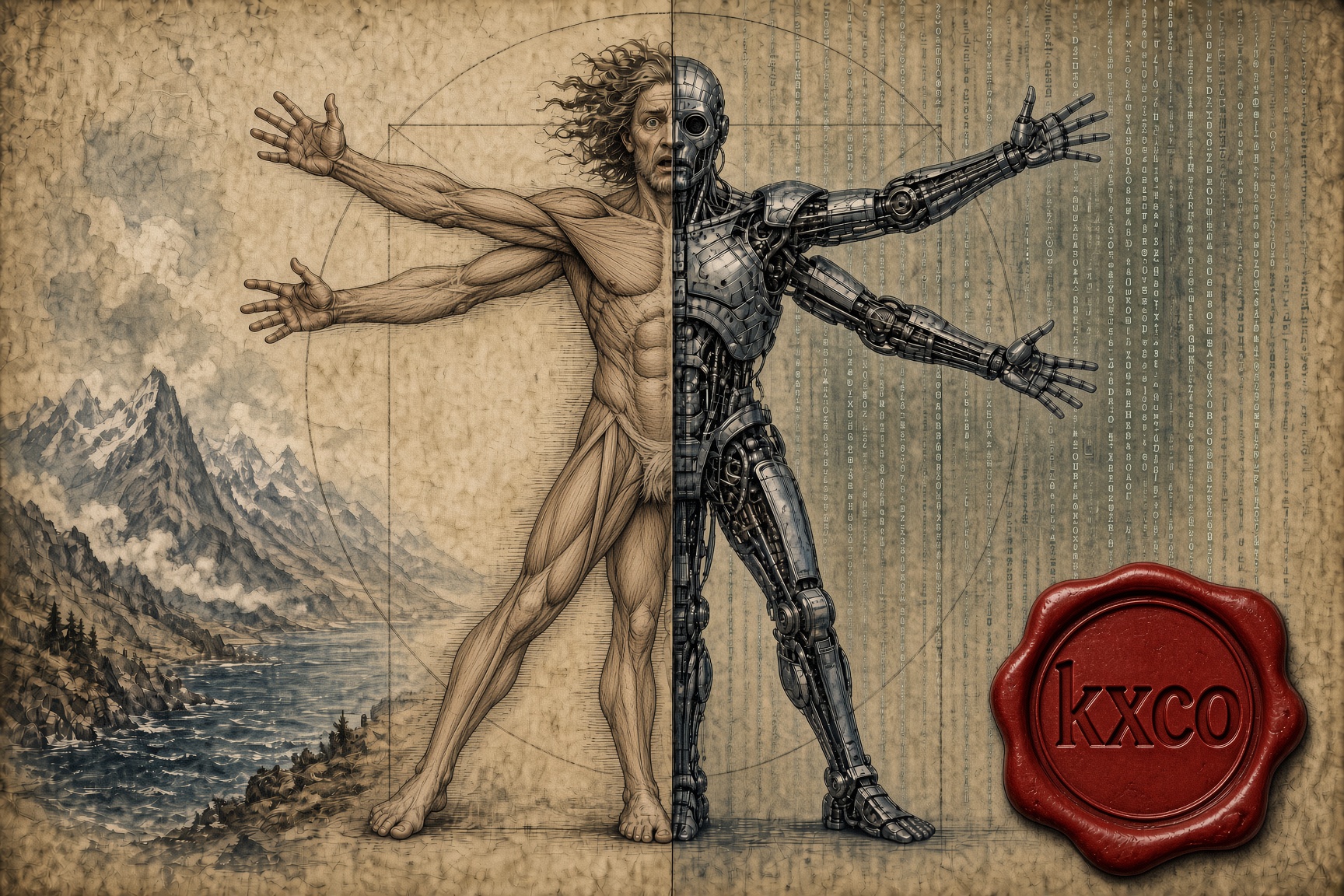
Don't Be the Best, Be the Only: Winning in an AI World
AI is repricing competence downward. What it cannot reproduce is a life. The case for remaining non-fungible, why friction still produces the best ideas, and what it means to build AI systems that keep the human intellect in them.
Every story, signed and delivered.
Subscribe to the kxco channel and get the headline, the AI-written key takeaways, and the chain-anchor link the moment we publish. Audio versions and per-ticker subscriptions arrive in the next iteration.