
WeWork in "Selective Default" as It Misses Debt Holder Conditions
WeWork, the embattled flexible workspace provider, finds itself in a precarious financial position, labeled as being in "selective default" by ratings agency S&P. This development arises from WeWork's failure to meet conditions set by its debt holders, casting a shadow over the company's financial stability.
S&P's pronouncement came after WeWork disclosed its latest interactions with creditors in a securities filing. The company stated that bondholders had granted it a 30-day grace period on October 2 for interest payments. However, WeWork mentioned that this forbearance agreement was set to terminate within seven days, according to the filing.
In this context, WeWork made the decision to withhold $6.4 million in interest payments. The company asserted that it possessed sufficient liquidity to meet this obligation, and it had a 30-day grace period before non-payment would be classified as an "event of default," as indicated in the filing.
S&P, on the other hand, characterized WeWork's status as one of "selective default." The agency justified this stance by noting that WeWork was distressed, failed to fulfill its contractual obligation to make timely interest payments, and did not adequately compensate all lenders for temporarily waiving their rights. S&P also stated that it would reevaluate the situation at the conclusion of the seven-day period.
WeWork's financial troubles had been brewing for some time. In August, the company had raised concerns by acknowledging that "substantial doubt exists about the company's ability to continue as a going concern." The first half of the year had seen WeWork facing significant losses, with weakening macroeconomic conditions dampening demand for its shared office spaces, as reported to regulators.
WeWork, previously associated with controversial founder Adam Neumann, has received substantial funding from SoftBank. The company had been a prominent player in the sharing economy, significantly impacting the commercial real estate landscape of major cities worldwide.
In the wake of these financial challenges, WeWork's shares took a substantial hit, plummeting by nearly 50 percent and closing at $1.22 on Wednesday, reflecting the company's tenuous financial position and the hurdles it faces in regaining stability.
AI is the Neat Handwriting of the Illiterate
A model in the hands of someone who has read the filing and walked the plant is a clerk. The same model, speaking for someone who has done neither, is a disguise. On AI slop, phantom citations and factslop, why finish stopped being evidence of work, and the containment layer KXCO built so a machine cannot speak as the institution until a source is attached.
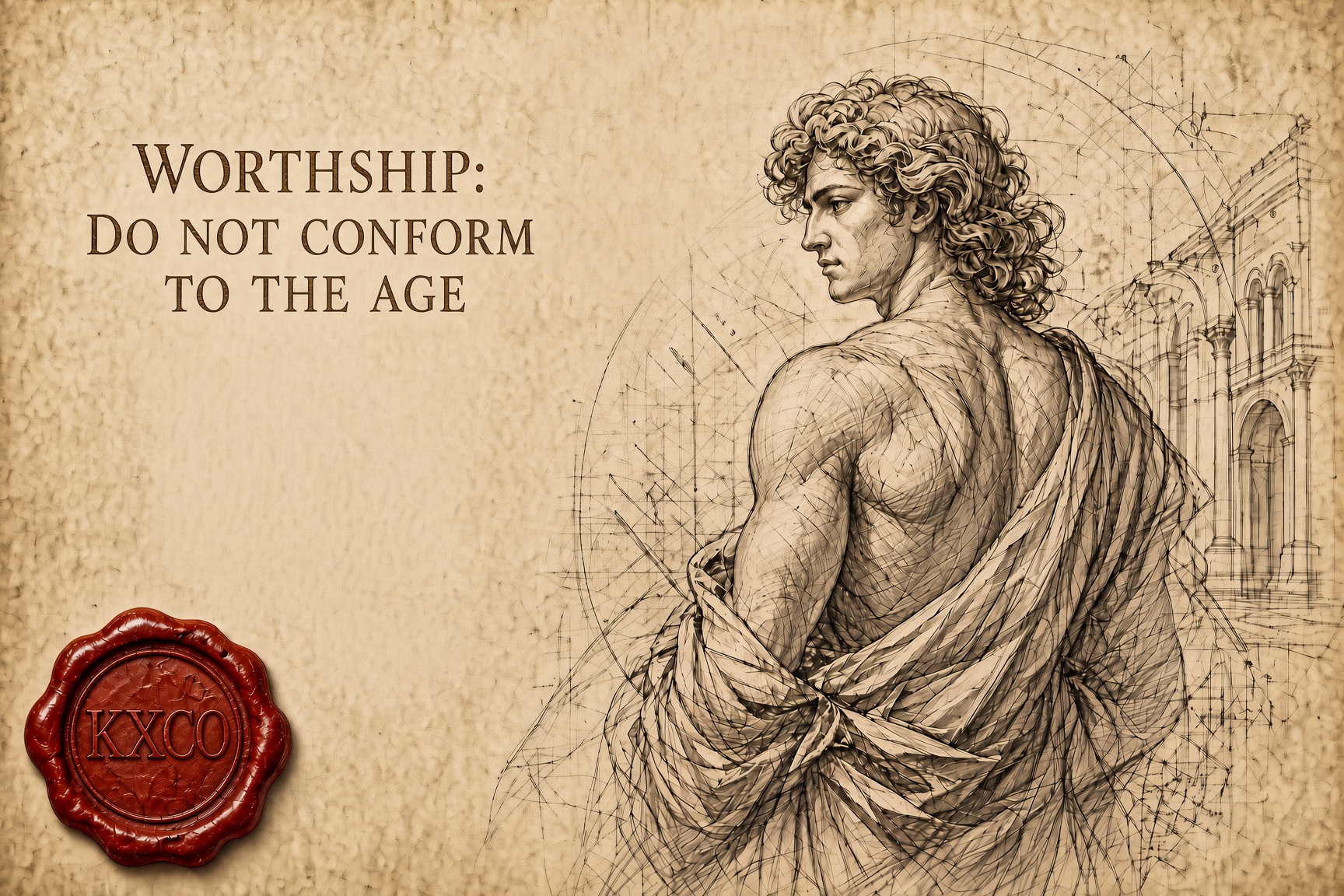
Worthship: Do Not Conform to the Age
Worthship is the older English word for worship, and it means to ascribe worth. Bishop Robert Barron preached Romans 12 on 30 August. This essay follows the text into the prison letters, and puts two questions to a graph: do the four readings of that Sunday agree, and was Paul free or in chains when he wrote about despair?
The Truth in All Its Ugliness Must Survive
A majority vote does not determine the truth. Consensus is a mood, gossip is a sport, and a model will write the pretty version for free. Why the ugly number has to survive, why a record beats a dashboard, and what KXCO was built to keep standing when the room changes its mind.

Don't Be the Best, Be the Only: Winning in an AI World
AI is repricing competence downward. What it cannot reproduce is a life. The case for remaining non-fungible, why friction still produces the best ideas, and what it means to build AI systems that keep the human intellect in them.
Every story, signed and delivered.
Subscribe to the kxco channel and get the headline, the AI-written key takeaways, and the chain-anchor link the moment we publish. Audio versions and per-ticker subscriptions arrive in the next iteration.