
USA is Still Stimulus Dependent
U.S. Federal Reserve Chair Jerome Powell told lawmakers on Tuesday that U.S. economic recovery remains uneven and far from complete, and the path ahead is highly uncertain.
"The resurgence in COVID-19 cases, hospitalizations, and deaths in recent months is causing great hardship for millions of Americans and is weighing on economic activity and job creation," Powell said at a virtual hearing before the Senate Banking Committee.
Noting that the weakness concentrated in sectors most adversely affected by the resurgence of the virus, Powell said ongoing vaccinations "offer hope for a return to more normal conditions" later this year.
However, the economy remains "a long way" from the central bank's employment and inflation goals, and it is likely to "take some time" for substantial further progress to be achieved, said the Fed chief.
"We will continue to clearly communicate our assessment of progress toward our goals well in advance of any change in the pace of purchases," he said.
The central bank last month decided to hold its policy rate near zero and continue its asset purchase program at least at the current pace of 120 billion U.S. dollars per month until it sees "substantial further progress" in employment and inflation.
While the Congress is moving ahead with President Joe Biden's 1.9-trillion-U.S.-dollar COVID-19 relief package, Powell doesn't see persistent inflation pressures in the coming months.

"We have been living in a world that for a quarter of a century where all of the pressures were disinflationary pushing downward on inflation, we have averaged less than 2 percent inflation for more than the last 25 years," Powell said.
"Inflation dynamics do change over time but they don't change on a dime and so we don't think how a burst of fiscal support or spending that doesn't last for many years would actually change those inflation dynamics," he said.
Powell also said the United States could get through the pandemic much more quickly than people had feared, but "the job is not done".
"That's the thing I keep coming back to we have got to finish the job with the pandemic, get everyone under control so that the U.S. economy can really reopen," he said.
In its semi-annual Monetary Policy Report submitted to the Congress last week, the Fed warned that risks to the U.S. economic outlook remain substantial while vaccines offer hope of an end to the pandemic.
"The pace of vaccinations, the rate of decline in the spread of the virus, and the speed with which people return to normal activities all remain highly uncertain, particularly given the emergence of new, apparently more contagious strains," the Fed said, adding the economic outlook depends crucially on the course of the pandemic.
AI is the Neat Handwriting of the Illiterate
A model in the hands of someone who has read the filing and walked the plant is a clerk. The same model, speaking for someone who has done neither, is a disguise. On AI slop, phantom citations and factslop, why finish stopped being evidence of work, and the containment layer KXCO built so a machine cannot speak as the institution until a source is attached.
Worthship: Do Not Conform to the Age
Worthship is the older English word for worship, and it means to ascribe worth. Bishop Robert Barron preached Romans 12 on 30 August. This essay follows the text into the prison letters, and puts two questions to a graph: do the four readings of that Sunday agree, and was Paul free or in chains when he wrote about despair?
The Truth in All Its Ugliness Must Survive
A majority vote does not determine the truth. Consensus is a mood, gossip is a sport, and a model will write the pretty version for free. Why the ugly number has to survive, why a record beats a dashboard, and what KXCO was built to keep standing when the room changes its mind.
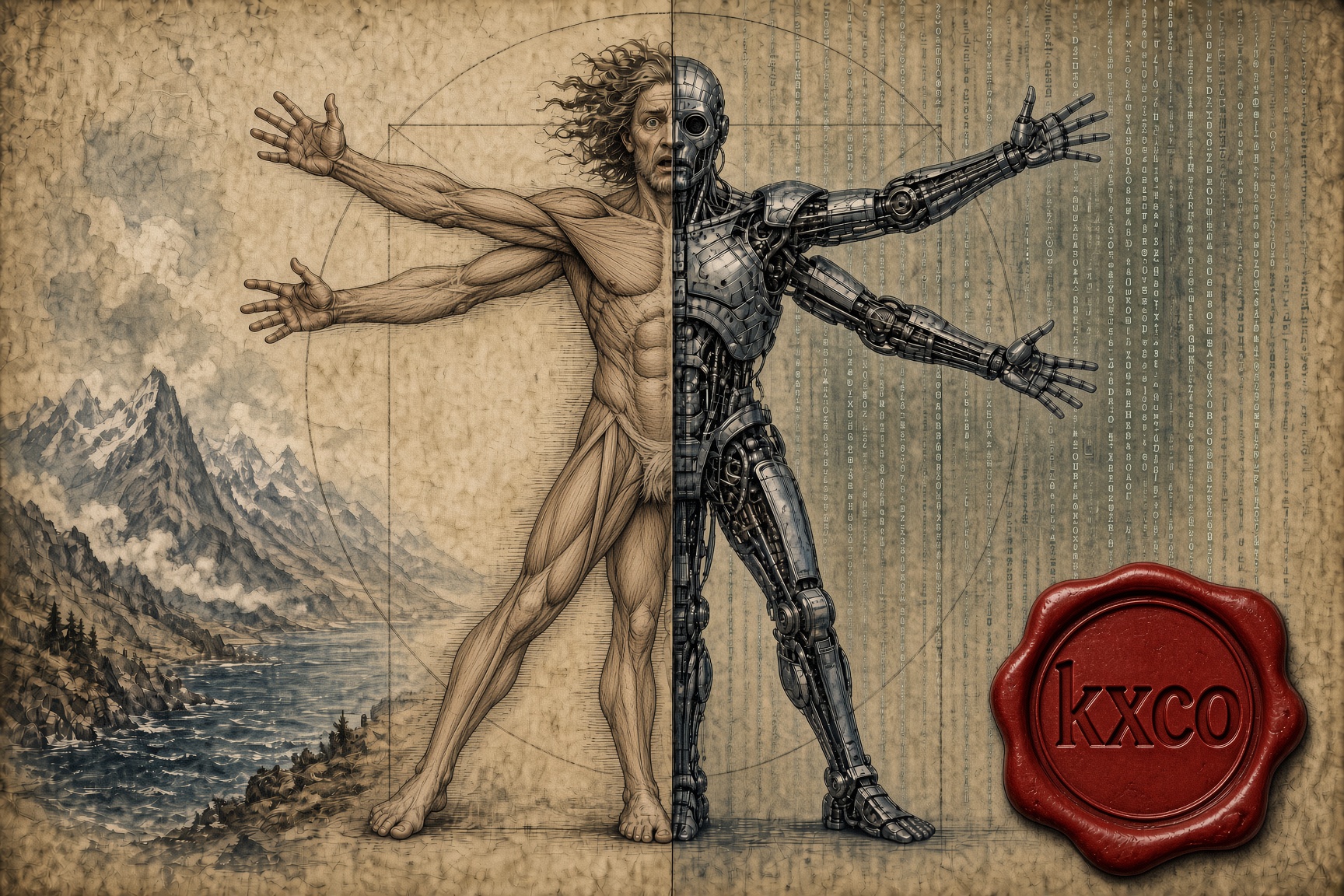
Don't Be the Best, Be the Only: Winning in an AI World
AI is repricing competence downward. What it cannot reproduce is a life. The case for remaining non-fungible, why friction still produces the best ideas, and what it means to build AI systems that keep the human intellect in them.
Every story, signed and delivered.
Subscribe to the kxco channel and get the headline, the AI-written key takeaways, and the chain-anchor link the moment we publish. Audio versions and per-ticker subscriptions arrive in the next iteration.