
USA Caught Out on WTO Breaches
China's Ministry of Commerce (MOC) issued a report on the World Trade Organization (WTO) compliance of the United States for the first time on Friday.
The report reviewed U.S. performance on following WTO rules, and expressed concerns over U.S. policy measures that undermine the multilateral trading rules, impose unilateral sanctions, manipulate double standards in industrial policies, and disturb global industrial and supply chains.
The concerns cover 11 areas, including tariff and non-tariff barriers, industrial subsidies, agricultural subsidies, trade remedies, standards and technical regulations, trade in services and intellectual property rights.
The United States has not only selectively implemented WTO rulings, but has also blocked appointments of new Appellate Body members, which led to the "paralysis" of the Appellate Body.
The United States has a long history of taking unilateral measures against other members under the guise of so-called "national security," "human rights" and "forced technology transfer," and has also coerced others into abiding by its diplomatic policies and illegitimate demands, the report said.
In addition, the United States has implemented exclusive and discriminatory subsidy policies, and has disrupted other countries' industrial development through means like export control, the report added.
It has instigated decoupling and fragmenting industrial and supply chains, tried to utilize unilateral tariff measures to force re-shoring of industrial chains, established U.S.-centered industrial and supply chains through massive subsidies, and promoted near-shoring and friend-shoring based on so-called "values," the report said.
As the world's largest economy and an important founder and principal beneficiary of the multilateral trading system, the United States should have set a good example by abiding by the rules, honoring its commitments, and upholding the authority and efficacy of the multilateral trading system, according to the report.
China will, as always, maintain close communication and cooperation with all parties, fully and deeply participate in the reform of the WTO, and work together to promote the multilateral trading system to play a bigger role in global economic governance, said the MOC.
AI is the Neat Handwriting of the Illiterate
A model in the hands of someone who has read the filing and walked the plant is a clerk. The same model, speaking for someone who has done neither, is a disguise. On AI slop, phantom citations and factslop, why finish stopped being evidence of work, and the containment layer KXCO built so a machine cannot speak as the institution until a source is attached.
Worthship: Do Not Conform to the Age
Worthship is the older English word for worship, and it means to ascribe worth. Bishop Robert Barron preached Romans 12 on 30 August. This essay follows the text into the prison letters, and puts two questions to a graph: do the four readings of that Sunday agree, and was Paul free or in chains when he wrote about despair?
The Truth in All Its Ugliness Must Survive
A majority vote does not determine the truth. Consensus is a mood, gossip is a sport, and a model will write the pretty version for free. Why the ugly number has to survive, why a record beats a dashboard, and what KXCO was built to keep standing when the room changes its mind.
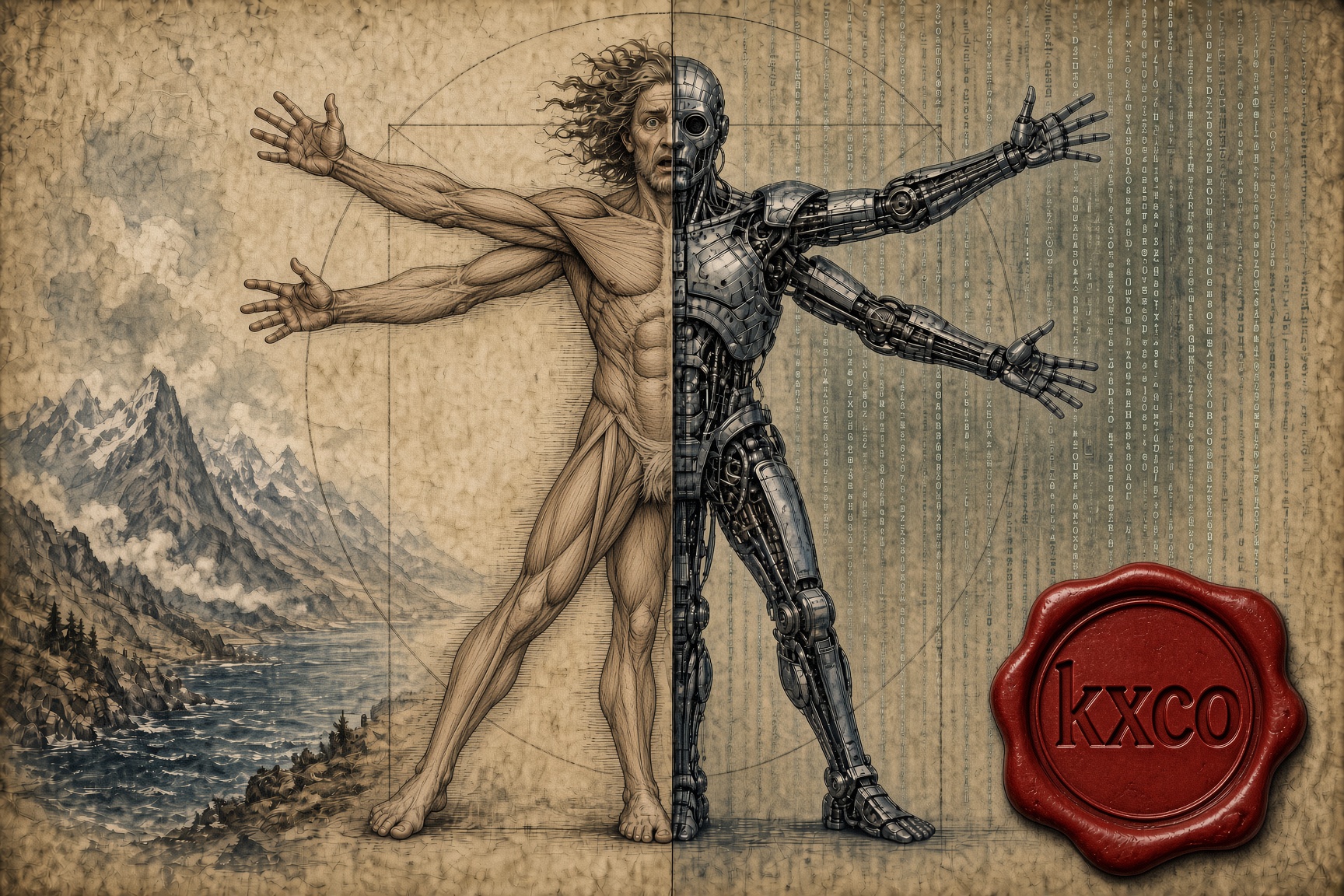
Don't Be the Best, Be the Only: Winning in an AI World
AI is repricing competence downward. What it cannot reproduce is a life. The case for remaining non-fungible, why friction still produces the best ideas, and what it means to build AI systems that keep the human intellect in them.
Every story, signed and delivered.
Subscribe to the kxco channel and get the headline, the AI-written key takeaways, and the chain-anchor link the moment we publish. Audio versions and per-ticker subscriptions arrive in the next iteration.