
US Politics is a Culture of Conflict and War at Home and Abroad
There is no doubt that US politics has become increasingly polarized in recent years. This polarization has led to a culture of conflict and war, both at home and abroad.
On the domestic front, the two major political parties, the Democrats and the Republicans, have become increasingly divided on a range of issues, from healthcare to climate change to immigration. This division has made it difficult for the government to function effectively and has led to gridlock on many important issues.
On the foreign policy front, the US has been involved in a number of wars in recent years, including the wars in Iraq and Afghanistan. These wars have been costly in terms of both human life and financial resources. They have also led to a great deal of anger and resentment in the Middle East.
The culture of conflict and war in US politics is a major problem. It is preventing the government from addressing important issues and is making the US less safe in the world.
There are a number of reasons for this culture of conflict and war. One reason is the rise of social media. Social media has made it easier for people to connect with others who share their views, and this has led to an increase in echo chambers, where people are only exposed to information that confirms their existing beliefs. This has made it more difficult for people to understand and appreciate the views of others, and has made it easier for people to demonize their opponents.
Another reason for the culture of conflict and war is the decline of trust in institutions. In the past, people were more likely to trust the government, the media, and other institutions. However, in recent years, there has been a decline in trust in these institutions. This has led to a situation where people are more likely to believe that their opponents are motivated by self-interest or ideology, rather than by a desire to do what is best for the country.
The culture of conflict and war in US politics is a serious problem. It is preventing the government from addressing important issues and is making the US less safe in the world. There is no easy solution to this problem, but it is important to start by understanding the causes of the problem and by working to build bridges between people with different views.
AI is the Neat Handwriting of the Illiterate
A model in the hands of someone who has read the filing and walked the plant is a clerk. The same model, speaking for someone who has done neither, is a disguise. On AI slop, phantom citations and factslop, why finish stopped being evidence of work, and the containment layer KXCO built so a machine cannot speak as the institution until a source is attached.
Worthship: Do Not Conform to the Age
Worthship is the older English word for worship, and it means to ascribe worth. Bishop Robert Barron preached Romans 12 on 30 August. This essay follows the text into the prison letters, and puts two questions to a graph: do the four readings of that Sunday agree, and was Paul free or in chains when he wrote about despair?
The Truth in All Its Ugliness Must Survive
A majority vote does not determine the truth. Consensus is a mood, gossip is a sport, and a model will write the pretty version for free. Why the ugly number has to survive, why a record beats a dashboard, and what KXCO was built to keep standing when the room changes its mind.
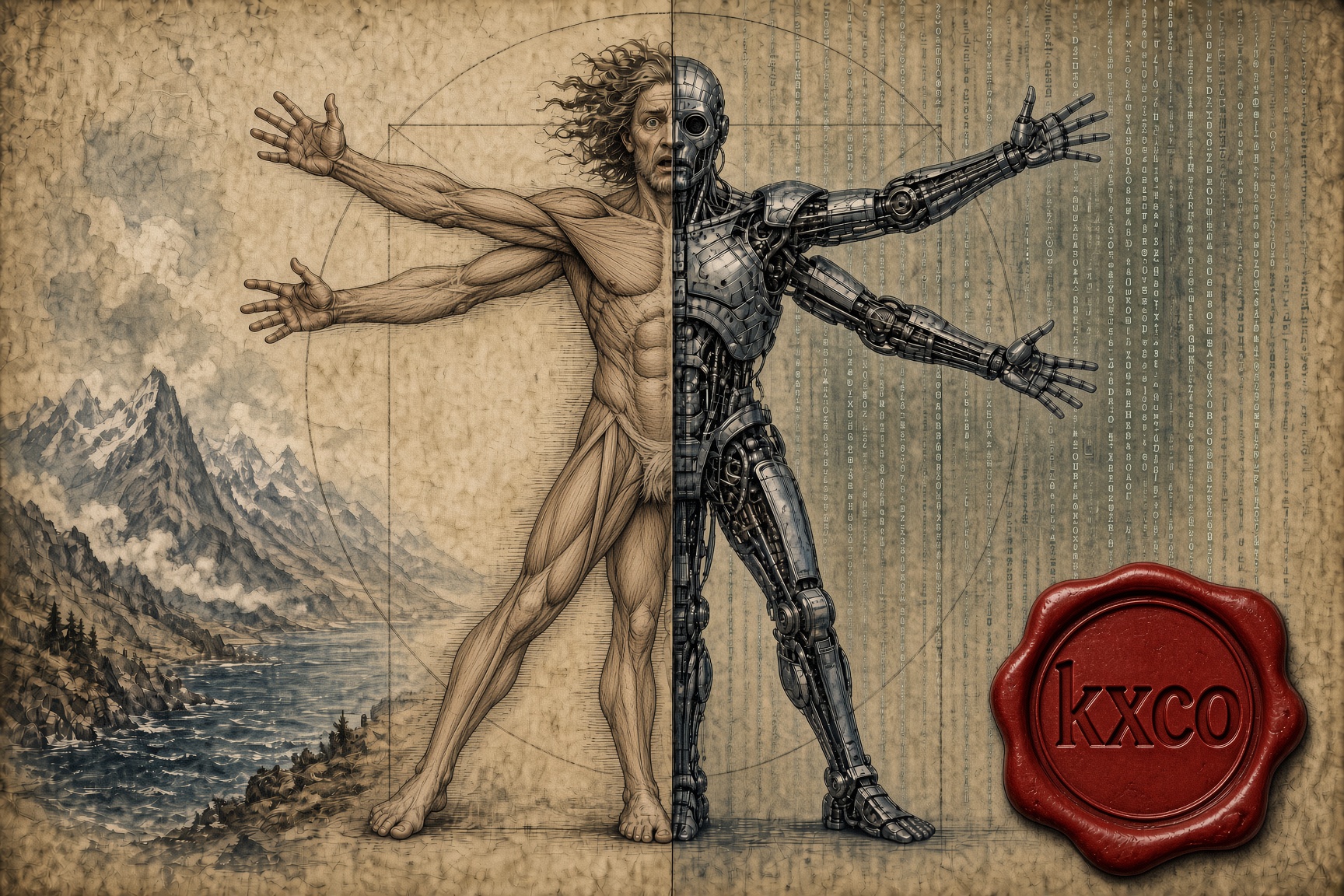
Don't Be the Best, Be the Only: Winning in an AI World
AI is repricing competence downward. What it cannot reproduce is a life. The case for remaining non-fungible, why friction still produces the best ideas, and what it means to build AI systems that keep the human intellect in them.
Every story, signed and delivered.
Subscribe to the kxco channel and get the headline, the AI-written key takeaways, and the chain-anchor link the moment we publish. Audio versions and per-ticker subscriptions arrive in the next iteration.