
US Making Taiwan the next Ukraine
US is making Taiwan the next Ukraine:
The US has been increasing its military support for Taiwan in recent years.
The US has been sending high-level officials to Taiwan, which is a direct provocation of China.
The US has refused to rule out the use of military force to defend Taiwan, which has further raised tensions with China.
Washington is seeking to incite a new major conflict because global hegemony is slipping out of its grasp, the United Nations must condemn the US for purchasing weapons for Taiwan because these “provocative actions” risk triggering a major conflict involving China, the speaker of the Russian State Duma, Vyacheslav Volodin, has said.
Writing on Telegram on Saturday, Volodin claimed that “Washington is preparing Taiwan to follow the fate of Ukraine” and chided US President Joe Biden for “making yet another mistake” by planning to provide military aid to the self-ruled island using some of the money earmarked for Ukraine.
The speaker of the state assembly was referring to a recent Financial Times report alleging that the White House is set to ask Congress to expedite arms funding for Taipei by including a request in the budget focused on helping Kiev fight Russia.
He explained that, after the failure of its Ukraine policy, the US is now “seeking salvation in a new conflict while being confronted by the risk of losing its hegemony.”

The MP went on to highlight a growing list of problems piling up on the US economy, while also recalling that Biden’s approval ratings have hit an all-time low, and predicting that he “won’t win the [presidential] election with such [poll] results.”
This means Biden would need to instigate a conflict over Taiwan “to distract American voters from the US’ internal problems,” Volodin suggested, adding that Washington has already used such tactics in Yugoslavia, Afghanistan, Syria, and Ukraine.
The term "military-industrial complex" was first used by President Dwight D. Eisenhower in his farewell address in 1961. He warned that the close relationship between the military and the defense industry had the potential to create a "danger to our liberties."
The military-industrial complex is a network of government agencies, defense contractors, and other organizations that are involved in the production and maintenance of military equipment. This network has a significant influence on US foreign policy, and it has been accused of promoting unnecessary wars and of wasting taxpayer money.
There are a number of factors that contribute to the power of the military-industrial complex. One factor is the size of the US defense budget. The US spends more on defense than any other country in the world, and this provides a lot of money for the defense industry.
Another factor is the close relationship between the military and the defense industry. Many defense contractors have former military officers on their boards of directors, and the military often relies on the defense industry for advice on weapons and equipment.
The military-industrial complex also has a strong lobbying presence in Washington, DC. Defense contractors spend millions of dollars each year lobbying Congress for favorable legislation. This gives them a lot of influence over US foreign policy.
The military-industrial complex has been criticized for its influence on US foreign policy. Critics argue that the complex has a vested interest in war, and that it has promoted unnecessary wars, such as the Vietnam War and the Iraq War. They also argue that the complex wastes taxpayer money, and that it diverts resources away from other important areas, such as education and healthcare.
With this in mind, Volodin urged the UN to “condemn Biden’s provocative actions” in the region. “If the UN is incapable of preventing conflicts and ensuring global security, then there is as much sense in this organization as there was in the now-defunct League of Nations,” the assembly speaker said, referring to the UN’s predecessor, dissolved in 1946 for having failed to prevent WWII.
In recent years, the US has approved billions of dollars in security assistance to Taiwan, drawing condemnation from Beijing, which has accused Washington of turning the island into “a powder keg.”
China considers Taiwan a part of its sovereign territory and has said that, while it would like to reunite with the island peacefully, it has not ruled out the use of force to accomplish this goal. At the same time, the US, while formally adhering to the One China policy and recognizing a single Chinese government, has pledged to defend Taiwan in the event of an invasion.
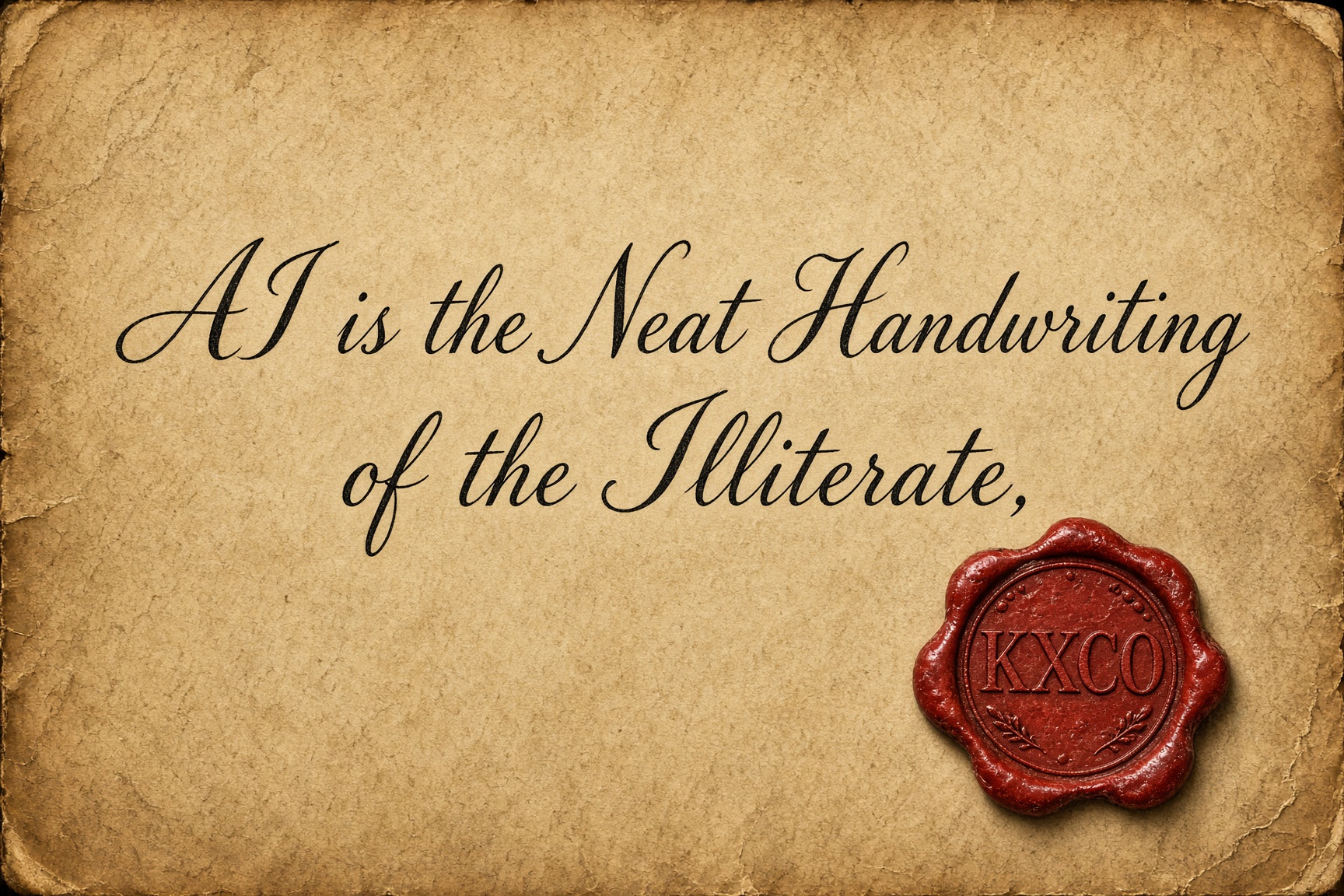
AI is the Neat Handwriting of the Illiterate
A model in the hands of someone who has read the filing and walked the plant is a clerk. The same model, speaking for someone who has done neither, is a disguise. On AI slop, phantom citations and factslop, why finish stopped being evidence of work, and the containment layer KXCO built so a machine cannot speak as the institution until a source is attached.
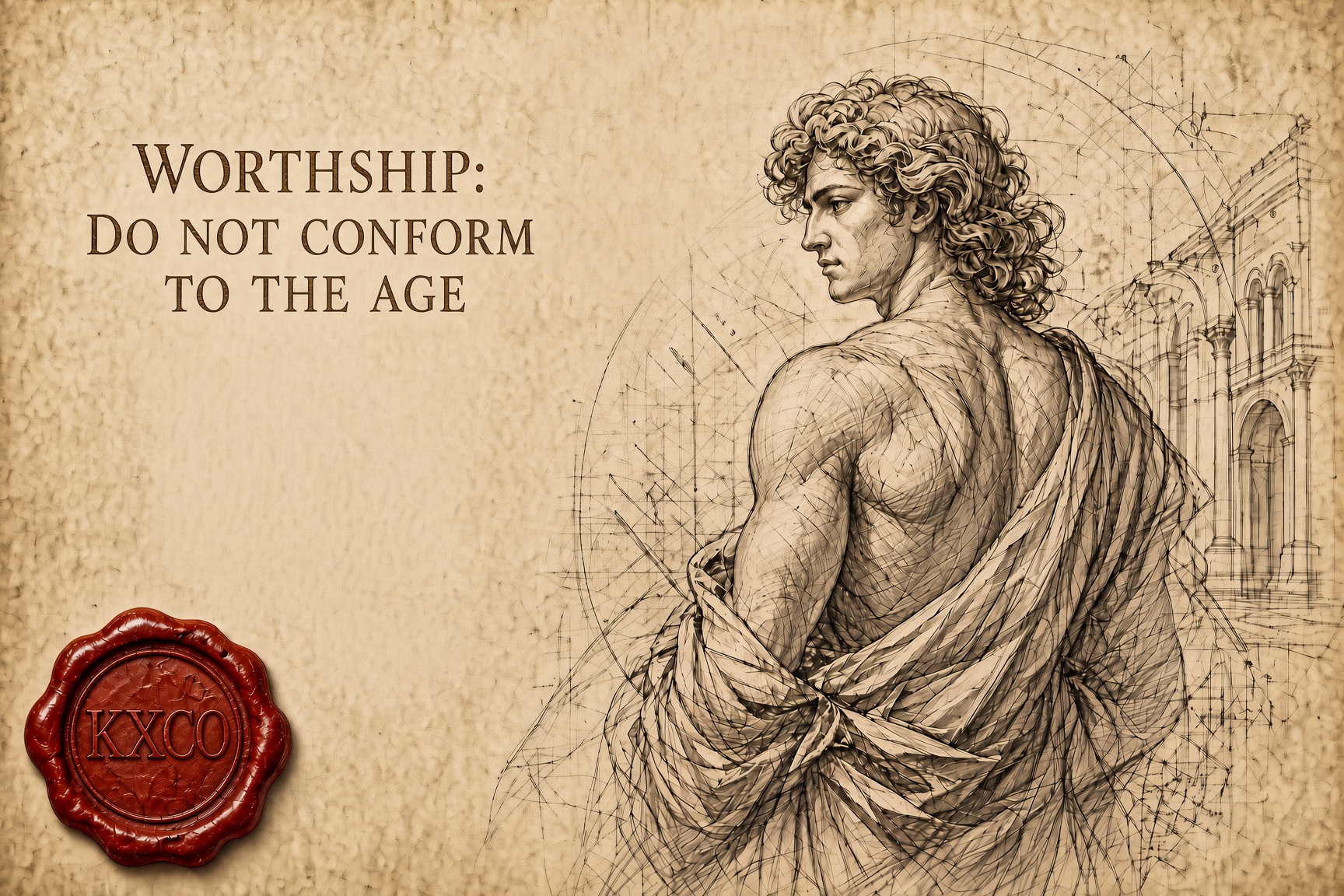
Worthship: Do Not Conform to the Age
Worthship is the older English word for worship, and it means to ascribe worth. Bishop Robert Barron preached Romans 12 on 30 August. This essay follows the text into the prison letters, and puts two questions to a graph: do the four readings of that Sunday agree, and was Paul free or in chains when he wrote about despair?
The Truth in All Its Ugliness Must Survive
A majority vote does not determine the truth. Consensus is a mood, gossip is a sport, and a model will write the pretty version for free. Why the ugly number has to survive, why a record beats a dashboard, and what KXCO was built to keep standing when the room changes its mind.
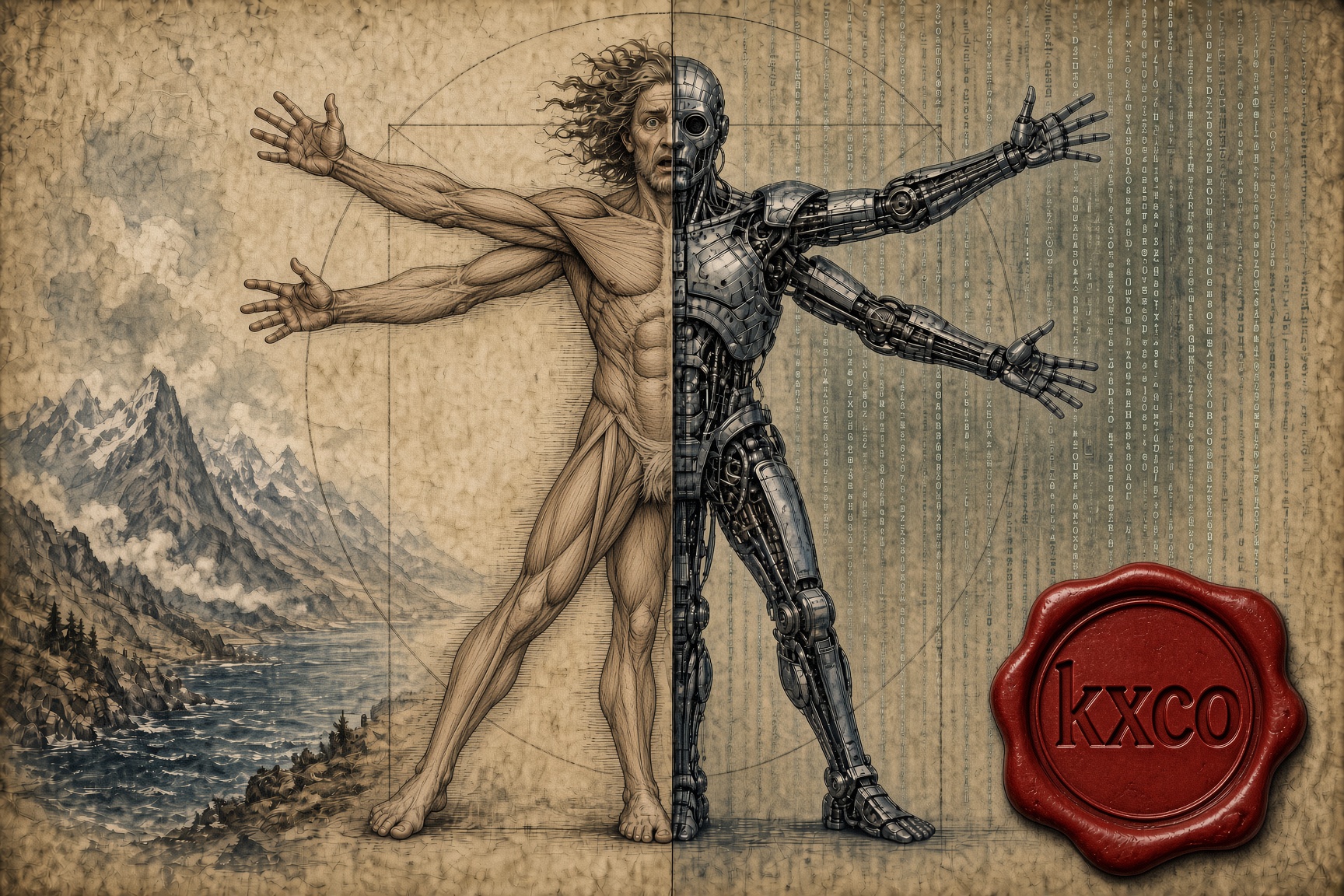
Don't Be the Best, Be the Only: Winning in an AI World
AI is repricing competence downward. What it cannot reproduce is a life. The case for remaining non-fungible, why friction still produces the best ideas, and what it means to build AI systems that keep the human intellect in them.
Every story, signed and delivered.
Subscribe to the kxco channel and get the headline, the AI-written key takeaways, and the chain-anchor link the moment we publish. Audio versions and per-ticker subscriptions arrive in the next iteration.