
Understanding the Triduum
Understanding the Triduum: How to Celebrate This Sacred Time – Shayne Heffernan
By Shayne Heffernan, April 11, 2025
The Triduum is a cornerstone of the Christian liturgical calendar, and its celebration holds deep meaning for the faithful. This article explores the Triduum’s definition, its three-day structure, and the traditional ways to observe it, focusing on Catholic practices while noting variations in other Christian traditions. The Triduum’s significance also ties into broader cultural and economic contexts, impacting markets like $SPY through seasonal consumer trends.
What Is the Triduum?
The Triduum, also known as the Paschal Triduum, spans three days in the Christian calendar, marking the culmination of Lent and the heart of the Easter celebration. It begins with the evening Mass of the Lord’s Supper on Holy Thursday, continues through Good Friday, Holy Saturday, and concludes with the Easter Vigil on the evening of Holy Saturday, leading into Easter Sunday. These days commemorate the Passion, Death, and Resurrection of Jesus Christ, forming a single, continuous liturgical event despite occurring over three calendar days. The term "Triduum" comes from Latin, meaning "three days," and its origins trace back to early Christian practices, with formalized observances documented as early as the 4th century in texts like the Apostolic Constitutions.
The Structure of the Triduum
Holy Thursday (Maundy Thursday): This day starts the Triduum with the Mass of the Lord’s Supper, typically held in the evening. It commemorates the Last Supper, where Jesus instituted the Eucharist and washed the disciples’ feet, symbolizing service. The Mass ends with the transfer of the Blessed Sacrament to a side altar, followed by a period of adoration, often lasting until midnight. The altar is stripped, and the church is left bare, reflecting the somber tone of Christ’s impending Passion.
Good Friday: Focused on the Crucifixion and Death of Jesus, Good Friday is a day of fasting and penance. The Celebration of the Lord’s Passion, usually held at 3 p.m., includes the Liturgy of the Word, Veneration of the Cross, and Holy Communion using hosts consecrated on Holy Thursday. No Mass is celebrated, and the church remains stark, with no decorations, emphasizing the mourning of Christ’s death.
Holy Saturday and the Easter Vigil: Holy Saturday is a day of quiet reflection, with no Mass until the Easter Vigil begins after nightfall. The Vigil is the high point of the Triduum, celebrating Christ’s Resurrection. It includes the Service of Light (lighting the Paschal Candle), the Liturgy of the Word, Baptism and Confirmation for catechumens, and the Liturgy of the Eucharist. The Vigil transitions into Easter Sunday, marking the Resurrection and the start of the Easter season.
How to Celebrate the Triduum: Traditional Practices
Celebrating the Triduum involves both communal and personal observances, rooted in Catholic tradition but adaptable across Christian denominations.
Holy Thursday: Attend the Mass of the Lord’s Supper, where the priest washes the feet of parishioners, echoing Jesus’ act of humility. After Mass, participate in the adoration of the Blessed Sacrament, often called the “Holy Hour,” reflecting on Christ’s agony in the Garden of Gethsemane. Fasting or abstaining from meat is encouraged, aligning with Lenten penance. In some cultures, like in the Philippines, the Visita Iglesia tradition involves visiting seven churches to pray at each altar of repose.
Good Friday: Join the Celebration of the Lord’s Passion, venerating the cross through a kiss or bow, a practice dating back to the 4th century as noted in the Peregrinatio Etheriae. Observe fasting (one full meal, two smaller meals) and abstinence from meat, as required for Catholics aged 18-59 and 14 and older, respectively, per Canon 1251. Spend time in silent prayer, perhaps meditating on the Stations of the Cross, and avoid secular activities to honor the solemnity of Christ’s death. Some communities hold processions, like the Way of the Cross in Rome, led by the Pope.
Holy Saturday and Easter Vigil: Use Holy Saturday for quiet reflection, preparing for the Easter Vigil. Attend the Vigil, which can last 2-3 hours, to experience the full liturgy, including the lighting of the Paschal Candle and the Exsultet hymn. If unable to attend, pray the Liturgy of the Hours or read the Vigil’s scripture readings, such as Genesis 1 (Creation) and Exodus 14 (Crossing the Red Sea). The Vigil concludes with the first Eucharist of Easter, celebrating the Resurrection, often followed by a communal meal or gathering.
Variations Across Traditions
In Protestant traditions, the Triduum is observed with less formality. Many focus on Good Friday services with scripture readings and hymns, while Easter Sunday celebrations emphasize the Resurrection through sunrise services. Orthodox Christians celebrate the Paschal Triduum on a different calendar (Julian), often a week later, with similar liturgies but distinct customs, like the Holy Fire ceremony in Jerusalem.
AI is the Neat Handwriting of the Illiterate
A model in the hands of someone who has read the filing and walked the plant is a clerk. The same model, speaking for someone who has done neither, is a disguise. On AI slop, phantom citations and factslop, why finish stopped being evidence of work, and the containment layer KXCO built so a machine cannot speak as the institution until a source is attached.
Worthship: Do Not Conform to the Age
Worthship is the older English word for worship, and it means to ascribe worth. Bishop Robert Barron preached Romans 12 on 30 August. This essay follows the text into the prison letters, and puts two questions to a graph: do the four readings of that Sunday agree, and was Paul free or in chains when he wrote about despair?
The Truth in All Its Ugliness Must Survive
A majority vote does not determine the truth. Consensus is a mood, gossip is a sport, and a model will write the pretty version for free. Why the ugly number has to survive, why a record beats a dashboard, and what KXCO was built to keep standing when the room changes its mind.
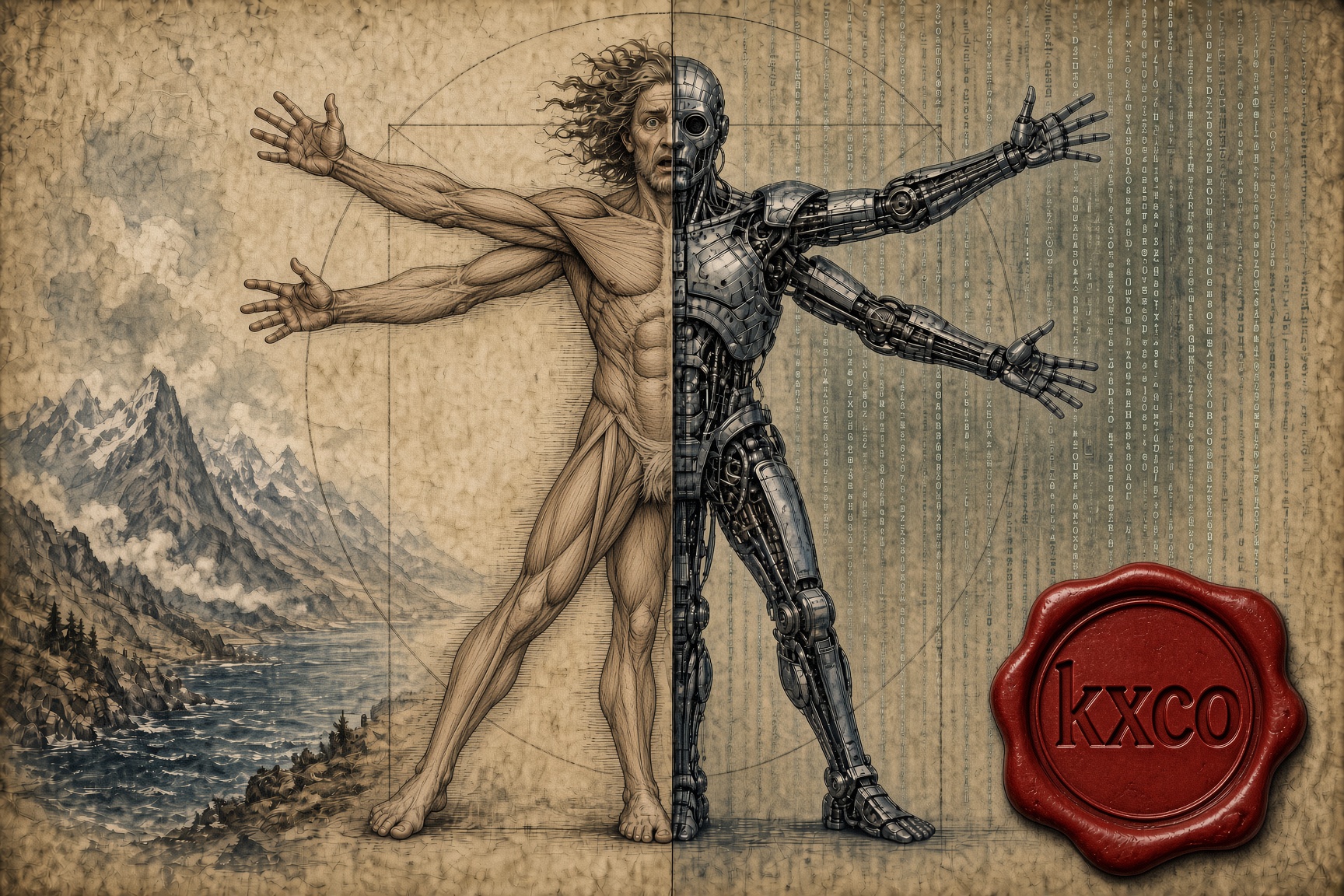
Don't Be the Best, Be the Only: Winning in an AI World
AI is repricing competence downward. What it cannot reproduce is a life. The case for remaining non-fungible, why friction still produces the best ideas, and what it means to build AI systems that keep the human intellect in them.
Every story, signed and delivered.
Subscribe to the kxco channel and get the headline, the AI-written key takeaways, and the chain-anchor link the moment we publish. Audio versions and per-ticker subscriptions arrive in the next iteration.