
Understanding BRC-20
BRC-20 is an experimental token standard that enables the minting and transferring of fungible tokens via the Ordinals protocol on the Bitcoin blockchain.
Taking a cue from Ethereum's ERC-20 tokens, BRC-20 tokens feature different mechanisms and functions. Despite gaining massive popularity during the first half of 2023, BRC-20 tokens are still experimental, and users should exercise extreme caution.
How Were BRC-20 Tokens Created?
After the Bitcoin Ordinals protocol launched in January 2023, enabling NFTs (non-fungible tokens) to be inscribed on satoshis (sats), there has been curiosity about whether fungible tokens could be created on Bitcoin. BRC-20 token standards were created in March 2023 by a pseudonymous programmer named Domo to make minting fungible tokens on Bitcoin possible.
The first BRC-20 token deployed was called "ordi." Bitcoin wallets quickly deployed tooling to support BRC-20 tokens. Numerous other BRC-20 tokens, many of which are meme tokens, were launched in the months after. As of May 2023, some BRC-20 tokens have experienced astronomical price increases and obtained significant market caps. The demand for BRC-20 tokens caused Bitcoin transaction fees to surge and caused significant congestion on the Bitcoin network.
How Do BRC-20 Tokens Work?
It's important to know how Bitcoin Ordinals work to better understand BRC-20 tokens. The Ordinals protocol is a system for numbering satoshis and allows users to attach extra data to satoshis in a process known as "inscription."
BRC-20 tokens utilize Ordinals inscriptions of JSON (JavaScript Object Notation) data to deploy token contracts, mint, and transfer tokens. Currently, the BRC-20 token standard allows creating a BRC-20 token with the deploy function, minting an amount of BRC-20 tokens with the mint function, and transferring an amount of BRC-20 tokens via the transfer function.
The BRC-20 token standard is new and the process of deploying, minting, and transferring BRC-20 tokens isn't user-friendly. There are also a limited number of tooling and supporting services.
Differences Between BRC-20 and ERC-20 Tokens
Despite the similarity in their names, there are significant differences between the two tokens.
BRC-20 tokens exist on the Bitcoin network, while ERC-20 is a standard on the Ethereum network. BRC-20 tokens don't use smart contracts and, therefore, have much less functionality. On the contrary, ERC-20 tokens can interact with other protocols and applications to enable a wide range of services, including borrowing and lending.
ERC-20 is a mature token standard with a massive number of ERC-20 tokens already created and widely used. Conceived in 2015 and officially recognized in 2017, ERC-20 tokens have been battle-tested and proven to function stably. That's not the case with BRC-20 tokens, whose future has a high degree of uncertainty.
Risks of BRC-20 Tokens
The BRC-20 token standard is currently an experiment by programmers to facilitate fungibility on the Bitcoin blockchain. As it's still being tested, many things could go wrong.
Despite the hype, BRC-20 tokens have little utility at present. The outlook is also highly questionable. Due to the ease of minting BRC-20 tokens, it's possible that most could end up being worthless. Users and investors should be cautious and conduct proper research before engaging with this new token type.
What Are Ordinals? An Overview of Bitcoin NFTs
Every bitcoin consists of 100,000,000 satoshis (sats). The Ordinals protocol allows for each individual satoshi to be identified and transacted with extra data attached (through a process known as an inscription).
Ordinals have created another use case for Bitcoin beyond the simple transfer of value, making Bitcoin NFTs a reality.
Until recently, NFTs have primarily been minted and used on blockchains like Ethereum, Solana, and BNB Smart Chain. However, the team behind Ordinals believes that non-fungible tokens also have their place on the Bitcoin blockchain. Consequently, this has led to the emergence of the Ordinals project.
History has proven that changing a piece of Bitcoin’s code is extremely difficult. This issue is mainly due to the decentralized network of nodes and developers who don’t want to risk network security. As such, Bitcoin NFTs have not gained as much traction. Nevertheless, the growth of the crypto ecosystem has opened the gates to more innovative minds for whom the creation of Bitcoin NFTs is part of the future of Web3.
As of February 2023, Inscriptions using ordinals exceeded 100,000 as users poured images, video games, and other content onto the network. Let’s see how it works.
What Are Bitcoin Ordinals?
The Ordinals protocol is a system for numbering satoshis, giving each satoshi a serial number and tracking them across transactions. Simply put, ordinals allows users to make individual satoshis unique by attaching extra data to them. This process is known as “inscription”.
A satoshi – named after Bitcoin's pseudonymous creator Satoshi Nakamoto – is the smallest denomination of bitcoin (BTC). A single BTC can be subdivided into 100,000,000 satoshis, meaning each satoshi is worth 0.00000001 BTC.
Satoshis are numbered based on the order in which they were mined and transferred. The numbering scheme relies on the order satoshis are mined, while the transfer scheme relies on the order of transaction inputs and outputs. Hence the name, “ordinals”.
While traditional NFTs are similar to ordinals in some ways, there are a few key differences. NFTs have typically been made using smart contracts on blockchains such as Ethereum, Solana, and the BNB Smart Chain, and sometimes, the assets they represent are hosted elsewhere. Conversely, ordinals are inscribed directly onto individual satoshis, which are then included in blocks on the Bitcoin blockchain. Ordinals reside fully on the blockchain and do not require a sidechain or separate token. In this sense, ordinal inscriptions inherit the simplicity, immutability, security, and durability of Bitcoin itself.
Ordinal Theory and Inscriptions
In the context of Bitcoin, Ordinal Theory is a proposed methodology for identifying each satoshi via a serial number and tracking them in the Bitcoin coin supply, from first minting through their entire lifespan of transactions. This process is referred to as “inscription”. Thus, ordinal inscriptions are digital assets, similar to NFTs, inscribed on a satoshi in the Bitcoin network. This process has been made possible thanks to the Taproot upgrade, launched on November 14, 2021. Because of this, ordinal inscriptions do not require a sidechain or separate token.
As Ordinal Theory allows the tracking and transfer of individual satoshis, it has opened the possibility of collecting them. Based on the total supply of Bitcoin, the following ranks have been prescribed to denote the rarity of different satoshis:
Common: any sat other than the first sat of its block (2.1 quadrillion total supply).
Uncommon: the first sat of each block (6,929,999 total supply).
Rare: the first sat of each difficulty adjustment period (3437 total supply).
Epic: the first sat after each halving (32 total supply).
Legendary: the first sat of each cycle* (5 total supply).
Mythic: the first sat of the genesis block (1 total supply).
*A cycle represents the period between conjunctions, which occur when a halving and a difficulty adjustment coincide. In theory, this happens every 6 halvings, but the first conjunction is yet to occur (expected to occur in 2032).
Ordinals Pros and Cons
Ordinals have created another use case for the Bitcoin network beyond simple transfers of value. However, the Ordinals protocol has been met with controversy as it precipitates a fundamental issue among the Bitcoin community. On one side are those who believe that the relative simplicity of Bitcoin in its limitations to storing and transferring value should be preserved. On the other side are those who believe that Bitcoin should evolve to include new features and use cases.
Inscribed satoshis are now competing for block space with regular BTC transactions, which increases network fees. This has caused some controversy in the Bitcoin community, but some Ordinals supporters argue that this could be positive as fees are a crucial incentive for miners to secure the blockchain. In the future, as block rewards dwindle over time, network fees will become the primary incentive for committing hash power to Bitcoin. The crypto community seems divided on the topic, but the project certainly brought innovation to the Bitcoin space.
Ordinals are changing the world of blockchain art by providing an entirely new way to store information on Bitcoin transactions. They are adding extra utility and have increased the number of non-zero Bitcoin addresses to an all-time high. We are witnessing a unique moment in Bitcoin history where innovation is generating network activity beyond the typical use cases of investment and monetary transfer. Does this mean that Ordinals will continue to grow? Not necessarily. We will have to wait and see.
AI is the Neat Handwriting of the Illiterate
A model in the hands of someone who has read the filing and walked the plant is a clerk. The same model, speaking for someone who has done neither, is a disguise. On AI slop, phantom citations and factslop, why finish stopped being evidence of work, and the containment layer KXCO built so a machine cannot speak as the institution until a source is attached.
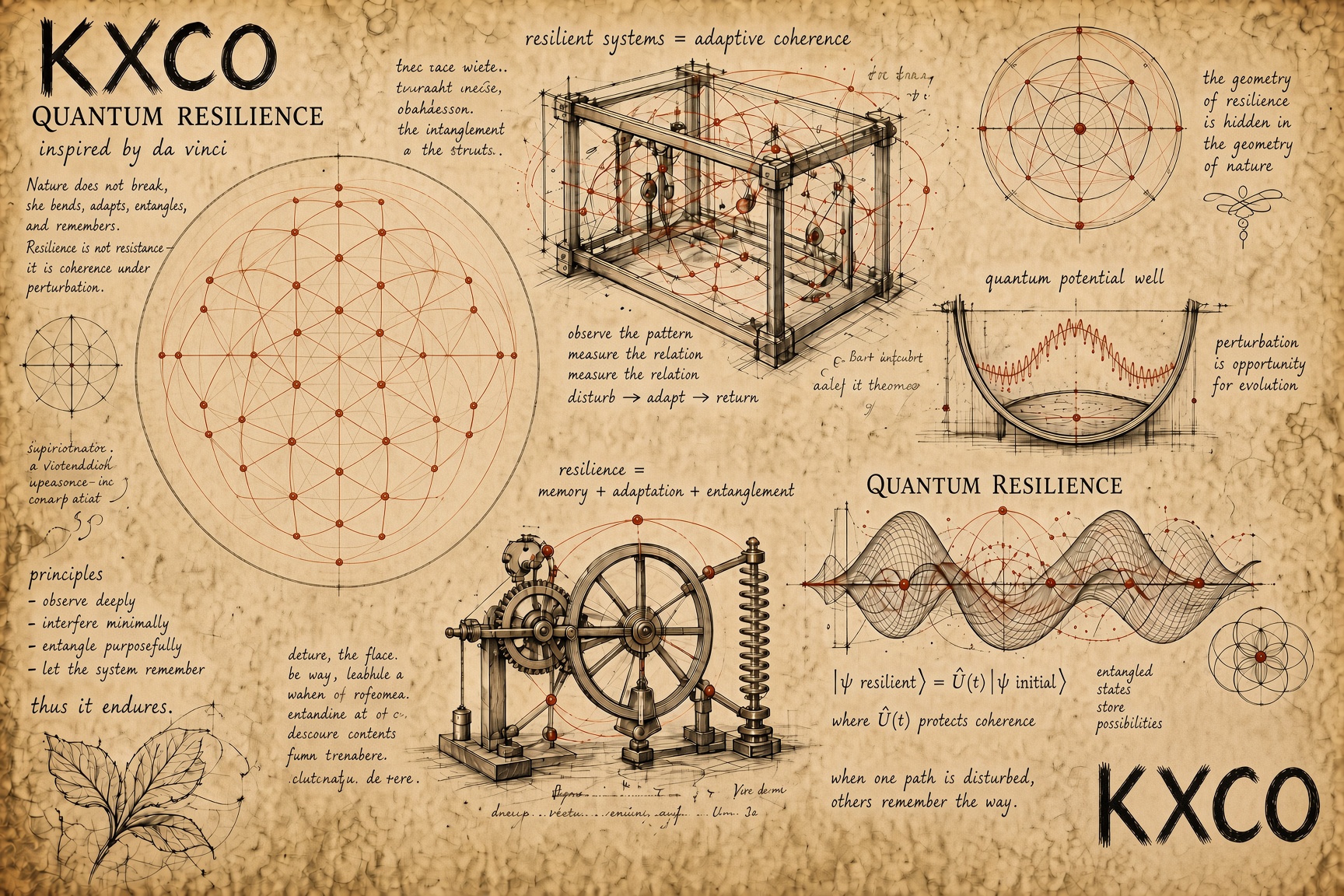
KXCO Put Its Quantum Cryptography in Public, With the Receipts Attached
KXCO has published the cryptography under its entire platform as fourteen open packages, and attached the evidence: NIST conformance, interoperability with three independent implementations, build provenance and reproducible releases. Every claim is checkable by a stranger.
Worthship: Do Not Conform to the Age
Worthship is the older English word for worship, and it means to ascribe worth. Bishop Robert Barron preached Romans 12 on 30 August. This essay follows the text into the prison letters, and puts two questions to a graph: do the four readings of that Sunday agree, and was Paul free or in chains when he wrote about despair?
The Truth in All Its Ugliness Must Survive
A majority vote does not determine the truth. Consensus is a mood, gossip is a sport, and a model will write the pretty version for free. Why the ugly number has to survive, why a record beats a dashboard, and what KXCO was built to keep standing when the room changes its mind.
Every story, signed and delivered.
Subscribe to the kxco channel and get the headline, the AI-written key takeaways, and the chain-anchor link the moment we publish. Audio versions and per-ticker subscriptions arrive in the next iteration.