
Toyota is Growing Fast
Toyota said Wednesday that net profit jumped more than 460 percent in the first quarter, boosted by strong sales fuelled by the recovery from the coronavirus crisis.
The world's top-selling automaker logged a 897.8 billion yen ($8.2 billion) net profit for the three months to June, a record for the first quarter and up from 158.8 billion yen in the same period last year.
But it left its full-year net profit forecast unchanged at 2.3 trillion yen, citing "uncertainties in and after the second quarter".
Toyota has bounced back quicker from the impact of the Covid-19 pandemic than its competitors, reclaiming the title of top-selling automaker last year.
Last week, it said group global sales hit a record high for the six months to June, thanks to healthy demand for its Highlander and Camry models in the United States and Corolla and Lexus brands in China.
"The first-quarter results were the result of our maintaining... stable sales and supply, despite the semiconductor shortage and spread of Covid-19," the firm said in a statement.
The Japanese giant has so far weathered a global semiconductor shortage that has forced rivals to slash production targets, but it now faces some disruption.
In June, Toyota temporarily suspended operations at two domestic plants owing to the chip crunch, with a third short hiatus currently underway at a separate factory.
"Semiconductor supplies are expected to remain tight at least until next year, because the global economic recovery from the coronavirus pandemic should further boost chip demand in many sectors," said Yasuo Imanaka, chief analyst at Rakuten Securities.
AI is the Neat Handwriting of the Illiterate
A model in the hands of someone who has read the filing and walked the plant is a clerk. The same model, speaking for someone who has done neither, is a disguise. On AI slop, phantom citations and factslop, why finish stopped being evidence of work, and the containment layer KXCO built so a machine cannot speak as the institution until a source is attached.
Worthship: Do Not Conform to the Age
Worthship is the older English word for worship, and it means to ascribe worth. Bishop Robert Barron preached Romans 12 on 30 August. This essay follows the text into the prison letters, and puts two questions to a graph: do the four readings of that Sunday agree, and was Paul free or in chains when he wrote about despair?
The Truth in All Its Ugliness Must Survive
A majority vote does not determine the truth. Consensus is a mood, gossip is a sport, and a model will write the pretty version for free. Why the ugly number has to survive, why a record beats a dashboard, and what KXCO was built to keep standing when the room changes its mind.
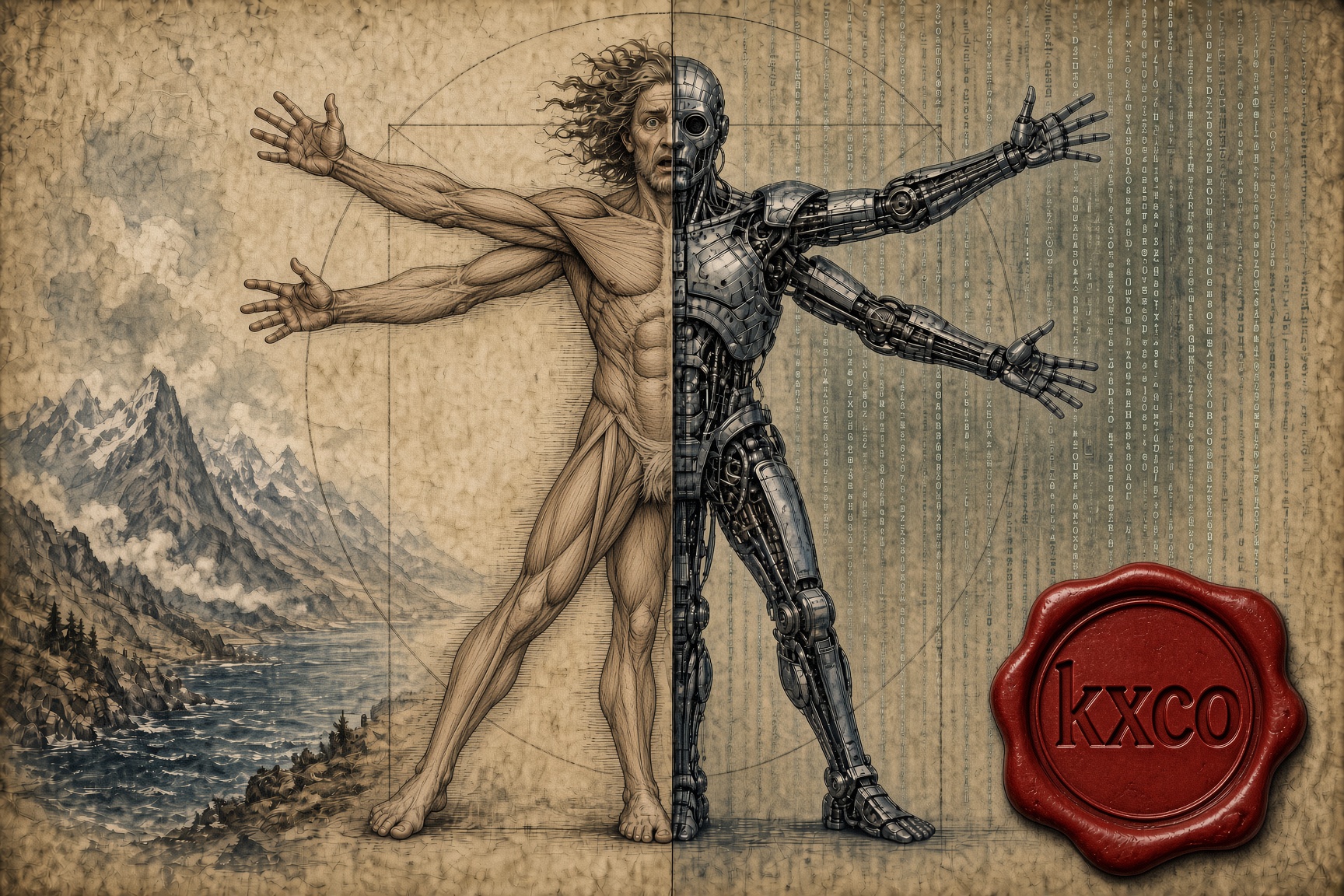
Don't Be the Best, Be the Only: Winning in an AI World
AI is repricing competence downward. What it cannot reproduce is a life. The case for remaining non-fungible, why friction still produces the best ideas, and what it means to build AI systems that keep the human intellect in them.
Every story, signed and delivered.
Subscribe to the kxco channel and get the headline, the AI-written key takeaways, and the chain-anchor link the moment we publish. Audio versions and per-ticker subscriptions arrive in the next iteration.