
Top Cryptocurrency Trading Platforms to watch in February 2023
Increasingly, traders have more and more ways to access cryptocurrencies. New exchanges and trading platforms have started in response to the wide interest in crypto. This larger choice of apps and exchanges gives us access to a wider selection of cryptocurrency — there are literally thousands — or some offer other benefits such as lower cost.
Platforms like the ones listed below offer specialized cryptocurrency exchanges, online brokers, and money and payment apps. You can get a feel of the scope of each app or exchange by looking at the pricing and the maximum number of coins you may trade.
It might not make sense to use an app that offers you dozens of other coins if you're only interested in trading the biggest cryptocurrency, Bitcoin. On the other hand, if your goal is to trade everything is popular right now, you should look at a more varied app or exchange.
Bittrex
Bittrex is an attractive option for crypto traders thanks to its straightforward low-cost commissions, particularly for those trading high volumes. If you’re trading less than $50,000 every 30 days, you’ll pay between 0.25 and 0.30 percent in commissions, but the fees fall quickly from there if you’re trading big bucks. Plus, Bittrex doesn’t charge for USD deposits or ACH withdrawals.
Hard-core crypto enthusiasts will also appreciate Bittrex’s offering of about 100 cryptocurrencies to trade. You’ll find all the most popular coins including Bitcoin, Ethereum and Dogecoin, as well as the more obscure listings.
Cost: Fees start at 0.35 percent and decline sharply for high-volume traders.
Coins available to trade: About 100 coins including Bitcoin, Ethereum, Dogecoin and Litecoin
Binance.US
Binance.US, which is the American arm of the larger Binance organization, is one of the best crypto exchanges because of its low trading costs. Bitcoin and Ethereum traders can access commission-free trades, while other coins are priced on a sliding scale for high-volume traders. Plus, if you use Binance’s in-house coin, BNB, to pay trading fees, you’ll get a discount of 25 percent.
You’ll also be able to trade more than 130 different cryptocurrencies at Binance, so you shouldn’t have any trouble finding what you’re looking for, especially if you just want to trade the most popular coins.
Cost: Free for Bitcoin and Ethereum, but fees for less-common coins start at 0.45 percent and decline for high-volume traders. A 25 percent discount is available if you pay trading fees with BNB.
Coins available to trade: 137 coins including Bitcoin, Ethereum, Solana, Cardano and more
eToro
The broker eToro is all crypto, all the time (at least for American traders, though others can trade stocks). At eToro, you’ll have access to about 80 cryptocurrencies, including quite a few, such as Tezos, Uniswap and Polygon, that you won’t normally find on the traditional brokerage apps. The app doesn’t charge a direct commission but rather a flat spread markup of 1 percent, regardless of which coin you purchase or how much.
Cost: Commission-free, but spread markup of 1 percent
Coins available to trade: 79 cryptos, including Bitcoin, Ethereum, Dogecoin and more
Probit
ProBit Exchange is a global Top 20 crypto exchange in real daily trading volume that has successfully completed over 200 rounds of IEO. This exchange also features over 500 trading pairs - one of the highest in the market. ProBit Exchange offers customer support, customer service , and customer care
Cost: Effective trading fee 0.03% - 0.2%
Coins available to trade: Over 500 trading pairs, all the top coins and many more such as Finance Blocks (FBX) by KXCO.io and many more
Coinbase
Coinbase is a specialized cryptocurrency exchange that allows you to trade a bunch of digital currencies, 230 at the latest count. That range will likely scratch your crypto itch, since it includes most of the top coins, including Bitcoin, of course. But what will you pay for using the basic service? Unfortunately, Coinbase has become cagier about what you’ll pay to trade, recently obscuring the fee structure on its website.
When it was visible, the fee structure was complex, to say the least. You’d pay a spread markup of about 0.5 percent and a transaction fee that depended on the size of the transaction and the funding source. For Coinbase Advanced Trade, you’ll pay fees that start at 0.6 percent for 30-day volume under $10,000 and decline to as low as 0.15 percent for up to $100,000 in volume and then head even lower.
Cost: Typically at least 1.99 percent (lower with Coinbase Advanced Trade)
Coins available to trade: A whopping 230, including Bitcoin, Ethereum, Cardano and Solana
Kraken
Kraken is another specialized cryptocurrency exchange that lets you trade a ton of different coins, including the most popular as well as some (Solana, Uniswap, Cardano and more) that are not typically available on the usual financial apps. In total, the exchange supports trading in more than 212 cryptos. Kraken does not offer its service to residents of New York and Washington state.
Commissions on Kraken Pro are competitive, ranging from 0.16 to 0.26 percent at the lowest volume levels and declining to a range of 0 to 0.1 percent with volume of $10 million or more in the last 30 days. High-net-worth traders can also access margin trading, increasing their buying power (and risk). While you can deposit money via ACH for free into Kraken, debit or credit card transactions incur a 3.75 percent fee plus 25 cents, and you can get hit with a 0.5 percent online banking processing fee if you fund through a bank, at last check.
Cost: Fees start at 0.26 percent, plus fees for cards and online banking
Coins available to trade: 212 of them, including Bitcoin, Ethereum, Solana and Uniswap
Webull
Webull may not be the poster child for trading apps, but its feature set feels a step above Robinhood’s. Like its well-known rival, Webull offers stocks, options, ETFs and cryptocurrencies with no out-of-pocket commission. And similarly, Webull works on a spread markup for its crypto trades, so your cost is built into the trade. You’re also able to trade a few more coins than you’re able to at Robinhood, including Cardano.
Cost: Commission-free, but spread markup of 1 percent (100 basis points)
Coins available to trade: 58 different types, including Bitcoin, Ethereum and Solana
Cash App
When you think of cryptocurrency, you might not think of Cash App at first. The financial app is known more for its cash management account or even its ability to trade stocks and ETFs. But it also offers the ability to trade crypto, albeit only one — Bitcoin. While you can send Bitcoin to other users for free, Cash App charges what it calls a “small fee” for trading the coin, which it will disclose before you place the trade. That’s in addition to a spread markup built into the trade itself. Unfortunately, it doesn’t disclose its exact fee structure.
Cost: Spread markup plus a trading fee
Coins available to trade: Only Bitcoin

Digital Erasure, and Why KXCO Matters
Pew found 38 percent of 2013's web pages gone a decade later, and quantum computing will eventually let attackers forge the signatures that prove records authentic. Why durable history now depends on post-quantum cryptography, on-chain anchoring and verification that needs nobody's permission.
Economic Calendar and Trading Strategies for the Week Ahead: July 20–24, 2026
A pivotal week for markets: Iran's closure of the Strait of Hormuz sends crude above $86 and gasoline over $5, while Alphabet, Tesla and Intel earnings test the AI trade. Full economic calendar plus trading strategies across oil, gold, Bitcoin, FX and AI chip stocks.
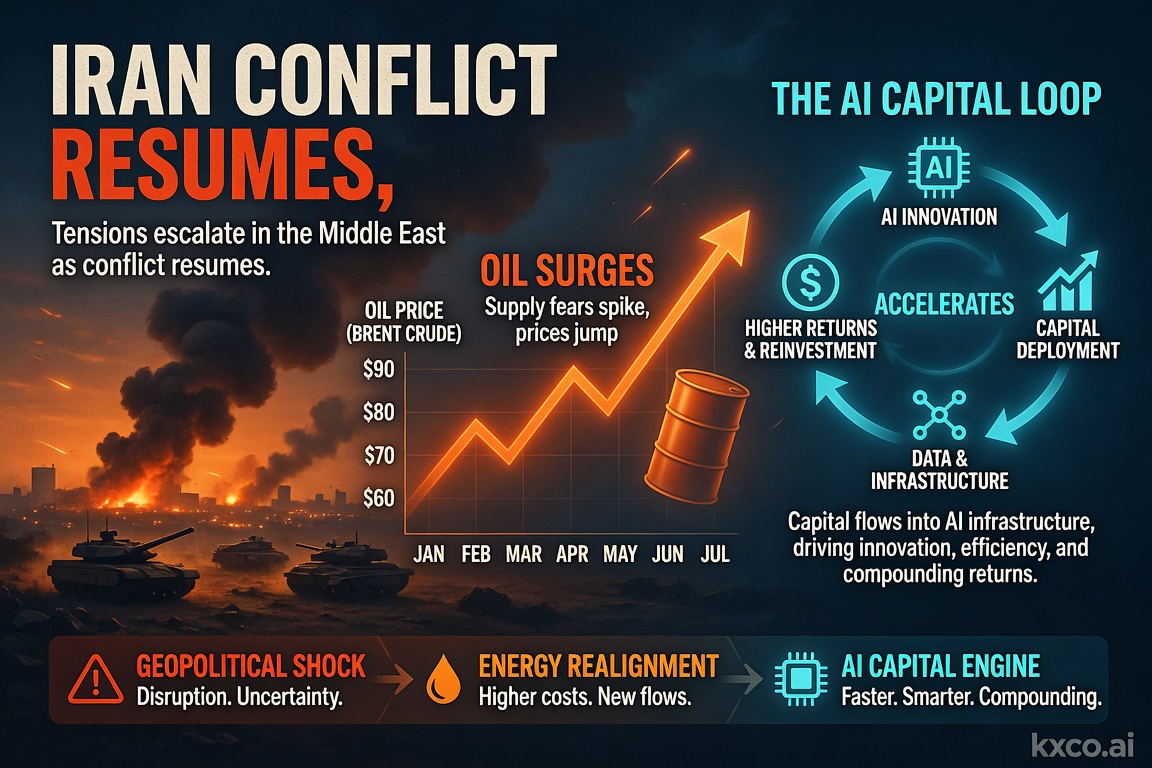
Economic Calendar and Trading Strategies for the Week Ahead: July 14–18, 2026
A pivotal week for markets: US strikes on Iran reignite the oil risk premium, June CPI and retail sales test the Fed's rate-cut path, and the $1 trillion AI capital loop keeps driving the tech trade. Full economic calendar plus trading strategies across oil, gold, Bitcoin, FX and AI stocks.
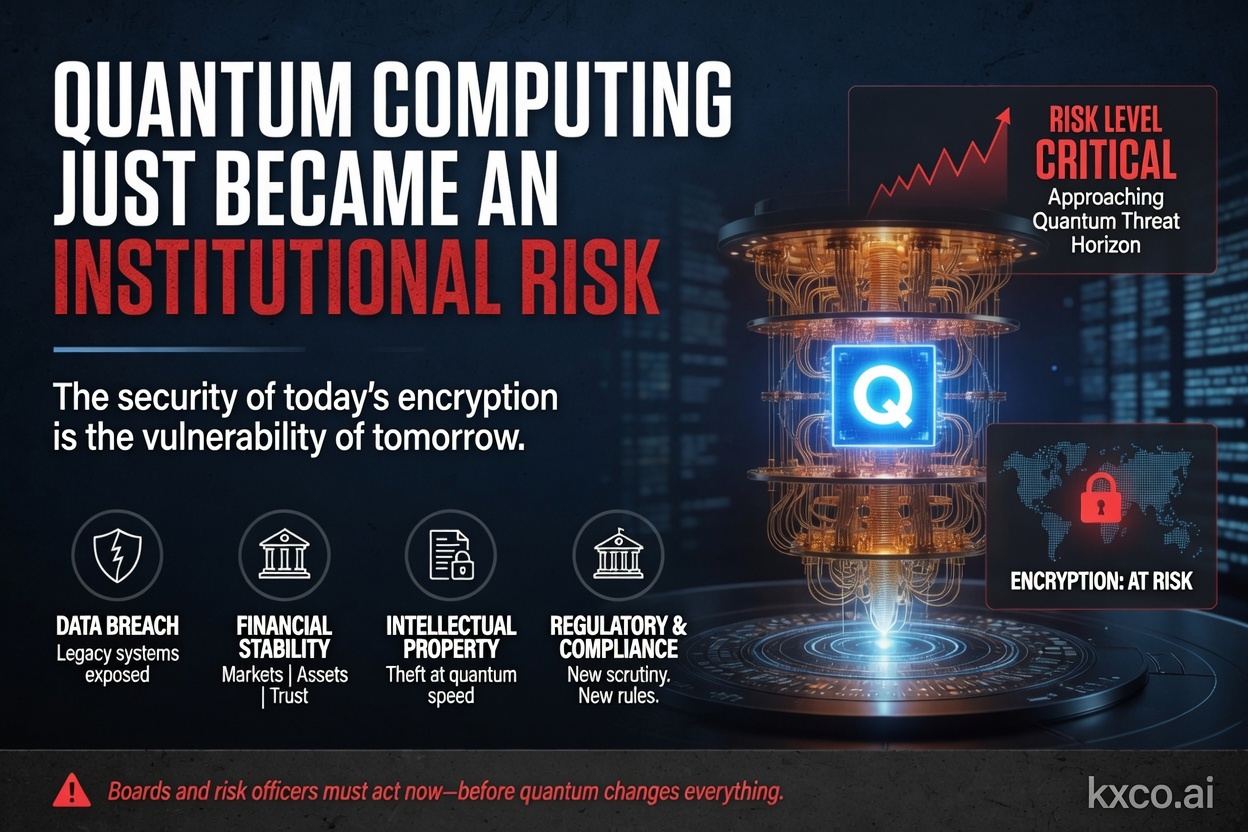
Quantum Computing Just Became an Institutional Risk
Shayne Heffernan on BlackRock's quantum-computing warning for Bitcoin and Ethereum, Google's cryptanalysis research, the two on-chain risk vectors, and how KXCO's Armature L1 — post-quantum from genesis, coordinated by its ontology — answers a threat that just went institutional.
Every story, signed and delivered.
Subscribe to the kxco channel and get the headline, the AI-written key takeaways, and the chain-anchor link the moment we publish. Audio versions and per-ticker subscriptions arrive in the next iteration.