
Tomato, the Red Superfood
Why I am green with envy over an heirloom tomato harvest, and why you should be eating them too
Part of theLife Center
I have a confession to make. Right now, as I sit halfway across the world, I am suffering from a severe case of tomato envy. A good friend of mine in the USA recently sent me a photo of his weekend haul: a sprawling, chaotic, beautiful mountain of heirloom tomatoes. Big, lumpy, deeply grooved, and radiating colours from vibrant crimson to dusky purple and bright yellow. I am genuinely, utterly jealous.
You see, there is nothing in the culinary world that compares to a perfect, homegrown tomato. And for me, the absolute pinnacle of this fruit is the big red heirloom. The ones you find in supermarkets, bred for uniform redness and the ability to survive being bounced around a truck, are imposters. A true big red heirloom is a biological masterpiece. It has a tender, thin skin that splits easily, revealing a meaty, juicy interior with a complex, sweet, slightly tangy flavour that bursts in your mouth. Sprinkle a little flaky sea salt on a thick slice of a big red heirloom and you are tasting summer itself.
But my jealousy is not only about the taste. As someone deeply invested in health, longevity and nutritional science, my envy stems from the fact that my friend is currently sitting on a goldmine of pure, unadulterated health. We tend to think of superfoods as exotic, expensive berries from the Amazon or rare algae from pristine lakes. We overlook the humble tomato. The truth is that the tomato is arguably the most accessible and most thoroughly studied superfood on the planet.
That envy has now turned into action closer to home. My son John has just begun the family's attempt to produce our own heirloom tomatoes. Watching him start the seedlings, select the varieties and prepare the soil has been one of the most grounding projects we have taken on together. There is something profoundly satisfying about reclaiming food production at the family level, especially when the goal is not flavour alone but the dense nutritional payoff that only true heirlooms can deliver. If you have been thinking along the same lines, I set out the practical side of that argument in How to Retire and Grow Your Own Food.
Here is why that mountain of heirloom tomatoes in my friend's backyard, and the ones John is now cultivating, is the ultimate treasure trove of human health.
The Raw Versus Cooked Paradox
One of the most fascinating aspects of tomato nutrition is how its chemical profile changes depending on how you prepare it. Most fruits and vegetables lose nutritional value when heated. Tomatoes play by their own rules.
The case for raw tomatoes
When you eat a raw tomato, biting into that magnificent big red heirloom, you are getting a substantial dose of vitamin C and folate. Vitamin C is a water-soluble antioxidant that is crucial for immune function, collagen production and wound healing. Because vitamin C is heat-sensitive, it degrades when cooked. Raw tomatoes also contain a flavonoid called naringenin, which has been studied for anti-inflammatory and antioxidant effects, mostly in laboratory and animal work rather than in large human trials. Eating them raw preserves the delicate, hydrating cellular structure, providing water and fibre.
The case for cooked tomatoes
If you take those same tomatoes and roast, stew or sauce them, you lose some vitamin C but you unlock a completely different superpower: lycopene.
Lycopene is a carotenoid, the natural pigment that gives tomatoes their red colour, and it is one of the most powerful antioxidants known to science. In a raw tomato, lycopene sits tightly bound inside the plant's cell walls in its all-trans form, which the human digestive tract absorbs poorly. Apply heat and two things happen. The cell walls rupture, releasing the pigment, and some of the lycopene converts to cis isomers that the body takes up more readily. The result is a far more bioavailable nutrient from the same fruit.
The catch. Lycopene is fat-soluble, so your body cannot absorb much of it without dietary fat in the same meal. This is why the combination of cooked tomatoes and extra virgin olive oil, a staple of the Mediterranean kitchen, is so effective. It is not folklore. It is absorption chemistry.
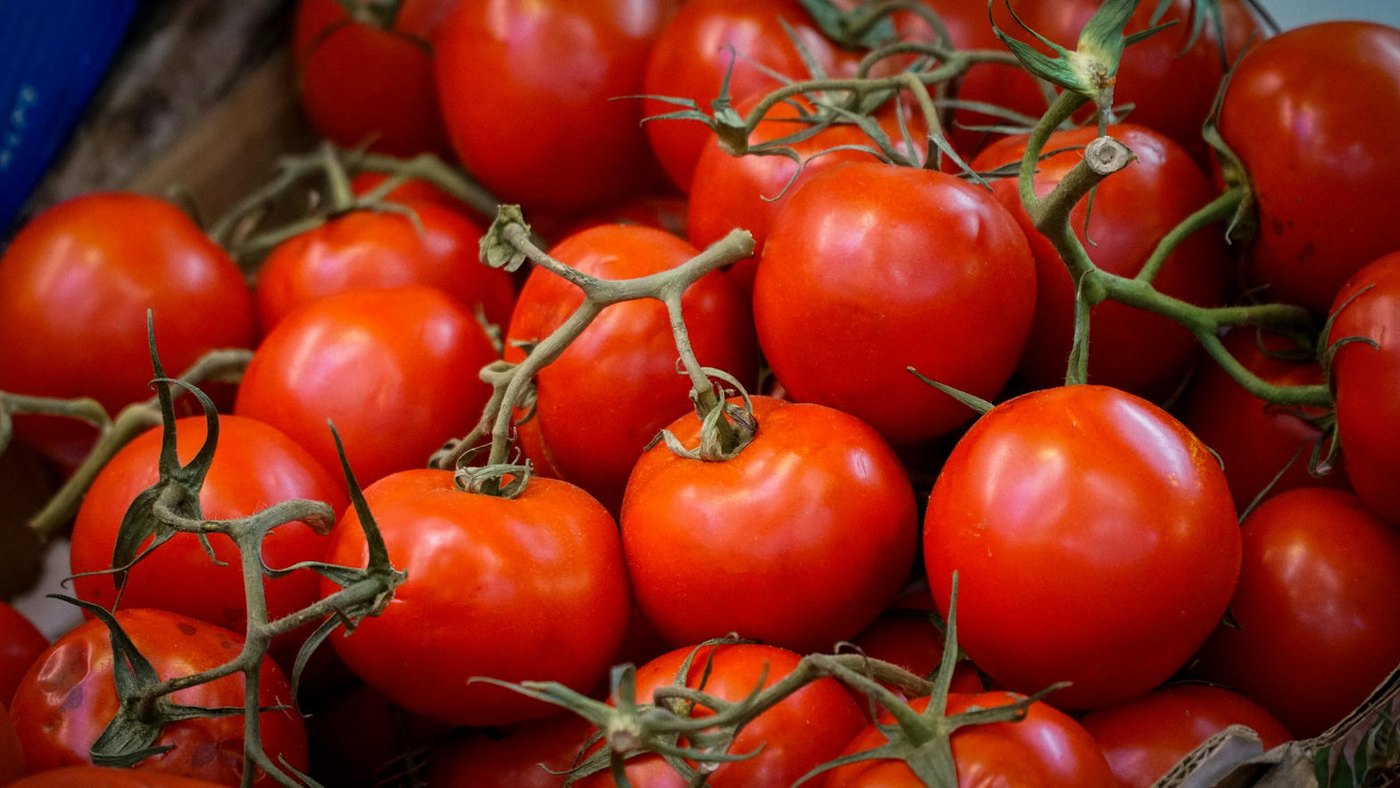
Ripe red tomatoes on the vine, the classic source of bioavailable lycopene once cooked with healthy fats.
Heirloom Varieties and What Each One Is Good For
Not all tomatoes are created equal. Heirloom varieties are open-pollinated plants whose seeds have been saved and passed down for generations, typically fifty years or more. They offer a far wider spectrum of flavours, colours, textures and phytonutrient profiles than commercial hybrids bred for shipping durability. Because they were selected for taste and resilience rather than uniformity, they often carry higher concentrations of protective compounds. Here is a practical tour of the most celebrated heirlooms and the best culinary and nutritional use for each.
Brandywine, in pink, red and black
Often called the gold standard of heirloom flavour. Large, ribbed beefsteak fruits, with potato-leaf foliage in many strains. Complex, rich, sweet and tangy, with a creamy texture. Best for: thick slicing on sandwiches, Caprese salads, and fresh eating with salt and olive oil. Lower yields, unmatched taste. An excellent source of lycopene and a broad spread of carotenoids.
Cherokee Purple
Deep dusky rose to purple-brown skin with green shoulders and brick-red flesh. Smoky, sweet, almost wine-like. Medium to large beefsteak. Best for: fresh slicing, gourmet salads, sandwiches and light roasting. High in anthocyanins, the purple pigments, on top of its lycopene, which gives it extra antioxidant punch. One of the most widely grown and best loved heirlooms, for flavour and for visual drama.
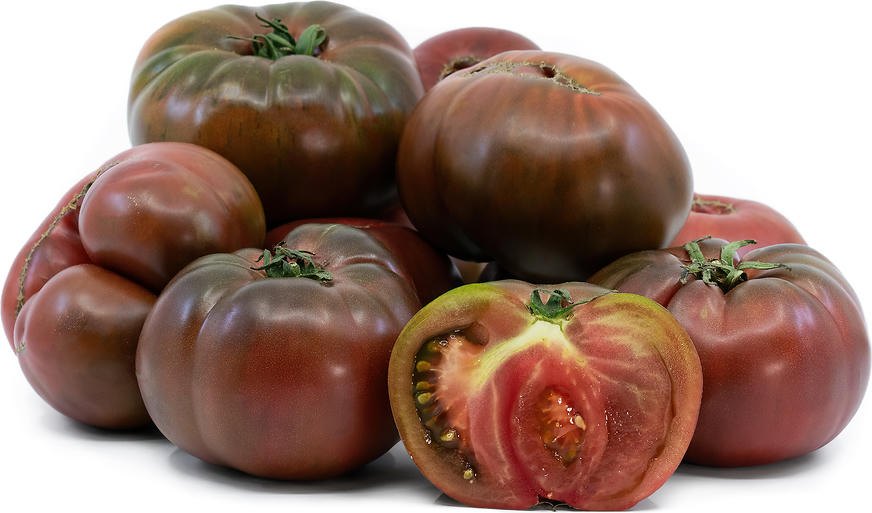
Cherokee Purple heirlooms, smoky and sweet, carrying both lycopene and anthocyanins.
Black Krim, also called Black Crimea
Dark maroon to almost black fruit with greenish shoulders and dense, juicy flesh. A distinctive salty, smoky, rich tomato flavour. Heat-tolerant and relatively crack-resistant for an heirloom. Best for: fresh eating, roasting, bruschetta, and pairing with strong cheeses or grilled meats. An excellent all-purpose slicer that also concentrates well when cooked.
Mortgage Lifter
A legendary large pink beefsteak developed in the 1930s by M.C. Byles, a West Virginia radiator repairman known as Radiator Charlie, who sold the seedlings and used the proceeds to pay off his mortgage. Meaty, mild, sweet and low in acid, with fruits that can exceed one pound. Best for: sandwiches, burgers, stuffing, and anything needing a substantial, juicy slice. Its potassium content supports normal blood-pressure regulation as part of a wider diet.
Amish Paste and San Marzano
These are the kings of sauce. Amish Paste, oxheart to plum shaped, meaty and with few seeds, and true San Marzano, elongated, dense, low in moisture and high in pectin, both deliver concentrated flavour and lycopene with less water to cook off. Best for: sauces, pastes, canning, stews and roasting. Because they concentrate so efficiently, they are among the most efficient ways to get bioavailable lycopene onto a plate when cooked with olive oil.
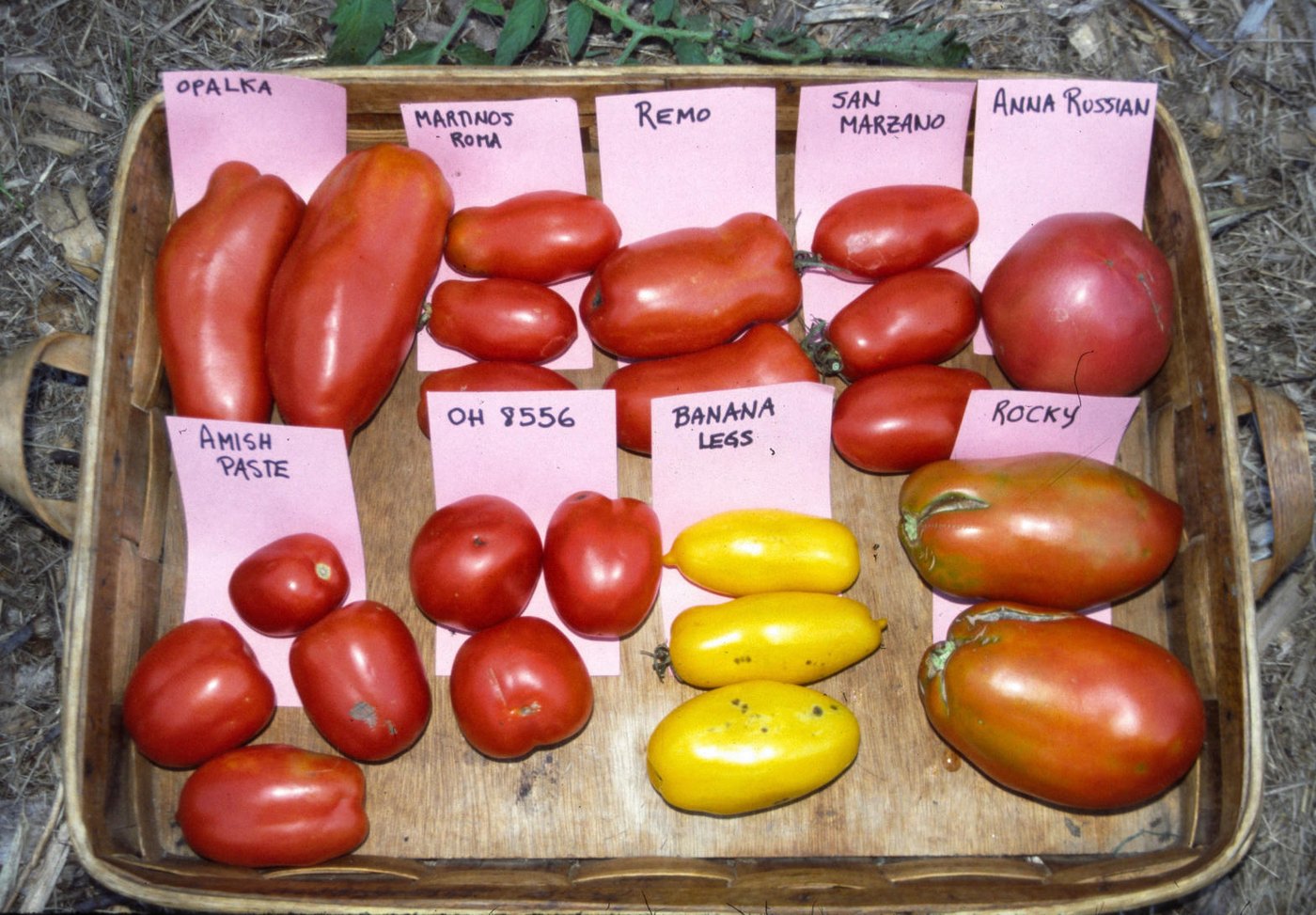
A paste tomato lineup including Amish Paste, San Marzano and Opalka, the varieties built for sauce and for lycopene concentration.
Green Zebra
Striking yellow-green fruits with dark green stripes. Tangy, zesty and bright, and it stays firm. Strictly speaking this is a modern variety, bred by Tom Wagner in the 1980s from heirloom lines, but it is grown and sold as an heirloom-style tomato. Best for: salads, salsas, garnishes, and adding visual and acidic contrast to mixed-tomato dishes. Lower in lycopene, since there is less red pigment, but a good source of other carotenoids and vitamin C.
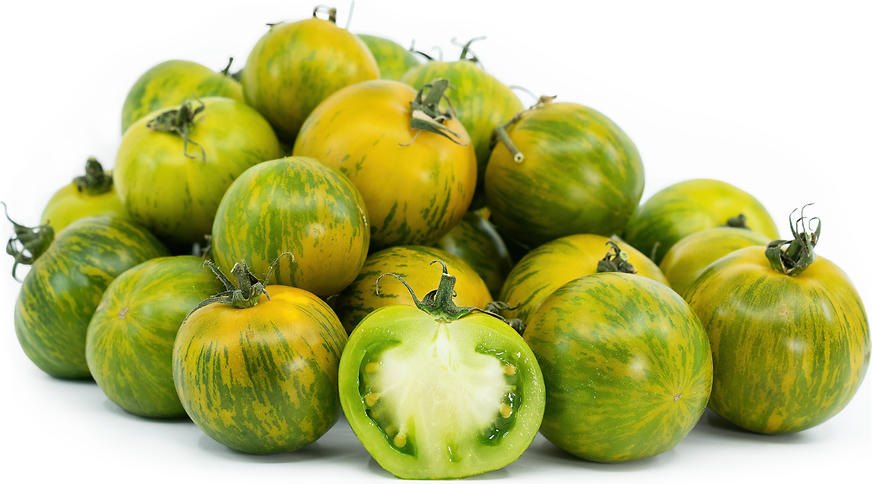
Green Zebra, tart and vibrant, ideal for salads and for visual contrast.
Cherry, currant and grape heirlooms
Black Cherry, Matt's Wild Cherry, Yellow Pear and their relatives. Small fruits with intense sweetness and high sugar-to-acid ratios. Black Cherry offers rich, complex flavour, Matt's Wild Cherry is tiny and explosively sweet, and Yellow Pear is mild and decorative. Best for: snacking, salads, roasting whole, and steady antioxidant intake across the day. Particularly high in beta-carotene, a vitamin A precursor, relative to the larger fruits.
Other notables
Kellogg's Breakfast and Pineapple. Large yellow-orange beefsteaks, fruity and low in acid, excellent for fresh platters and for anyone sensitive to acidity.
Aunt Ruby's German Green. A large beefsteak that stays green when ripe, with a spicy-sweet flavour. Good for unusual salads and for frying.
Costoluto Genovese and the other ribbed Italians. Heavily fluted, intense in flavour, strong both fresh and in sauce.
Beefsteak types in general. High in potassium, with substantial flesh, ideal for sandwiches and grilling.
The deep red and purple heirlooms tend to carry the highest concentrations of lycopene and anthocyanins. Eating a diverse mix is not only a pleasure. It is eating centuries of surviving genetics that were selected for flavour and resilience rather than shelf life.
Tomatoes in Traditional Medicine
Long before modern epidemiology quantified lycopene, traditional medical systems recognised the tomato's therapeutic reputation, even though the plant itself is a relatively recent arrival in the Old World, introduced from the Americas after the sixteenth century.
Traditional Chinese Medicine
In TCM, tomatoes, fan qie, are classified as slightly cold or cooling in nature, with a sweet and sour flavour that enters the Lung and Stomach channels. They are used to clear internal heat, generate body fluids, relieve thirst and support digestion, which makes them particularly valuable in summer heat patterns or in conditions of dryness and irritability. Traditional indications include promoting saliva, strengthening the stomach, aiding digestion, reducing blood lipids and supporting the skin. The cooling property makes them especially useful when the body shows signs of excess heat.
Ayurveda
Tomatoes do not appear in the classical Ayurvedic texts, because they arrived in India centuries after those works were composed. Modern Ayurvedic analysis notes their predominantly sour rasa, or taste, with some sweetness, and a heating virya, or potency, that can aggravate Pitta dosha when eaten raw in excess, potentially contributing to acidity or inflammatory tendencies. Cooked with balancing spices such as cumin, turmeric, coriander or mustard seed, tomatoes are considered more tridoshic and supportive of Agni, the digestive fire. They are valued for stimulating appetite, for supporting mild detoxification, and in moderation for Kapha-reducing qualities. Traditional folk uses in India include tomato juice for wounds and insect bites, and as a mild digestive aid.
Historical Western and folk uses
In the 1830s America saw a brief but intense tomato pill craze. Physicians and entrepreneurs promoted tomato extract pills for indigestion, dyspepsia, headaches, cholera prevention and a good deal more. Many of those products were of dubious quality and the claims went far beyond the evidence, but the episode reflects an early popular belief in the fruit's medicinal reputation. Folk applications across cultures have included tomato juice or pulp applied externally for minor burns, insect stings and skin soothing, and taken internally for mild digestive complaints and as a general summer tonic.
These traditional frameworks are descriptions of how different systems classified the fruit, not clinical evidence. What is interesting is how often they point in the same direction as the modern findings. The cooling and fluid-generating language maps onto hydration. Digestive stimulation maps onto the organic acids and fibre. And the traditional emphasis on cooking tomatoes with fats anticipates, by several centuries, what we now understand about lycopene absorption.
The Blue Zone Connection
If you want a real-world case for the tomato's status, look at the Blue Zones. These are the regions where people reach one hundred at remarkably high rates: Ikaria in Greece, Sardinia in Italy, the Nicoya Peninsula in Costa Rica, Okinawa in Japan, and Loma Linda in California.
In almost all of them, Okinawa being the exception, tomatoes are a foundational daily staple rather than a side dish. Ikarian stew, a daily meal for many centenarians on that Greek island, is essentially a slow-cooked amalgamation of tomatoes, olive oil, onions, garlic and beans. In Sardinia, tomatoes are eaten fresh in salads with local olive oil, or slow-roasted, and served alongside whole grains and very little meat.
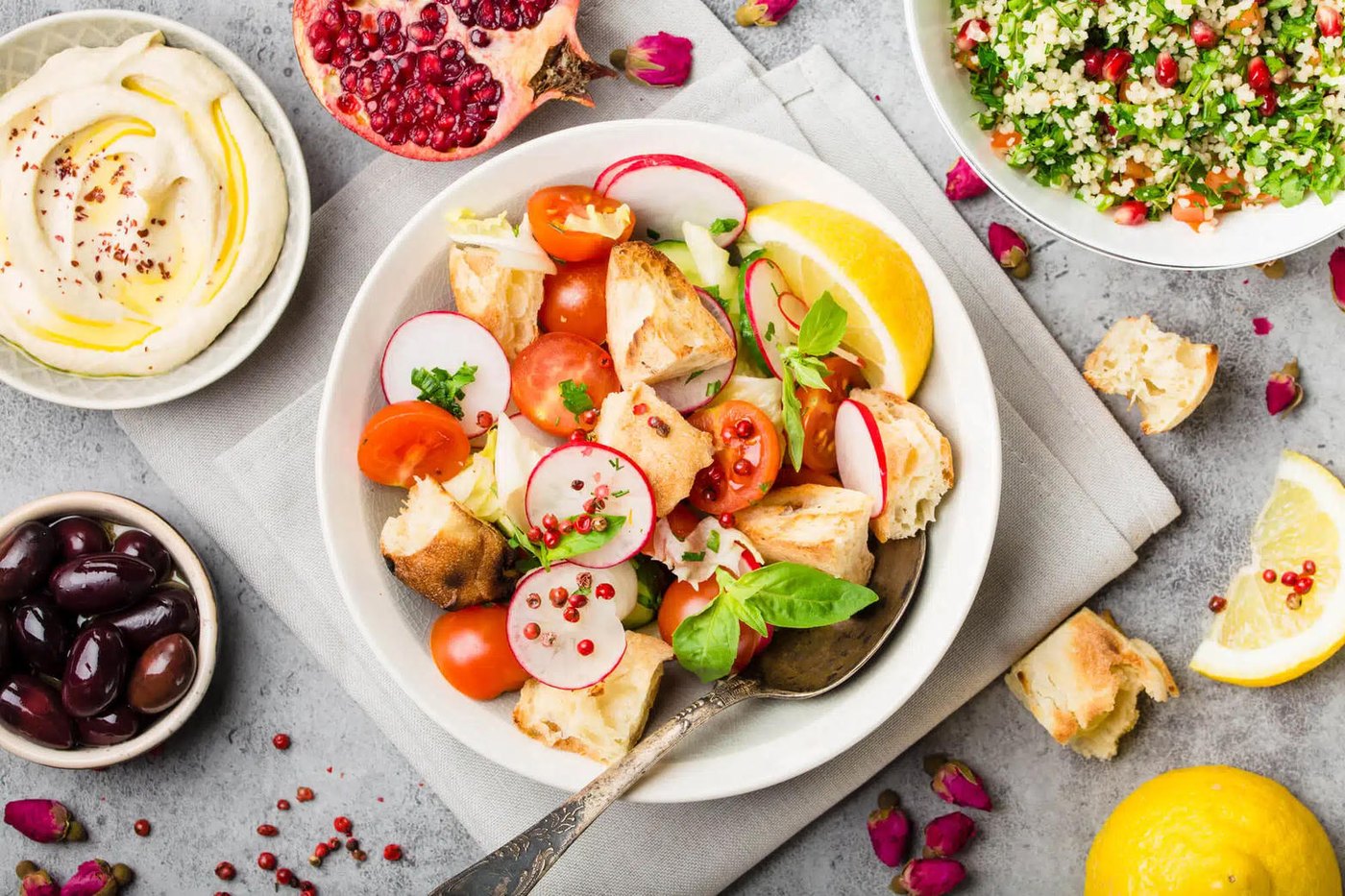
Mediterranean-style tomato dishes, the everyday fare of the Blue Zone longevity cultures.
Why do tomatoes turn up so consistently in the longevity hotspots?
Heart health. The Mediterranean Blue Zone populations have strikingly low rates of cardiovascular disease. Lycopene from tomatoes and polyphenols from olive oil both appear to lower LDL cholesterol and to make LDL particles more resistant to oxidation. Oxidised LDL is one of the steps by which arterial plaque forms and becomes unstable, which is why that resistance matters. It is one contributing mechanism among several, not the single cause of heart attacks and strokes, and diet is one factor among many in these populations.
Anti-inflammatory synergy. Chronic low-grade inflammation is one of the mechanisms thought to drive ageing and age-related disease, sometimes called inflammaging. The antioxidants in tomatoes, eaten alongside the allium compounds in the garlic and onions that these diets use heavily, work against that background inflammation rather than any single acute problem.
Gut health. Tomatoes contribute fibre, organic acids and polyphenols, and these are the compounds gut bacteria feed on. Worth being precise here, because the point is often overstated: sun-dried tomatoes packed in oil are preserved, not fermented. The fermented foods in these diets are the breads, the dairy and the wine. What the tomato contributes to the microbiome is plant fibre and polyphenols, eaten daily, for decades.
What the Research Says
The Blue Zone pattern is observational. The good news is that tomatoes and lycopene are among the most heavily studied topics in nutritional epidemiology, so there is a great deal more to go on.
Prostate cancer
The landmark study, published in the Journal of the National Cancer Institute in 1995 by Edward Giovannucci and colleagues at Harvard, tracked the diets of 47,894 men in the Health Professionals Follow-up Study. Of 46 fruits, vegetables and related products examined, tomato sauce, tomatoes and pizza stood out, and they were the primary sources of lycopene in the diet. Men in the highest bracket of combined tomato intake, more than ten servings a week, had a relative risk of 0.65 for prostate cancer against those eating fewer than one and a half servings, and a relative risk of 0.47 for advanced disease. In plain terms, roughly a third lower risk overall and closer to half for the aggressive cases. A prospective follow-up in the same journal in 2002 supported the association, and later meta-analyses have continued to find an inverse relationship between tomato and lycopene intake and prostate cancer risk. Lycopene accumulates in the prostate gland, which gives the finding a plausible mechanism.
Cardiovascular protection
Meta-analyses of the epidemiological evidence, including work by Cheng and colleagues, have associated higher lycopene and tomato intake with reduced risk of stroke and cardiovascular events. Intervention studies have shown that tomato products and tomato juice can lower LDL cholesterol and increase LDL's resistance to oxidative damage.
Skin protection from ultraviolet light
A randomised controlled trial published in the British Journal of Dermatology in 2011 by Rizwan and colleagues gave twenty healthy women either 55g of tomato paste, providing about 16mg of lycopene, in olive oil, or olive oil alone, daily for twelve weeks. The tomato paste group showed significantly less UV-induced erythema, meaning less reddening and less measurable skin damage. Lycopene appears to act as an internal defence, neutralising free radicals generated by sun exposure. It is a small trial, and it is not a substitute for sunscreen.
Bone health
A randomised study of sixty postmenopausal women aged 50 to 60, published in Osteoporosis International in 2011 by Mackinnon, Rao and colleagues, found that lycopene supplementation significantly reduced oxidative stress and lowered N-telopeptide of type I collagen, a marker of bone resorption. That is a biochemical marker rather than a fracture outcome, so it points at a plausible mechanism for reducing osteoporosis risk rather than proving one.
Broader cancer and mortality associations
An umbrella review of systematic reviews and meta-analyses, published in Food Chemistry in 2021 by Li and colleagues, examined twenty health outcomes. Tomato intake was inversely associated with all-cause mortality, coronary heart disease mortality, cerebrovascular disease mortality, prostate cancer and gastric cancer, and lycopene showed benefits for mortality, prostate cancer, cardiovascular disease and metabolic syndrome. The authors were careful to add that the overall quality of the evidence was not high, which is the honest way to read this literature. The direction of the findings is consistent and it favours regular tomato consumption, especially cooked and with fat. The certainty is not the same as the consistency.
The Verdict
As I look at that photograph of my friend's harvest, and now watch my son John begin our own family's heirloom project, my feelings have shifted from pure jealousy to motivated optimism. The big red heirloom and its colourful cousins sit at the intersection of gourmet pleasure and genuine medical interest, which is a rare place for any food to occupy.
The practical reading is simple enough. Eat them raw on a summer afternoon for the vitamin C and the sheer pleasure of it. Slow-cook them in olive oil when you want the lycopene. Do both, often. Tomatoes are the quiet staple of the Blue Zones, they are among the best studied foods in the nutritional literature, and quite frankly they are the most delicious superfood on earth. Traditional medical systems reached for them long before anyone could measure a lycopene isomer or an oxidative biomarker.
To my friend in the USA, enjoy that harvest. To John and the rest of our family, may our first season of heirloom tomatoes be the start of a long tradition. And if a few of those big red heirlooms happen to get lost in the mail heading my way, I certainly will not complain.
Selected References and Further Reading
Giovannucci E, Ascherio A, Rimm EB, Stampfer MJ, Colditz GA, Willett WC. Intake of carotenoids and retinol in relation to risk of prostate cancer. Journal of the National Cancer Institute. 1995;87(23):1767-1776.
Giovannucci E, Rimm EB, Liu Y, Stampfer MJ, Willett WC. A prospective study of tomato products, lycopene, and prostate cancer risk. Journal of the National Cancer Institute. 2002;94(5):391-398.
Cheng HM, Koutsidis G, Lodge JK, Ashor AW, Siervo M, Lara J. Lycopene and tomato and risk of cardiovascular diseases: a systematic review and meta-analysis of epidemiological evidence. Critical Reviews in Food Science and Nutrition. 2019;59(1):141-158.
Rizwan M, Rodriguez-Blanco I, Harbottle A, Birch-Machin MA, Watson REB, Rhodes LE. Tomato paste rich in lycopene protects against cutaneous photodamage in humans in vivo: a randomized controlled trial. British Journal of Dermatology. 2011;164(1):154-162.
Mackinnon ES, Rao AV, Josse RG, Rao LG. Supplementation with the antioxidant lycopene significantly decreases oxidative stress parameters and the bone resorption marker N-telopeptide of type I collagen in postmenopausal women. Osteoporosis International. 2011;22(4):1091-1101.
Li N, Wu X, Zhuang W, Xia L, Chen Y, Wu C, et al. Tomato and lycopene and multiple health outcomes: umbrella review. Food Chemistry. 2021;343:128396.
Stahl W, Sies H. Lycopene: a biologically important carotenoid for humans? Archives of Biochemistry and Biophysics. 1996;336(1):1-9.
Traditional Chinese Medicine dietary therapy sources classifying tomato as cooling, fluid-generating and stomach-supporting, including Compendium of Materia Medica interpretations and modern TCM dietary texts.
Contemporary Ayurvedic analyses of tomato, Solanum lycopersicum, covering sour rasa, heating virya, Pitta considerations, and the value of cooking with spices.
Blue Zones research by Dan Buettner and collaborators on dietary patterns in Ikaria, Sardinia and the other longevity regions.
Shayne Heffernan, Ph.D. is the founder of Live Trading News, KnightsBridge Group and KXCO.ai.
This article is for educational and informational purposes and does not constitute medical advice. Consult a qualified healthcare professional for personal health decisions.
Embracing the Mediterranean Lifestyle: A Feast for Health and Wellness
Health: Power Up for Spring with Superfoods
Health: Pay Attention to What You Eat

KXCO Now Verifies ML-DSA-87 in Consensus, the Signature Level Named by the NSA
On 6 October 2026 KXCO's chain began verifying ML-DSA-87 signatures as a rule of consensus, and the first ML-DSA-87 identity registered 28 seconds later. ML-DSA-87 is the category 5 level of NIST's FIPS 204, specified by the NSA for US national security systems and preferred by Australia's Information Security Manual. KXCO ships it for signing and for keys held in hardware, accepts it across its network and verifies it on chain, and anyone can check a verdict.
Every story, signed and delivered.
Subscribe to the kxco channel and get the headline, the AI-written key takeaways, and the chain-anchor link the moment we publish. Audio versions and per-ticker subscriptions arrive in the next iteration.