
Time to Buy Gold
The World Gold Council (WGC), as cited by CNBC on Sunday, has reported that the gold mining industry is experiencing difficulty in maintaining production growth due to the increased difficulty of locating deposits of the yellow metal.
According to the trade association's data, mine production increased by only 0.5% in 2023 when contrasted with the previous year.
The annual growth rate in 2022 was 1.35%, a decrease from the 2.7% increase in the previous year.
"We have observed a 4% increase in mine production year-over-year in the first quarter of 2024," stated John Reade, Chief Market Strategist at WGC, in an interview with CNBC. "However, the more significant aspect of mine production is that it plateaued around 2016-2018, and there has been no growth since then."
It is becoming increasingly difficult to locate new gold deposits worldwide, as numerous potential locations have already been investigated, according to Reade.
Company Name
Stock Ticker
Exchange
Newmont Corporation
NEM
NYSE
Barrick Gold Corporation
GOLD
NYSE
Franco-Nevada Corporation
FNV
NYSE
Kinross Gold Corporation
KGC
NYSE
Agnico Eagle Mines Limited
AEM
NYSE
AngloGold Ashanti Limited
AU
NYSE
Wheaton Precious Metals Corp.
WPM
NYSE
Kirkland Lake Gold Ltd.
KL
NYSE
Gold Fields Limited
GFI
NYSE
Yamana Gold Inc.
AUY
NYSE
He emphasized that the mining of gold on a large scale is capital-intensive and necessitates substantial exploration and development. The market strategist stated that an average of 10 to 20 years is required for a mine to be prepared for production. He also noted that only approximately 10% of discoveries contain enough deposits to justify mining.
The gold price has reached a record high following the passing of Raisi.READ MORE: Gold prices reach record highs following Raisi's passing
Additionally, mining companies may require several years to obtain the necessary government licenses and permits to commence operations.
Reade observed that numerous mining ventures in remote regions necessitate the construction of infrastructure, including roads, power, and water.
"It is becoming increasingly difficult to locate, finance, operate, and permit gold," he stated.
The report indicates that approximately 187,000 metric tons of gold have been mined throughout history, with an additional 57,000 tons remaining unexcavated.
The price of gold reached record highs last month, surging to nearly $2,450 per ounce in response to the intensification of global geopolitical tensions.
https://youtu.be/R7UikzYdgTc?feature=shared
As geopolitical tensions escalate and political uncertainties loom large, the allure of gold as a safe-haven asset grows stronger. History has repeatedly shown that gold thrives in times of crisis, acting as a reliable store of value when traditional investments falter. Here are several reasons why gold remains a worthy asset to own amidst increasing political challenges:
1. Safe-Haven Status: Gold has long been revered as a safe-haven asset, prized for its intrinsic value and universal acceptance. During periods of political turmoil, investors flock to gold as a hedge against uncertainty, seeking refuge from the storm of market volatility.
2. Store of Value: Unlike fiat currencies, which are subject to the whims of central banks and government policies, gold maintains its value over time. Its scarcity and tangible nature make it a preferred choice for preserving wealth and purchasing power in the face of economic and political instability.
3. Diversification Benefits: Gold offers diversification benefits to investment portfolios, serving as a counterbalance to traditional assets like stocks and bonds. Its low correlation to other asset classes helps mitigate risk and enhance overall portfolio resilience, especially during turbulent times.
4. Inflation Hedge: Political turmoil often leads to economic uncertainties, including inflationary pressures. Gold has historically served as an effective hedge against inflation, maintaining its purchasing power and preserving wealth when fiat currencies lose value.
5. Geopolitical Risk Premium: Heightened geopolitical tensions often result in a "geopolitical risk premium" for gold, driving up its price as investors seek safety amid uncertainty. This premium reflects the market's perception of gold as a reliable asset in times of geopolitical upheaval.
6. Central Bank Demand: Central banks around the world continue to bolster their gold reserves, recognizing its importance as a strategic asset. The steady demand from central banks further underscores gold's relevance as a store of value and a symbol of stability in the global financial system.
7. Long-Term Performance: Over the long term, gold has demonstrated resilience and steady appreciation in value, outperforming many traditional assets during periods of political turmoil and economic downturns.
AI is the Neat Handwriting of the Illiterate
A model in the hands of someone who has read the filing and walked the plant is a clerk. The same model, speaking for someone who has done neither, is a disguise. On AI slop, phantom citations and factslop, why finish stopped being evidence of work, and the containment layer KXCO built so a machine cannot speak as the institution until a source is attached.
Worthship: Do Not Conform to the Age
Worthship is the older English word for worship, and it means to ascribe worth. Bishop Robert Barron preached Romans 12 on 30 August. This essay follows the text into the prison letters, and puts two questions to a graph: do the four readings of that Sunday agree, and was Paul free or in chains when he wrote about despair?
The Truth in All Its Ugliness Must Survive
A majority vote does not determine the truth. Consensus is a mood, gossip is a sport, and a model will write the pretty version for free. Why the ugly number has to survive, why a record beats a dashboard, and what KXCO was built to keep standing when the room changes its mind.
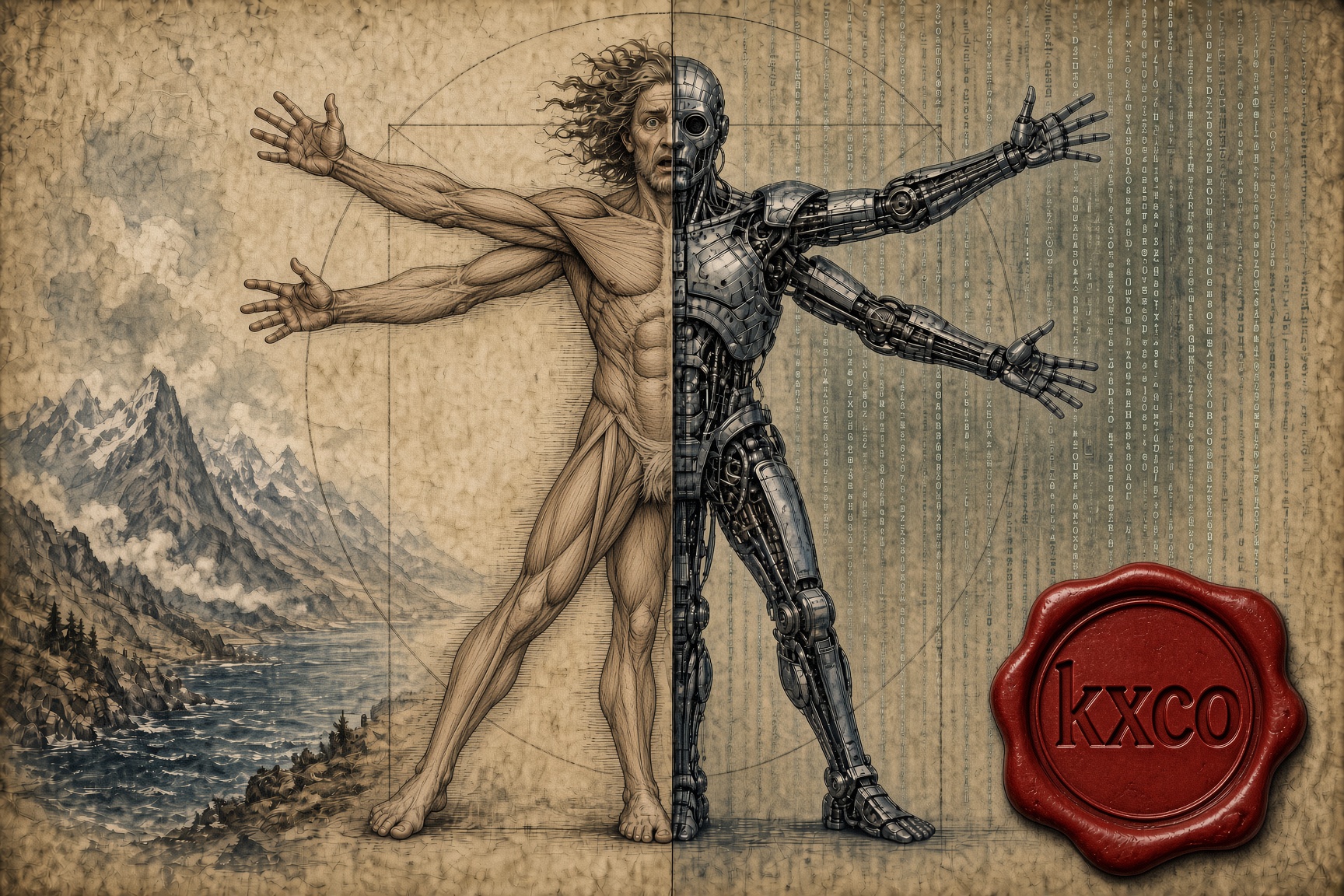
Don't Be the Best, Be the Only: Winning in an AI World
AI is repricing competence downward. What it cannot reproduce is a life. The case for remaining non-fungible, why friction still produces the best ideas, and what it means to build AI systems that keep the human intellect in them.
Every story, signed and delivered.
Subscribe to the kxco channel and get the headline, the AI-written key takeaways, and the chain-anchor link the moment we publish. Audio versions and per-ticker subscriptions arrive in the next iteration.