
This is a Financial Collapse due to Excess Money Printing, Where Do You Invest Now?
A financial collapse due to excess money printing is a scenario in which the economy collapses due to the government printing too much money. This can lead to a number of problems, including:
Hyperinflation: Hyperinflation is a rapid and uncontrolled increase in the general price level of goods and services. It can occur when the government prints too much money, which causes the value of money to decrease. Hyperinflation can make it difficult for people to afford basic necessities and can lead to a decline in living standards.
Loss of confidence in the currency: When the government prints too much money, it can lead to a loss of confidence in the currency. This can make it difficult for businesses to invest and grow, and it can lead to a decline in economic activity.
Bankruptcy of businesses and governments: When the value of money decreases, it can lead to the bankruptcy of businesses and governments. This is because businesses and governments will have to pay back their debts in a currency that is worth less than when they borrowed it.
A financial collapse due to excess money printing can have a devastating impact on the economy. It can lead to widespread job losses, a decline in living standards, and social unrest.
Here are some specific examples of what a financial collapse due to excess money printing could look like:
Prices for goods and services would rise rapidly. This would make it difficult for people to afford basic necessities, such as food and housing.
Interest rates would rise sharply. This would make it more expensive for businesses to borrow money, which would slow economic growth.
The stock market would crash. This would wipe out people's savings and make it more difficult for businesses to raise capital.
Banks would fail. This would make it difficult for people to access their savings and make it more difficult for businesses to borrow money.
The government would default on its debt. This would make it difficult for the government to borrow money, and it would lead to a decline in confidence in the economy.
"In a world of increasing tyranny and government overreach, it is more important than ever to become a sovereign individual. This means taking responsibility for your own life and well-being, and making your own choices without interference from others. It means being self-sufficient and independent, and not relying on the government or any other institution for your livelihood. It means being free to think and speak for yourself, and to live your life according to your own values."
The best place to be invested in a financial collapse due to excess money printing is in assets that are likely to hold their value or even appreciate in value during a period of high inflation and economic instability. These assets include:
Hard assets: Hard assets are assets that have a physical presence and are limited in supply. Examples of hard assets include gold, silver, real estate, and commodities.
Cryptocurrencies: Cryptocurrencies are digital or virtual tokens that use cryptography to secure their transactions and to control the creation of new units. Cryptocurrencies are often seen as a hedge against inflation and government overreach.
Defensive stocks: Defensive stocks are stocks of companies that sell products and services that are in high demand even during economic downturns. Examples of defensive stocks include consumer staples, utilities, and healthcare.
It is important to note that there is no surefire way to protect yourself from a financial collapse. However, by investing in a diversified portfolio of hard assets, cryptocurrencies, and defensive stocks, you can increase your chances of weathering the storm.
Here are some specific examples of investments that you may want to consider in a financial collapse due to excess money printing:
Gold: Gold is a traditional hedge against inflation and economic instability. Gold prices have historically risen during periods of high inflation.
Silver: Silver is another traditional hedge against inflation and economic instability. Silver prices have also historically risen during periods of high inflation.
Real estate: Real estate can be a good investment in a financial collapse because it is a hard asset that is limited in supply. However, it is important to choose real estate in a desirable location that is likely to hold its value or even appreciate in value.
Commodities: Commodities are raw materials that are used to produce other goods and services. Examples of commodities include oil, gas, wheat, and corn. Commodities can be a good investment in a financial collapse because they are in high demand and have a limited supply.
Cryptocurrencies: Cryptocurrencies are digital or virtual tokens that use cryptography to secure their transactions and to control the creation of new units. Cryptocurrencies are often seen as a hedge against inflation and government overreach.
Defensive stocks: Defensive stocks are stocks of companies that sell products and services that are in high demand even during economic downturns. Examples of defensive stocks include consumer staples, utilities, and healthcare.
It is important to do your own research before investing in any asset. You should also consider your own investment goals and risk tolerance.
AI is the Neat Handwriting of the Illiterate
A model in the hands of someone who has read the filing and walked the plant is a clerk. The same model, speaking for someone who has done neither, is a disguise. On AI slop, phantom citations and factslop, why finish stopped being evidence of work, and the containment layer KXCO built so a machine cannot speak as the institution until a source is attached.
Worthship: Do Not Conform to the Age
Worthship is the older English word for worship, and it means to ascribe worth. Bishop Robert Barron preached Romans 12 on 30 August. This essay follows the text into the prison letters, and puts two questions to a graph: do the four readings of that Sunday agree, and was Paul free or in chains when he wrote about despair?
The Truth in All Its Ugliness Must Survive
A majority vote does not determine the truth. Consensus is a mood, gossip is a sport, and a model will write the pretty version for free. Why the ugly number has to survive, why a record beats a dashboard, and what KXCO was built to keep standing when the room changes its mind.
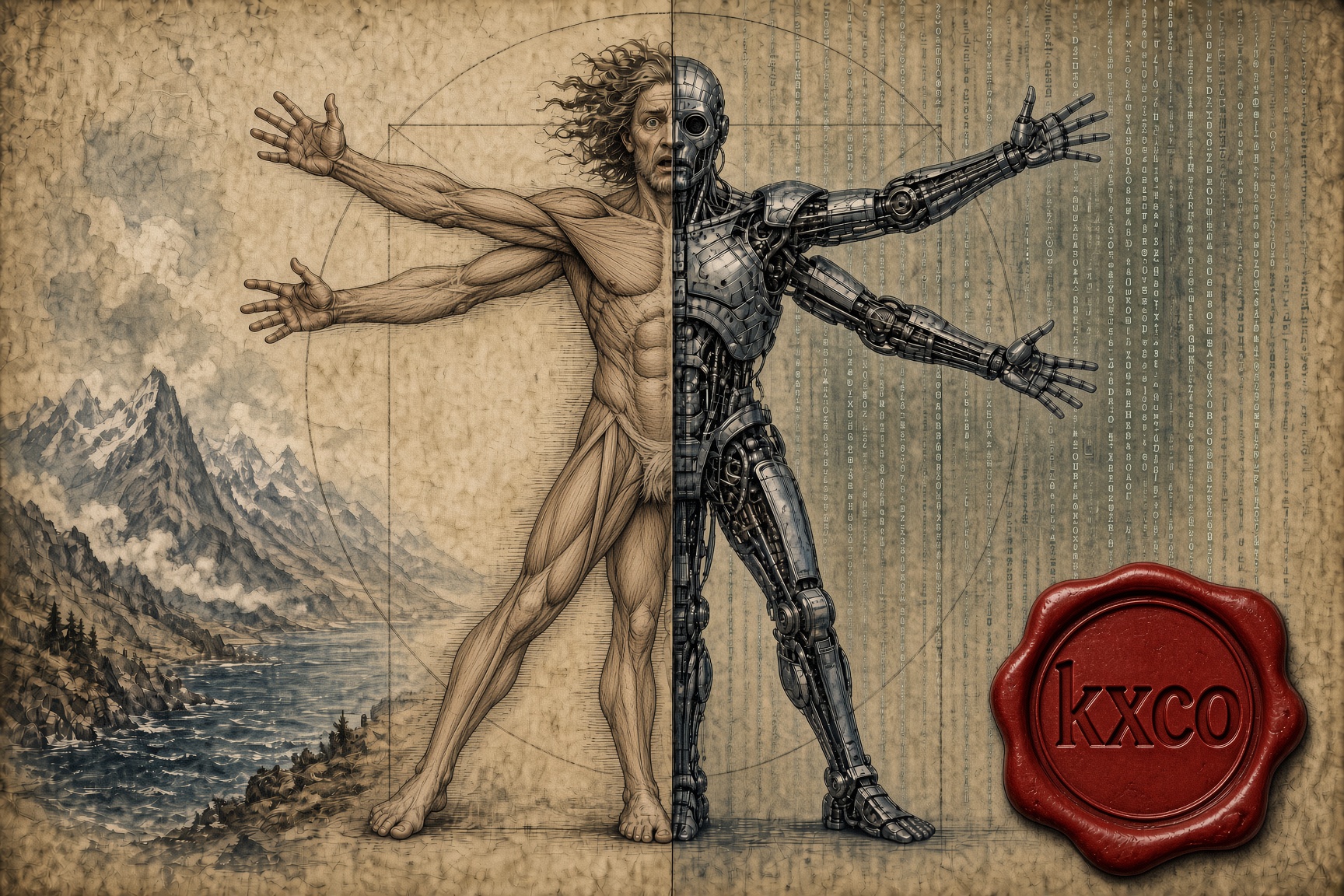
Don't Be the Best, Be the Only: Winning in an AI World
AI is repricing competence downward. What it cannot reproduce is a life. The case for remaining non-fungible, why friction still produces the best ideas, and what it means to build AI systems that keep the human intellect in them.
Every story, signed and delivered.
Subscribe to the kxco channel and get the headline, the AI-written key takeaways, and the chain-anchor link the moment we publish. Audio versions and per-ticker subscriptions arrive in the next iteration.