
The Weaponization of the US Dollar was a Disaster $BTC #China #Russia
In recent years, the global economic landscape has witnessed significant shifts, with China and Russia increasingly challenging the longstanding dominance of the US dollar. While the USA has historically wielded considerable influence through its currency, the weaponization of the US dollar and the response by strategic adversaries like China and Russia signals a pivotal juncture in global economic dynamics.
Challenging Assumptions of US Dollar Dominance
For decades, the assumption that the USA controlled the world economy through the preeminence of the US dollar has shaped global economic policies, trade dynamics, and geopolitical strategies. However, the strategic counter maneuvers by China and Russia to diminish the dominance of the US dollar underscore a fundamental miscalculation of US hegemony.
Strategic Alignments and Economic Alliances
China and Russia's concerted efforts to diversify their foreign reserves, promote bilateral trade agreements, and establish alternative financial infrastructures reflect a calculated strategy to reduce dependency on the US dollar. Initiatives such as the Belt and Road Initiative (BRI), Eurasian Economic Union (EAEU), and the establishment of alternative payment systems challenge the traditional financial frameworks dominated by Western institutions.
Weaponizing Financial Instruments
The weaponization of the US dollar extends beyond mere economic strategies; it encompasses the utilization of financial instruments, sanctions, and regulatory frameworks to exert influence, impose constraints, and advance geopolitical objectives. China and Russia's efforts to develop alternative payment systems, digital currencies, and trade mechanisms circumvent US-led politically motivated financial sanctions, promote economic sovereignty, and foster multipolarity in the global financial system.
Implications for the USA
The diminishing influence of the US dollar, coupled with the strategic initiatives by China and Russia, poses significant implications for the USA. A loss of financial leverage, reduced influence over global economic policies, and challenges to the primacy of the US dollar could undermine US geopolitical objectives, economic competitiveness, and strategic alliances.
Moreover, the weaponization of the US dollar and subsequent reactions by China and Russia reflects a broader geopolitical contest for influence, power, and control in an increasingly multipolar world. As the USA confronts these evolving dynamics, it must reassess its economic strategies, diplomatic engagements, and geopolitical alignments to navigate the complexities of a shifting global order.
Conclusion
The weaponization of the US dollar and the countermeasures by China and Russia signifies a paradigm shift in global economic dynamics, challenging longstanding assumptions of US dominance. As China and Russia continue to promote alternative financial systems, payment mechanisms, and trade agreements, the USA must recognize, adapt, and navigate the complexities of a multipolar world.
By understanding the strategic motivations, economic implications, and geopolitical consequences of the weaponization of the US dollar, policymakers, economists, and stakeholders can anticipate, adapt, and engage constructively in shaping a more equitable, resilient, and cooperative global financial system.
AI is the Neat Handwriting of the Illiterate
A model in the hands of someone who has read the filing and walked the plant is a clerk. The same model, speaking for someone who has done neither, is a disguise. On AI slop, phantom citations and factslop, why finish stopped being evidence of work, and the containment layer KXCO built so a machine cannot speak as the institution until a source is attached.
Worthship: Do Not Conform to the Age
Worthship is the older English word for worship, and it means to ascribe worth. Bishop Robert Barron preached Romans 12 on 30 August. This essay follows the text into the prison letters, and puts two questions to a graph: do the four readings of that Sunday agree, and was Paul free or in chains when he wrote about despair?
The Truth in All Its Ugliness Must Survive
A majority vote does not determine the truth. Consensus is a mood, gossip is a sport, and a model will write the pretty version for free. Why the ugly number has to survive, why a record beats a dashboard, and what KXCO was built to keep standing when the room changes its mind.
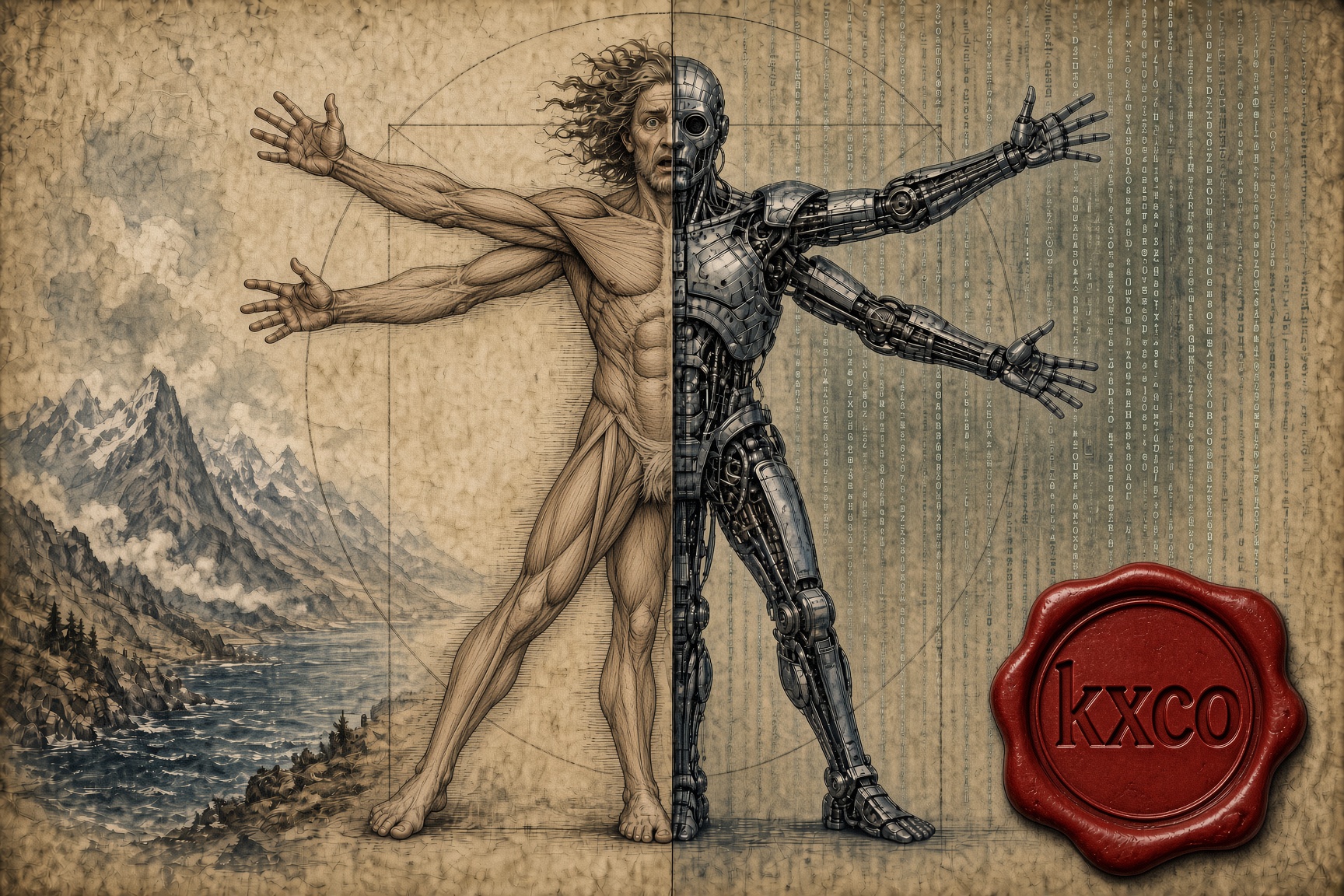
Don't Be the Best, Be the Only: Winning in an AI World
AI is repricing competence downward. What it cannot reproduce is a life. The case for remaining non-fungible, why friction still produces the best ideas, and what it means to build AI systems that keep the human intellect in them.
Every story, signed and delivered.
Subscribe to the kxco channel and get the headline, the AI-written key takeaways, and the chain-anchor link the moment we publish. Audio versions and per-ticker subscriptions arrive in the next iteration.