
The US has Terminal Debt, Bitcoin is a Must Own
Terminal Government Debt: What It Is and What It Means
Terminal government debt is a term used to describe the point at which the interest payments on a government's debt become more than the government's revenues. In other words, it is the point at which the government can no longer afford to pay its debts.
There are a number of factors that can contribute to terminal government debt, including:
A large and growing debt: If a government's debt is too large, it can become difficult to keep up with the interest payments.
Declining tax revenues: If a government's tax revenues begin to decline, it can make it even more difficult to pay off debt.
Unanticipated expenses: Unexpected expenses, such as a natural disaster or a war, can also contribute to terminal government debt.
If a government reaches terminal government debt, it may be forced to take drastic measures, such as defaulting on its debt or printing more money. These measures can have a number of negative consequences, including:
Economic instability: A default on government debt can lead to economic instability, as investors lose confidence in the government's ability to repay its debts.
Runaway inflation: Printing more money can lead to runaway inflation, as the value of the currency declines.
Social unrest: A government that is unable to pay its debts may face social unrest, as citizens become frustrated with the government's inability to provide basic services.
Terminal government debt is a serious problem that can have a devastating impact on a country's economy and society.
US budget deficit nearly triples
The gap from October through June came in at around $1.4 trillion, according to the department
The US federal government’s budget deficit widened sharply in the first nine months of the fiscal year to hit $1.39 trillion in June, the Treasury Department said on Thursday. The figure was up from $515.1 billion in the same period last year.
The federal government operates under a fiscal year that begins October 1.
According to the report, the budget gap widened by $227.76 billion in June, up from $88.8 billion in the same month last year.
The Treasury data showed that a sharp increase in government spending and a significant drop in tax revenues were the key reasons behind the widening deficit.
Overall, tax revenues between October and June were 11% lower than the same period a year ago due to a slump in stocks, bonds and other assets. Data showed that in June government receipts declined by $42 billion to $418 billion from a year ago. At the same time, spending increased, with outlays rising $96 billion to $646 billion. Soaring inflation has also added to federal spending.
US Federal Reserve officials have been warning that the government’s finances were on a path that in the long-term would be unsustainable. According to Phillip Swagel, the director of the Congressional Budget Office, the federal deficit will average around $2 trillion per year, adding to the $32.5 trillion national debt.
“We are projected to spend more on interest payments in the next decade than we will on the entire defense budget,” said Maya MacGuineas, president of the Committee for a Responsible Federal Budget. “How can anyone possibly think this trend is sustainable?”
“We’re running off the rails at an alarming rate,” MacGuineas stated, adding “We need to do better.”
Here are some of the pros and cons of Bitcoin as a store of value:
Scarcity: Bitcoin has a limited supply of 21 million coins, which makes it a scarce asset.
Divisibility: Bitcoin can be divided into smaller units, making it a more divisible asset than gold.
Portability: Bitcoin can be easily transferred from one person to another, making it a more portable asset than gold.
Durability: Bitcoin is stored in a digital ledger, which makes it a more durable asset than gold.
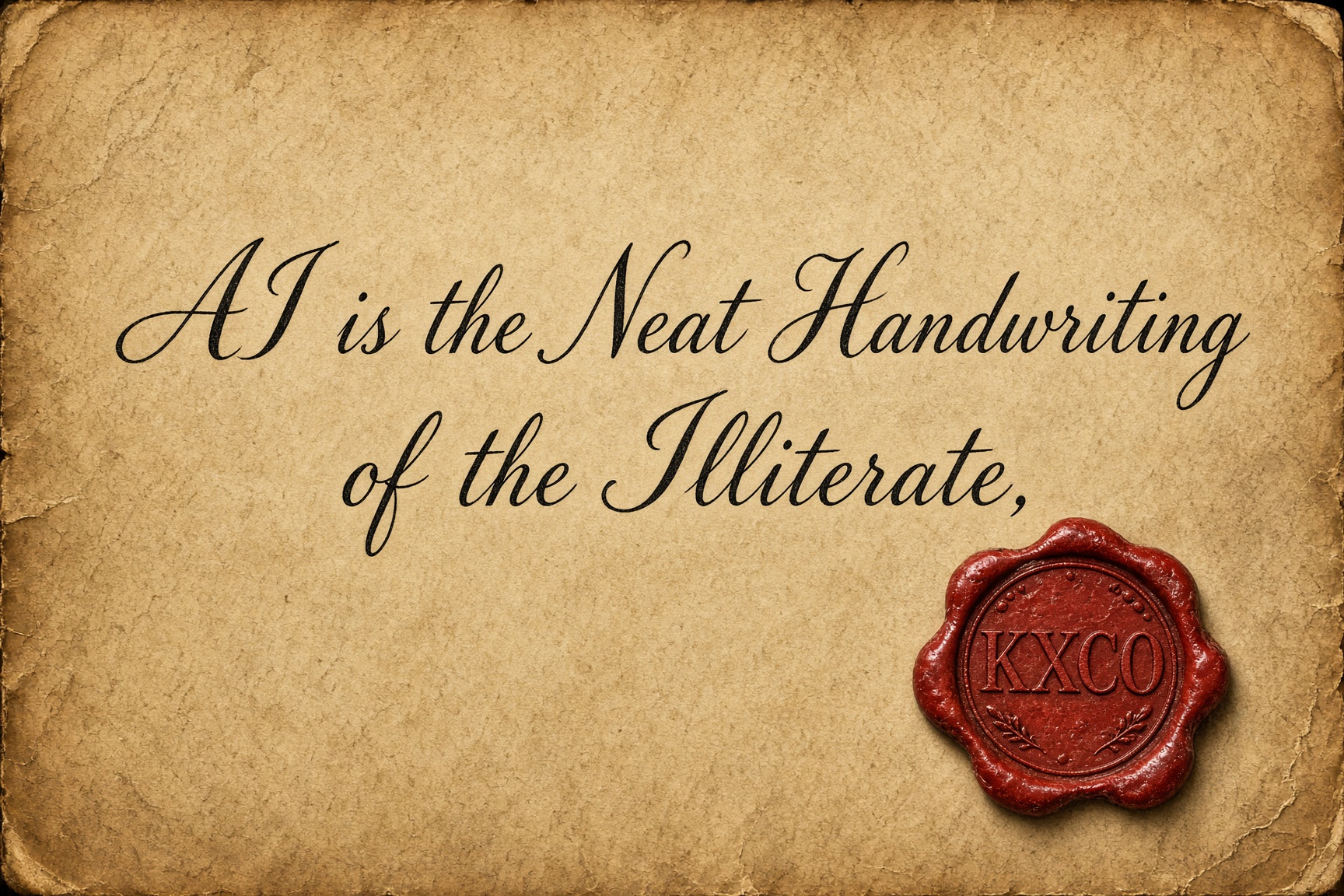
AI is the Neat Handwriting of the Illiterate
A model in the hands of someone who has read the filing and walked the plant is a clerk. The same model, speaking for someone who has done neither, is a disguise. On AI slop, phantom citations and factslop, why finish stopped being evidence of work, and the containment layer KXCO built so a machine cannot speak as the institution until a source is attached.
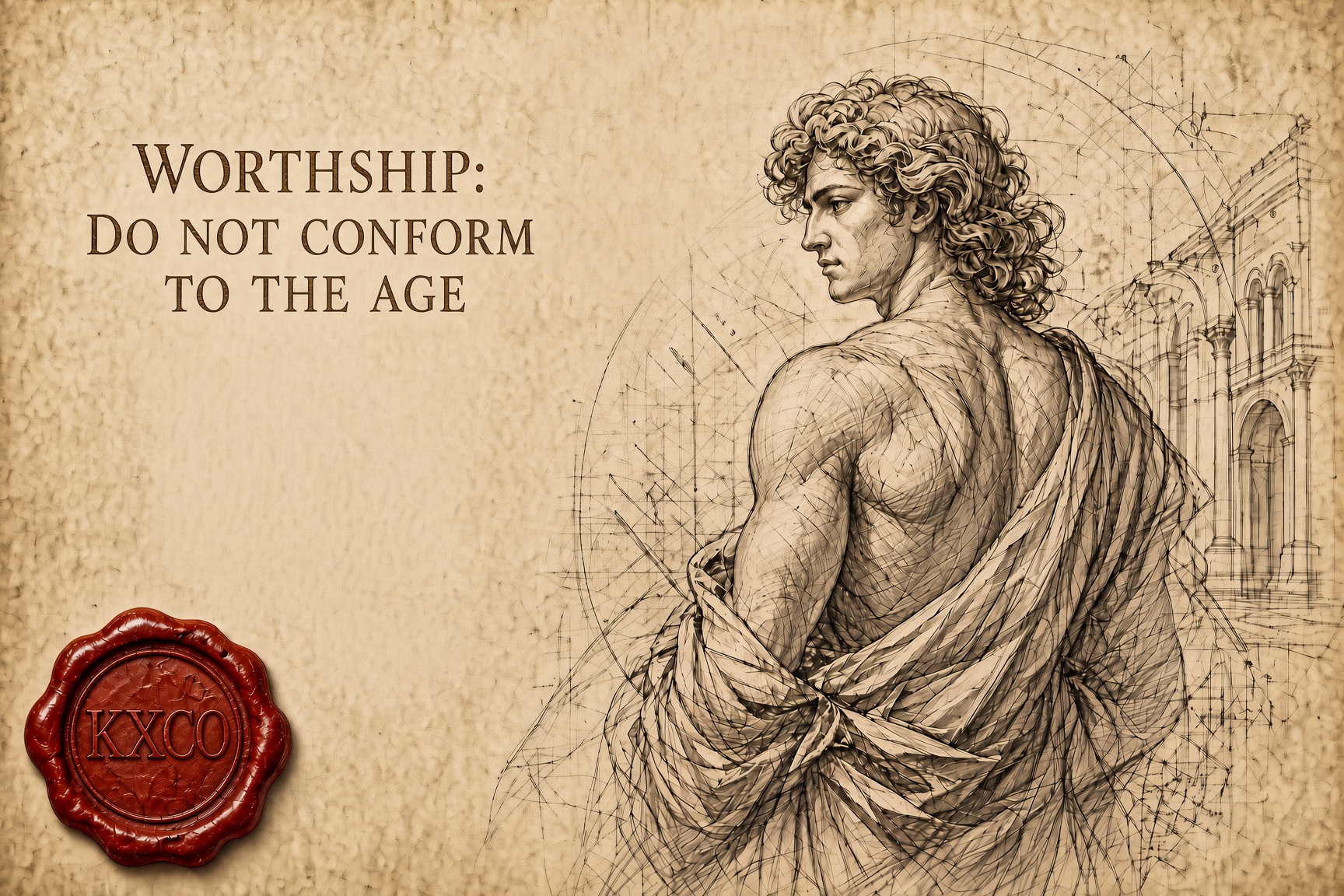
Worthship: Do Not Conform to the Age
Worthship is the older English word for worship, and it means to ascribe worth. Bishop Robert Barron preached Romans 12 on 30 August. This essay follows the text into the prison letters, and puts two questions to a graph: do the four readings of that Sunday agree, and was Paul free or in chains when he wrote about despair?
The Truth in All Its Ugliness Must Survive
A majority vote does not determine the truth. Consensus is a mood, gossip is a sport, and a model will write the pretty version for free. Why the ugly number has to survive, why a record beats a dashboard, and what KXCO was built to keep standing when the room changes its mind.
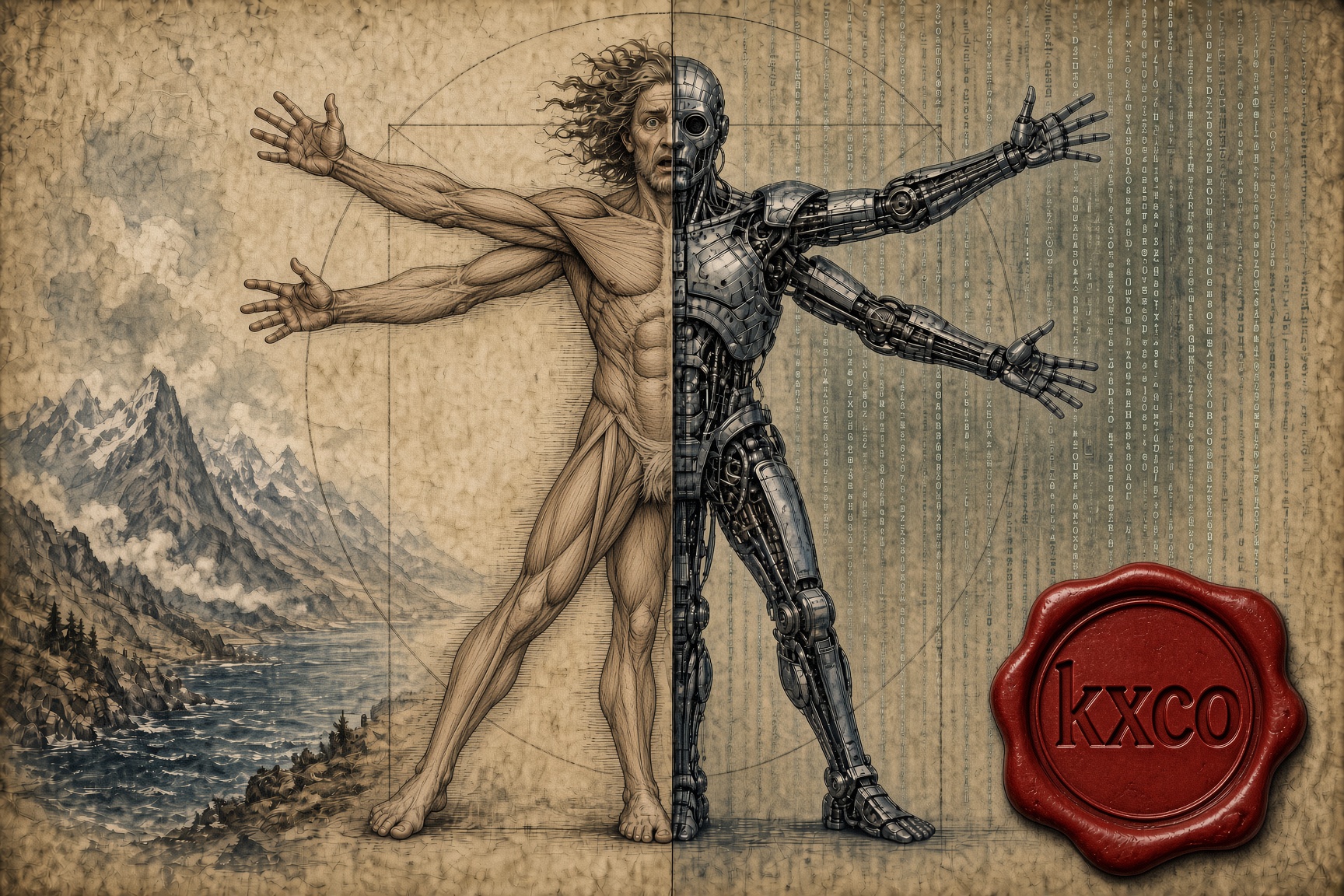
Don't Be the Best, Be the Only: Winning in an AI World
AI is repricing competence downward. What it cannot reproduce is a life. The case for remaining non-fungible, why friction still produces the best ideas, and what it means to build AI systems that keep the human intellect in them.
Every story, signed and delivered.
Subscribe to the kxco channel and get the headline, the AI-written key takeaways, and the chain-anchor link the moment we publish. Audio versions and per-ticker subscriptions arrive in the next iteration.