
The US Government Vs Bitcoin, the Battle Ahead
The battle between the US government and Bitcoin is indeed far from over. While the past few months have seen a relative calm, with Bitcoin's price stabilizing and regulatory noise subsiding, the underlying tensions remain. Here's why:
1. Continued Regulatory Scrutiny:
The US government, particularly the Securities and Exchange Commission (SEC), has been increasing its focus on crypto regulation. They're investigating lending platforms, stablecoins, and even cracking down on unregistered exchanges.
The Biden administration's Executive Order on digital assets outlines a comprehensive approach to regulating crypto, potentially leading to stricter rules on issuance, trading, and custody.
The SEC is also likely to continue its tactics of stalling the Bitcoin ETFs, which could significantly impact the market's volatility and mainstream adoption.
2. Financial Stability Concerns:
Bitcoin's price volatility and its use in illicit activities raise concerns about its potential threat to financial stability. The government is likely to remain vigilant in monitoring these risks and implementing measures to mitigate them.
The interconnectedness of the crypto market with traditional finance is also a concern. Regulators might implement stricter controls to prevent systemic risks from spilling over.
3. Geopolitical Landscape:
The ongoing conflict in Ukraine and the potential for wider geopolitical instability could put pressure on the government to take a more cautious approach towards Bitcoin and other cryptocurrencies.
Countries like China have already cracked down heavily on crypto, and others might follow suit, potentially impacting Bitcoin's global adoption and price.
4. Technological Advancements:
The development of central bank digital currencies (CBDCs) could pose a challenge to Bitcoin's dominance. Governments might favor CBDCs for their stability and controllability.
Technological advancements in areas like quantum computing could also threaten Bitcoin's security, necessitating further adaptations and upgrades to its network.
5. Public Perception:
Public opinion on Bitcoin remains divided, with concerns about its environmental impact, energy consumption, and potential for scams. The government might be swayed by public pressure to take a more restrictive approach.
While the outcome of this battle is uncertain, it's safe to say that the US government and Bitcoin are locked in a complex dance. The next few years will likely see continued regulatory efforts, technological advancements, and evolving geopolitical landscapes, all shaping the future of Bitcoin and the broader cryptocurrency ecosystem.
Remember, staying informed and understanding the diverse perspectives involved is crucial for navigating this dynamic landscape.
AI is the Neat Handwriting of the Illiterate
A model in the hands of someone who has read the filing and walked the plant is a clerk. The same model, speaking for someone who has done neither, is a disguise. On AI slop, phantom citations and factslop, why finish stopped being evidence of work, and the containment layer KXCO built so a machine cannot speak as the institution until a source is attached.
Worthship: Do Not Conform to the Age
Worthship is the older English word for worship, and it means to ascribe worth. Bishop Robert Barron preached Romans 12 on 30 August. This essay follows the text into the prison letters, and puts two questions to a graph: do the four readings of that Sunday agree, and was Paul free or in chains when he wrote about despair?
The Truth in All Its Ugliness Must Survive
A majority vote does not determine the truth. Consensus is a mood, gossip is a sport, and a model will write the pretty version for free. Why the ugly number has to survive, why a record beats a dashboard, and what KXCO was built to keep standing when the room changes its mind.
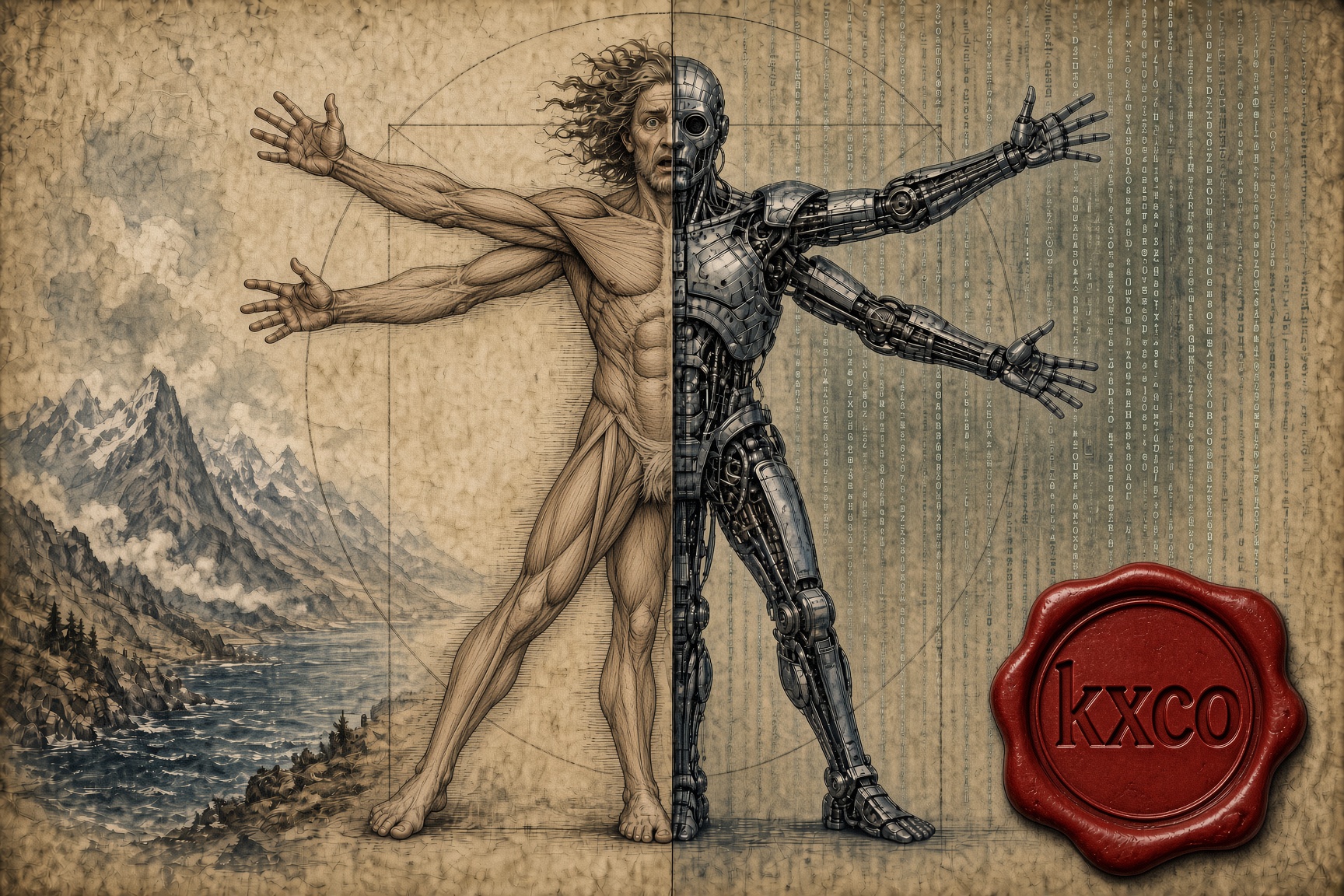
Don't Be the Best, Be the Only: Winning in an AI World
AI is repricing competence downward. What it cannot reproduce is a life. The case for remaining non-fungible, why friction still produces the best ideas, and what it means to build AI systems that keep the human intellect in them.
Every story, signed and delivered.
Subscribe to the kxco channel and get the headline, the AI-written key takeaways, and the chain-anchor link the moment we publish. Audio versions and per-ticker subscriptions arrive in the next iteration.