
The US Dollar is Over
The US dollar has been the world's reserve currency for over 50 years. However, there are increasing signs that the world is moving away from the dollar.
There are a number of reasons for this. One reason is that the US economy is no longer as dominant as it once was. The US share of global GDP has been declining for decades, and other countries, such as China, are now major economic powers.
Another reason is that the US dollar is seen as less reliable. The US government has been running large budget deficits for many years, and this has led to concerns about the dollar's long-term value.
In addition, the US has been involved in a number of wars and interventions in recent years, which has also damaged the dollar's reputation.
As a result of these factors, there is a growing demand for alternative reserve currencies. Some of the leading contenders include the euro, the Chinese yuan, and the Japanese yen.
The euro is the most likely candidate to replace the dollar as the world's reserve currency. The eurozone is the world's second-largest economy, and the euro is already used by over 300 million people in 19 countries.
The Chinese yuan is also a potential challenger to the dollar. China is the world's second-largest economy, and the yuan is becoming increasingly integrated into the global financial system.
The Japanese yen is another possible alternative to the dollar. The Japanese economy is the third-largest in the world, and the yen is a relatively stable currency.
It is still too early to say definitively whether the world will move away from the dollar. However, the trend is clear, and the dollar's days as the world's reserve currency may be numbered.
Here are some of the implications of the world moving away from the US dollar:
It could lead to increased instability in the global financial system.
It could make it more difficult for the US to finance its budget deficits.
It could give China and other countries more power in the global economy.
It could lead to a decline in the value of the dollar.
The move away from the dollar is a complex issue with far-reaching implications. It is important to monitor this trend closely and to understand its potential impact.
In addition to the factors mentioned above, there are a number of other factors that could contribute to the decline of the US dollar as the world's reserve currency. These include:
The rise of cryptocurrencies, such as Bitcoin, which could challenge the dollar's status as a safe haven asset.
The increasing use of regional currencies, such as the euro and the yuan, in trade and finance.
The growing economic and political power of China and other emerging markets.
The future of the US dollar as the world's reserve currency is uncertain. However, the trend is clear, and the dollar's days as the dominant currency may be numbered.
AI is the Neat Handwriting of the Illiterate
A model in the hands of someone who has read the filing and walked the plant is a clerk. The same model, speaking for someone who has done neither, is a disguise. On AI slop, phantom citations and factslop, why finish stopped being evidence of work, and the containment layer KXCO built so a machine cannot speak as the institution until a source is attached.
Worthship: Do Not Conform to the Age
Worthship is the older English word for worship, and it means to ascribe worth. Bishop Robert Barron preached Romans 12 on 30 August. This essay follows the text into the prison letters, and puts two questions to a graph: do the four readings of that Sunday agree, and was Paul free or in chains when he wrote about despair?
The Truth in All Its Ugliness Must Survive
A majority vote does not determine the truth. Consensus is a mood, gossip is a sport, and a model will write the pretty version for free. Why the ugly number has to survive, why a record beats a dashboard, and what KXCO was built to keep standing when the room changes its mind.
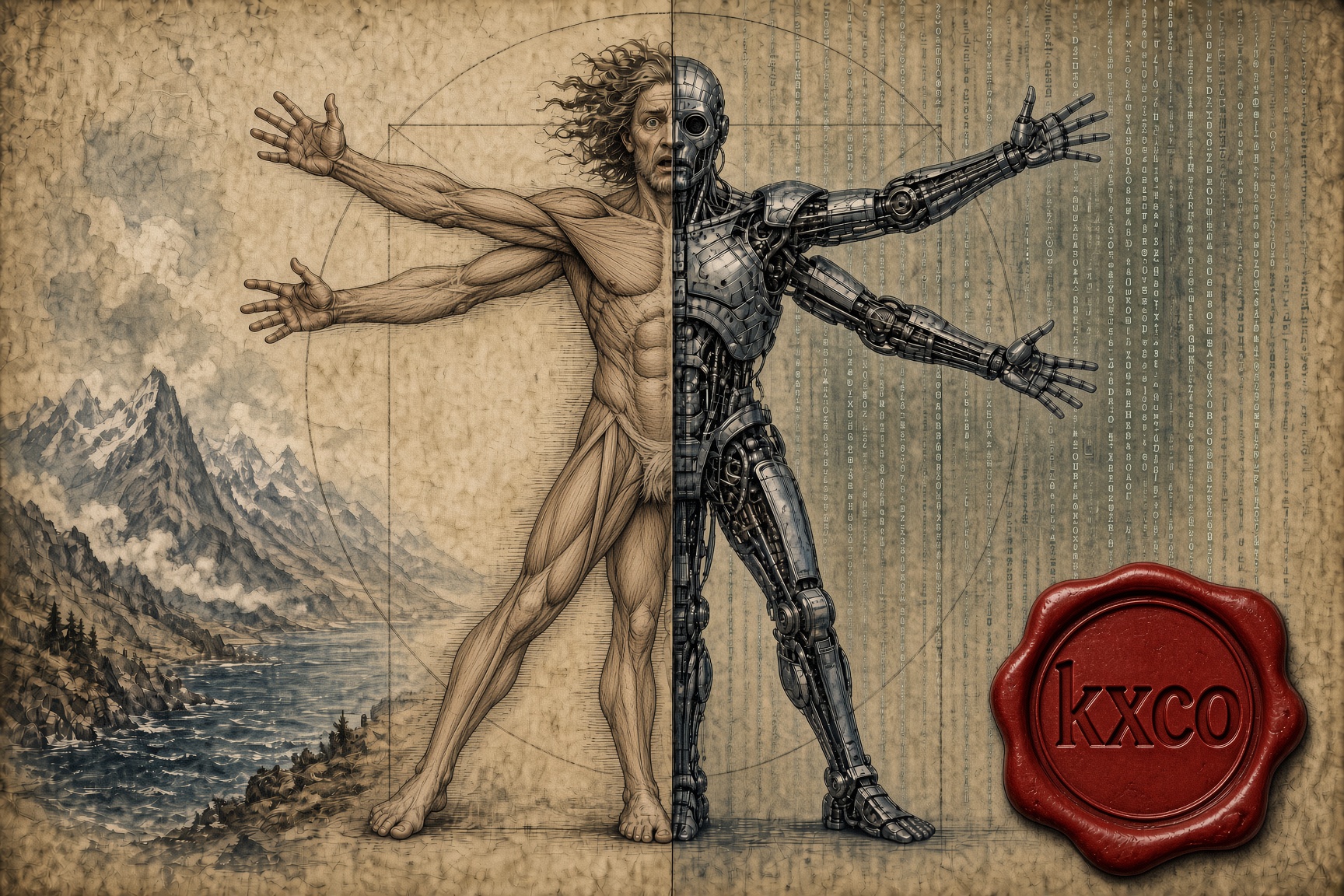
Don't Be the Best, Be the Only: Winning in an AI World
AI is repricing competence downward. What it cannot reproduce is a life. The case for remaining non-fungible, why friction still produces the best ideas, and what it means to build AI systems that keep the human intellect in them.
Every story, signed and delivered.
Subscribe to the kxco channel and get the headline, the AI-written key takeaways, and the chain-anchor link the moment we publish. Audio versions and per-ticker subscriptions arrive in the next iteration.