
The Obama Gang and the George Floyd Riots
The wave of riots and anti-police actions that began in the Spring of 2020, and continue to this day, have been generally reported by the mainstream media as an entirely spontaneous grass roots response to the death in police custody of George Floyd in Minneapolis.
The mainstream media got it wrong.

(PRNewsfoto/National Police Association)
National Police Association writer and retired Seattle police officer Steve Pomper's new book, The Obama Gang, provides for the first time an explanation that what happened was far from spontaneous. This investigation into what is really behind the new vilification of law enforcement exposes the groundwork for the anti-police firestorm was carefully created, organized and led by former president Barack Obama's Foundation, and executed by the Foundation's web of allies. The anti-police machine which has been constructed to operate across the country 24/7.
The seemingly independent anti-police factions are in actuality part of a larger "family" or "gang" of wealthy and radical individuals and organizations. With former President Barack H. Obama's Foundation at the top, they operate similar to an organized crime family—on the periphery of civil society.
From the bottom up, the organizational chart begins with the "soldiers" on the streets, who caused such visible destruction during 2020, and climbs the crowded pyramid to the top. This "family", or gang of individuals and organizations are now working together like never before to collapse policing in America as we know it—to collapse America as we know it.
The Obama Gang is available at Amazon https://www.amazon.com/dp/1098355253/ and all other major booksellers.
The Obama Gang is published by the National Police Association, a 501(c)3 nonprofit with a mission of educating supporters of law enforcement in how to help police departments accomplish their goals.
AI is the Neat Handwriting of the Illiterate
A model in the hands of someone who has read the filing and walked the plant is a clerk. The same model, speaking for someone who has done neither, is a disguise. On AI slop, phantom citations and factslop, why finish stopped being evidence of work, and the containment layer KXCO built so a machine cannot speak as the institution until a source is attached.
Worthship: Do Not Conform to the Age
Worthship is the older English word for worship, and it means to ascribe worth. Bishop Robert Barron preached Romans 12 on 30 August. This essay follows the text into the prison letters, and puts two questions to a graph: do the four readings of that Sunday agree, and was Paul free or in chains when he wrote about despair?
The Truth in All Its Ugliness Must Survive
A majority vote does not determine the truth. Consensus is a mood, gossip is a sport, and a model will write the pretty version for free. Why the ugly number has to survive, why a record beats a dashboard, and what KXCO was built to keep standing when the room changes its mind.
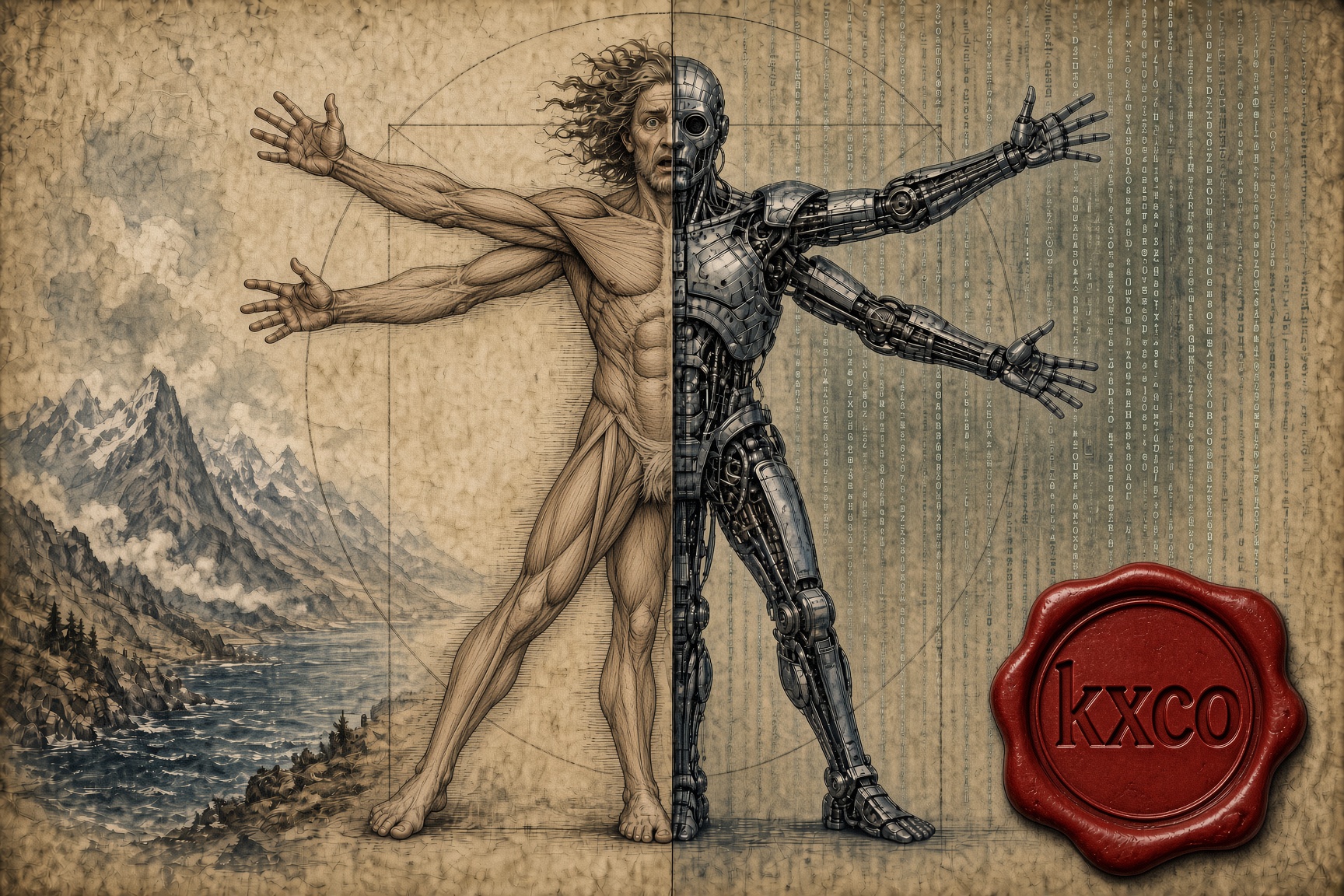
Don't Be the Best, Be the Only: Winning in an AI World
AI is repricing competence downward. What it cannot reproduce is a life. The case for remaining non-fungible, why friction still produces the best ideas, and what it means to build AI systems that keep the human intellect in them.
Every story, signed and delivered.
Subscribe to the kxco channel and get the headline, the AI-written key takeaways, and the chain-anchor link the moment we publish. Audio versions and per-ticker subscriptions arrive in the next iteration.