
The Most Important Chinese Companies Listed on U.S. Stock Markets $BABA $NIO $PDD $LI
In recent years, Chinese companies have made a significant impact on the U.S. stock markets. Many of these companies are giants in their respective industries and have attracted the attention of investors worldwide. In this article, we will explore some of the most important Chinese companies listed on U.S. stock markets and understand why they have become such influential players.
1. Alibaba Group Holding Ltd (BABA):
Often referred to as the "Amazon of China," Alibaba is a global e-commerce and technology conglomerate. It operates various platforms, including Taobao and Tmall, which have a massive user base. Alibaba's influence extends beyond e-commerce, as it's a major player in cloud computing, digital entertainment, and financial services.
2. Tencent Holdings Ltd (TCEHY):
Tencent is a tech giant known for its social media and gaming dominance. It owns WeChat, one of China's most popular messaging apps, and has a significant stake in several gaming companies, including the creators of "Fortnite" and "League of Legends." Tencent's diversified portfolio also includes fintech and digital advertising.
3. JD.com, Inc. (JD):
JD.com is another e-commerce giant in China, known for its commitment to delivering products to customers quickly and efficiently. It has a strong logistics network and a growing presence in international markets.
4. Pinduoduo Inc. (PDD):
Pinduoduo is a rising star in China's e-commerce landscape. It has gained popularity through its innovative group-buying model, which allows users to purchase products at discounted prices when they team up with friends. Pinduoduo's focus on affordability and social commerce has made it a compelling player.
5. NIO Inc. (NIO):
NIO is a leading electric vehicle (EV) manufacturer often called "China's Tesla." The company has gained recognition for its high-quality EVs and innovative battery-swapping technology.
6. Baidu, Inc. (BIDU):
Baidu is China's foremost internet search engine and AI company. It provides a wide range of services, from online search to autonomous driving technology. Baidu's commitment to AI research and development makes it a pivotal player in the tech sector.
7. NetEase, Inc. (NTES):
NetEase is a major player in the Chinese gaming and internet services industry. It's known for its popular online games and operates one of China's leading music streaming platforms.
8. Li Auto Inc. (LI):
Li Auto is another prominent Chinese EV manufacturer that combines electric power with extended-range technology. It offers SUVs with gasoline engine support for longer journeys, addressing the range-anxiety concerns of EV users.
9. Kweichow Moutai Co. (KWEICHOW):
Kweichow Moutai is China's leading distiller and the world's most valuable liquor company. Its flagship product, Moutai, is a premium Chinese liquor highly sought after both in China and internationally.
10. Trip.com Group Limited (TCOM): - Trip.com is one of China's largest online travel agencies, providing services for booking hotels, flights, and vacation packages. It has expanded its presence worldwide and is a prominent player in the travel industry.
These Chinese companies listed on U.S. stock markets have not only captured the attention of investors but have also significantly impacted global industries. Their innovations and business models are reshaping e-commerce, technology, electric vehicles, and more. As they continue to grow and expand their influence, these companies are poised to remain vital players in both the Chinese and global economies.
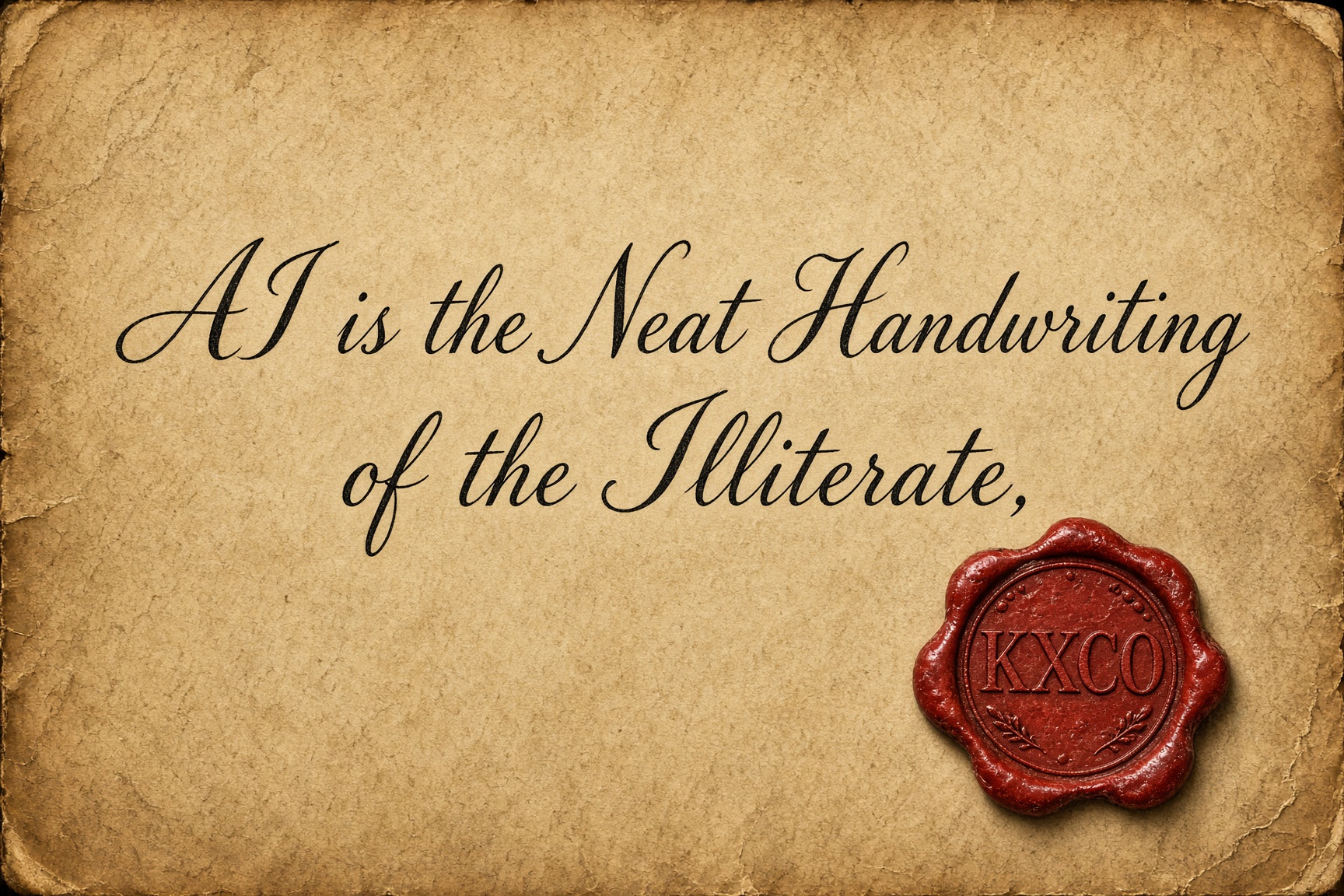
AI is the Neat Handwriting of the Illiterate
A model in the hands of someone who has read the filing and walked the plant is a clerk. The same model, speaking for someone who has done neither, is a disguise. On AI slop, phantom citations and factslop, why finish stopped being evidence of work, and the containment layer KXCO built so a machine cannot speak as the institution until a source is attached.
Worthship: Do Not Conform to the Age
Worthship is the older English word for worship, and it means to ascribe worth. Bishop Robert Barron preached Romans 12 on 30 August. This essay follows the text into the prison letters, and puts two questions to a graph: do the four readings of that Sunday agree, and was Paul free or in chains when he wrote about despair?

The Truth in All Its Ugliness Must Survive
A majority vote does not determine the truth. Consensus is a mood, gossip is a sport, and a model will write the pretty version for free. Why the ugly number has to survive, why a record beats a dashboard, and what KXCO was built to keep standing when the room changes its mind.
Don't Be the Best, Be the Only: Winning in an AI World
AI is repricing competence downward. What it cannot reproduce is a life. The case for remaining non-fungible, why friction still produces the best ideas, and what it means to build AI systems that keep the human intellect in them.
Every story, signed and delivered.
Subscribe to the kxco channel and get the headline, the AI-written key takeaways, and the chain-anchor link the moment we publish. Audio versions and per-ticker subscriptions arrive in the next iteration.