
The Gucci Strike
Around 40 artisans from Gucci's design studio staged their first-ever strike on Monday, protesting against the planned relocation of a significant portion of the team from Rome to Milan.
Gucci, the Italian luxury brand owned by the French group Kering, announced in October that it would move 153 of its 219 design employees from the capital to Milan. The protesting artisans argue that this move is essentially a disguised mass redundancy.
Demonstrators outside one of the Rome offices held banners with messages like "Gucci cuts but doesn't sew" and "At Gucci, redundancy is fashionable." Chiara Giannotti, a union representative for the brand, highlighted the significance of the strike, stating that the style office is the heart of Gucci, where designers and couturiers work, and where all collections are born.
This strike follows the participation of over 50 Gucci artisans in a national strike organized by Italy's largest trade unions last week. Giannotti accuses Kering of wanting to use this restructuring to reduce staff numbers and force out employees who may not find the new conditions satisfactory or cannot relocate due to family commitments in Rome.
Gucci responded to the protests, stating that the move "does not envisage any reduction in personnel and will be implemented in full compliance with current regulations." The company also claimed to have provided "a series of economic and support measures" for the affected staff.

While 153 employees are set to be transferred to Milan by March, the fate of the remaining 66 artisans staying in Rome is uncertain, according to the unions. Giannotti stressed the unions' demand for equal conditions for all during the transfer to Milan, or relocation to other Kering companies in Rome or Florence.
This strike comes in the wake of Gucci's change in artistic direction in January, with Sabato De Sarno taking over from Alessandro Michele, who had damaged the label with eccentric, gender-fluid designs and unconventional shows over seven years.
AI is the Neat Handwriting of the Illiterate
A model in the hands of someone who has read the filing and walked the plant is a clerk. The same model, speaking for someone who has done neither, is a disguise. On AI slop, phantom citations and factslop, why finish stopped being evidence of work, and the containment layer KXCO built so a machine cannot speak as the institution until a source is attached.
Worthship: Do Not Conform to the Age
Worthship is the older English word for worship, and it means to ascribe worth. Bishop Robert Barron preached Romans 12 on 30 August. This essay follows the text into the prison letters, and puts two questions to a graph: do the four readings of that Sunday agree, and was Paul free or in chains when he wrote about despair?
The Truth in All Its Ugliness Must Survive
A majority vote does not determine the truth. Consensus is a mood, gossip is a sport, and a model will write the pretty version for free. Why the ugly number has to survive, why a record beats a dashboard, and what KXCO was built to keep standing when the room changes its mind.
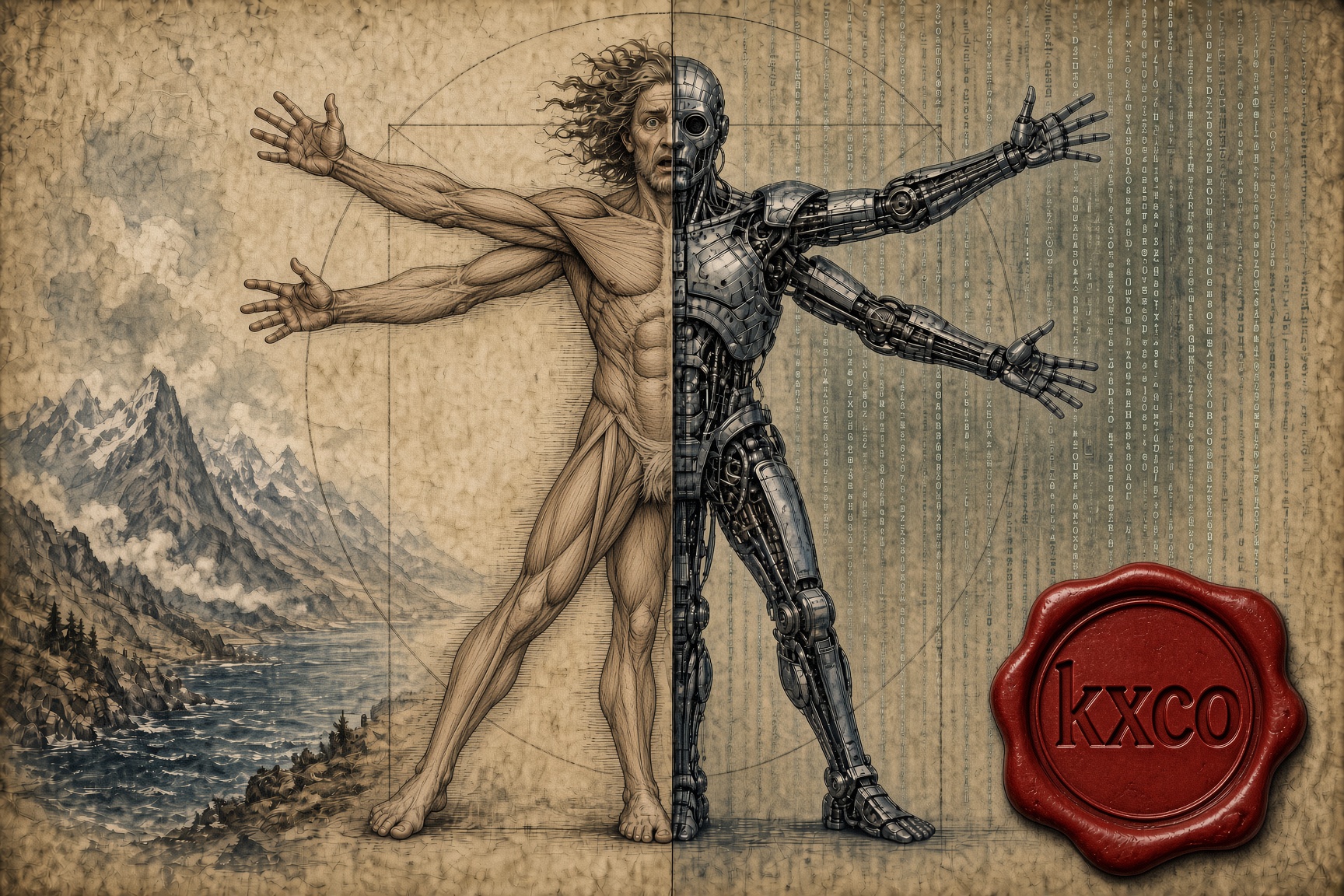
Don't Be the Best, Be the Only: Winning in an AI World
AI is repricing competence downward. What it cannot reproduce is a life. The case for remaining non-fungible, why friction still produces the best ideas, and what it means to build AI systems that keep the human intellect in them.
Every story, signed and delivered.
Subscribe to the kxco channel and get the headline, the AI-written key takeaways, and the chain-anchor link the moment we publish. Audio versions and per-ticker subscriptions arrive in the next iteration.