
The Fed's Early Rate Drop: A Boon for #Bitcoin and Gold $GOLD $BTC
In a strategic move to navigate the economic landscape, the Federal Reserve's decision to implement an early rate drop has sent ripples through financial markets. While this adjustment aims to address immediate concerns, particularly amid global uncertainties, its repercussions may extend far beyond traditional assets. This article delves into the potential impacts of the Fed's early rate drop on Bitcoin, gold, and the long-term prospects of the US dollar.
The Fed's Proactive Measures: The Federal Reserve's role in steering the US economy is pivotal, and its recent decision to lower interest rates early reflects a proactive approach to economic challenges. The move is a testament to the Fed's commitment to maintaining economic stability and fostering growth.
Bitcoin's Bullish Outlook: One of the immediate beneficiaries of the Fed's early rate drop is the world of digital assets, particularly Bitcoin. Bitcoin, often dubbed "digital gold," has demonstrated resilience as a store of value, especially during times of economic uncertainty. The lowered interest rates may drive investors towards alternative assets like Bitcoin, seeking avenues for capital preservation and potential appreciation.
The decentralized nature of Bitcoin, free from direct influence by any government or central authority, positions it as a hedge against inflation and currency devaluation. As traditional assets face increased volatility, Bitcoin's limited supply and scarcity become attractive attributes for investors.
Gold Shines Brighter: Similar to Bitcoin, gold stands to gain from the Fed's monetary policy adjustments. Historically, gold has been a safe-haven asset, retaining its value during economic downturns and periods of inflation. The lowered interest rates reduce the opportunity cost of holding gold, making it more appealing to investors compared to interest-bearing assets.
Investors traditionally turn to gold as a hedge against inflation and currency depreciation. The precious metal's intrinsic value and status as a tangible asset contribute to its allure, especially in times of economic uncertainty.
Long-Term Concerns for the US Dollar: While the short-term impact of the Fed's rate drop may boost Bitcoin and gold, there are concerns about the long-term consequences for the US dollar. Persistent low-interest rates can erode the value of a currency over time, potentially leading to inflationary pressures.
A weakened US dollar could have far-reaching implications for global trade, financial markets, and the purchasing power of US consumers. Additionally, it may impact the attractiveness of US assets to international investors, potentially reshaping the global economic landscape.
Conclusion: The Federal Reserve's decision to implement an early rate drop reflects a commitment to economic stability, but its implications extend beyond traditional markets. Bitcoin and gold emerge as immediate beneficiaries, offering investors alternative avenues for wealth preservation. However, the long-term consequences for the US dollar warrant careful consideration, as sustained low-interest rates may present challenges for the world's primary reserve currency. As the economic landscape continues to evolve, strategic diversification and a keen understanding of emerging trends will be crucial for investors navigating these uncertain times.
AI is the Neat Handwriting of the Illiterate
A model in the hands of someone who has read the filing and walked the plant is a clerk. The same model, speaking for someone who has done neither, is a disguise. On AI slop, phantom citations and factslop, why finish stopped being evidence of work, and the containment layer KXCO built so a machine cannot speak as the institution until a source is attached.
Worthship: Do Not Conform to the Age
Worthship is the older English word for worship, and it means to ascribe worth. Bishop Robert Barron preached Romans 12 on 30 August. This essay follows the text into the prison letters, and puts two questions to a graph: do the four readings of that Sunday agree, and was Paul free or in chains when he wrote about despair?
The Truth in All Its Ugliness Must Survive
A majority vote does not determine the truth. Consensus is a mood, gossip is a sport, and a model will write the pretty version for free. Why the ugly number has to survive, why a record beats a dashboard, and what KXCO was built to keep standing when the room changes its mind.
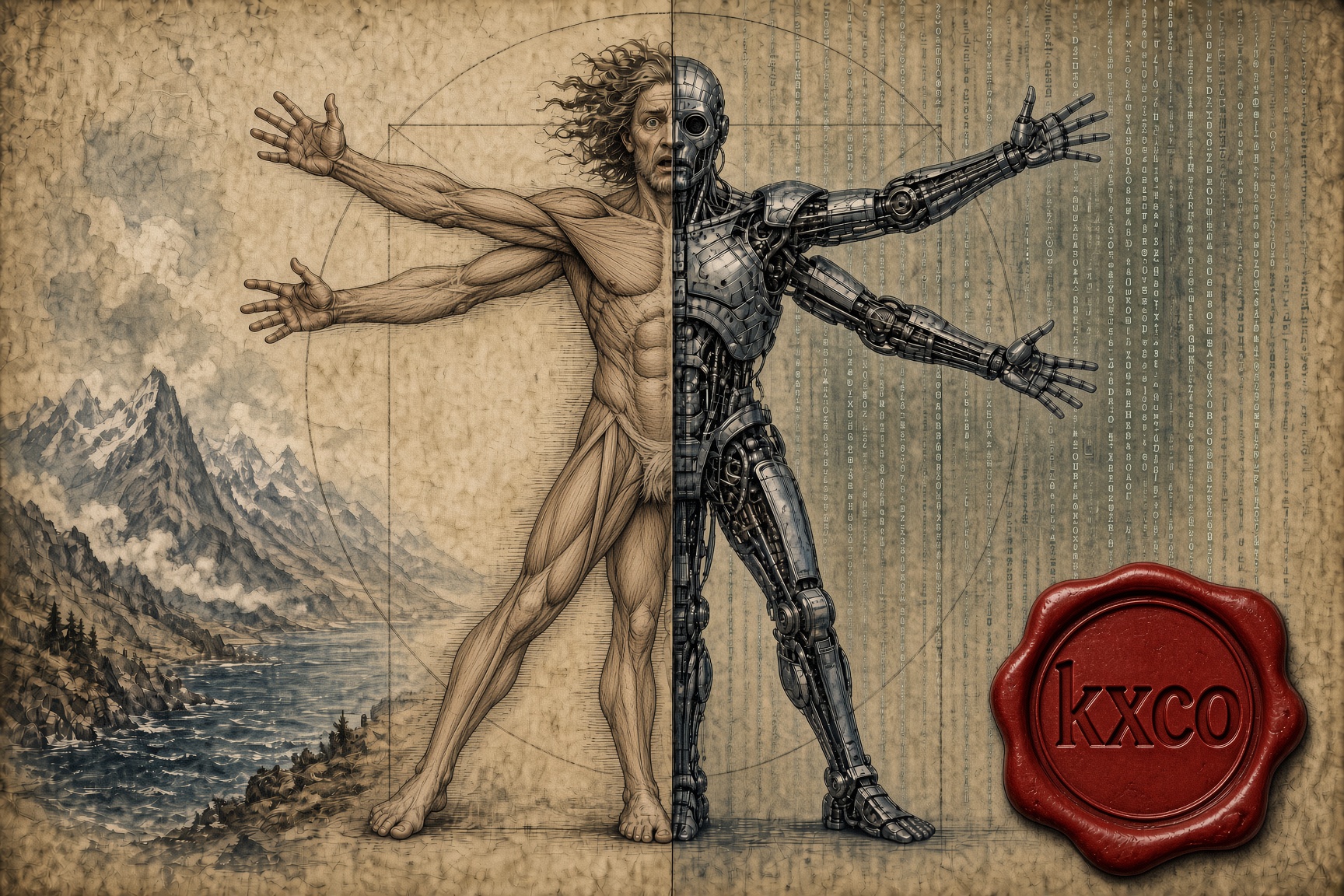
Don't Be the Best, Be the Only: Winning in an AI World
AI is repricing competence downward. What it cannot reproduce is a life. The case for remaining non-fungible, why friction still produces the best ideas, and what it means to build AI systems that keep the human intellect in them.
Every story, signed and delivered.
Subscribe to the kxco channel and get the headline, the AI-written key takeaways, and the chain-anchor link the moment we publish. Audio versions and per-ticker subscriptions arrive in the next iteration.