
The economic relationship between China and the United States
The economic relationship between China and the United States is one of the most important in the world. As two of the largest economies on the planet, the trade relationship between these two countries has a significant impact on the global economy. In this article, we will explore the economics of China-US trade, including the history of the trade relationship, the current state of trade, and the potential implications for the future.
History of China-US Trade The economic relationship between China and the United States began to grow rapidly in the 1980s, as China began to open up its economy to the world. The United States became one of the largest investors in China, and trade between the two countries grew rapidly. However, trade tensions between the two countries began to rise in the 1990s, as the US began to feel that China was not playing fair in its trade practices. The US accused China of currency manipulation, intellectual property theft, and other unfair trade practices.
Current State of China-US Trade Today, China is the United States' largest trading partner, with the two countries exchanging goods and services worth over $660 billion in 2020. The United States imports a wide range of products from China, including electronics, machinery, clothing, and furniture. Meanwhile, China imports a significant amount of raw materials and agricultural products from the United States, such as soybeans, corn, and aircraft.

However, the trade relationship between the two countries remains contentious. The United States continues to accuse China of engaging in unfair trade practices, and has imposed tariffs on a wide range of Chinese goods in an effort to reduce the trade deficit. In response, China has imposed its own tariffs on US goods, leading to a trade war that has had significant impacts on both countries.
Potential Implications for the Future The future of China-US trade is uncertain, as the two countries continue to engage in trade negotiations and impose tariffs on each other's goods. One potential outcome is a reduction in trade between the two countries, as each country seeks to reduce its reliance on the other. This could have significant implications for the global economy, as many other countries rely on China and the United States as major trading partners.
Another potential outcome is a resolution of the trade tensions between the two countries, with the United States and China reaching a new trade agreement that addresses the concerns of both countries. This could lead to a more stable and predictable trade relationship, which would benefit businesses and consumers in both countries.
Conclusion The economics of China-US trade is complex and constantly evolving, as the two countries seek to balance their economic interests with their political and strategic concerns. The trade relationship between these two countries has a significant impact on the global economy, and any changes to this relationship will have far-reaching consequences. As such, it is important for policymakers and businesses to monitor the economic relationship between China and the United States closely and to be prepared to adapt to changes in this relationship.
AI is the Neat Handwriting of the Illiterate
A model in the hands of someone who has read the filing and walked the plant is a clerk. The same model, speaking for someone who has done neither, is a disguise. On AI slop, phantom citations and factslop, why finish stopped being evidence of work, and the containment layer KXCO built so a machine cannot speak as the institution until a source is attached.
Worthship: Do Not Conform to the Age
Worthship is the older English word for worship, and it means to ascribe worth. Bishop Robert Barron preached Romans 12 on 30 August. This essay follows the text into the prison letters, and puts two questions to a graph: do the four readings of that Sunday agree, and was Paul free or in chains when he wrote about despair?
The Truth in All Its Ugliness Must Survive
A majority vote does not determine the truth. Consensus is a mood, gossip is a sport, and a model will write the pretty version for free. Why the ugly number has to survive, why a record beats a dashboard, and what KXCO was built to keep standing when the room changes its mind.
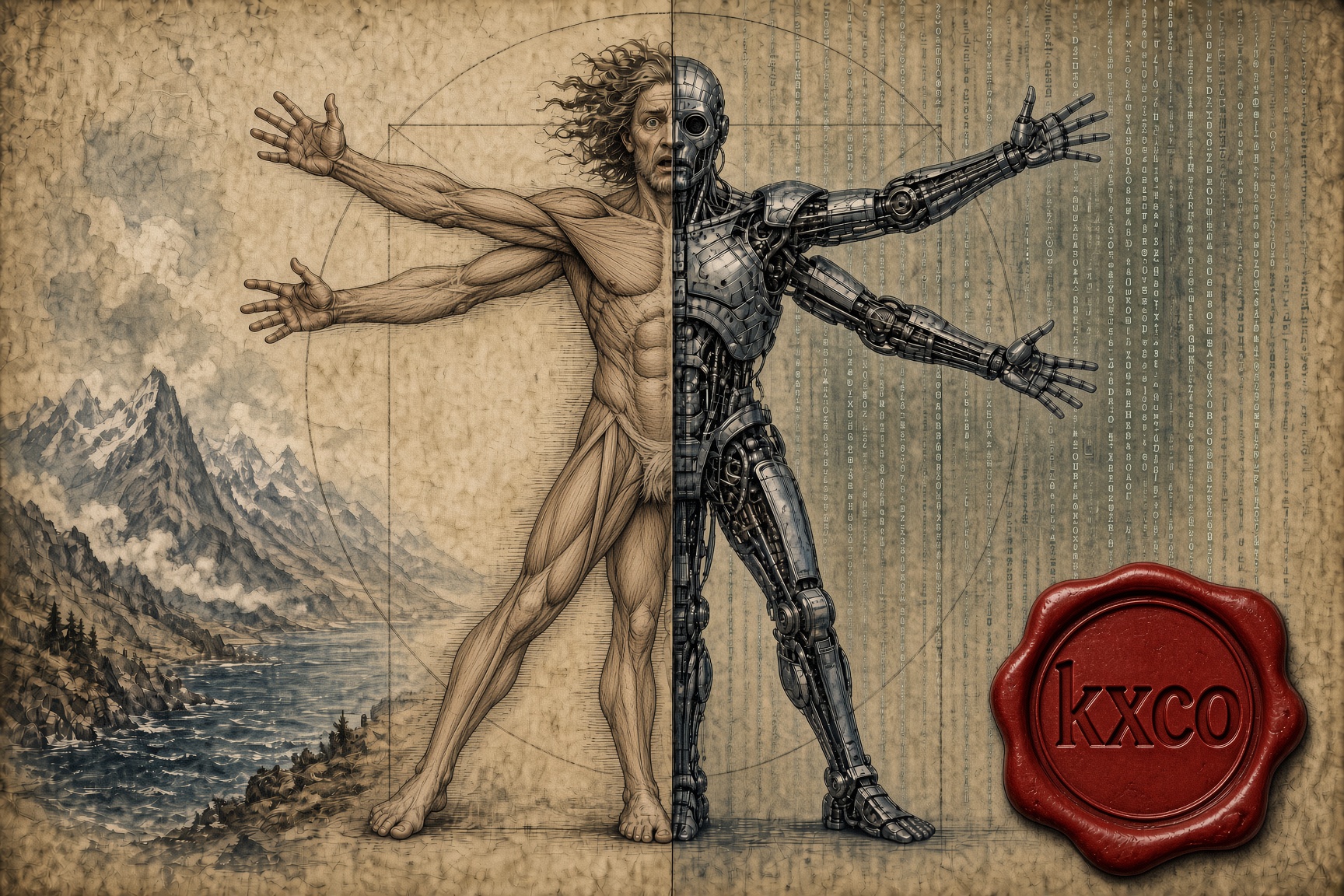
Don't Be the Best, Be the Only: Winning in an AI World
AI is repricing competence downward. What it cannot reproduce is a life. The case for remaining non-fungible, why friction still produces the best ideas, and what it means to build AI systems that keep the human intellect in them.
Every story, signed and delivered.
Subscribe to the kxco channel and get the headline, the AI-written key takeaways, and the chain-anchor link the moment we publish. Audio versions and per-ticker subscriptions arrive in the next iteration.