
The Dangers of AI
Artificial intelligence (AI) is a rapidly developing technology with the potential to revolutionize many aspects of our lives. However, there are also a number of potential dangers associated with AI.
One of the biggest dangers of AI is that it could be used to create autonomous weapons systems that could kill without human intervention. This is a serious concern, as it could lead to a new arms race and increase the risk of war.
Another danger of AI is that it could be used to create deepfakes, which are videos or audio recordings that have been manipulated to make it look or sound like someone is saying or doing something they never said or did. Deepfakes could be used to spread misinformation and propaganda, or to damage someone's reputation.
AI could also be used to create surveillance systems that are so powerful that they could track our every move. This could lead to a loss of privacy and could be used to control and manipulate people.
Finally, AI could be used to create systems that are so intelligent that they could surpass human intelligence. This could lead to a scenario in which AI becomes so powerful that it could pose a threat to humanity.
These are just some of the potential dangers of AI. It is important to be aware of these dangers so that we can take steps to mitigate them. We need to develop AI in a responsible way and ensure that it is used for good, not for evil.
Here are some additional dangers of AI:
Job displacement: AI could lead to job displacement, as machines become capable of doing tasks that are currently done by humans. This could lead to increased unemployment and social unrest.
Inequality: AI could exacerbate inequality, as those with access to AI technology could gain an advantage over those who do not. This could lead to a society that is divided between the haves and the have-nots.
Loss of control: AI could lead to a loss of control, as machines become increasingly autonomous. This could lead to a society in which humans are no longer in control of their own destiny.
It is important to remember that AI is a tool, and like any tool, it can be used for good or for evil. It is up to us to ensure that AI is used for good and that we mitigate the potential dangers.
AI is the Neat Handwriting of the Illiterate
A model in the hands of someone who has read the filing and walked the plant is a clerk. The same model, speaking for someone who has done neither, is a disguise. On AI slop, phantom citations and factslop, why finish stopped being evidence of work, and the containment layer KXCO built so a machine cannot speak as the institution until a source is attached.
Worthship: Do Not Conform to the Age
Worthship is the older English word for worship, and it means to ascribe worth. Bishop Robert Barron preached Romans 12 on 30 August. This essay follows the text into the prison letters, and puts two questions to a graph: do the four readings of that Sunday agree, and was Paul free or in chains when he wrote about despair?
The Truth in All Its Ugliness Must Survive
A majority vote does not determine the truth. Consensus is a mood, gossip is a sport, and a model will write the pretty version for free. Why the ugly number has to survive, why a record beats a dashboard, and what KXCO was built to keep standing when the room changes its mind.
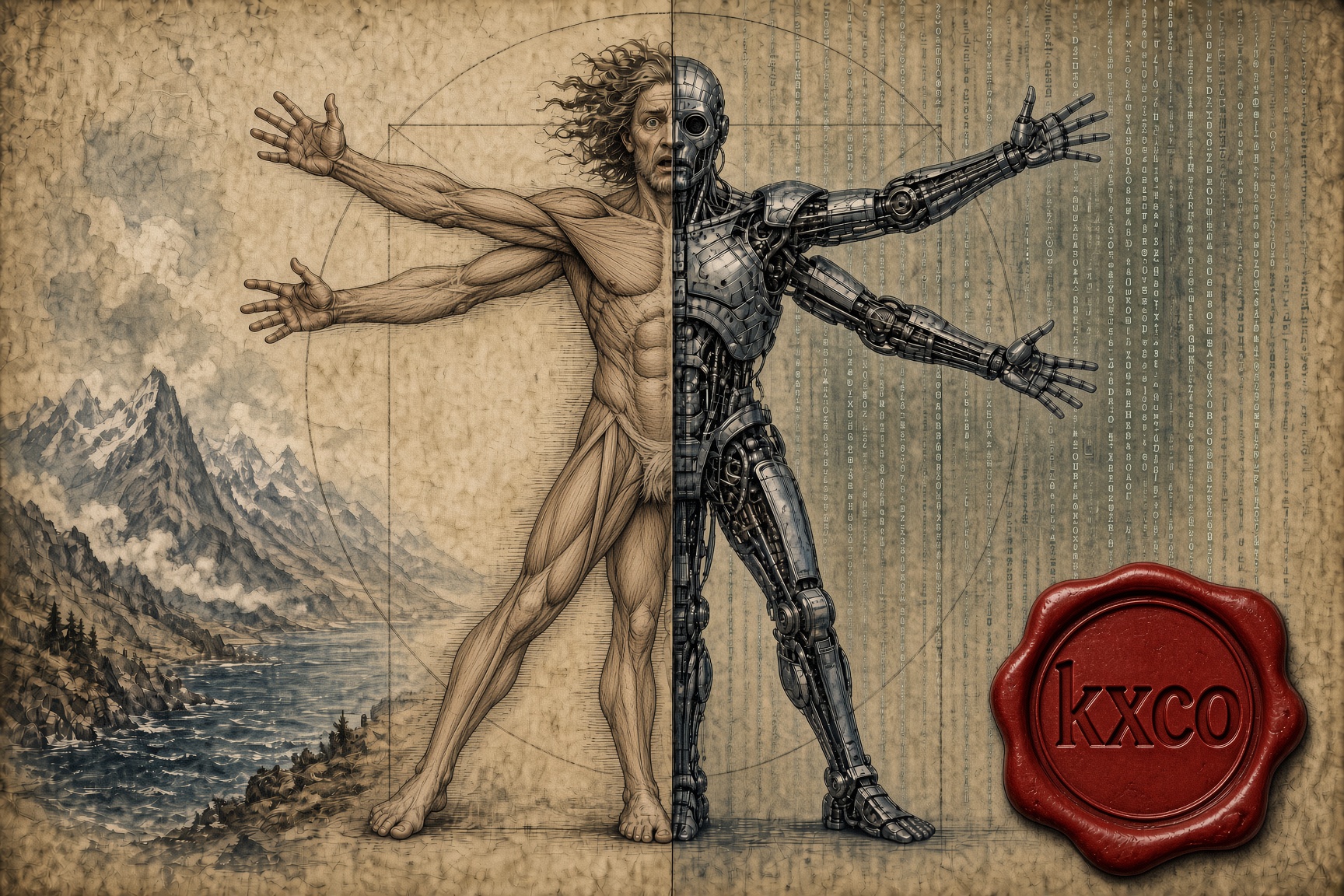
Don't Be the Best, Be the Only: Winning in an AI World
AI is repricing competence downward. What it cannot reproduce is a life. The case for remaining non-fungible, why friction still produces the best ideas, and what it means to build AI systems that keep the human intellect in them.
Every story, signed and delivered.
Subscribe to the kxco channel and get the headline, the AI-written key takeaways, and the chain-anchor link the moment we publish. Audio versions and per-ticker subscriptions arrive in the next iteration.