
Thailand: A Rising Economic Powerhouse in Southeast Asia
Thailand is a Southeast Asian country with a population of over 70 million people. It is a constitutional monarchy with a parliamentary government. The capital city is Bangkok.
Thailand has a long history of trade and commerce. It was a major trading hub in the region for centuries. In recent years, Thailand has become a major player in the global economy. It is a member of the Association of Southeast Asian Nations (ASEAN) and the World Trade Organization (WTO).
Thailand has a strong export-oriented economy. Its main exports are electronics, machinery, and automobiles. It is also a major exporter of agricultural products, such as rice, rubber, and sugar.
Thailand has a growing middle class and a young population. This has led to increased consumption and investment. The country is also a major tourist destination.
Thailand is a stable and relatively prosperous country. It has a low debt-to-GDP ratio and a positive current account balance. The government is committed to economic development and has implemented a number of reforms to improve the business environment.
As a result of these factors, Thailand is seen as a rising economic powerhouse in Southeast Asia. It is well-positioned to take advantage of the growing global economy.
Here are some of the specific ways in which Thailand is important to the global economy:
Thailand is a major exporter of agricultural products. It is the world's second-largest exporter of rice and a major exporter of rubber, sugar, and maize.
Thailand is a major producer of electronics. It is the world's leading producer of hard disk drives and a major producer of computers, televisions, and mobile phones.
Thailand is a major tourist destination. It is the most visited country in Southeast Asia, with over 30 million tourists visiting each year.
Thailand is a major financial center. It is the second-largest stock exchange in Southeast Asia and a major center for foreign investment.
Thailand is a key player in the global economy and is likely to continue to grow in importance in the years to come.
AI is the Neat Handwriting of the Illiterate
A model in the hands of someone who has read the filing and walked the plant is a clerk. The same model, speaking for someone who has done neither, is a disguise. On AI slop, phantom citations and factslop, why finish stopped being evidence of work, and the containment layer KXCO built so a machine cannot speak as the institution until a source is attached.
Worthship: Do Not Conform to the Age
Worthship is the older English word for worship, and it means to ascribe worth. Bishop Robert Barron preached Romans 12 on 30 August. This essay follows the text into the prison letters, and puts two questions to a graph: do the four readings of that Sunday agree, and was Paul free or in chains when he wrote about despair?
The Truth in All Its Ugliness Must Survive
A majority vote does not determine the truth. Consensus is a mood, gossip is a sport, and a model will write the pretty version for free. Why the ugly number has to survive, why a record beats a dashboard, and what KXCO was built to keep standing when the room changes its mind.
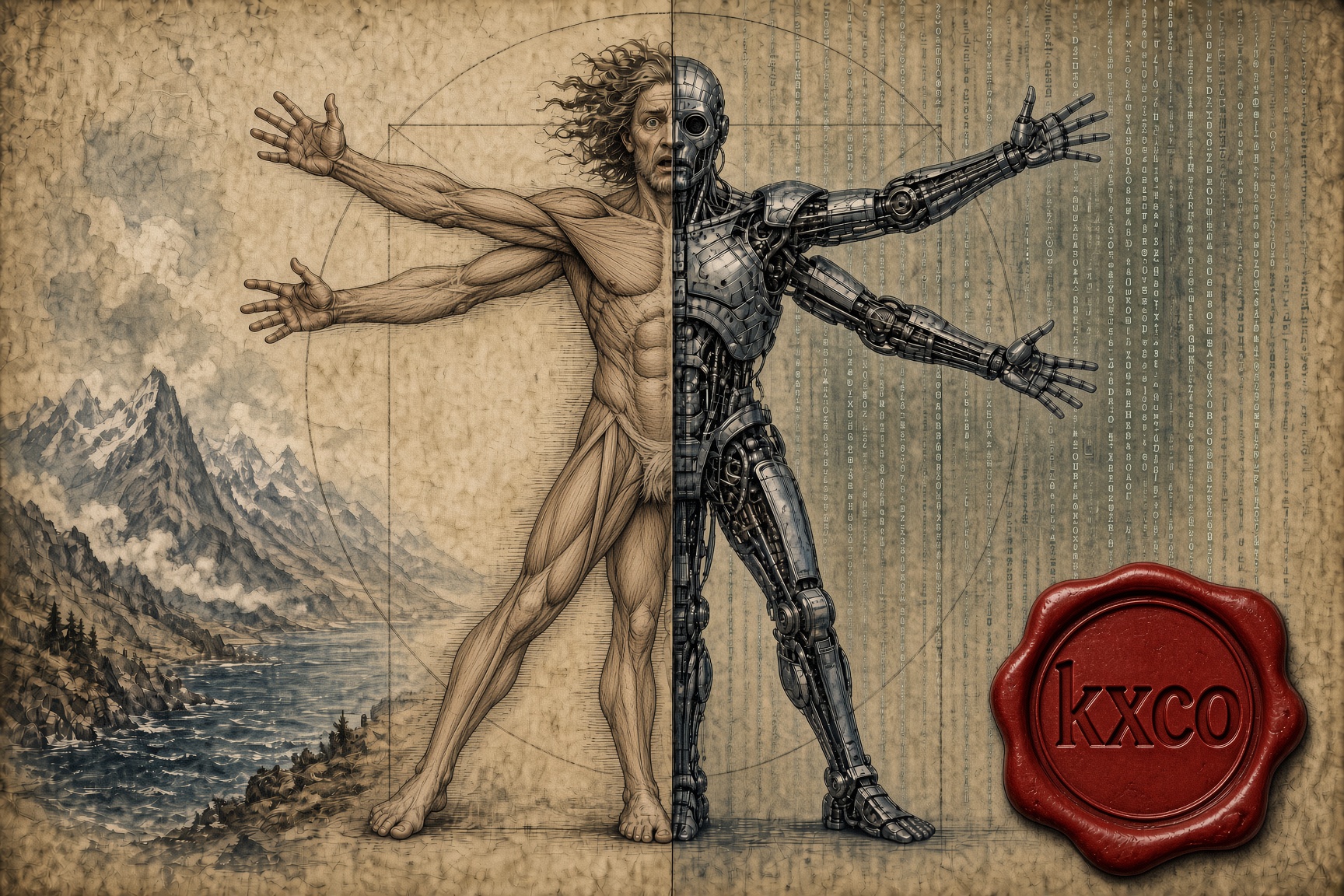
Don't Be the Best, Be the Only: Winning in an AI World
AI is repricing competence downward. What it cannot reproduce is a life. The case for remaining non-fungible, why friction still produces the best ideas, and what it means to build AI systems that keep the human intellect in them.
Every story, signed and delivered.
Subscribe to the kxco channel and get the headline, the AI-written key takeaways, and the chain-anchor link the moment we publish. Audio versions and per-ticker subscriptions arrive in the next iteration.