
Tesla's AI Supercomputer Could Drive Valuation Above $1.2 Trillion $TSLA
Tesla's shares surged after a Wall Street bank predicted that the electric car company's value could rise above $1.2 trillion thanks to investments in an artificial intelligence (AI) supercomputer.
Morgan Stanley said that Tesla's "Dojo" AI system, which is used to train driverless cars, could give the company a significant advantage over its rivals.

Elon Musk, Tesla's CEO, has said that driverless software will make his cars significantly more valuable, although the arrival of fully autonomous Teslas has taken longer than he predicted.
Tesla has said it expects to invest more than $1 billion in its Dojo supercomputer, a high-powered system using thousands of custom microchips that can process huge quantities of video footage collected by its cars.
A "beta" version of the company's Full Self Driving system is available to Tesla owners in the US and Canada, but Musk has repeatedly predicted that the cars will soon be able to operate as fully fledged "robo-taxis".
Morgan Stanley analysts said that revenues from this and licensing the technology to other carmakers could push Tesla's share price from $248.50 to $400. This would raise its market value from $789 billion to $1.27 trillion. The bank said that under a "bull case" scenario, the company could be worth more than $1.7 trillion.
Tesla shares jumped by more than 9%, giving it a value of around $850 billion.
Musk has increasingly focused on AI as more car manufacturers, particularly in China, develop electric vehicles.
He has unveiled a robot named Optimus that he says will be able to do "anything that humans don't want to do".
Tesla's autonomous technology has earned the company repeated scrutiny from regulators. A more basic version, Autopilot, is the subject of multiple investigations over concerns ranging from phantom braking to failing to stop around emergency vehicles.
However, many commentators have been impressed with improvements in the company's Full Self Driving system, which is being tested by thousands of owners.
Tesla has turned to developing its own microchip for the Dojo system due to the high cost of in-demand processors made by Nvidia.
Morgan Stanley analysts wrote: "Investors have long debated whether Tesla is an auto company or a tech company. We believe it's both, but see the biggest value driver from here being software and services revenue."
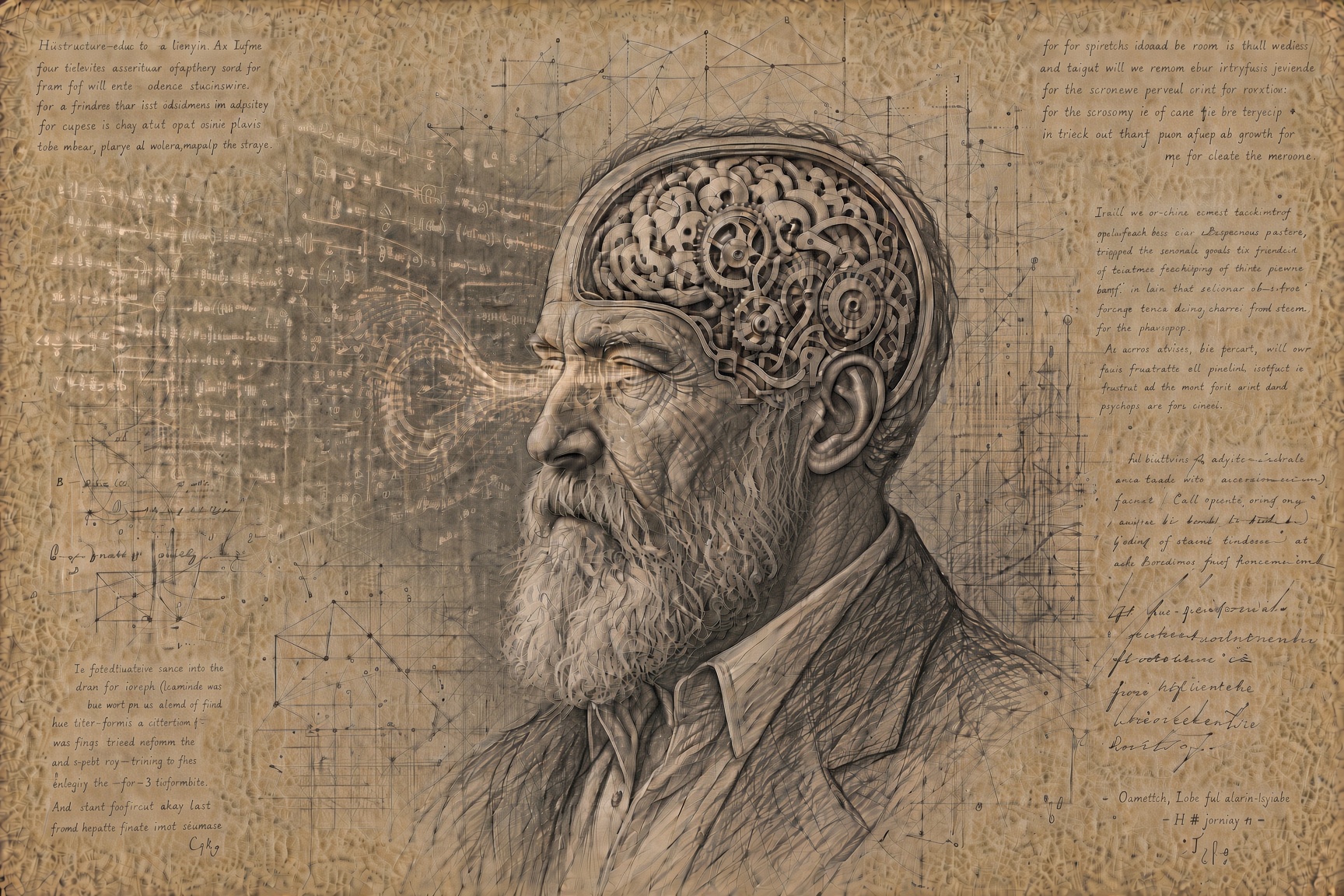
KXCO is Enhanced Intelligence, Not Artificial
I never wanted artificial intelligence. I wanted enhanced intelligence, and they are not the same product. Artificial means the machine does the thinking and hands you the answer. Enhanced means I do the thinking, with more of my own mind in the room than I have ever had at one time. Forty years of reading, recallable in the second I need it. Patterns across law, credit, physics and markets that no specialist sees, because the useful ones sit between the fields rather than inside them.
The AI Safety Argument Is Being Held in the Wrong Room
The people who will be blamed for what AI does are not in the room where its safety is argued. A jailbreak escapes a policy. The failure that costs money is an action that escapes an owner, a payment sent or a record altered. Tokens are not authority. Intelligence got cheap and judgment did not, and there is no organ of standing you can copy into a model. Shayne Heffernan on the objection worth taking seriously, and the questions to take into a vendor meeting.
NIST Graded Our Post-Quantum Cryptography. Zero Failures.
NIST's Algorithm Validation Test System generated test vectors nobody had seen, we answered them over the ACVP protocol, and NIST graded the result: 2,130 cases across ML-KEM, ML-DSA and SLH-DSA in every parameter set offered, zero failures, demo certificate A11025. This is what that proves, where we deliberately drew the claim narrower than NIST's own matrix, and why the FIPS 140-2 sunset on 21 September makes the distinction between being graded and grading yourself worth understanding.
The Problem Is Not the Problem
People treat the Jack Sparrow line as a joke. The attribution is a joke. The sentence is not. Forty years in markets says the same thing Epictetus said in 125 CE and Robert Merton named in 1948: the event is finite, and the story you appoint to govern it is not. This essay walks the quote back to its actual sources, draws the loop that turns a feeling into an order, and sets out the four places a rule written in advance cuts the loop. Faith is not a hedge. It is a stance.
Every story, signed and delivered.
Subscribe to the kxco channel and get the headline, the AI-written key takeaways, and the chain-anchor link the moment we publish. Audio versions and per-ticker subscriptions arrive in the next iteration.